The Effectiveness of a Massive Open Online Course on Knowledge, Learning Behavior, and Learning Satisfaction in Women’s Health and Newborn Nursing Among Nursing Students: A Quasi-Experimental Study
Keywords:
Massive Open Online Course (MOOC), Newborns, Nursing students, Satisfaction, Women’s healthAbstract
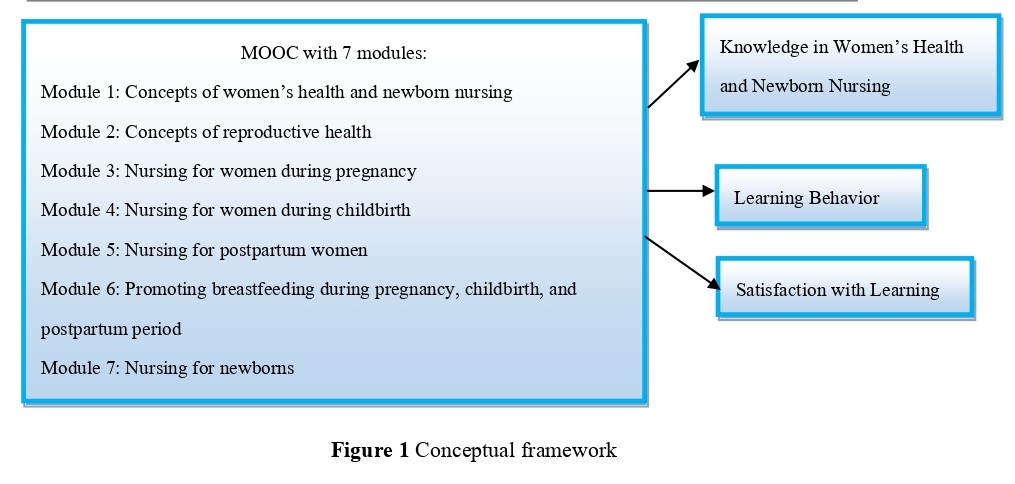
Background and Objectives The Massive Open Online Course (MOOC) has been used to enhance nursing students’ knowledge in various areas of nursing, but its effectiveness has not been examined in women’s health and newborn nursing. This study aims to examine the effectiveness of MOOC on nursing students’ knowledge of women’s health and newborn nursing, learning behaviors, and learning satisfaction.
Methods This was a quasi-experimental one-group pretest-posttest study. The participants consisted of 184 third-year nursing students from three network institutions in Thailand. Participants were selected using stratified random sampling. Data was collected between April and May 2025 using demographic data form, the Knowledge in Women’s Health and Newborn Nursing Scale, the Learning Behavior Questionnaire, and the Satisfaction with Learning on MOOC Questionnaire. The index of item-objective congruence was 1.00, 0.67, and 1.00. Cronbach's alpha coefficients were 0.74, 0.90, and 0.82, respectively. Data analysis was performed with descriptive statistics and a paired t-test.
Results The mean score of knowledge in women’s health and newborn nursing at post-test (=28.46, S.D. = 5.67) was higher than at pre-test (=16.45, S.D. = 5.40) with statistical significance (t = 23.22, p < .001). The total mean score of online learning behavior in women’s health and newborn nursing was at a high level ( = 4.03, S.D. = 0.96). The overall satisfaction with learning through MOOC was at the highest level ( = 4.42, S.D. = 0.69). The satisfaction with the content ( = 4.39, S.D. = 0.68) and the satisfaction with the design ( = 4.44, S.D. = 0.69) were at the highest level.
Conclusion and Recommendation The MOOC has the potential to be integrated into nursing education as a self-directed learning approach for nursing students. However, this study’s main limitation is the lack of a between-group comparison. Further investigation is required to improve its applicability.
References
Berre, V.O., Knutstad, U., & Jensen, K.T. (2025). Nursing students' use of digital resources for self-directed learning in bioscience. SAGE Open Nursing, 11, https://doi.org/10.1177/23779608251363870
Bogren, M., Alesö, A., Teklemariam, M., Sjöblom, H., Hammarbäck, L., & Erlandsson, K. (2022). Facilitators of and barriers to providing high-quality midwifery education in South-East Asia-An integrative review. Women and Birth, 35(3), e199 – e210. https://doi.org/10.1016/j.wombi.2021.06.006
Bowdler, S., Nielsen, W., Moroney, T., & Meedya, S. (2022). What knowledge of breastfeeding do nursing students hold and what are the factors influencing this knowledge: An integrative literature review. Nurse Education in Practice, 64, 103423.
https://doi.org/10.1016/j.nepr.2022.103423
Chainakin, P., Sukjaem, J., Sriphongsut, P., Ruenprot, W., Karuna, S., Vachiravanichakij, P., Thepbuddee, S., & Phengsuk, A. (2025). The effects of learning management through massive open online courses (MOOCS) on academic achievement in maternal, newborn, and midwifery nursing among nursing students. Journal of the Police Nurses and Health Science, 17(1), 51 - 62.
http://he01.tci-thaijo.org/index.php/policenurse/article/view/278412
Cunningham, F. G., Leveno, K. J., Dashe, J. S., Hoffman, B. L., Spong, C. Y., & Casey, B. M. (2022). Williams obstetrics (26th ed.). McGraw-Hill Medical.
De Gagne, J. C., Randall, P. S., Koppel, P. D., Cho, E., Blackwood, E. R., & Kang, H. S. (2025). Online learning in nursing education: A 21st century bibliometric analysis. Nurse Education Today, 151, 106740. https://doi.org/10.1016/j.nedt.2025.106740
Dube, R., Bambani, T., Saif, S., Patni, M. M., Kar, S. S., Bahutair, S. N., Younus, H. A., & Kar, S. S. (2026). Knowledge and attitudes of medical and nursing students toward noninvasive prenatal testing and fetal anomaly scan. Annals of African Medicine, 25(1). 158 – 164. https://doi.org/10.4103/aam.aam_71_25
Gause, G., Mokgaola, I. O., & Rakhudu, M. A. (2022). Technology usage for teaching and learning in nursing education: An integrative review. Curationis, 45(1), e1 – e9. https://doi.org/10.4102/curationis.v45i1.2261
Ghallab, E. Z. M., Abdellah, M. M. M., Mohamed, N. R., & Morsy, S. R. (2023). Effect of a massive open online course (MOOC) about menstrual disorders on female nursing students’ knowledge and satisfaction. Alexandria Scientific Nursing Journal, 25(3), 191 – 204. https://www.semanticscholar.org/reader/e1ad24f73f43200d3000020aed96ec9fef3f219
Haseli, A., Khosravi, S., Hajimirzaie, S.S., Feli, R., & Rasoal, D. (2024). Midwifery students' experiences: Violations of dignity during childbirth. Nursing Ethics, 31(2-3), 296 – 310. https://doi.org/10.1177/09697330231197703
Hoseini, A.S., Ghasemi, F., Valizadeh, F., Nayeri, N.D., & Hasanvand, S. (2024). Improving the quality of clinical training in maternal and neonatal health in undergraduate nursing students: A participatory action research. BMC Nursing, 23(1). https://doi.org/10.1186/s12912-024-02160-z
Jittitaworn, W., & Wisanskoonwong, P. (2023). Self-directed learning about normal birth with web-based support for nurse-midwife students in Thailand: A mixed methods study. Midwifery, 126, 103813. https://doi.org/10.1016/j.midw.2023.103813
Jungpanich, P., & Ployluan, W. (2023). The study of situation of early childhood development in Thailand 2021. Thailand Journal of Health Promotion and Environmental Health, 46(1), 41 - 53. https://thaidj.org/index/php/tjha/article/view/14250
Khongtor, O., Wannakit, U., Aeamla-or, N., Nima, P., Wongchaiya, P., Muhammadsakul, P., Tohpaeroh, M., Noypha, W., Thanee, S., Surangsee, S., & Yodchai, K. (2025). Development of a massive open online course in mental health and psychiatric nursing for nursing students. Thai Red Cross Nursing Journal, 18(3), 83 – 102. https://doi.org/10.64767/trcn.2025.276667
Kirkpatrick, D.L., & Kirkpatrick, J.D. (2006). Evaluating training programs: The four levels (3rd ed.). Berrett-Koehler.
Liu, C., Zou, D., Chen, X., Xie, H., & Chan, W.H. (2021). A bibliometric review on latent topics and trends of the empirical MOOC literature (2008–2019). Asia Pacific Education Review, 22(3), 515 – 534. https://doi.org/10.1007/s12564-021-09692-y
Mramel, M., El Alaoui, M., & El Janati Idrissi, R. (2024). Barriers to clinical learning skills development among midwifery students and newly qualified midwives in Morocco: A qualitative study. Belitung Nursing Journal, 10(2), 160 – 168. https://doi.org/10.33546/ bnj.3163
National Statistical Office of Thailand. (2023). Thailand Multiple Indicator Cluster Survey 2022, survey findings report. Author.
Nieder, J., Nayna Schwerdtle, P., Sauerborn, R., & Barteit, S. (2022). Massive open online courses for health worker education in low- and middle-income countries: A scoping review. Frontiers in Public Health, 10, 891987. https://doi.org/10.3389/fpubh.2022.891987
Padilha, J.M., Machado, P.P., Ribeiro, A.L., Ribeiro, R., Vieira, F., & Costa, P. (2021). Easiness, usefulness and intention to use a MOOC in nursing. Nurse Education Today, 97, 104705. https://doi.org/10.1016/j.nedt.2020.104705
Polit, D.F., & Beck, C.T. (2017). Nursing research: Generating and assessing evidence for nursing practice (10th ed.). Wolters Kluwer.
Puttaruksa, L., Krungkraipetch, N., Mahakayanan, S., & Nadarajan, S. (2023). A development of online open lessons on “reasonable drug use for nursing students”. Nursing Journal of the Ministry of Public Health, 33(3), 15 - 24.
https://he02.tci-thaijo.org/index.php/tnaph/article/view/266914
Srisawad, K., & Puttapitukpol, S. (2025). Midwifery practicum in a model of distance education with blended learning. The Journal of the Royal Thai Army Nurses, 26(1), 438 – 449. https://he01.tci-thaijo.org/index.php/JRTAN/article/view/275817
Thailand Nursing and Midwifery Council. (2025). Scope of content of the first-level maternal and infant nursing course. https://www.tnmc.or.th/images/userfiles/files/1102.pdf
United Nations Children’s Fund. (2023). Early childhood development. UNICEF vision for every child. Author.
United Nations Children's Fund. (2026). SDG goal 3: Good health and well-being. Unicef.
https://data.unicef.org/sdgs/goal-3-good-health-wellbeing/
Wannarit, L. (2023). The effect of midwifery preparation program for nurse and midwifery license examination among Air Force student nurses. The Journal of the Royal Thai Army Nurses, 24(3), 153 - 161. https://he01.tci-thaijo.org/index.php/JRTAN/article/view/266453
Wanngamwiset, S., Lumrod, N., & Tojun, S. (2023). Factors associated with intentional behavior of using online learning among nursing students of nursing colleges under Praboromarajchanok Institute (Central Network 1). Journal of Nursing and Education, 16(1), 48 - 57. https://he01.tci-thaijo.org/index.php/JNAE/article/view/256994/175236
World Health Organization. (2023, February 27). Congenital disorders. https://www.who.int/news-room/fact-sheets/detail/birth-defects
World Health Organization. (2025a, April 7). Maternal health. https://www.who.int/health-topics/maternal-health#tab=tab_3
World Health Organization. (2025b, April 7). Maternal mortality. https://www.who.int/news-room/fact-sheets/detail/maternal-mortality
World Health Organization. (2025c, August 4). On world breastfeeding week, countries urged to invest in health systems and support breastfeeding mothers. https://www.who.int/news/item/04-08-2025-on-world-breastfeeding-week-countries-urged-to-invest-in-health-systems-and-support-breastfeeding-mothers
Yamane, T. (1970). Statistic: An introductory analysis (2nd ed.). Harper & Row.
Downloads
Published
How to Cite
Issue
Section
License
Copyright (c) 2026 Princess of Naradhiwas University Journal

This work is licensed under a Creative Commons Attribution-NonCommercial-NoDerivatives 4.0 International License.