Effectiveness of a Massive Open Online Course in Paediatric Nursing for Undergraduate Nursing Students
Keywords:
Paediatric nursing, ThaiMOOC, Learning behaviours, Student satisfactionAbstract
Background and Objective Massive Open Online Courses (MOOCs) represent a flexible and accessible mode of learning, with a strong emphasis on learner-centered approaches. ThaiMOOC is Thailand’s national MOOC platform that provides open online courses for higher education and lifelong learning. This study aimed to evaluate the effectiveness of the ThaiMOOC-based paediatric nursing course in enhancing knowledge, learning behaviours, and satisfaction among undergraduate nursing students from networked institutions.
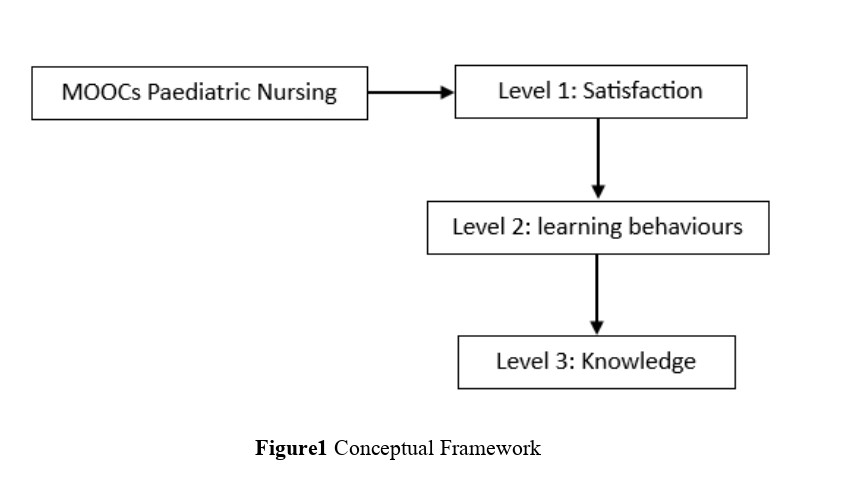
Methods A quasi-experimental one-group pretest–posttest design was employed with a sample of 210 nursing students from five institutions. This course consisted of 14 modules with a total learning time of nine hours. The intervention was delivered through the ThaiMOOC online learning platform. The research instruments included a demographic questionnaire, a knowledge assessment test, a learning behavior questionnaire, and a satisfaction questionnaire. Data were analyzed using descriptive statistics and a paired t-test.
Result The finding revealed that students’ knowledge scores significantly increased from pretest (M = 22.06, S.D. = 7.667) to posttest (M = 36.12, S.D. = 5.213), p < .001. Learning behaviours were reported at a “frequent” level (M = 4.12, S.D. = 0.519), while satisfaction with both course content and course design was rated as “very high” (M = 4.19, S.D. = 0.272).
Conclusion and Recommendations The ThaiMOOC-based paediatric nursing course was associated with significant improvements in nursing students’ knowledge, learning behaviours, and satisfaction, demonstrating the value of well-designed MOOC instruction in nursing education. By structuring learning into smaller modules and adopting a learner-centred approach, it can effectively promote flexible learning and support educational equity.
References
Abdull Mutalib, A. A., Abdah, M. A., & Jaafar, M. H. (2022). A systematic review of health sciences students’ online learning during the COVID-19 pandemic. BMC Medical Education, 22, 524. https://doi.org/10.1186/s12909-022-03579-1
Asgari Tapeh, Z., Darvishpour, A. (2024). Undergraduate nursing students’ experiences of virtual learning during the COVID-19 pandemic: A qualitative study. Nursing Research and Practice, 2024(1), 7801500. https://doi.org/10.1155/2024/7801500
Aung, K.T., Razak, R.A., Mohamad Nazry, N.N., & Mohd Ali, N.A. (2023). Evaluating the readiness of nurses for massive open online courses (MOOCs) in continuing nursing education. Journal of Contemporary Social Science and Education Studies, 3(1), 1–15. https://doi.org/10.5281/zenodo.10173119
Bandura, A. (1991). Social cognitive theory of self-regulation. Organizational Behaviour and Human Decision Processes, 50(2), 248–287. https://doi.org/10.1016/0749-5978(91)90022-L
Brown, O. (2025). Global trends in education: Emerging practices and innovations. Educator Insights: A Journal of Teaching Theory and Practice, 1(1), 15 – 21. https://brightmindpublishing.com/index.php/EI/article/view/3
Cao, W., Hu, L., Li, X., Li, X., Chen, C., Zhang, Q., & Cao, S. (2021). Massive open online courses–based blended versus face-to-face classroom teaching methods for a fundamental nursing course. Medicine, 100(9), e24829. https://doi.org/10.1097/MD.0000000000024829
Chainakin, P., Sukjaem, J., Sriphongsut, P., Ruenprot, W., Karuna, S., Vachiravanichakij, P., Thepbuddee, S., & Phengsuk, A. (2025). The effects of learning management through massive open online courses (MOOCs) on academic achievement in maternal, newborn, and midwifery nursing among nursing students. Journal of The Police Nurses and Health Science, 17(1), 51–62. https://he01.tcithaijo.org/index.php/policenurse/article/view/278412
Cunha, D. J., Machado, P., & Padilha, J. M. (2025). Effectiveness of m-learning in enhancing knowledge retention for nurses’ lifelong learning: A quasi-experimental study. JMIR Nursing, 8, e72957. https://doi.org/10.2196/72957
Daniel, O. A., Pedro, K. M., & Tadeus, S. (2023). Experiences of nursing students’ preparedness to migrate to online learning during COVID-19 lockdown in Namibia. Health SA Gesondheid, 28, 1–7. http://doi.org/10.4102/hsag.v28i0.2427
El-Gazar, H.E., Zoromba, M.A., Fayed, S.M., Loutfy, A., Elzieny, A A., Elzeiny, A., & El-Monshed, A.H. (2024). Nurturing success: E-learning readiness and academic self-efficacy in nursing students. BMC Nursing, 23, 495. https://doi.org/10.1186/s12912-024-02125-2
Harris, A., Buglass, S., & Gous, G. (2021). The impact of lecture chunking format on university student vigilance: Implications for classroom pedagogy. Journal of Pedagogical Sociology and Psychology, 3(2), 90 – 102. https://doi.org/10.33902/JPSP.2021272429
Hu, Y., Ow Yong, J. Q. Y., Chng, M.-L. C., Li, Z., & Goh, Y.-S. (2022). Exploring undergraduate nursing students students’ experiences toward home-based learning as pedagogy during the COVID-19 pandemic: A descriptive qualitative exploration. BMC Nursing, 21, 13. https://doi.org/10.1186/s12912-021-00788-9
IBM Corp. (2019). IBM SPSS Statistics for Windows (Version 26.0) [Computer software]. Author.
Kim, S., & Kim, D.-J. (2021). Structural relationship of key factors for student satisfaction and achievement in asynchronous online learning. Sustainability, 13(12), 6734. https://doi.org/10.3390/su13126734
Kirkpatrick, D. L. (1979). Techniques for evaluating training programmes. Training and Development Journal, 33, 78 - 92. https://assets.td.org/m/4a306d561507658e/original/TECHNIQUES-FOR-EVALUATING-TRAINING-PROGRAMS.pdf
Kumar, P., & Kumar, N. (2020). A study of learners’ satisfaction from MOOCs through a mediation model. Procedia Computer Science, 173, 354–363. https://doi.org/10.1016/j.procs.2020.06.041
Kunaviktikul, W., Ang, E., Baridwan, N. S., Bernal, A. B., Dones, L. B. P., Flores, J. L., Freedman-Doan, R., Klunklin, A., Lee, W.L., Lin, C-C., Luk, T.T., Nguyen, A.T.H., Nurumal, M.S., Setiawan, A., Jamaluddin, T.S.S., Huy, T.Q., Tungpunkom, P., Wati, D.N.K., … Shorey, S., (2022). Nursing students’ and faculty members’ experiences of online education during COVID-19 across Southeast Asia: A photovoice study. Nurse Education Today, 111, 105307. https://doi.org/10.1016/j.nedt.2022.105307
Langseth, I., Jacobsen, D.Y., & Haugsbakken, H. (2021). MOOCs for flexible and lifelong learning in higher education. In C. Meinel, T. Staubitz, S. Schweiger, C. Friedl, J. Kiers, M. Ebner, A. Lorenz, G. Ubachs, C. Mongenet, J. A. Ruipérez-Valiente, & M. Cortes Mendez (Eds.), EMOOCs 2021 (pp. 63 – 78). Universitätsverlag Potsdam.
Muhammad, N., Sidhu, G., & Srinivasan, S. (2020). Effect of the time of day of instruction on student learning. International Journal of Pedagogy and Teacher Education, 4(2), 126 - 137 https://doi.org/10.20961/ijpte.v4i2.43070
Padilha, J. M., Bastos, C., Vieira, F., Machado, P., Ribeiro, A. L., Cabral, P., & Abreu, M. (2025). Perceived usefulness and effectiveness of a MOOC on healthcare during the pandemic. Humanities and Social Sciences Communications, 12(1), 773. https://doi.org/10.1057/s41599025-05057-7
Polit, D.F., & Beck, C.T. (2021). Nursing research: Generating and assessing evidence for nursing practice. Lippincott Williams & Wilkins.
Rodniyom, A. (2024). MOOCs: A new opportunity for education in the era of change. Journal of MCU Nakhondhat, 11(3), 1 – 10. https://so03.tci-thaijo.org/index.php/JMND/article/view/275234
Sadeghi, N., Janatolamakn, M., Rezaeian, S., Rashi, M., & Khatony, A. (2024). Exploring self-directed learning readiness and related factors: The role of time management skills in nursing students. BMC Medical Education, 24(1), 1088. https://doi.org/10.1186/s12909-024-06083-w
Selwyn, N. (2024). Digital degrowth: Toward radically sustainable education technology. Learning, Media and Technology, 49(2), 186–199. https://doi.org/10.1080/17439884.2022.2159978
Sharma, D. (2025). The digital dilemma in education: Global challenges and ethical opportunities in the 5IR transition. International Journal of Social Sciences, Language and Linguistics, 5(9), 5 – 13. https://doi.org/10.55640/ijssll-05-09-02
Si, J. (2022). Critical e-learning quality factors affecting student satisfaction in a Korean medical school. Korean Journal of Medical Education, 34(2), 107–119. https://doi.org/10.3946/kjme.2022.223
Wardhani, R., Aziz, S., Khan, J., & Siswanty, F. (2024). The role of MOOCs in lifelong learning and professional development. Journal International Inspire Education Technology (JIIET), 3(3), 265–277. https://ejournal.staialhikmahpariangan.ac.id/Journal/index.php/JIIET/article/view/721
Yamane, T. (1973). Statistics: An introductory analysis. Harper & Row.
Zhang, Y., Liu, S., Li, C., & Hao, A. (2025). Impact of a MOOC-Based Blended Learning Model on Performance, Satisfaction, and Perceptions in a Histology Course for Chinese Medical Students. Advances in medical education and practice, 16, 1501 – 1510. https://doi.org/10.2147/AMEP.S534676
Zhu, M., & Bonk, C. J. (2019). Designing MOOCs to facilitate participant self-directed learning: An analysis of instructor perspectives and practices. International Journal of Self-Directed Learning, 16(2), 39 – 60. https://publicationshare.com/pdfs/Designing-MOOCsforSDL.pdf
Zou, Y., Kuek, F., Feng, W., & Cheng, X. (2025). Digital learning in the 21st century: Trends, challenges, and innovations in technology integration. Frontiers in Education, 10, 1562391. https://doi.org/10.3389/feduc.2025.1562391
Downloads
Published
How to Cite
Issue
Section
License
Copyright (c) 2026 Princess of Naradhiwas University Journal

This work is licensed under a Creative Commons Attribution-NonCommercial-NoDerivatives 4.0 International License.