
Development of Biodegradable Plant Pots from Thermoplastic Starch/ Water Hyacinth/Peanut Hulls Polymer Composites
Article Sidebar
Main Article Content
Abstract
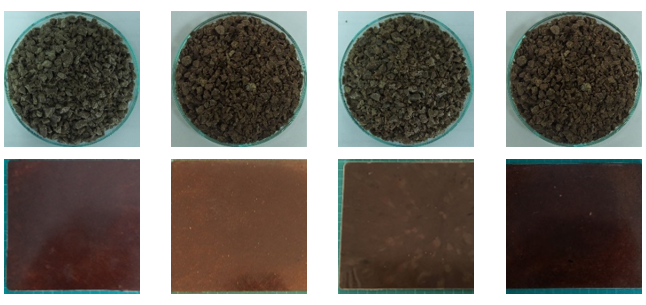
This study prepared a biodegradable polymer composite for a prototype plant bio-pot from thermoplastic starch (TPS), poly (L-lactide) (PLL), reinforced with water hyacinth (WH) and peanut hulls (P) through a melt forming process. The TPS compounds were prepared from native tapioca starch using a plasticizer mixture consisting of glycerol and other plasticizers in a 2:1 weight ratio. The mixture included glycerol/sorbitol (GS), glycerol/urea (GU) and glycerol/distilled water (GW), and were complared with glycerol (Gly) alone. The results showed that plastic sheet from TPSGS has tensile mechanical properties, thermal stability, and water resistance better than other TPS compounds. When TPSGS was reinforced with water hyacinth fiber and peanut shell (WHP) at 10 % by weight and 5 phr PLL was added as an additive (90TPSGS/10WHP+5PLL), the tensile and water absorption properties of the composite sheets were studied. It appeared that the reinforcement with 10% WHP by weight increased the elongation at break to 20.39%, while also reducing water absorption and improving the stability of the plastic sheet during testing. Additionally, the polymer composites can be formed into conical plant pots using a vertical ram extruder. The resulting plant pots exhibited a dark brown color with creamy streaks evenly distributed throughout, a smooth surface texture and morphology stability. They are suitable for use as small plant pots.
Article Details

This work is licensed under a Creative Commons Attribution-NonCommercial-NoDerivatives 4.0 International License.
The content and information in the article published in Journal of Rajamangala University of Technology Srivijaya It is the opinion and responsibility of the author of the article. The editorial journals do not need to agree. Or share any responsibility.
References
Bogracheva, T.Y., Wang, Y.L., Wang, T.L. and Hedley, C.L. 2002. Structural studies of starches with different water contents. Biopolymers 64: 268-281.
Buachum, S. and Towatana, P. 2015. The utilization of aquatic weeds and agricultural residues for composting and planting material in Pak Phanang River basin, pp. 546-556. In The 6th National and International Conference. Suan Sunandha Rajabhat University, Thailand. (in Thai)
Bunkerd, R., Molloy, R., Somsunan, R., Punyodom, W., Topham, P.D. and Tighe, B.J. 2018. Synthesis and characterization of chemically-modified cassava starch grafted with poly (2‐ethylhexyl acrylate) for blending with poly(lactic acid). Starch 70: 1-10.
Chieng, B.W., Ibrahim, N.A., Yunns, W.M.Z.W. and Hussein, M.Z. 2014. Poly(Lactic Acid)/Poly(Ethylene Glycol) Polymer Nanocomposites: Effects of Graphene Nanoplatelets. Polymers 6: 93-104.
Fekete, E., Kun, D. and Móczó, J. 2018. Thermoplastic starch/wood composites: effect of processing technology, interfacial interactions, and particle characteristics. Periodica Polytechnica Chemical Engineering 62(2): 129-136.
Food and Agriculture Organization of the United Nations (FAO). 2021. Assessment of Agricultural Plastics and Their Sustainability-A Call for Action. FAO, Rome, Italy.
Galdeano, M.C., Grossmann, M.V.E., Mali, S., Bello-Perez, L.A., Garcia, M.A. and Zamudio-Flores, P.B. 2009. Effects of production process and plasticizers on stability of films and sheets of oat starch. Materials Science Engineering C 29: 492-498.
Gironès, J., López, J.P., Mutjè, P., Carvalho, A.J.F., Curvelo, A.A.S. and Vilaseca, F. 2012. Natural fiber-reinforced thermoplastic starch composites obtained by melt processing. Composites Science and Technology 72: 858-863.
Grazuleviciene, T., Treinyte, J. and Zaleckas, E. 2012. Film-forming starch composites for agriculture applications. Journal of Polymers and the Environment 20: 485-491.
Gupta, A. and Urahn, N. 2023. Sustainable bio-based planting pots as an approach to reduce plastic waste in the agriculture industry. International Journal of Agriculture Innovation, Technology and Globalisation 3(3): 215-244.
Islam, M.N., Rahman, F., Papri, S.A., Faruk, M.O., Das, A.K., Adhikary, N., Debrot, A.O. and Ahsan, M.N. 2021. Water Hyacinth (Eichhornia Crssipes (Mart.) Solms.) as an alternative raw material for the production of bio-compost and handmade paper. Journal of Environmental Management 294: 1-9.
Ji, M., Li, F., Li, J., Li, J., Zhang, C., Sun, K. and Guo, Z. 2021. Enhanced mechanical properties, water resistance, thermal stability, and biodegradation of the starch-sisal fibre composites with various fillers. Materials and Design 198: 1-10.
Jiang, T., Duan, Q., Zhu, J., Liu, H. and Yu, L. 2020. Starch-based biodegradable materials: Challenges and opportunities. Advanced Industrial and Engineering Polymer Research 3(1): 8-18.
Juanga-Labayen, J.P. and Yuan, Q. 2021. Making Biodegradable Seedling Pots from Textile and Paper Waste Part B: Development and Evaluation of Seedling Pots. International Journal of Environmental Research and Public Health 18: 1-14.
Khumyat, N. 2015. Increasing Hydrophilicity of poly(lactic acid) by mixing with short chain PLA containing positive charges. Bachelor of Science (Chemistry), Chulalongkorn University. (in Thai)
Li, H. and Huneault, M.A. 2010. Comparison of sorbitol and glycerol as plasticizers for thermoplastic starch in TPS/PLA blends. Journal of Applied Polymer Science 19: 2439-2448.
Lourdin, D., Bizot, H. and Colonna, P. 1997. Antiplasticization in starch-glycerol films. Journal of Applied Polymer Science 63(8):1047-1053.
Ma, X.F., Yu, J.G. and Wan, J.J. 2006. Urea and ethanolamine as a mixed plasticizer from thermoplastic starch. Carbohydrate Polymers 64: 267-273.
Muller, P., Bere, J., Fekete, E., Moczo, J., Nagy, B., Kallay, M., Gyarmati, B. and Pukanszky, B. 2016. Interactions, Structure and Properties in PLA/Plasticized Starch Blends. Polymer 103: 9-18.
Obasi, H.C. 2015. Peanut husk filled polyethylene composites: effects of filler content and compatibilizer on properties. Journal of Polymers 2015: 1-9.
Paczkowski, P., Puszla, A. and Gawdzik, B. 2021. Effect of eco-friendly peanut shell powder on the chemical resistance, physical, thermal, and thermomechanical properties of unsaturated polyester resin composites. Polymers 13: 1-20.
Paluch, M., Ostrowska, J., Tyński, P., Sadurski, W. and Konkol, M. 2022. Structural and thermal properties of starch plasticized with glycerol/urea mixture. Journal of Polymers and the Environment 30: 728-740.
Piyang, T., Chaichan, W. and Sagulsawasdipan, K. 2018. Environment-friendly Plant Pot Production from Palm Oil Sludge and Mushroom Cultured Waste. Rajamangala University of Technology Srivijaya Research Journal 10(3): 497-511.
Qiao, X., Tang, Z. and Sun, K. 2011. Plasticization of Corn Starch by Polyol Mixtures. Carbohydrate Polymers 83: 659-664.
Soontornchai, S., Lertwissuttipaiboon, S. and Tosing, P. 2016. Bioplastics from agricultural crops to health and environment. Journal of Health Management 3(1): 24-36. (in Thai)
Sriroth, K. and Piyachomkwan, K. 2003. Starch Technology (3rd ed). Kasetsart University Press, Bangkok. (in Thai)
Suppakarn, N. and Meekum, U. 2003. Preliminary study for using starch as filler for biodegradable polymer. Suranaree University of Technology. (in Thai)
Tanpaiboonkul, N., Budnumpetch, T., Sukaranadara, K and Photilangka, P. 2022. Biodegradable pots from water hyacinth using cassava starch and cassava pulp as binder. Huachiew Chalermprakiet Science and Technology Journal 8(1): 56-69.
Tarique, J., Zainudin, E.S., Sapuan, S.M., Ilyas, R.A. and Khalina, A. 2022. Physical, Mechanical, and Morphological Performances of Arrowroot (Maranta arundinacea) Fiber Reinforced Arrowroot Starch Biopolymer Composites. Polymers 14(388): 1-21.
Theamdee, P. and Rueangrung, J. 2019. The effect of glycerol content on physical and mechanical properties of the biodegradable film from sweet potato flour for plastic plant bag application. Journal Science and Technology Ubon Ratchathani University 21: 14-24. (in Thai)
The Petroleum and Petrochemical College. 2010. Development of plastic resins and compounds projects; plant bio-pot. Master Plan. Intellectual Infrastructure. (in Thai)
Triwises, P., Ruksakulpiwat, Y. and Ruksakulpiwat, C. 2016. The modification of tapioca starch by esterification technique. Suranaree Journal of Science and Technology 23(2): 157-165.
Volpe, V., De, F.G., De, M.I. and Pantani, R. 2018. Use of sunflower seed fried oil as an ecofriendly plasticizer for starch and application of this thermoplastic starch as a filler for PLA. Industrial Crops & Product 122: 545-552.
Zahiruddin, S.M.M., Othman, S.H., Tawakkal, I.S.M.A. and Talib, R.A. 2019. Mechanism and thermal properties of tapioca starch films plasticized with glycerol and sorbitol. Food Research 3(2): 157-163.
Zhang, J.S., Yu, J.G., Wu, Y. and Ma, X.F. 2008. Synthesis of aliphatic amidediol and used as a novel mixed plasticizer for thermoplastic starch. Chinese Chemical Letters 19: 395-398.
Zhong, Y. and Li, Y. 2014. Effects of glycerol and storage relative humidity on the properties of kudzu starch-based edible films. Starch/Starke 66: 524-532.
