
ผลของสารกำจัดแมลงศัตรูพืชร่วมกับพอลิเมอร์เคลือบเมล็ดต่อคุณภาพเมล็ดพันธุ์และการเจริญเติบโตของต้นกล้าข้าวโพดเลี้ยงสัตว์
Article Sidebar
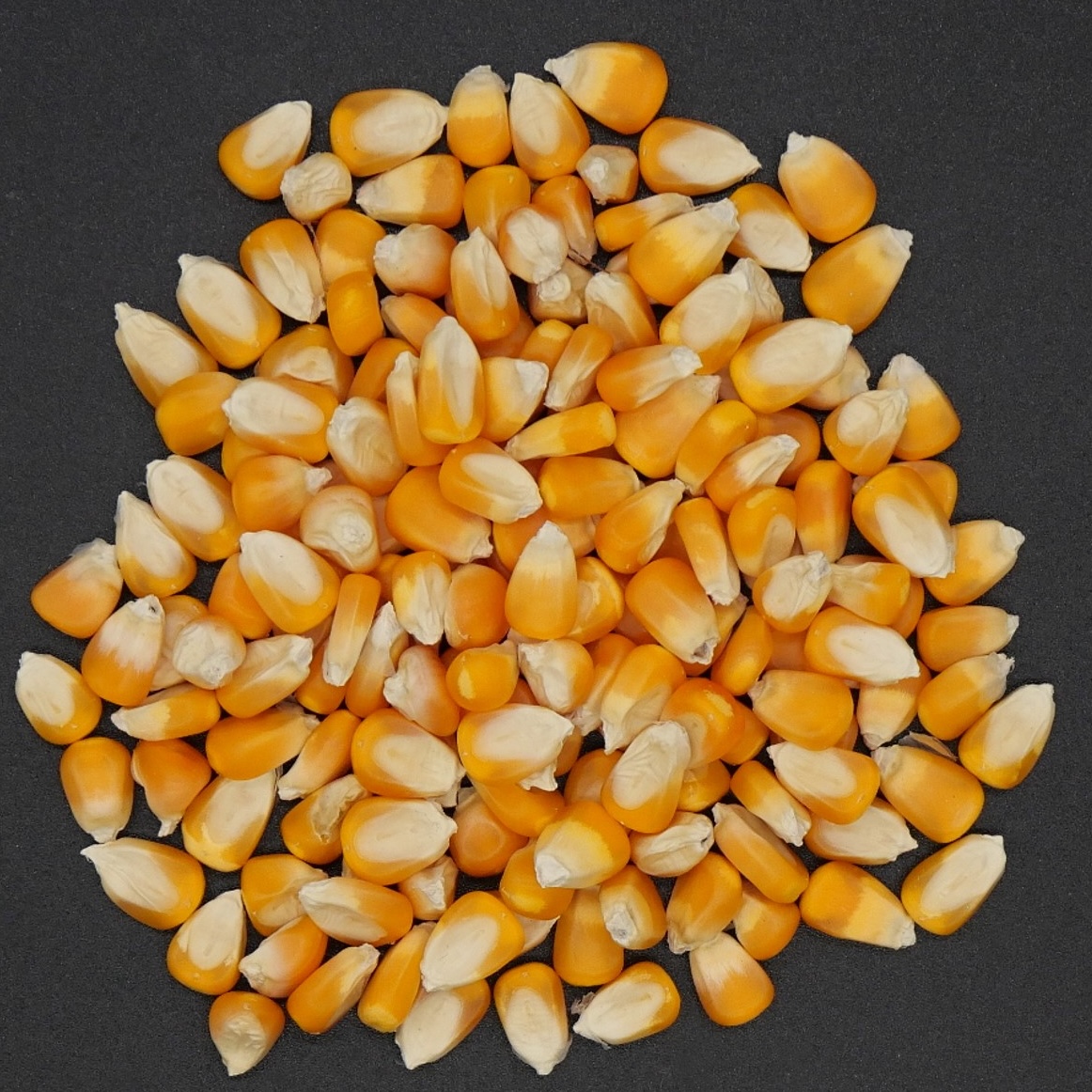
Main Article Content
บทคัดย่อ
ความเป็นมาและวัตถุประสงค์: การทำลายของหนอนกระทู้ข้าวโพดลายจุดส่งผลให้การผลิตข้าวโพดเลี้ยงสัตว์ลดลงอย่างต่อเนื่อง การเคลือบเมล็ดร่วมกับสารกำจัดศัตรูพืชอาจช่วยป้องกันต้นกล้าในระยะแรกที่เจริญเติบโตได้ งานวิจัยนี้มีวัตถุประสงค์เพื่อทดสอบการเคลือบเมล็ดด้วยสารพอลิเมอร์ PRIME GREEN G106 (PG) ร่วมกับสารกำจัดแมลงศัตรูพืชที่ชื่อว่า emamectin benzoate (EB)
วิธีดำเนินการวิจัย: นำเมล็ดพันธุ์ข้าวโพดเลี้ยงสัตว์มาเคลือบตามทรีตเมนต์ (T) ดังนี้ (T1) เมล็ดไม่เคลือบ (T2) เคลือบสาร PG และ (T3)–(T7) เคลือบสาร PG ผสมสาร EB ความเข้มข้น 0.01 0.05 0.1 0.5 และ 1.0 เปอร์เซ็นต์ ประเมินความงอก ความเร็วในการงอก การเจริญเติบโตของต้นกล้า และการดูดซึมสารออกฤทธิ์ภายในต้นกล้า
ผลการวิจัย: การเคลือบเมล็ดพันธุ์ด้วยสารเคลือบ PG ผสมสาร EB ทุกความเข้มข้น ไม่ทำให้เมล็ดมีความงอกแตกต่างทางสถิติเมื่อเปรียบเทียบกับเมล็ดพันธุ์ไม่เคลือบ (P > 0.05) อย่างไรก็ตาม การเคลือบเมล็ดด้วยสาร PG ผสมสาร EB ที่ความเข้มข้น 0.05–1.0 เปอร์เซ็นต์ มีแนวโน้มทำให้การเจริญเติบโตของต้นกล้าดีกว่าการเคลือบด้วยทรีตเมนต์อื่น นอกจากนี้ ผลจากการศึกษาการดูดซึมสารออกฤทธิ์ พบว่า ต้นกล้าสามารถดูดสารที่เคลือบเมล็ดผ่านระบบท่อลำเลียงในระหว่างการเจริญเติบโตได้
สรุป: การเคลือบเมล็ดพันธุ์ด้วยสาร PG ร่วมกับการผสมสาร EB ความเข้มข้น 0.05–1.0 เปอร์เซ็นต์ สามารถนำมาใช้เคลือบเมล็ดพันธุ์ข้าวโพดเลี้ยงสัตว์ได้โดยยังคงความงอก ความงอกหลังการเร่งอายุ และการเจริญเติบโตของต้นกล้าได้สูง ซึ่งจะใช้เป็นข้อมูลเบื้องต้นก่อนการทดสอบประสิทธิภาพของสารออกฤทธิ์กับการเข้าทำลายของหนอนกระทู้ข้าวโพดลายจุดต่อไป
Article Details

อนุญาตภายใต้เงื่อนไข Creative Commons Attribution-NonCommercial-NoDerivatives 4.0 International License.
เอกสารอ้างอิง
Afzal, I., T. Javed, M. Amirkhani and A.G. Taylor. 2020. Modern seed technology: Seed coating delivery systems for enhancing seed and crop performance. Agriculture. 10(11): 526. https://doi.org/10.3390/agriculture10110526.
Amirkhani, M., H.S. Mayton, A.N. Netravali and A.G. Taylor. 2019. A seed coating delivery system for bio-based biostimulants to enhance plant growth. Sustainability. 11(19): 5304. https://doi.org/10.3390/su11195304.
Calabrese, E.J. and L.A. Baldwin. 2002. Defining hormesis. Hum. Exp. Toxicol. 21(2): 91–97. https://doi.org/10.1191/0960327102ht217oa.
Calabrese, E.J. and L.A. Baldwin. 2003. Hormesis: The dose-response revolution. Annu. Rev. Pharmacol. Toxicol. 43: 175–197. https://doi.org/10.1146/annurev.pharmtox.43.100901.140223.
Ellis, R.H. and E.H. Roberts. 1980. Improved equations for the prediction of seed longevity. Ann. Bot. 45(1): 13–30. https://doi.org/10.1093/oxfordjournals.aob.a085797.
Hruska, A.J. 2019. Fall armyworm (Spodoptera frugiperda) management by smallholders. CAB. Rev. 14: 43. https://doi.org/10.1079/PAVSNNR201914043.
International Seed Testing Association. 2018. International Rules for Seed Testing. ISTA, Bassersdorf, Switzerland. 298 pp.
Kangsopa, J. and P. Jeephet. 2021. Effect of seed coating with metalaxyl, captan and mancozeb after primed on germination and seedling growth of field corn seeds. Thai Science and Technology Journal. 29(3): 441–453. https://doi.org/10.14456/tstj.2021.38. (in Thai)
Mobli, A., A. Matloob and B.S. Chauhan. 2020. Glyphosate-induced hormesis: Impact on seedling growth and reproductive potential of common sowthistle (Sonchus oleraceus). Weed Sci. 68(6): 605–611. https://doi.org/10.1017/wsc.2020.77.
Muraro, D.S., D.O.A. Neto, R.H. Kanno, I.S. Kaiser, O. Bernardi and C. Omoto. 2021. Inheritance patterns, cross-resistance and synergism in Spodoptera frugiperda (Lepidoptera: Noctuidae) resistant to emamectin benzoate. Pest Manag. Sci. 77(11): 5049–5057. https://doi.org/10.1002/ps.6545.
Nakhon Sawan Field Crops Research Center. 2023. Fall Armyworm. Available Source: https://www.doa.go.th/fc/nakhonsawan/?p=1332, July 12, 2024. (in Thai)
National Center for Biotechnology Information. 2024. PubChem compound summary for CID 11650986: Emamectin benzoate. Available Source: https://pubchem.ncbi.nlm.nih.gov/Emamectin-benzoate, July 12, 2024.
Office of Agricultural Economics. 2023. Maize seed. Available Source: https://www.oae.go.th/view/1/TH-TH, July 9, 2024. (in Thai)
Office of Agricultural Regulation. 2023. The controlled seed for commercial as classified by plant type. Available Source: https://www.doa.go.th/ard/?page_id=1443, July 10, 2024. (in Thai)
Priestley, D.A. 1986. Seed Aging: Implications of Seed Storage and Persistence in the Soil. Cornell University Press, Ithaca, New York, USA. 304 pp.
Puetipongkun, A., K. Bunrut, N. Junsang and P. Kueamanee. 2023. Maize. Available Source: https://www.opsmoac.go.th, July 20, 2023.
Salanenka, Y.A. and A.G. Taylor. 2008. Seed coat permeability and uptake of applied systemic compounds. Acta Hortic. 782: 151–154. https://doi.org/10.17660/ActaHortic.2008.782.16.
Siri, B. 2015. Seed Conditioning and Seed Enhancements. Klungnana Vitthaya Press, Khon Kaen, Thailand. 239 pp. (in Thai)
Su, W.H., S.A. Fennimore and D.C. Slaughter. 2019. Fluorescence imaging for rapid monitoring of translocation behaviour of systemic markers in snap beans for automated crop/weed discrimination. Biosyst. Eng. 186: 156–167. https://doi.org/10.1016/j.biosystemseng.2019.07.009.
Taiz, L. and E. Zeiger. 2002. Plant Physiology. 3rd edition. Sinauer Associates, Massachusetts, USA. 623 pp.
Timkratok, W. 2021. Application of modern seed enhancement technology. Available Source: www.eastwestseed.com, August 14, 2021. (in Thai)
Wang, Z., M. Amirkhani, S.A.G. Avelar, D. Yang and A.G. Taylor. 2020. Systemic uptake of fluorescent tracers by soybean (Glycine max L. Merr.) seed and seedlings. Agriculture. 10(6): 248. https://doi.org/10.3390/agriculture10060248.
Wilson, T.T. and R.L. Geneve. 2004. The impact of film coating on initial water uptake and imbibitional chilling injury in high and low vigor sh2 sweet corn seeds. SST. 32(2): 271–281. https://doi.org/10.15258/sst.2004.32.2.01.
Woltz, J.M. and D.M. TeKrony. 2001. Accelerated aging test for corn seed. Seed Technology. 23(1): 21–34.
Wu, X., L. Zhang, C. Yang, M. Zong, Q. Huang and L. Tao. 2016. Detection on emamectin benzoate-induced apoptosis and DNA damage in Spodoptera frugiperda Sf-9 cell line. Pestic. Biochem. Physiol. 126: 6–12. https://doi.org/10.1016/j.pestbp.2015.06.009.
Zhang, K., J. He, L. Liu, R. Xie, L. Qiu, X. Li, W. Yuan, K. Chen, Y. Yin, M.M.M. Kyaw, A.A. San, S. Li, X. Tang, C. Fu and M. Li. 2020. A convenient, rapid and efficient method for establishing transgenic lines of Brassica napus. Plant Methods. 16: 43. https://doi.org/10.1186/s13007-020-00585-6.
