
ผลของปุ๋ยหมักมูลแพะผสมชีวภัณฑ์ไตรโคเดอร์มาต่อการเจริญเติบโตและผลผลิตของผักกาดขาวปลี
Article Sidebar
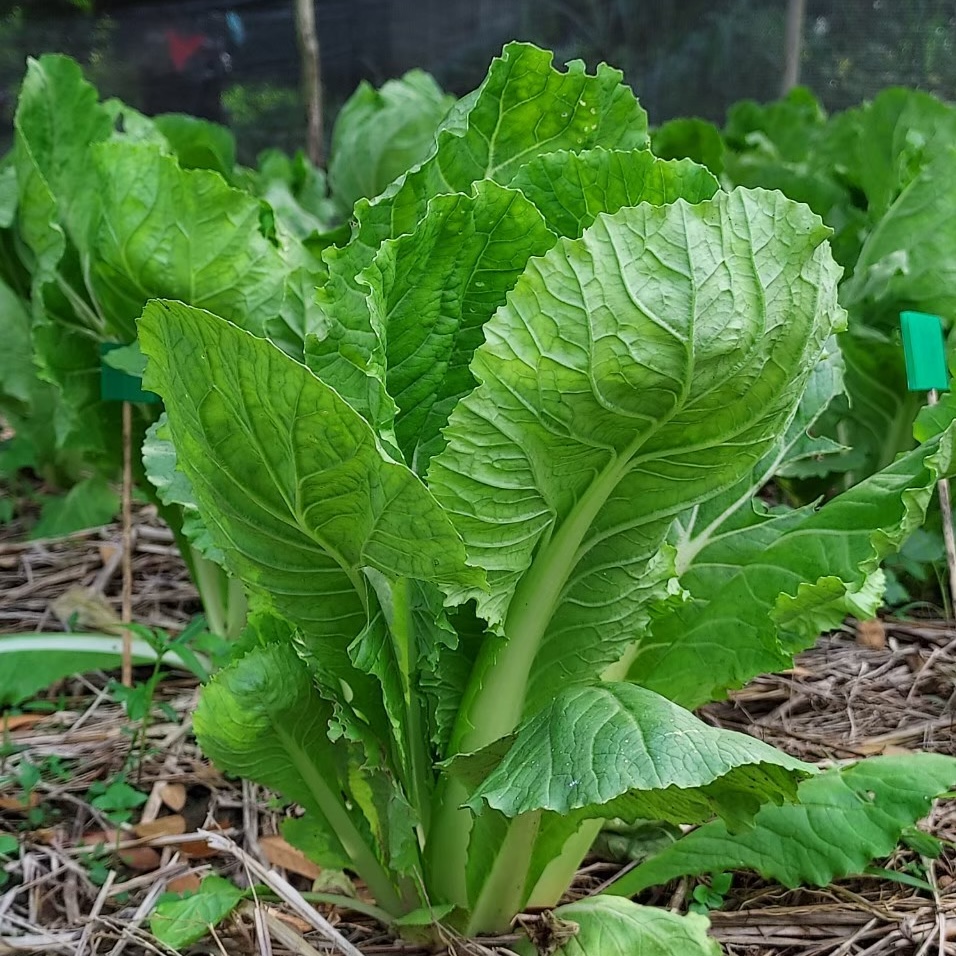
Main Article Content
บทคัดย่อ
ความเป็นมาและวัตถุประสงค์: การใช้ปุ๋ยหมักมูลแพะร่วมกับชีวภัณฑ์เชื้อราไตรโคเดอร์มาได้รับความสนใจและถูกนำไปใช้อย่างแพร่หลายในการทำเกษตรอินทรีย์ งานวิจัยนี้มีวัตถุประสงค์เพื่อศึกษาผลของปุ๋ยหมักมูลแพะผสมชีวภัณฑ์ไตรโคเดอร์มาต่อการเจริญเติบโตและผลผลิตของผักกาดขาวปลี
วิธีดำเนินการวิจัย: วางแผนการทดลองแบบบล็อกสมบูรณ์เชิงสุ่ม (Randomized Complete Block Design, RCBD) แบ่งเป็น 6 ทรีตเมนต์ ทรีตเมนต์ละ 20 ต้น ประกอบด้วย T1: กลุ่มควบคุม (ปุ๋ยเคมีสูตร 16-16-16), T2: ปุ๋ยหมักมูลแพะ 100%, T3: ชีวภัณฑ์ไตรโคเดอร์มา 100%, T4: ชีวภัณฑ์ไตรโคเดอร์มา 50% + ปุ๋ยหมักมูลแพะ 50%, T5: ชีวภัณฑ์ไตรโคเดอร์มา 75% + ปุ๋ยหมักมูลแพะ 25% และT6: ชีวภัณฑ์ไตรโคเดอร์มา 25%+ปุ๋ยหมักมูลแพะ 75% บันทึกผลการเจริญเติบโตของผักกาดขาวปลีทุก 7 วัน หลังย้ายปลูก
ผลการวิจัย: การเจริญเติบโตของต้นผักกาดขาวปลีในทรีตเมนต์ที่ 4 ชีวภัณฑ์ไตรโคเดอร์มา 50% + ปุ๋ยหมักมูลแพะ 50% มีความสูงเฉลี่ยที่อายุ 28 วันหลังย้ายปลูก เท่ากับ 29.10 เซนติเมตร ส่วนในระยะเก็บเกี่ยวที่อายุ 50 วันหลังย้ายปลูก ต้นผักกาดขาวปลีมีความยาวทรงพุ่ม ความกว้างทรงพุ่ม จำนวนใบ และน้ำหนักสดของผลผลิต เท่ากับ 34.00 เซนติเมตร, 30.90 เซนติเมตร, 20.30 ใบ และ 315.24 กรัม ตามลำดับ
สรุป: การใช้ปุ๋ยหมักมูลแพะ 50% ร่วมกับชีวภัณฑ์ไตรโคเดอร์มา 50% ช่วยเพิ่มปริมาณผลผลิตของผักกาดขาวปลีได้ดีที่สุด สามารถนำมาส่งเสริมให้เกษตรกรนำใช้เทดแทนปุ๋ยเคมีเพื่อลดต้นทุนการผลิตผักกาดขาวปลีได้
Article Details

อนุญาตภายใต้เงื่อนไข Creative Commons Attribution-NonCommercial-NoDerivatives 4.0 International License.
เอกสารอ้างอิง
Asghar, W. and R. Kataoka. 2021. Effect of co-application of Trichoderma spp. with organic composts on plant growth enhancement, soil enzymes and fungal community in soil. Arch. Microbiol. 203: 4281–4291. https://doi.org/10.1007/s00203-021-02413-4.
Athinuwat, D., J. Sottiwilaiphong and W. Chuaboon. 2015. Plant extracts controlling soft rot disease of Chinese cabbage. Thai Journal of Science and Technology. 4(3): 244–254. (in Thai)
Batubara, S.F., A.B. Santoso and K.E. Ramija. 2021. Potential of goat manure as organic fertilizer in North Sumatra. BIO Web Conf. 33: 05001. https://doi.org/10.1051/bioconf/20213305001.
Butay, J.S. 2018. Growth and yield performance of lettuce (Lactuca sativa L.) applied with different concentrations of fermented goat manure as bio-fertilizer. J. Bio. & Env. Sci. 13(1): 269–277.
Chamswang, C. 2020. Trichoderma Antagonistic Fungi for Plant Disease Control. Department of Plant Pathology, Faculty of Agriculture at Kamphaeng Saen, Kasetsart University Kamphaeng Saen Campus, Nakhon Pathom, Thailand. 556 p. (in Thai)
Fitriani, D., F. Podesta., R. Harini and F. Fahrurrozi. 2023. Growth and yield response of black soybean to bioactivator- enriched goat manures amended with Trichoderma. Int. J. Agric. Technol. 19(1): 53–62.
Ji, S., L. Zhihua, B. Liu, Y. Wang and J. Wang. 2020. The effect of Trichoderma biofertilizer on the quality of flowering Chinese cabbage and the soil environment. Sci. Hortic. 262: 109069. https://doi.org/10.1016/j.scienta.2019.109069.
Kamolmanit, B. and P. Lawongsa. 2021. Influence of goat manure biochar compost on soil organic carbon accumulation and aggregate formation. Khon Kaen Agr. J. 49(5): 1194–1204. https://doi.org/10.14456/kaj.2021.106. (in Thai)
Katoh, M., W. Kitahara and T. Sato. 2016. Role of inorganic and organic fractions in animal manure compost in lead immobilization and microbial activity in soil. Appl. Environ. Soil Sci. 2016(1): 7872947. https://doi.org/10.1155/2016/7872947.
Lasmini, S.A., N. Edy, M. Yunus, B.H. Nasir and N. Khasanah. 2022. Effect of the combined application of manure compost and Trichoderma sp. on production parameters and stem rot disease incidence of shallot. Chil. J. Agric. Anim. Sci. 38(3): 335–344. http://dx.doi.org/10.29393/chjaa38-31ohvl10031.
Liu, L., Y. Xu, H. Cao, Y. Fan, K. Du, X. Bu and D. Gao. 2022. Effect of Trichoderma harzianum biofertilizer on growth, yield, and quality of Bupleurum chinense. Plant Direct. 6(11): e461. https://doi.org/10.1002/pld3.461.
Lu, J., J. Wang, Q. Gao, D. Li, Z. Chen, Z. Wei, Y. Zhang and F. Wang. 2021. Effect of microbial inoculation on carbon preservation during goat manure aerobic composting. Molecules. 26(15): 4441. https://doi.org/10.3390/molecules26154441.
Nokham, N., P. Yusuk, N. Boonmala and S. Kabbua. 2021. Final Report. The Integrative Research for Increase Efficiency of Growing Organic Vegetables in the Royal Project Areas. Highland Research and Development Institute (Public Organization). Available Source: https://research.hrdi.or.th/research/detail/547. August 6, 2024. (in Thai)
Saputra, D., M. Handajaningsih and B. Hermawan. 2017. Effect of incubation of goat manure on growth and yield of sweet corn. Akta Agrosia. 20(2): 43–47. https://doi.org/10.31186/aa.20.2.43-47.
Thaha, A.R., U. Umrah, A. Asrul, A. Rahim, F. Fajir and N. Nurzakia. 2020. The role of local isolates of Trichoderma sp. as a decomposer in the substrate of cacao pod rind (Theobroma cacao L.). AIMS Agriculture and Food. 5(4): 825–834. https://doi.org/10.3934/agrfood.2020.4.825.
Tisa, S. and J. Kumchai. 2022. Heterosis in Chinese cabbage and selection of heat-tolerant varieties. Khon Kaen Agr. J. 50(2): 330-339. (in Thai)
Treemek, W. and P. Kaewtaphan. 2021. Effect of manure and bio-charcoal on growth of green oak lettuce. In: Proc. of the 3rd National Conference in Science, Technology and Innovation 2021. March 26, 2021. Loei Rajabhat University, Loei. (in Thai)
Vinci, G., V. Cozzolino, P. Mazzei, H. Monda, R. Spaccini and A. Piccolo. 2018. An alternative to mineral phosphorus fertilizers: The combined effects of Trichoderma harzianum and compost on Zea mays, as revealed by 1H NMR and GC-MS metabolomics. PLoS ONE. 13(12): e0209664. https://doi.org/10.1371/journal.pone.0209664.
Washaya, S. and D. Washaya. 2023. Benefits, concerns and prospects of using goat manure in sub-Saharan Africa. Pastoralism. 13: 28. https://doi.org/10.1186/s13570-023-00288-2.
Yogita, P., V. Prasad, V. Bahadur and T. Gaddam. 2022. Effect of inorganic, organic manures and Trichoderma on growth, quality and yield of ridge gourd (Luffa acutangular) cv. Kashi Shivani. Pharma Innov. 11(6): 1793–1797.
