
ผลของเอทิลีนและบราสสิโนสเตียรอยด์ในการแสดงออกของเพศดอกและผลผลิตของแตงกวา (Cucumis sativus L.)
Article Sidebar
Main Article Content
บทคัดย่อ
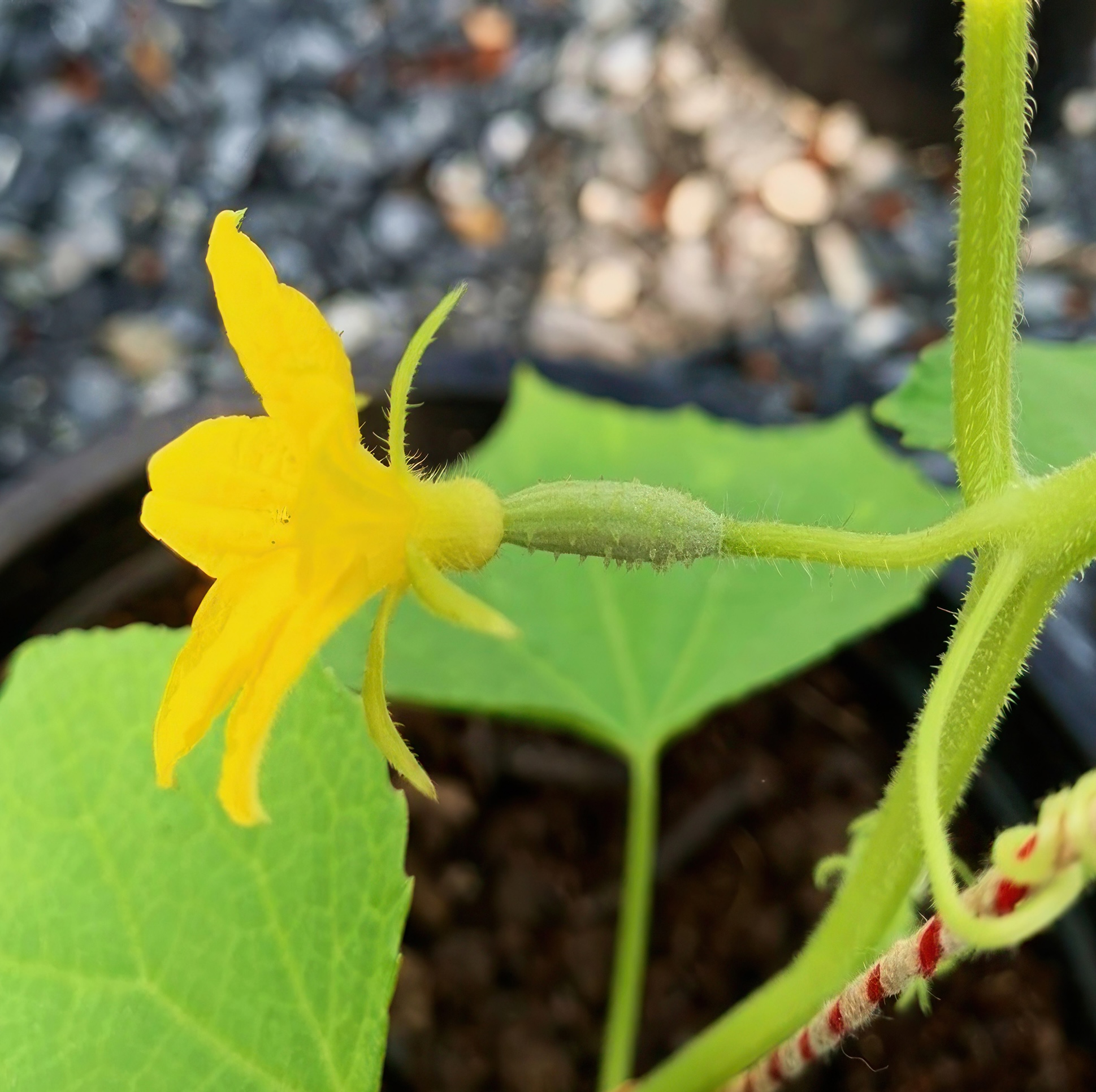
ความเป็นมาและวัตถุประสงค์: แตงกวาเป็นพืชผักเศรษฐกิจสำคัญของไทย แตงกวามีดอกแยกเพศ การเพิ่มจำนวนดอกเพศเมียเป็นหนึ่งในปัจจัยที่นำไปสู่การเพิ่มจำนวนผลและผลผลิตรวม การศึกษานี้มุ่งเน้นการเพิ่มจำนวนดอกเพศเมียและผลผลิตแตงกวา โดยใช้สารควบคุมการเจริญเติบโตของพืชในกลุ่มเอทิลีนและบราสสิโนสเตียรอยด์
วิธีดำเนินการวิจัย: พ่นสารควบคุมการเจริญเติบโต ประกอบด้วย น้ำกลั่น (ชุดควบคุม) สารละลายอีทีฟอน 200 มิลลิกรัมต่อลิตร สารละลาย 24-อิพิบราสสิโนไลด์ (EBR) 10–8 M และสารละลายผสมอีทีฟอน+EBR ให้ต้นแตงกวาในระยะที่มีใบจริง 4 ใบ สัปดาห์ละ 1 ครั้งต่อเนื่อง 4 สัปดาห์บันทึกข้อมูลการออกดอก ปริมาณและคุณภาพผลผลิต
ผลการวิจัย: สารละลายอีทีฟอนสามารถเพิ่มจำนวนดอกเพศเมียและผลผลิตอย่างมีนัยสำคัญทางสถิติ (P < 0.05) และชะลอการลดลงของดัชนีความเขียวใบได้ดีกว่าการใช้ EBR การพ่นอีทีฟอน+EBR สามารถเพิ่มผลผลิตต่อต้นของแตงกวาได้เช่นกัน ในขณะที่ การพ่น EBR เพียงชนิดเดียวสามารถเพิ่มอัตราส่วนดอกเพศเมียต่อเพศผู้มากกว่าการใช้สารละลายอีทีฟอน+EBR ทั้งนี้ การใช้สารละลายทั้งสามชนิดไม่ส่งผลต่ออัตราการหายใจและการผลิตเอทิลีนของต้นแตงกวา ปริมาณของแข็งที่ละลายน้ำได้ทั้งหมดในผล และขนาดผลแตงกวา
สรุป: การพ่นเอทิลีนและบราสสิโนสเตียรอยด์มีศักยภาพในการเพิ่มจำนวนดอกเพศเมียในแตงกวา นำไปสู่การเพิ่มจำนวนผลผลิตแตงกวา และอาจใช้เป็นข้อมูลในการปรับปรุงพันธุ์ได้
Article Details

อนุญาตภายใต้เงื่อนไข Creative Commons Attribution-NonCommercial-NoDerivatives 4.0 International License.
เอกสารอ้างอิง
Aoyisaranukul, B. 2004. Study of the Correlation between Leaf Greenness, Chlorophyll Content, Leaf Nitrogen Content, and Net Photosynthetic Rate of Dendrobium sp. cv. Sonia and Bomjo. Undergraduate Special Problem. Kasetsart University, Kamphaeng Saen Campus, Nakhon Pathom. (in Thai)
Arabsalmani, K., A.H. Jalali and J. Hasanpour. 2012. Control of sex expression in Cantaloupe (Cucumis melo L.) by ethephon application at different growth stages. Int. J. AgriSci. 2(7): 605–612.
Boualem, A., C. Troadec, C. Camps, A. Lemhemdi, H. Morin, M.A. Sari, R. Fraenkel-Zagouri, I. Kovalski, C. Dogimont, R. Perl-Treves and A. Bendahmane. 2015. A cucurbit androecy gene reveals how unisexual flowers develop and dioecy emerges. Science. 350(6261): 688–691. https://doi.org/10.1126/science.aac8370.
Cebrián, G., J. Iglesias-Moya, J. Romero, C. Martínez, D. Garrido and M. Jamilena. 2022. The ethylene biosynthesis gene CpACO1A: A new player in the regulation of sex determination and female flower development in Cucurbita pepo. Front. Plant Sci. 12: 817922. https://doi.org/10.3389/fpls.2021.817922.
Chiatai. 2021. Cultivation guide for Chia Tai hybrid cucumber and hybrid Armenian cucumber: Dark green, cylindrical shape, disease resistant. Available Source: https://www.chiataiseed.com/wp–content/uploads/2021/08/khumux–taengkwa–taeng–ran–ceiy–ti–P1–14_CREATE_compressed.pdf, Jan 1, 2021. (in Thai)
Engin, H. and Z. Gökbayrak. 2019. Effects of plant growth regulators on sex expression and flower development in pomegranates. Erwerbs-Obstbau. 61: 23–27. https://doi.org/10.1007/s10341-018-0384-8.
Fariduddin, Q., R.R.A.E. Khalil, B.A. Mir, M. Yusuf and A. Ahmad. 2013. 24–Epibrassinolide regulates photosynthesis, antioxidant enzyme activities and proline content of Cucumis sativus under salt and/or copper stress. Environ. Monit. Assess. 185(9): 7845–7856. https://doi.org/10.1007/s10661-013-3139-x.
Fu, F.Q., W.H. Mao, K. Shi, Y.H. Zhou, T. Asami and J.Q. Yu. 2008. A role of brassinosteroids in early fruit development in cucumber. J. Exp. Bot. 59(9): 2299–2308. https://doi.org/10.1093/jxb/ern093.
Goldammer, T. 2025. Greenhouse Management: A Guide to Operations and Technology. 3rd edition. Apex Publishers, Virginia, USA. 506 pp.
Guan, W., E.T. Maynard, B. Aly, J. Zakes, D.S. Egel and L.L. Ingwell. 2019. Parthenocarpic cucumber cultivar evaluation in high-tunnel production. HortTechnology. 29(5): 634–642. https://doi.org/10.21273/HORTTECH04370-19.
Hartwig, T., G.S. Chuck, S. Fujioka, A. Klempien, R. Weizbauer, D.P.V. Potluri, S. Choe, G.S. Johal and B. Schulz. 2011. Brassinosteroid control of sex determination in maize. PNAS. 108(49): 19814–19819. https://doi.org/10.1073/pnas.1108359108.
Information and Communication Technology Center. 2019. Monthly report of agricultural production data collection system at the sub-district level. Department of Agricultural Extensions. Available Source: http://www.agriinfo.doae.go.th/year62/plant/rortor/veget/24.pdf, April 12, 2020. (in Thai)
Iqbal, N., N.A. Khan, A. Ferrante, A. Trivellini, A. Francini and M.I.R. Khan 2017. Ethylene role in plant growth, development and senescence: Interaction with other phytohormones. Front. Plant Sci. 8: 475. https://doi.org/10.3389/fpls.2017.00475.
Jutamanee, K. 2018. Physiological Responses to Plant Hormones. 1st edition. Thammasat University Press, Bangkok, Thailand. 374 pp. (in Thai)
Kamalanathan, S. 1972. Studies on sex expression and sex ratio in ash-gourd (Benincasa hispida L.). Madras Agric. J. 59: 486–495.
Kuprasit, A. 2013. Prolonging the shelf life of Gros Michel banana using ethylene absorbents. Available Source: https://www.tistr.or.th/tistrblog, April 12, 2020. (in Thai)
Kusumiyati, S.N. Fajri, W. Sutari and J.S. Hamdani. 2022. Growth, yield, and fruit quality responses of three cucumber (Cucumis sativus L.) varieties to different ethephon concentrations. Emir. J. Food Agric. 34(1): 1–8. https://doi.org/10.9755/ejfa.2022.v34.i1.2813.
Latimer, J.G. and H.L. Scoggins. 2012. Using plant growth regulators on containerized herbaceous perennials. Available Source: http://hdl.handle.net/10919/48112, July 3, 2014.
Lee, B.R., R. Zaman, V.H. La, S.H. Park and T.H. Kim. 2021. Ethephon-induced ethylene enhances protein degradation in source leaves, but its high endogenous level inhibits the development of regenerative organs in Brassica napus. Plants. 10(10): 1993. https://doi.org/10.3390/plants10101993.
Manzano, S., C. Martinez, J.M García, Z. Megías and M. Jamilena. 2014. Involvement of ethylene in sex expression and female flower development in watermelon (Citrullus lanatus). Plant Physiol. Biochem. 85: 96–104. https://doi.org/10.1016/j.plaphy.2014.11.004.
Manzano, S., C. Martínez, Z. Megías, D. Garrido and M. Jamilena. 2013. Involvement of ethylene biosynthesis and signalling in the transition from male to female flowering in the monoecious Cucurbita pepo. J. Plant Growth Regul. 32(4): 789–798. https://doi.org/10.1007/s00344-013-9344-6.
Manzano, S., C. Martínez, Z. Megías, P. Gomez, D. Garrido and M. Jamilena. 2011. The role of ethylene and brassinosteroids in the control of sex expression and flower development in Cucurbita pepo. Plant Growth Regul. 65: 213–221. https://doi.org/10.1007/s10725-011-9589-7.
Martínez, C. and M. Jamilena. 2021. To be a male or a female flower, a question of ethylene in cucurbits. Curr. Opin. Plant Biol. 59: 101981. https://doi.org/10.1016/j.pbi.2020.101981.
Martínez, C., S. Manzano, Z. Megías, D. Garrido, B. Picó and M. Jamilena. 2013. Involvement of ethylene biosynthesis and signalling in fruit set and early fruit development in zucchini squash (Cucurbita pepo L.). BMC Plant Biol. 13: 139. https://doi.org/10.1186/1471-2229-13-139.
Murad, H. and M.A. Nyc. 2016. Evaluating the potential benefits of cucumbers for improved health and skin care. J. Aging Res. Clin. Pract. 5(3): 139–141. https://doi.org/10.14283/jarcp.2016.108.
Pan, J., G. Wang, H. Wen, H. Du, H. Lian, H. He, J. Pan and R. Cai. 2018. Differential gene expression caused by the F and M loci provides insight into ethylene-mediated female flower differentiation in cucumber. Front. Plant Sci. 9: 1091. https://doi.org/10.3389/fpls.2018.01091.
Papadopoulou, E. and R. Grumet. 2005. Brassinosteriod-induced femaleness in cucumber and relationship to ethylene production. HortScience. 40(6): 1763–1767. https://doi.org/10.21273/HORTSCI.40.6.1763.
Pawełkowicz, M., P. Osipowski, M. Wojcieszek, R. Wóycicki, J. Witkowicz, D. Hincha and Z. Przybecki. 2012. Identification and characterization of genes connected with flower morphogenesis in cucumber. BioTechnologia. 93(3): 123–134. https://doi.org/10.5114/bta.2012.46588.
Pike, L.M. and C.E. Peterson. 1969. Inheritance of parthenocarpy in the cucumber (Cucumis sativus L.). Euphytica. 18: 101–105. https://doi.org/10.1007/BF00021987.
Pongkarn, S. and A. Mongkolchaiyaphruek. 2020. Effects of temperature on quality and storage life of green pepper (Piper nigrum L.). Agricultural Sci. J. 51(2): 192–208. (in Thai)
Prasongsap, S. 2013. Cucumber. Available Source: http://hort.ezathai.org/?p=2219, May 1, 2020. (in Thai)
Rossouw, G., S. Rogiers, B. Holzapfel and L. Schmidtke. 2021. Auxin-type herbicide drift: Effects on grapevine leaf functioning and reproductive performance. IVES Technical Reviews. https://doi.org/10.20870/IVES-TR.2021.4869.
Sakthinathan, B., V. Swaminathan, P. Balasubramanian and T. Sivakumar. 2017. Effect of ethrel on sex expression in pumpkin (Cucurbita moschata L.). Int. J. Chem. Stud. 5(6): 964–966.
Shafeek, M.R., Y.I. Helmy, A.A. Ahmed and A.A. Ghoname. 2016. Effect of foliar application of growth regulators (GA3 and ethereal) on growth, sex expression and yield of summer squash plants (Cucurbita peop L.) under plastic house condition. Int. J. ChemTech Res. 9(6): 70–76.
Szulc, P., J. Bocianowski, K. Nowosad, W. Zielewicz and J. Kobus-Cisowska. 2021. SPAD leaf greenness index: Green mass yield indicator of maize (Zea mays L.), genetic and agriculture practice relationship. Plants. 10(5): 830. https://doi.org/10.3390/plants10050830.
Tepkaew, T., O. Khamsuk, J. Chumpookam, W. Sonjaroon and K. Jutamanee. 2022. Exogenous brassinosteroids regulate mango fruit set through inflorescence development and pollen fertility. Hortic. Sci. Technol. 40(5): 481–495. https://doi.org/10.7235/HORT.20220043.
Thongampai, P. 1986. Plant Hormones and Synthetic Substances: Guidelines for Utilization in Thailand. Dynamic Publishing Co., Ltd., Bangkok, Thailand. 196 pp. (in Thai)
Vadigeri, B.G., B.B. Madalageri and M.N. Sheelavantar. 2001. Effect of ethrel and gibberellic acid on yield and quality of two cucumber varieties. KJAS. 14(3): 727–730.
Vardhini, B.V. and S.S.R. Rao. 2003. Amelioration of osmotic stress by brassinosteroids on seed germination and seedling growth of three varieties of sorghum. Plant Growth Regul. 41(1): 25–31. https://doi.org/10.1023/A:1027303518467.
Yin, T. and J.A. Quinn. 1995. Tests of a mechanistic model of one hormone regulating both sexes in Cucumis sativus (Cucurbitaceae). Am. J. Bot. 82(12): 1537–1546. https://doi.org/10.2307/2446182.
