
การใช้บรรจุภัณฑ์บรรยากาศดัดแปลงย่อยสลายได้ทางชีวภาพเพื่อยืดอายุการเก็บรักษาดอกไม้กินได้
Article Sidebar
Main Article Content
บทคัดย่อ
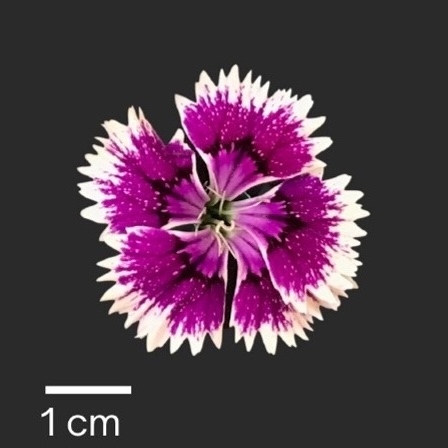
ความเป็นมาและวัตถุประสงค์: ดอกผีเสื้อเป็นดอกไม้กินได้ที่ได้รับความนิยม แต่เสื่อมเสียง่ายและมีอายุการเก็บรักษาสั้น งานวิจัยนี้มีวัตถุประสงค์เพื่อศึกษาการใช้ฟิล์มพลาสติกย่อยสลายได้ทางชีวภาพ ได้แก่ พอลิแลคติกแอซิด (Polylactic acid, PLA) และพอลิบิวทิลีนซัคซิเนต (Polybutylene succinate, PBS) เปรียบเทียบกับบรรจุภัณฑ์ทางการค้าจากพลาสติกฐานปิโตรเลียม ได้แก่ ฟิล์ม oriented polypropylene (OPP) และกล่องพอลิพรอพิลีน (Polypropylene, PP) ต่อคุณภาพและอายุการเก็บรักษาของดอกผีเสื้อ
วิธีดำเนินการวิจัย: ศึกษาผลของบรรจุภัณฑ์ ประกอบด้วย 1) กล่อง PP (ชุดควบคุม) 2) ฟิล์ม OPP 3) ฟิล์ม PLA และ 4) ฟิล์ม PBS วางแผนการทดลองแบบสุ่มสมบูรณ์ มี 3 ซ้ำ ซ้ำละ 9 ดอก เก็บรักษาที่ 4 ± 1 องศาเซลเซียส เป็นเวลา 14 วัน บันทึกผลทุก 2 วัน ได้แก่ ปริมาณ O2 และ CO2 ในบรรจุภัณฑ์ การสูญเสียน้ำหนัก การเปลี่ยนสีดอก และการประเมินคุณภาพทางประสาทสัมผัสด้านลักษณะปรากฏ
ผลการวิจัย: ฟิล์ม OPP, PLA และ PBS สร้างสภาพบรรยากาศดัดแปลงสมดุลไม่ต่างจากอากาศปกติในวันที่ 6 มีค่า O2 17.65 ± 0.83% และ CO2 1.90 ± 0.24% โดยดอกผีเสื้อที่บรรจุในฟิล์ม PBS สูญเสียน้ำหนักน้อยที่สุด 17.51 ± 6.38% แต่ในวันที่ 10 ดอกผีเสื้อที่บรรจุในฟิล์ม OPP มีค่าการสูญเสียน้ำหนักน้อยที่สุดเท่ากับ 21.66 ± 5.92%
สรุป: ฟิล์ม OPP สามารถยืดอายุการเก็บรักษาดอกผีเสื้อได้นานที่สุด 12 วัน เนื่องจากมีการยอมให้ผ่านของไอน้ำต่ำที่สุด รองลงมา ได้แก่ ฟิล์ม PBS และกล่อง PP จากผลการศึกษาพบว่า PBS ช่วยรักษาคุณภาพของดอกไม้กินได้และมีแนวโน้มที่จะนำมาใช้ทดแทนพลาสติกฐานปิโตรเลียมได้
Article Details

อนุญาตภายใต้เงื่อนไข Creative Commons Attribution-NonCommercial-NoDerivatives 4.0 International License.
เอกสารอ้างอิง
Casalini, T., F. Rossi, A. Castrovinci and G. Perale. 2019. A perspective on polylactic acid-based polymers use for nanoparticles synthesis and applications. Front. Bioeng. Biotechnol. 7: 259. https://doi.org/10.3389/fbioe.2019.00259.
Cheng, J., R. Gao, Y. Zhu and Q. Lin. 2024. Applications of biodegradable materials in food packaging: A review. Alex. Eng. J. 91: 70–83. https://doi.org/10.1016/j.aej.2024.01.080.
Demasi, S., M.G. Mellano, N.M. Falla, M. Caser and V. Scariot. 2021. Sensory profile, shelf life, and dynamics of bioactive compounds during cold storage of 17 edible flowers. Horticulturae. 7(7): 166. https://doi.org/10.3390/horticulturae7070166.
Fadda, A., A. Palma, E. Azara and S. D'Aquino. 2020. Effect of modified atmosphere packaging on overall appearance and nutraceutical quality of pot marigold held at 5 °C. Food Res. Int. 134: 109248. https://doi.org/10.1016/j.foodres.2020.109248.
Fang, Y. and M. Wakisaka. 2021. A review on the modified atmosphere preservation of fruits and vegetables with cutting–edge technologies. Agriculture. 11(10): 992. https://doi.org/10.3390/agriculture11100992.
Kasakun, N., P. Saobuntan, W. Watcharawipa, N. Kaewsangiem and S. Kamthai. 2017. Efficiency of packaging bag for extending storage-life of fresh-cut lettuce (Lactuca sativa L.). Agricultural Sci. J. 48(Suppl. 3): 375–378. (in Thai)
Kou, L., E.R. Turner and Y. Luo. 2012. Extending the shelf life of edible flowers with controlled release of 1-methylcyclopropene and modified atmosphere packaging. J. Food Sci. 77(5): S118–S193. https://doi.org/10.1111/j.1750-3841.2012.02683.x.
Lufu, R., A. Ambaw and U.L. Opara. 2019. The contribution of transpiration and respiration processes in the mass loss of pomegranate fruit (cv. Wonderful). Postharvest Biol. Technol. 157: 110982. https://doi.org/10.1016/j.postharvbio.2019.110982.
Mistriotis, A., A. Giannoulis, D. Giannopoulos and D. Briassoulis. 2011. Analysis of the effect of perforation on the permeability of biodegradable non-barrier films. Procedia Food Sci. 1: 32–38. https://doi.org/10.1016/j.profoo.2011.09.006.
Mistriotis, A., D. Briassoulis, A. Giannoulis and S. D’Aquino. 2016. Design of biodegradable bio-based equilibrium modified atmosphere packaging (EMAP) for fresh fruits and vegetables by using micro-perforated poly-lactic acid (PLA) films. Postharvest Biol. Technol. 111: 380–389. https://doi.org/10.1016/j.postharvbio.2015.09.022.
Nilsen-Nygaard, J., E.N. Fernández, T. Radusin, B.T. Rotabakk, J. Sarfraz, N. Sharmin, M. Sivertsvik, I. Sone and M.K. Pettersen. 2021. Current status of biobased and biodegradable food packaging materials: Impact on food quality and effect of innovative processing technologies. Compr. Rev. Food Sci. Food Saf. 20(2): 1333–1380. https://doi.org/10.1111/1541-4337.12715.
Parveen, S., F. Altaf, S. Farooq, A.U. Haq and I. Tahir. 2022. Phenylmethylsulfonyl fluoride pulse and cold storage independently or synergistically alleviate postharvest losses in Dianthus chinensis L. Sci. Hortic. 291: 110574. https://doi.org/10.1016/j.scienta.2021.110574.
Pêgo, R.G., C.V.A. Fiorini, T.A.D. Deco, R.C.C. Coneglian, M.C.G. Xavier and W.P.C. Ferreira. 2022. Postharvest of edible flowers. Pesq. Agropec. Bras. 57: e02953. https://doi.org/10.1590/S1678-3921.pab2022.v57.02953.
Samatova, S.U. and Y.Y. Mirzaeva. 2023. The intensity of respiration in plants depends on the environment, seasons, temperature, humidity depending on the change. Sci. Innov. 2(12): 836–839. https://doi.org/10.5281/zenodo.10402618.
Shantamma, S., E.M. Vasikaran, R. Waghmare, S. Nimbkar, J.A. Moses and C. Anandharamakrishnan. 2021. Emerging techniques for the processing and preservation of edible flowers. Future Foods. 4: 100094. https://doi.org/10.1016/j.fufo.2021.100094.
Stefaniak, A. and M.E. Grzeszczuk. 2019. Nutritional and biological value of five edible flower species. Not. Bot. Horti. Agrobot. Cluj Napoca. 47(1): 128–134. https://doi.org/10.15835/nbha47111136.
Taib, N.A.A.B., M.R. Rahman, D. Huda, K.K. Kuok, S. Hamdan, M.K.B. Bakri, M.R.M.B. Julaihi and A. Khan. 2023. A review on poly lactic acid (PLA) as a biodegradable polymer. Polym. Bull. 80: 1179–1213. https://doi.org/10.1007/s00289-022-04160-y.
Tengrang, S., K. Loylerd and S. Changprasert. 2012. Effects of additives on the properties of bioplastic packaging for prolong the storage life of rambutan. Agricultural Sci. J. 43(Suppl. 3): 375–378. (in Thai)
Tholen, D.J., V.G. Tejfel and A.N. Cox. 2000. From Earth, pp. 258–259. In A.N. Cox, ed. Allen’s Astrophysical Quantities. 4th edition. Springer, New York, USA.
