Creative marketing management on organic agriculture with farmer participation of Sampran model project
Article Sidebar
Main Article Content
Abstract
Background and Objective:
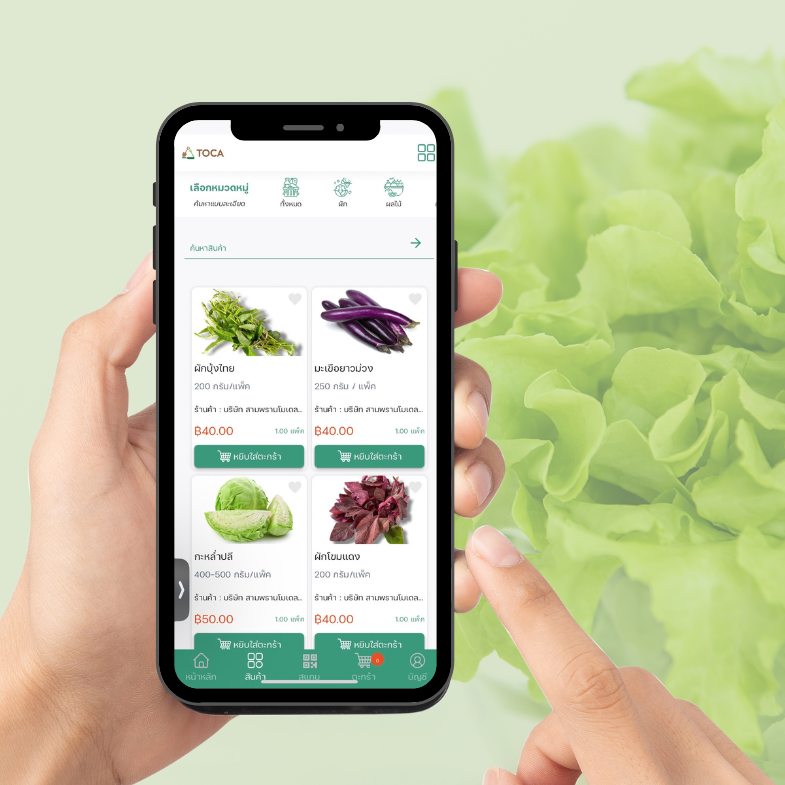
The Sampran model is a participatory approach that promotes organic agriculture through the development of market mechanisms and the TOCA platform, aiming to empower farmers as agri-entrepreneurs in the digital era. This study aimed to examine farmers’ demographic profiles, knowledge of marketing mix components, perceptions of the organic market, participation in the project, and their level of creative organic market management. It also aimed to compare these factors with market management practices.
Methodology:
Data were collected through structured interviews with 127 farmers participating in the Sampran model. Descriptive statistics and cross-tabulation analysis were used to examine the relationships among key variables.
Main Results:
Most farmers were male, with an average age of 54.65 years and organic farming experience of 8.15 years. They possessed high levels of knowledge, held positive perceptions of organic marketing, and actively participated in group meetings. However, their overall organic market management was moderate, with strengths in personnel and financial management. Limitations were observed in the use of equipment and digital technologies, particularly in the adoption of the TOCA platform.
Conclusions:
Farmers’ knowledge, perceptions, and participation were not significantly associated with their level of creative organic market management. Thus, the Sampran model should emphasize the strategic development of digital tools, particularly improving the accessibility and user-friendliness of TOCA, as well as enhancing farmers’ digital marketing skills. Demonstrating successful farmer experiences could motivate broader adoption of online platforms, fostering a more inclusive and sustainable organic market system.
Article Details

This work is licensed under a Creative Commons Attribution-NonCommercial-NoDerivatives 4.0 International License.
References
Best, J.W. 1977. Research in Education. 3rd edition. Prentice Hall, Inc., New Jersey, USA.
Hanrak, L. 2023. Development of an Online Platform for the Agricultural Wholesale Market. MS Thesis, Naresuan University, Phitsanulok. (in Thai)
Kotler, P. and K.L. Keller. 2016. Marketing Management. 15th edition. Prentice Hall, Inc., New Jersey, USA.
Namwong, S. 2024. Readiness of Agricultural Entrepreneurs to Elevate the Business to High-value Agriculture. MS Independent Study, Kasetsart University, Bangkok. (in Thai)
National Innovation Agency. 2023. Update on 6 agricultural innovation trends and 12 promising agri-startup rising stars to watch in 2023. Available Source: https://www.nia.or.th/AgTech-Trends-2023, April 9, 2025. (in Thai)
National Organic Development Board. 2022. Organic Agriculture Strategy 2023–2027 for Organic Farming Development. Bangkok, Thailand. (in Thai)
Pannok, T. and P. Treewannakul. 2018. Participation of farmers in Sampran model in Nakhon Pathom and Ratchaburi province. Agricultural Sci. J. 49(2): 179–192. (in Thai)
Petnoi, C. 2019. Study of Marketing Mix (7Ps) for Organic Market Extension in Phetchaburi Province. MS Thesis, Thammasat University, Pathum Thani. (in Thai)
Rattanasen, C., B. Yooprasert and S. Sanserm. 2024. An extension model for the sustainability of organic agricultural product marketing for farmers in lower north-eastern provincial cluster 2, Thailand. e-JODIL. 14(2): 196–212. (in Thai)
Saethow, P., S. Kanjanawanawan and A. Tongkaw. 2020. Management strategy (4M) of the ancient Chinese Chak-Ngeaw community market by first-order confirmatory factor analysis. DTC Journal. 14(3): 295–309. (in Thai)
Samutsri, M. 2015. Problems in Fiscal Management of Subdistrict Administrative Organizations in Maha Sarakham. MPA Thesis, Mahasarakham Rajabhat University, Maha Sarakham. (in Thai)
Sanitchua, A. 2016. The Performance Study of the Sampran Model in Nakhonpathom Province. MPolSc Independent Study, Thammasat University, Bangkok. (in Thai)
Thai Health Promotion Foundation. 2018. Sampran model creates a balance between health and environment. Available Source: https://www.thaihealth.or.th/?p=238184, March 11, 2025. (in Thai)
Thai Organic Consumer Association. 2020. About Thai Organic Consumer Association. Available Source: https://toca.or.th/index.php/about/, March 11, 2025. (in Thai)
Treewannakul, P., M. Rengkounkway, S. Sangtaewtim, A. Navaraj and C. Mengkred. 2019. A Lesson Learned from Participatory Driving on Organic Agriculture of Farmers in Value Chain Sampran Model. Complete Research Report. Thailand Research Fund. Available Source: https://digital.library.tu.ac.th/tu_dc/frontend/Info/item/dc:175973, March 11, 2025. (in Thai)
Uthaiwattananon, A. and T. Nilbai. 2023. Factors influencing consumer purchase decisions for organic food in Bangkok metropolitan region. Ramkhamhaeng University Journal: Graduate School. 6(2): 82–94. (in Thai)
