Evaluation of phytochemical compositions, total phenolic contents and antioxidant activities in different solvent maceration techniques of Zingiber cassumunar Roxb., Curcuma longa L. and Zingiber officinale Roscoe
Keywords:
Phlai, Turmeric, Ginger, Phytochemical, AntioxidantAbstract
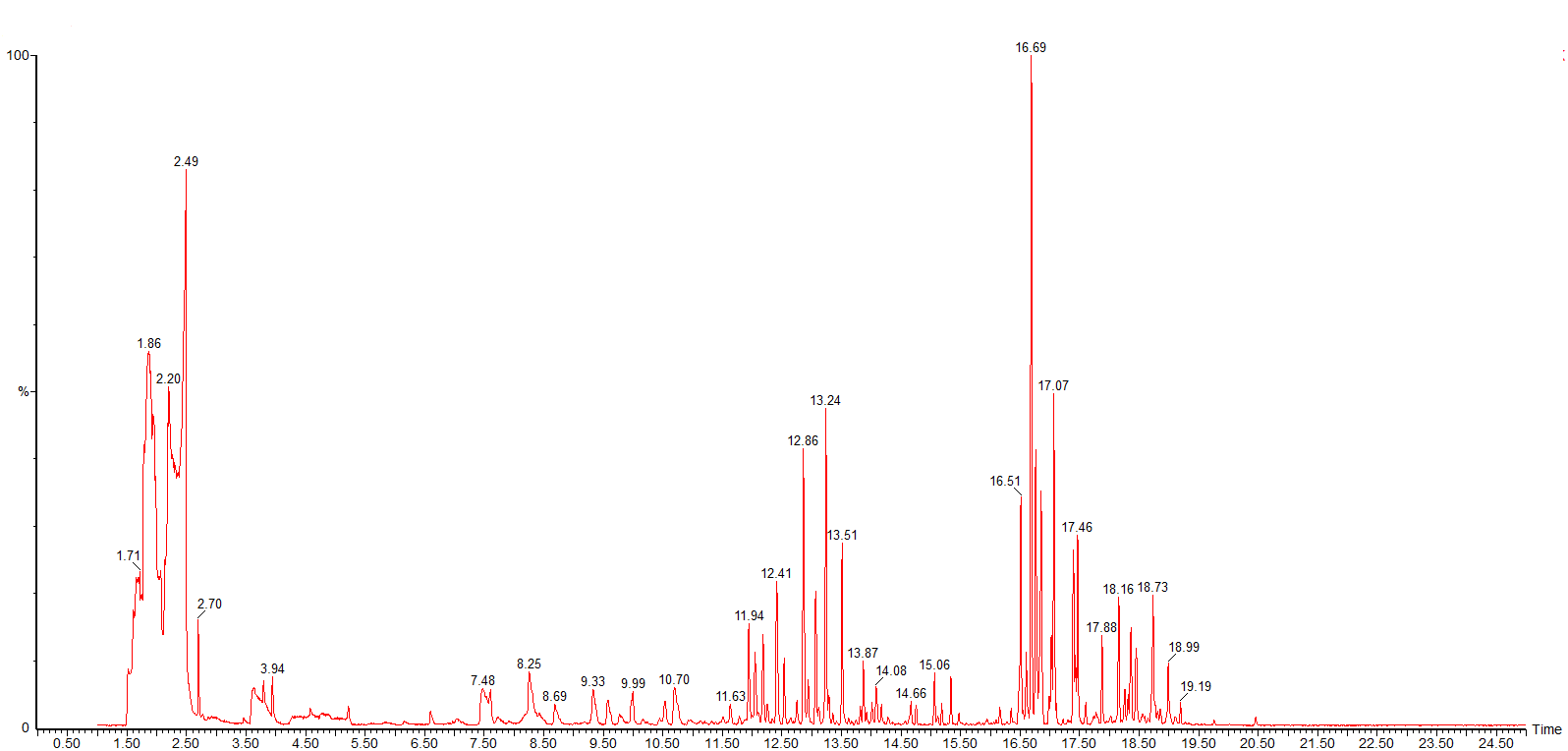
Active ingredients from plants extraction have the ability to act as antioxidants. These free radicals will stimulate the oxidation process that affecting the functioning of cells in the body and leading to various diseases. This research aimed to determine total phenolic contents and antioxidant activity in different solvent maceration techniques of Zingiber cassumunar Roxb. or Phlai (P), Curcuma longa L. or Turmeric (T) and Zingiber officinale Roscoe or Ginger (G) by different 4 techniques including 1) aqueous extract (D) 2) boiling at 60ºC for 10 minutes extract (B) 3) 95 percent of ethanol extract (A-95) and 4) 50 percent of ethanol extract (A-50). The phenolic compound contents and the antioxidant activity were investigated by using Folin-Ciocalteu method, Flavonoid Assay, DPPH, ABTS and Nitric oxide (NO) radical scavenging assay. The results shown that GA-50 and TA-95 extract have the most total phenolic compound and flavonoid at 30.17±1.45 mg GAE/g extract and 100.54±0.56 mg QE/g extract, respectively. Moreover, the antioxidant activity by DPPH and ABTS assay shown that GA-50 extract has the best of the half maximal inhibitory concentration (IC50) at 0.17±0.01 and 5.19±0.03 mg/ml, respectively. In addition, PA-50 extraction is highest of percentage of NO inhibition at 50.21±0.65. Then, the extracts of the 3 herbs with 50 percent of ethanol extract were tested for the phytochemicals by GC-MS as it showed the phenolic content and antioxidant activity better than other methods. It was found that GA-50, TA-50 and PA-50 have 15, 9 and 3 active ingredients, respectively. Conclusion, this research has demonstrated that Phlai, Turmeric and Ginger have high antioxidant capacity due to their identifiable properties of phytochemicals and active substances. The 50 percentage of ethanol fermentation extract technique show the higher level of total phenolic contents and the antioxidant activity than other methods.
References
Zheng WZ and Wang SY. Antioxidant Activity and Phenolic Compounds in Selected Herbs. J Agric Food Chem 2001;49(11):5165-70.
Astley SB. Dietary Antioxidants-Past, Present and Future. Trends Food Sci Technol 2003;14,93-98.
Ratchadaporn T and Yingyong P. Variation of total curcuminoids content, antioxidant activity and genetic diversity in turmeric (Curcuma longa L.). collections 2009;43(3):507-18.
Ali G, Hawa ZE J and Asmah R. Antioxidant activities, total phenolics and flavonoids content in two varieties of Malaysia young ginger (Zingiber officinale Roscoe). Molecules 2010;15(6):4324-33.
Thiraphattanavong P, Wattanathorn J, Muchimapura S, Thukham-mee W, Suriharn, B, Lertrat K. The combined extract of purple waxy corn and ginger prevents cataractogenesis and retinopathy in streptozotocin-diabetic rats. Oxid. Med. Cell. Longev 2014:1-12.
Ah-RH, Hyunyoung K, Donglan P, Chan-HJ and Eun KS. Phytochemicals and Bioactivities of Zingiber cassumunar Roxb. Molecules 2021;26(8):1-16.
Thepthong P, Rattakarn K, Ritchaiyaphum N, Intachai S and Chanasit W. Effect of Extraction Solvents on Antioxidant and Antibacterial Activity of Zingiber montanum Rhizomes. ASEAN J. Sci. Tech. Report 2023;26(3):1-9.
Jeenapongsa R, Yoovathaworn K, Sriwatanakul KM, Pongprayoon U, Sriwatanakul K. Anti-inflammatory activity of (E)-1-(3,4-dimethoxyphenyl) butadiene from Zingiber cassumunar Roxb. J Ethnopharmacol 2003;87(2-3):143-8.
Tangyuenyongwatana P, Gritsanapan W. Prasaplai: An essential Thai traditional formulation for primary dysmenorrhea treatment. TANG 2014;4(2):10-1.
Chongmelaxme B, Sruamsiri R, Dilokthornsakul P, Dhippayom T, Kongkaew C, Saokaew S, et al. Clinical effects of Zingiber cassumunar (Plai): A systematic review. Complementary Therapies in Medicine 2017; 35:70-77.
Bua-in S and Paisooksantivatana Y. Essential oil and antioxidant activity of Cassumunar Ginger (Zingiberaceae: Zingiber montanum (Koenig) Link ex Dietr.) collected from various parts of Thailand. Kasetsart J (Nat Sci) 2009;43:467-75.
Han AR, Kim H, Piao D, Jung CH, Seo EK. Phytochemicals and Bioactivities of Zingiber cassumunar Roxb. Molecules 2021;26(8):2377.
Rahul R, Arrivukkarasan S and Anhuradha S. In Vitro Antioxidant and Free Radical Scavenging Activity of Curcuma longa, Acorus calamus and Camellia sinensis. Food and Nutrition Sciences 2022;13:750-60.
Niamsa N, Sittiwet C. Antimicrobial Activity of Curcuma longa aqueous extract. J Pharmacol Toxicol 2009; 4(4):173-77.
Gupta A, Mahajan S, Sharma R. Evaluation of antimicrobial activity of Curcuma longa rhizome extract against Staphylococcus aureus. Biotechnology Reports 2015;6:51–55.
Roekruangr N, et al. Comparative Study on Antioxidant Activities and Phytochemical Components of Steamed and Non-Steamed Ginger Extracts. Thammasat Medical Journal 2018;18(4):528-35.
Shim S, Kim S, Choi D-S, Kwon Y-B, Kwon J. Anti-inflammatory effects of [6]-shogaol: Potential roles of HDAC inhibition and HSP70 induction. Food and chemical toxicology 2011;49:2734-40.
Black CD, Herring MP, Hurley DJ, O'Connor PJ. Ginger (Zingiber officinale) reduces muscle pain caused by eccentric exercise. J Pain 2010;11(9):894-903.
Naderi Z. Mozaffari-Khosravi H, Dehghan A, Nadjarzadeh A, Husein HF. Effect of ginger powder supplementation on nitric oxide and C-reactive protein in elderly knee osteoarthritis patients: A 12-week double-blind randomized placebo-controlled clinical trial. Journal of Traditional and Complementary Medicine 2016;6:199-203.
Li F, Nitteranon V, Tang X, Liang J, Zhang G, Parkin KL, et al. In vitro antioxidant and anti-inflammatory activities of 1-dehydro-[6]-gingerdione, 6-shogaol, 6-dehydroshogaol and hexahydrocurcumin. Food chemistry 2012;135:332-337.
Maja D, et al. The Effect of Extraction Solvents, Temperature and Time on the Composition and Mass Fraction of Polyphenols in Dalmatian Wild Sage (Salvia officinalis L.) Extracts. Food Technol. Biotechnol 2013;51(1):84-91.
Intan Soraya CS, et al. Effects of temperature, time, and solvent ratio on the extraction of phenolic compounds and the anti-radical activity of Clinacanthus nutans Lindau leaves by response surface methodology. Chem Cent J 2018;11(54):1-11.
Quettier-Deleu C, et al. Phenolic compounds and antioxidant activities of buckwheat (Fagopyrum esculentum Moench) hulls and flour. J Ethnopharmacol 2020;72:35-42.
Tai A, et al. Evaluation of antioxidant activity of vanillin by using multiple antioxidant assays. Biochim Biophys Acta 2011;1810:170-7.
Marino BA, Antonio C, Manuel A. The hydrophilic and lipophilic contribution to total antioxidant activity. Food Chem 2011;73:239-244.
Aktas N, et al. Radical scavenging effect of different marine sponges from Mediterranean coasts. Records of Natural Products 2013;7(2):96-104.
McCarron M, et al. Comparison of the monoterpenes derived from green leaves and fresh rhizomes of Curcuma longa L. from India. Flavour and Fragrance Journal 1995;10(6):355-57.
Ahumada R, Timmermann BN and Gang DR. Biosynthesis of curcuminoids and gingerols in Turmeric (Curcuma longa) and Ginger (Zingiber officinale): Identification of curcuminoid synthase and hydroxycinnamoyl-CoA thioesterases. Phyto chemistry 2006; 67:2017-29.
Poonkuil NL and Raja JD. Drying effects on ultrasonic assisted phenolic yields and retentiveness of antiradical properties of common culinary spices ginger (zingiber officinale) and turmeric (curcuma longo): hptlc and gc-ms profile for their active ingredients assessment. International Journal of Research 2017;5: 7-23.
Downloads
Published
How to Cite
Issue
Section
License
Copyright (c) 2023 University of Phayao

This work is licensed under a Creative Commons Attribution-NonCommercial-NoDerivatives 4.0 International License.
ผู้นิพนธ์ต้องรับผิดชอบข้อความในบทนิพนธ์ของตน มหาวิทยาลัยพะเยาไม่จำเป็นต้องเห็นด้วยกับบทความที่ตีพิมพ์เสมอไป ผู้สนใจสามารถคัดลอก และนำไปใช้ได้ แต่จะต้องขออนุมัติเจ้าของ และได้รับการอนุมัติเป็นลายลักษณ์อักษรก่อน พร้อมกับมีการอ้างอิงและกล่าวคำขอบคุณให้ถูกต้องด้วย
The authors are themselves responsible for their contents. Signed articles may not always reflect the opinion of University of Phayao. The articles can be reproduced and reprinted, provided that permission is given by the authors and acknowledgement must be given.