
Motivational Factors for Disease Prevention Influencing the COVID - 19 Vaccine Booster Dose Acceptance Services among Elderly Patients with Chronic Diseases Living in the Northeastern Region of Thailand
Keywords:
Motivation, COVID-19 booster vaccine, ElderlyAbstract
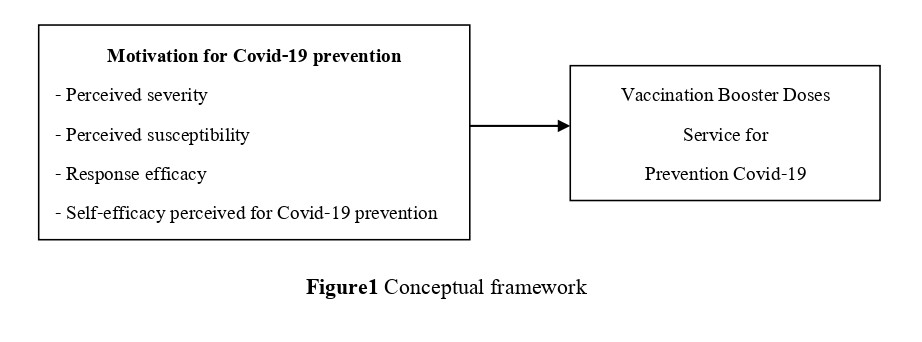
Background and Objectives Coronavirus disease 2019 (COVID - 19), which had a high transmission and mortality rate, had become a significant public health and social challenge globally. To mitigate the severity of this issue, COVID - 19 vaccines were developed. In the early stages of the outbreak, the vaccines were designed based on the original strain and administered in a two-dose regimen to stimulate initial immunity. However, breakthrough infections after completing the vaccination series had been frequently observed, primarily due to the decline in immunity over time. As a result, the booster vaccinations were necessitated to continuously enhance immune efficacy. This cross-sectional analytical study aimed to investigate 1) the level of motivation to prevent COVID - 19 and 2) the motivational factors influencing the COVID - 19 vaccine booster dose acceptance services among elderly patients with chronic diseases living in the northeastern region of Thailand.
Method The sample group consisted of 441 individuals, selected using stratified random sampling. The research instruments were validated by three experts, with item-objective congruence values ranging from 0.67 to 1.00 and a Cronbach's alpha reliability coefficient of 0.86. Data were analyzed using descriptive statistics and logistic multiple linear regression.
Results It was found that 1) the overall motivational level for preventing COVID - 19 (mean = 4.18, S.D. = .04) was at a high level; 2) the motivational factors influencing the COVID - 19 vaccine booster dose acceptance services among elderly patients with chronic diseases had self-efficacy perception in preventing COVID - 19, which can predict 26.40 % (Beta = 0.36, p-value < .00)
Conclusion and Recommendations Based on the results of this study, healthcare personnel involved in COVID - 19 vaccination services can use the findings to plan initiatives that enhance awareness of capabilities among elderly patients with chronic diseases to prevent COVID - 19. This will help elderly patients with chronic disease recognize the necessity and accept the COVID - 19 booster vaccine.
References
Albatineh, A.N., Dalvand, P., Aslani, M., Saritas, S., Baghi, V., & Gheshlagh, R.G. (2022). Prevalence and factors associated with COVID-19 vaccine acceptance among the general population in Asadabad, Iran: a cross-sectional study. Tropical Medicine and Health,
, 59. https://tropmedhealth.biomedcentral.com/articles/10.1186/s41182-022-00453-0
Alimohamadi, Y., Hosamirudsari, H., Hesari, E., & Sepandi, M. (2022). Global COVID-19 vaccine acceptance rate: a systematic review and meta-analysis. Z Gesundh Wiss, 26, 1-13. https://pubmed.ncbi.nlm.nih.gov/36188446/
Ansari-Moghaddam, A., Seraji, M., Sharafi, Z., Mohammadi, M., & Okati-Aliabad, H. (2021). The protection motivation theory for predict intention of COVID-19 vaccination in Iran: a structural equation modelling approach. BMC Public Health, 21, 1165. https://bmcpublichealth. biomedcentral.com/articles/10.1186/s12889-021-11134-8
Ausaniyaphon, C., Photjanart, S., & Siriyupa, S. (2023). Predictors of Preventive Behaviors for Coronavirus Disease 2019 Among Early. Adolescents, 6(1), 82 - 96. https://ir.buu.ac.th/ dspace/handle/1513/782
Best, J.W. (1981). Research in Education (4th ed.). Prentice Hall.
Bloom, B.S., Hastings, J.T., & Madaus, G.F. (1971). Handbook on formative and summative evaluation of student learning. McGraw-Hill.
Carlsen, A., Huang, P., Levitt, Z., & Wood, D. (2021). Coronavirus by the numbers: how is the COVID-19 vaccination campaign going in your state?. https://www.npr.org/sections/health-shots/2021/01/28/960901166/how-is-the-covid-19-vaccination-campaign-going-in-your-state
Cochran, W.G. (1977). Sampling techniques (3rd ed.). John Wiley & So ns.
DeFleur, M.L., & Ball-Rokeach, S. (1970). Theories of mass communication (2nd ed.). Mckay Co.
Department of Disease Control. (2024, December 20). COVID-19. https://ddc.moph.go.th/viralp neumonia/faq_more.php
Finney Rutten, L.J., Zhu, X., Leppin, A.L., Ridgeway, J.L., Swift, M.D., & Griffin, J.M. (2021). Evidence-based strategies for clinical organizations to address COVID-19 vaccine hesitancy. Mayo Clin Proc, 96(3), 699 – 707. https://pmc.ncbi.nlm.nih.gov/articles/PMC7772995/
Fisher, W., Fisher, J., & Harman, J. (2003). The Information–Motivation– Behavioral Skills Model: A
general social psychological approach to understanding and promoting health behavior.
Social psychological foundations of health and illness, 22(4), 82 - 106. https://doi.org/10.1002/ 9780470753552.ch4
Hair, J.F., Black, W.C., Babin, B.J., & Andeson, R.E. (2019). Multivariate data analysis. EMEA.
Luo, Y., Yao, L., Zhou, L., Yuan, F., & Zhong, X. (2022). Factors influencing health behaviours during the coronavirus disease 2019 outbreak in China: an extended information-motivation-behaviour skills model. Public Health, 185, 298 - 305. https://doi.org/10.1016/j.puhe.2020. 06.057
Paul, K.T., Zimmermann, B.M., Corsico, P., Fiske, A., Geiger, S., Johnson, S., Kuiper, J.M.L., Lievevrouw, E., Marelli, L., Prainsack, B., Spahl, W., & Hoyweghen, I.V. (2022). Anticipating hopes, fears and expectations towards COVID-19 vaccines: A qualitative interview study in seven European countries. SSM - Qualitative Research in Health, 2, 100035. https://doi.org/10.1016/j.ssmqr.2021.100035
Prentice-Dunn, S., & Roger, R.W. (1986). Protection motivation theory and preventive health: Beyond health belief model. Health Education Research, 1(3), 153 - 161. https://www.jstor.org/stable/45109745
Regan, J.J., Moulia, D.L., Link-Gelles, R., Godfrey, M., Mak, J., & Najdowski, M. (2023). Use of update COVID-19 vaccines 2023-2024 formula for person aged ≥6 months: Recommendations of the advisory committee on immunization practices-United State, September 2023. Morbidity and Mortality Weekly Report, 72(42), 1140 - 1146. https://pubmed.ncbi. nlm.nih.gov/37856366/
Ronald, W. R. (1975). A Protection Motivation Theory of Fear Appeals and Attitude Change1. The Journal of Psychology, 91(1), 93 - 114. https://doi.org/10.1080/00223980.1975.9915803
Roy, D.N., Biswas, M., Islam, E., &Azam, M.S. (2022)(a). Potential factors influencing COVID-19 vaccine acceptance and hesitancy: A systematic review. PLoS ONE .2022, 17(3), e0265496. http://doi.org/10.1371/journal.pone.0265496
Roy, D.N., Hossen, M.M., Ferdiousi, N., &Azam, M.S. (2022)(b). Potential factors influencing COVID-19 vaccine acceptance and hesitancy among Bangladeshi people: a cross-sectional study. Virus disease, 33(3), 251 - 60. https://pubmed.ncbi.nlm.nih.gov/35992094/
Steffens, M.S., Bullivant, B., Bolsewicz, K., King, C., &Beard, F. (2022). Factors Influencing COVID-19 Vaccine Acceptance in High Income Countries Prior to Vaccine Approval and Rollout: A Narrative Review. International Journal of Public Health, 67, 1604221. http://doi.org/10.3389/ijph.2022.1604221
Thabtrai, K., Premsane, j., Khamkue, B., Sopon, S., & Saleeon, T. (2022). Perception and Behavior of Village Health Volunteers in the Prevention of Coronavirus Disease 2019 (COVID-19) KhuanKhanun Sub-District, KhuanKhanun District, Phatthalung Province. Thaksin University Online Journal, 1(1), 1-9. https://www.thaiscience.info/view_content.asp?id=10996876
World Health Organization. (2020, January 10). Overview of public health and social measures in the context of COVID-19. https://www.who.int.https://iris.who.int/bitstream/handle/10665/ 332115/WHO-2019-nCoV-PHSM_Overview-2020.1-eng.pdf?sequence=1%26isAllowed=y
World Health Organization. (2022, February 19). Ten Health Issue WHO will Tackle This Year. https://www.who.int/news-room/spotlight/ten-threats-to-global-health-in-2019
Xiong, S., Jiang, H-D-C., & Yi, H. (2019). Research progress on the influencing factors for vaccine hesitancy. Preventive Medicine, 31(11), 1120 - 1123. http://doi.org/10.19485/j.cnki.issn 2096-5087.2019.11.010
Yanto, T.A., Lugito, N.P.H., Hwei, L.R.Y., Virliani, C., & Octavius, G.S. (2022). Prevalence and determinants of COVID-19 vaccine acceptance in South East Asia: a systematic review and meta-analysis of 1,166,275 respondents. Tropical Medicine and Infectious Disease, 7(11), 361. https://pubmed.ncbi.nlm.nih.gov/36355903/
Yuangngoen, P. (2023). Causal factors affecting the decision to receive Colona virus (COVID-19) booster dose of people at Kamphaeng Saen hospital. Journal of Preventive Medicine Association of Thailand, 11(1), 129 - 145. https://he01.tci-thaijo.org/index.php/JPMAT/ article/view/260389/177565
Downloads
Published
How to Cite
Issue
Section
License
Copyright (c) 2025 Princess of Naradhiwas University Journal

This work is licensed under a Creative Commons Attribution-NonCommercial-NoDerivatives 4.0 International License.