The Role of Nurses in Preventing Complications from the Use of Extracorporeal Membrane Oxygenation in Critically Ill Pediatric Patients
Keywords:
Nursing role, Prevention of complications from extracorporeal membrane oxygenation, Nursing practice guidelines, Complications from Extracorporeal Membrane Oxygenation, Critically ill pediatric patientsAbstract
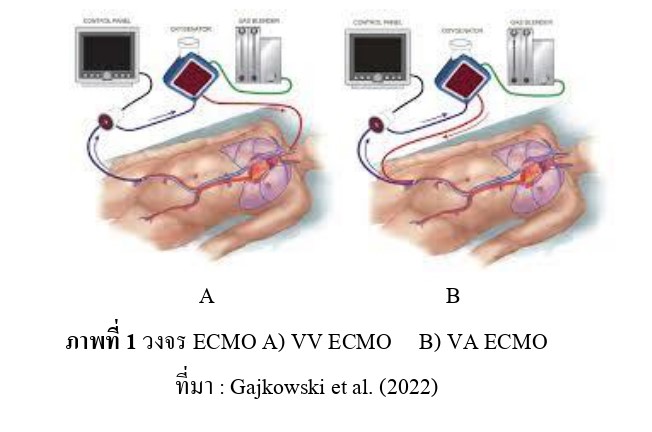
Extracorporeal Membrane Oxygenation (ECMO) is a device used to temporarily support heart and lung function in critically ill pediatric patients. It acts as an artificial lung to exchange gases and as an artificial heart to pump blood and control blood circulation in pediatric patients with acute lung and heart failure. Common complications during ECMO use include blood loss, cerebral hemorrhage, impaired kidney function, infection, and complications from device failure, such as membrane oxygenator failure and pump failure. This academic article focuses on the role of nurses in preventing complications during ECMO use in critically ill pediatric patients based on literature reviews and the authors' experience. Key practice guidelines can be summarized as closely monitoring electrocardiograms and vital signs, assessing level of consciousness and pupillary light response, measuring brain tissue oxygen levels by Near Infrared Spectroscopy (NIRS), observing and recording the characteristics, volume, and location of blood loss, administering anticoagulants (heparin), monitoring fluid intake and output, caring strictly with aseptic technique, preventing kinking, bending, pulling, or dislodgement of vascular catheters, checking for clots and air bubbles in the system, and regularly assessing the color of venous and arterial catheters. These guidelines reflect the important role of nurses in monitoring and preventing complications during ECMO use, which requires comprehensive knowledge, skills, and care to promote safety and the best possible outcomes for critically ill pediatric patients.
References
Atsanangkornchai, N. (2024). Physiology of the extracorporeal membrane oxygenation circuit. In N.Atsanangkornchai, P. Duangphakdee, K. Saelim, & B. Intranat (Eds.), Manual of care for patients with extracorporeal membrane oxygenation (2–12). Department of Cardiothoracic Surgery, Faculty of Medicine, Songkla University.
Bawornsuthasin, P., & Jantrathip, N. (2019). The use of extracorporeal membrane oxygenation inpost-cardiac surgery patients: Problems and nursing care in the case study of a heart valve surgery patient. Journal of Medical Sciences, Region 11, 33(3), 551 - 564. https://he02.tci-thaijo.org/index.php/Reg11MedJ/article/view/216980/150548
Bonicolini, E., Martucci, G., Simons, J., Raffa, G.M., Spina, C., Lo Coco, V., Arcadipane, A.,Pilato, E., & Lorusso, R. (2019). Limb ischemia in peripheral veno-arterial extracorporeal membrane oxygenation: A narrative review of incidence, prevention, monitoring, and treatment. Critical Care, 23(1), 1 - 17. https://doi.org/10.1186/s13054-019-2541-3
Cashen, K., Meert, K., & Dalton, H. J. (2020). Platelet count and function during pediatric extracorporeal membrane oxygenation. Seminars in Thrombosis and Hemostasis, 46(3), 357 - 365. https://doi.org/10.1055/s-0040-1708542
Fu, K.X., & MacLaren, G. (2020). Infectious complications of postcardiotomy extracorporeal membrane oxygenation. Pediatric Critical Care Medicine, 21(11), 1019 - 1020. https://doi.org/10.1097/PCC.0000000000002447
Gajkowski, E. F., Herrera, G., Hatton, L., Velia Antonini, M., Vercaemst, L., & Cooley, E. (2022). ELSO guidelines for adult and pediatric extracorporeal membrane oxygenation circuits. ASAIO Journal, 68(2), 133 - 152. https://doi.org/10.1097/MAT.0000000000001559
Guerguerian, A.-M., Sano, M., Todd, M., Honjo, O., Alexander, P., & Raman, L. (2021). Pediatric extracorporeal cardiopulmonary resuscitation ELSO guidelines. ASAIO Journal, 67(3), 229 - 237. https://doi.org/10.1097/MAT.0000000000001363
Hassumani, D.O., Shan, M., Mastropietro, C.W., Wing, S.E., & Friedman, M.L. (2022). Seizures in children with cardiac disease on extracorporeal membrane oxygenation. Neurocritical Care, 36, 157 - 163. https://doi.org/10.1007/s12028-021-01276-3
Hengyothmak, A. (2022). Respiratory management and ventilator support. In W. Kusumphan (Ed.), Critical care nursing: A holistic approach (7th ed., pp. 70–131). P.K.K. Printing Co., Ltd.
Jaita, K., & Chantham, A. (2021). Nursing care for patients with extracorporeal membrane oxygenation. In C. Sayasathit (Ed.), Cardiac critical care nursing (4th ed., pp. 153–164). Naresuan University Press.
Jenks, C.L., Landry, L.M., Garrison, C.F., Campbell, J.G., Weeks, M.F., Tramel, S.W., & Knudson, J.D. (2022). Pediatric extracorporeal membrane oxygenation anticoagulation protocol associated with a decrease in complications. ASAIO Journal, 68(2), 275 - 280. https://doi.org/10.1097/MAT.0000000000001438
Jirasuwannaprapa, P., & Sarmarunrat, U. (2024). Complications that may occur in patients receiving extracorporeal membrane oxygenation. In N. Atsanangkornchai, P. Duangphakdee, K. Saelim, & B. Intranat (Eds.), Manual of care for patients with extracorporeal membrane oxygenation (pp. 240–250). Department of Cardiothoracic Surgery, Faculty of Medicine, Songkla University.
MacLaren, G., Schlapbach, L.J., & Aiken, A.M. (2020). Nosocomial infections during extracorporeal membrane oxygenation in neonatal, pediatric, and adult patients: A comprehensive arrative review. Pediatric Critical Care Medicine, 21(3), 283 - 290. https://doi.org/10.1097/PCC.0000000000002190
Panngam, S., Kavira, S., Puangkhum, P., Marach, K., Wiwatthananon, H., & Yodsawas, P. (2024). Circuit complication. In N. Atsanangkornchai, P. Duangphakdee, K. Saelim, & B. Intranat (Eds.), Annual of care for patients with extracorporeal membrane oxygenation (pp. 251 - 258). Department of Cardiothoracic Surgery, Faculty of Medicine, Songkla University.
Sakulkanbundit, K., Chokpaisarn, W., Tocharoenchok, T., & Pornwilawan, S. (2019). Care for pediatric patients undergoing extracorporeal membrane oxygenation (ECMO) during the perioperative period. Siriraj Medical Bulletin, 12(3), 188 - 195. https://he02.tci-thaijo. org/index.php/simedbull/article/view/228444/155422
Saelim, K. (2024). Indication and patient selection: Neonatal and pediatrics. In N. Atsanangkornchai, P. Duangphakdee, K. Saelim, & B. Intranat (Eds.), Manual of care for patients with extracorporeal membrane oxygenation (pp. 47–49). Department of Cardiothoracic Surgery, Faculty of Medicine, Songkla University.
Said, A.S., Guilliams, K.P., & Bembea, M.M. (2020). Neurological monitoring and complications of pediatric extracorporeal membrane oxygenation support. Pediatric Neurology, 108, 31 - 39. https://doi.org/10.1016/j.pediatrneurol.2020.03.014
Shin, I., Ryu, H., Hou, Y., Kim, M.S., & Rhie, S.J. (2025). Mortality and complications in hybrid extracorporeal membrane oxygenation: A meta-analysis of initial use versus transition. A Shin Journal, 71(5), 363 - 369. https://doi.org/10.1097/MAT.0000000000002392
Sniderman, J., Monagle, P., Annich, G. M., & MacLaren, G. (2020). Hematologic concerns in extracorporeal membrane oxygenation. Research and Practice in Thrombosis and Haemostasis, 4(4), 455 - 468. https://doi.org/10.1002/rth2.12346
Songkhla Nakarin Hospital (2024). Pediatric intensive care unit statistics 2024. Author.
Su, Y., Liu, K., Zheng, J.L., Li, X., Zhu, D.M., Zhang, Y., Zhang, Y.J., Wang, C.S., Shi, T.T., Luo, Z., & Tu, G.W. (2020). Hemodynamic monitoring in patients with venoarterial extracorporeal embrane oxygenation. Annals of Translational Medicine, 8(12), 1 - 15. https://doi.org/10.21037/atm.2020.03.186
Thepsuriyanon, S., & Puthim, S. (2019). The use of extracorporeal membrane oxygenation in post-cardiac surgery patients: Problems and nursing care. Journal of Cardiothoracic Nursing, 30(1), 17 - 31. https://he02.tci-thaijo.org/index.php/journalthaicvtnurse/article/view/146258/141017
Zwischenberger, J. B. (2024). ELSO registry reports: A new look. ASAIO Journal, 70(2), 144 - 145. https://doi.org/10.1097/MAT.0000000000002145
Downloads
Published
How to Cite
Issue
Section
License
Copyright (c) 2025 Princess of Naradhiwas University Journal

This work is licensed under a Creative Commons Attribution-NonCommercial-NoDerivatives 4.0 International License.