
Effect of Pharmacist Participation in an Antimicrobial Stewardship Program on the Appropriateness of Antibiotic Use in the Inpatient Department at Sungaikolok Hospital
Keywords:
Pharmacist, Antimicrobial Stewardship Program, Appropriateness, Antimicrobial PrescriptionAbstract
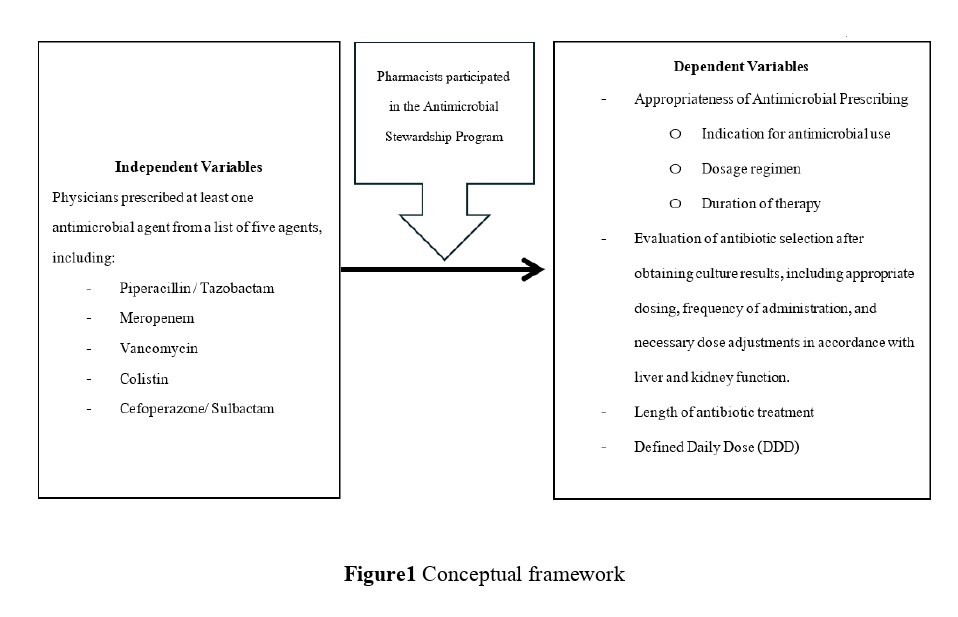
Background and Objectives Pharmacists play a major role in monitoring, evaluating, and intervening in antimicrobial prescribing as part of the Antimicrobial Stewardship Program (ASP). This study aimed to assess the impact of pharmacist involvement in the ASP on the appropriateness of antimicrobial prescribing in the inpatient department at Sungaikolok Hospital.
Methods A retrospective study was conducted by reviewing prescription records to compare both the appropriateness and the volume of antimicrobial use during periods with and without pharmacist participation. The study focused on five key antimicrobial agents: Meropenem, Piperacillin/ Tazobactam, Vancomycin, Colistin, and Cefoperazone/ Sulbactam. A total of 506 prescriptions were analyzed.
Results The appropriateness of antimicrobial prescribing significantly decreased during the period with pharmacist involvement compared to the period without (16.7% vs. 8.8%, P-value < 0.001). Most inappropriate prescriptions were due to incorrect dosages (7.7%) and inappropriate indications (5.9%). Pharmacists provided recommendations regarding antimicrobial use to physicians, all of which (100%) were accepted and led to modifications in prescribing. When comparing the volume of antimicrobial use, only Meropenem showed a statistically significant increase during the pharmacist-involved period (14.7 ± 4.3 vs. 5.0 ± 0.5; P-value < 0.001). The consumption of most other antimicrobials did not differ significantly.
Conclusion and Recommendations Pharmacist involvement in the Antimicrobial Stewardship Program supports the provision of recommendations to physicians, especially regarding dosing, which enhances the appropriateness of antimicrobial prescribing. However, most antimicrobial consumption did not show a statistically significant difference. It is recommended that pharmacists participation in ASP be continued to further improve antimicrobial use and patient outcomes.
References
Ananwattanakit, M., Usayaporn, S., Tantawichien, T., Puttilerpong, C., & Pengsuparp, T. (2015). Effects of Pharmacist Participation in an Antimicrobial Stewardship Program on Appropriate Antibiotic Use. Thai Pharmaceutical and Health Science Journal, 10(1), 1-9. https://ejournals.swu.ac.th/index.php/pharm/article/view/5245/4971
Antimicrobial Resistance (AMR) Thailand. (2023). National Antimicrobial Resistance Action Plan No. 2 | 2023-2027. Author.
Apisarnthanarak, A., & Mundy, L. M. (2008). Correlation of Antibiotic Use and Antimicrobial Resistance in Pratumthani, Thailand, 2000 to 2006. American Journal of Infection Control, 36(9), 681-682. https://doi.org/10.1016/j.ajic.2007.10.022
Gatechan, T., Nakaranurack, C., Plongla, R., Chuenjit, T., & Gross, A. E. (2025). The Impact of Pharmacist-Led Education and Prospective Audit and Feedback on Antibiotic Dose Optimization within Medical Intensive Care Units in Thailand: a Retrospective Study. Journal of Pharmaceutical Policy and Practice, 18(1), 1-18. https://doi.org/10.1080/20523211.2025.2467456
Health Policy and Systems Research on Antimicrobial Resistance (HPSR-AMR) Network. (2024). Highlights Thailand One Health Report 2021: Antimicrobial Consumption and Antimicrobial Resistance. International Health Policy Program.
Jantarathaneewat, K., Camins, B., & Apisarnthanarak, A. (2022). The Role of the Clinical Pharmacist in Antimicrobial Stewardship in Asia: A Review. Antimicrobial Stewardship & Healthcare Epidemiology, 2, 1-9. http://doi.org/10.1017/ash.2022.310
Limphan, J., & Songmuang, T. (2023). Effects of Pharmacist Participation in a Carbapenem Antimicrobial Stewardship Program on Appropriate Antibiotic Use. International Journal of Population Studies, 19(2), 1 - 15. https://he01.tci-thaijo.org/index.php/IJPS/article/ view/255418/178529
Nakamura, S., Arima, T., Tashiro, R., Yasumizu, S., Aikou, H., Watanabe, E., Nakashima, T., Nagatomo, Y., Kakimoto, I., & Motoya, T. (2021). Impact of an Antimicrobial Stewardship in a 126-Bed Community Hospital with Close Communication between Pharmacists Working on Post-Prescription Audit, Ward Pharmacists, and the Antimicrobial Stewardship Team. Journal of Pharmaceutical Health Care and Sciences, 7, 1 - 9. https://doi.org/10.1186/s40780-021-00206-x
Prakongsai, N., Sutthisawad, N., & Rimkeeree, P. (2021). Effects of Antimicrobial Control Program on Appropriate Use of Antibiotics. Buddhachinaraj Medical Journal, 38(2), 181 - 196. https://he01.tci-thaijo.org/index.php/BMJ/article/view/251807/170176
Rattanaumpawan, P., Upapan, P., & Thamlikitkul, V. (2018). A Noninferiority Cluster-Randomized Controlled Trial on Antibiotic Postprescription Review and Authorization by Trained General Pharmacists and Infectious Disease Clinical Fellows. Infection Control & Hospital Epidemiology, 39(10), 1154 - 1162. https://doi.org/10.1017/ice.2018.198
Rusic, D., Kumric, M., Perisin, A. S., Leskur, D., Bukic, J., Modun, D., Vilovic, M., Vrdoljak, J., Martinovic, D., Grahovac, M., & Bozic, J. (2024). Tackling the Antimicrobial Resistance “Pandemic” with Machine Learning Tools: A Summary of Available Evidence. Microorganisms, 12(5), 1 - 25. https://doi.org/10.3390/microorganisms12050842
Saha, S. K., Hawes, L., & Mazza, D. (2019). Effectiveness of Interventions Involving Pharmacists on Antibiotic Prescribing by General Practitioners: A Systematic Review and Meta-Analysis. Journal of Antimicrobial Chemotherapy, 74(5), 1173 - 1181. https://doi.org/10.1093/jac/dky572
Thomnoi, T., Komenkul, V., Prawang, A., & Santimaleeworagun, W. (2022). Impact of Pharmacist-Led Implementation of a Community Hospital-Based Outpatient Parenteral Antimicrobial Therapy on Clinical Outcomes in Thailand. Antibiotics (Basel, Switzerland), 11(6), 760. https://doi.org/10.3390/antibiotics11060760
Uda, A., Ebisawa, K., Sakon, H., Kusuki, M., Izuta, R., Yahata, M., & Yano, I. (2022). Sustained Improvements in Antimicrobial Therapy and Clinical Outcomes Following a Pharmacist-Led Antimicrobial Stewardship Intervention: Uncontrolled Before–After Study. Journal of Clinical Medicine, 11(3), 1 - 9. https://doi.org/10.1186/s40780-021-00206-x
Ungsamran, K. (2018). Antimicrobial Stewardship: Among Carbapenems, Tigecyline at Department of Medicine. Mahasarakham Hospital Journal, 15(2), 23 - 33. https://he02.tci-thaijo.org/index.php/MKHJ/article/download/195453/135811
World Health Organization. (2019). Antimicrobial Stewardship Programmes in Health-Care Facilities in Low-and Middle-Income Countries. WHO. https://iris.who.int/handle/10665/330270
World Health Organization. (2024, June 14). Thailand Sounds the Alarm on Antimicrobial Resistance. WHO. https://www.who.int/thailand/news/detail/14-06-2024-thailand-sounds-the-alarm-on-antimicrobial-resistance
Downloads
Published
How to Cite
Issue
Section
License
Copyright (c) 2025 Princess of Naradhiwas University Journal

This work is licensed under a Creative Commons Attribution-NonCommercial-NoDerivatives 4.0 International License.