
Factors Associated with Serum 25-Hydroxyvitamin D Levels in Muslim Women in Narathiwat Province: A Cross-Sectional Analytical Study
Keywords:
Vitamin D, Headscarf, Preventive Medicine, NarathiwatAbstract
Background and Objectives This analytical cross-sectional study aimed to compare serum 25-hydroxyvitamin D [25(OH)D] levels between Muslim women who wear a headscarf and those who do not in Narathiwat Province, Thailand, while analyzing factors associated with vitamin D levels after controlling for physiological confounders.
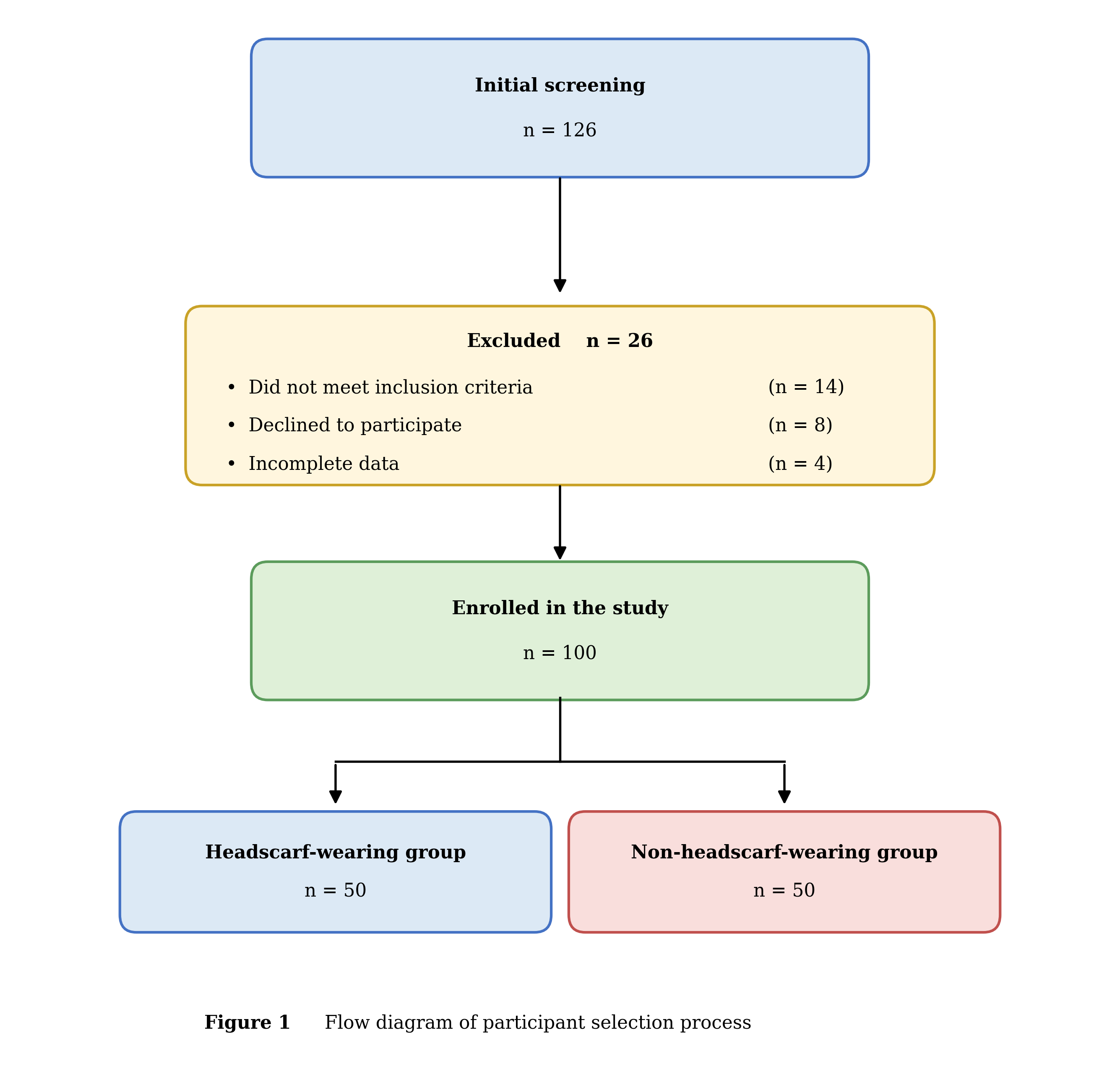
Methods A total of 100 female participants were equally divided into two groups: headscarf-wearing (n=50) and non-headscarf-wearing (n=50). Serum vitamin D levels were measured as total serum 25(OH)D using Chemiluminescent Microparticle Immunoassay (CMIA) at an ISO 15189:2012-certified laboratory. Data were analyzed using descriptive statistics, independent t-test, multiple linear regression, and logistic regression analysis.
Results The mean vitamin D level in the headscarf group (18.92 ± 7.34 ng/mL) was significantly lower than that in the non-headscarf group (25.22 ± 8.77 ng/mL) (p < 0.001), with a large effect size (Cohen’s d = 0.776). Multiple linear regression revealed that headscarf wearing was the only statistically significant predictor of vitamin D levels (B = -6.05, 95% CI: -9.16 to -2.95, p < 0.001), after adjusting for age, BMI, and eGFR (R² = 0.231). Furthermore, logistic regression showed that headscarf-wearing women had 7.16 times higher odds of vitamin D deficiency (95 % CI: 2.72 –18.90, p < 0.001). None of the headscarf-wearing participants achieved the optimal vitamin D level (≥ 40 ng/mL)
Conclusion and Recommendation The findings of this study indicated that Headscarf wearing is a significant independent predictor of lower serum vitamin D levels. Clothing-related physical barriers reduce UVB-exposed skin surface area, substantially limiting cutaneous vitamin D synthesis. These findings support targeted vitamin D screening and supplementation strategies for this high-risk population, while respecting their cultural and religious practices. Future studies should incorporate quantitative sun exposure assessment, dietary vitamin D intake, and genetic polymorphisms to more comprehensively explain the remaining variance.
References
Abu-Zaid, A., Saleh, S.A.K., Adly, H.M., Baradwan, S., Alharran, A.M., Alhatm, M., Alazyed, M.M., Alotaibi, M.N., Saad, A.R., Alfayadh, H.M., Abuazid, M., & Alomar, O. (2024). The impact of vitamin D on androgens and anabolic steroids among adult males: A meta-analytic review. Diseases, 12(10), 228. https://doi.org/10.3390/diseases12100228
Al Attia, H.M., & Ibrahim, M.A. (2012). The high prevalence of vitamin D inadequacy and dress style of women in the sunny UAE. Archives of Osteoporosis, 7, 307 – 310. https://doi.org/10.1007/s11657-012-0104-1
Amrein, K., Scherkl, M., Hoffmann, M., Wolfsberger, S., Zitt, E., Obermayer-Pietsch, B., Pilz, S., & Malle, O. (2020). Vitamin D deficiency 2.0: An update on the current status worldwide. European Journal of Clinical Nutrition, 74(11). 1498 – 1513. https://doi.org/10.1038/s41430-020-0558-y
Bilezikian, J.P., Binkley, N., De Luca, H.F., Fassio, A., Formenti, A.M., El-Hajj Fuleihan, G., Heijboer, A.C., & Giustina, A. (2023). Consensus and controversial aspects of vitamin D and COVID-19. The Journal of Clinical Endocrinology & Metabolism, 108(5), 1034 – 1042. https://doi.org/10.1210/clinem/dgac719
Bouillon, R., Manousaki, D., Rosen, C., Trajanoska, K., Rivadeneira, F., & Richards, J.B. (2022). The health effects of vitamin D supplementation: evidence from human studies. Nature Reviews Endocrinology, 18(2), 96–110. https://doi.org/10.1038/s41574-021-00593-z
Chailurkit, L.O., Ongphiphadhanakul, B., & Aekplakorn, W. (2023). Update on vitamin D status in sunshine-abundant Thailand, 2019–2020. Nutrition, 116, 112161. https://doi.org/10.1016/j.nut.2023.112161
Charoenngam, N., & Holick, M.F. (2020). Immunologic effects of vitamin D on human health and disease. Nutrients, 12(7), 2097. https://doi.org/10.3390/nu12072097
Demay, M.B., Pittas, A.G., Bikle, D.D., Diab, D.L., Kiely, M.E., Lazaretti-Castro, M., Lips, P., Mitchell, D.M., Murad, M.H., Powers, S., Rao, S.D., Scragg, R., Tayek, J.A., Balent, A.M., Walsh, J.M.E., & McCartney, C.R. (2024). Vitamin D for the Prevention of Disease: An Endocrine Society Clinical Practice Guideline. Journal of Clinical Endocrinology & Metabolism, 109(8), 1907 – 1947. https://doi.org/10.1210/clinem/dgae290
El-Mallah, C., Yarparvar, A., Galetti, V., Obeid, O., Boutros, M., Safadi, G., ZeinWddine, R., Ezzeddine, N.E.H., Kouzeiha, M., Kobayter, D., Wirth, J.P., Daou, M.A.Z., Asfahani, F., Hilal, N., Hamadeh, R., Abiad, F., & Petry, N. (2025). The sunshine paradox: Unraveling risk factors for low vitamin D status among non-pregnant women in Lebanon. Nutrients, 17(5), 804. https://doi.org/10.3390/nu17050804
Fantini, C., Corinaldesi, C., Lenzi, A., Migliaccio, S., & Crescioli, C. (2023). Vitamin D as a shield against aging. International Journal of Molecular Sciences, 24(5), 4546. https://doi.org/10.3390/ijms24054546
Felton, S.J., Cooke, M.S., Kift, R., Berry, J.L., Webb, A.R., Lam, P.M., de Gruijl, F.R., Vail, A., & Rhodes, L.E. (2016). Concurrent beneficial (vitamin D production) and hazardous (cutaneous DNA damage) impact of repeated low‐level summer sunlight exposures. British Journal of Dermatology, 175(6), 1320 – 1328. https://doi.org/10.1111/bjd.14863
Gao, H., Xie, T., Zhang, Y., Zhao, S., Su, L., Chen, Z., & Wang, G. (2025). Vitamin D and the aging skin: Insights into oxidative stress, inflammation, and barrier function. Immunity & Ageing, 22, 49. https://doi.org/10.1186/s12979-025-00536-6
Gill, S., Adenan, A.M., Thomas, E.E., Ramadas, A.H, Rahim, N.B.A., & Ismail, N.A.S. (2024). Beyond the tropics: Unraveling the complex relationship between sun exposure, dietary intake, and vitamin D deficiency in coastal Malaysians. Nutrients, 16(6), 830. https://doi.org/10.3390/nu16060830
Grant, W.B., Wimalawansa, S.J., Pludowski, P., & Cheng, R.Z. (2025). Vitamin D: Evidence-based health benefits and recommendations for population guidelines. Nutrients, 17(2), 277. https://doi.org/10.3390/nu17020277
GrassrootsHealth Nutrient Research Institute. (2023). Vitamin D action: Is your vitamin D level optimal for health?. GrassrootsHealth Nutrient Research Institute, Moving Research Into Practive. https://www.grassrootshealth.net/project/daction/
Hassanein, M.M., Huri, H.Z., Baig, K., & Abduelkarem, A.R. (2023). Determinants and effects of vitamin D supplementation in postmenopausal women: A systematic review. Nutrients, 15(3), 685. https://doi.org/10.3390/nu15030685
Huang, Y.L., Pham, T.T.M., Chen, Y-C., Chang, J-S., Chao, J.C-J., Bai, C.H. (2023). Effects of climate, sun exposure, and dietary intake on vitamin D concentrations in pregnant women: A population-based study. Nutrients, 15(5), 1182. https://doi.org/10.3390/nu15051182
Jaruratanasirikul, S., Boonrusmee, S., Kasemsripitak, S., Saengkaew, T., Chimrung, K., & Sriplung, H. (2023). Vitamin D status in non-pregnant women of reproductive age: a study in Southern Thailand. Scientific Reports, 13(1), 15264. https://doi.org/10.1038/s41598-023-42557-5
Judistiani, R.T.D., Nirmala, S.A., Rahmawati, M., Ghrahani, R., Natalia, Y.A., Sugianli, A.K., Indrati, A.R., Suwarsa, O., & Setiabudiawan, B. (2019). Optimizing ultraviolet B radiation exposure to prevent vitamin D deficiency among pregnant women in the tropical zone. BMC Pregnancy and Childbirth, 19(1), 209. https://doi.org/10.1186/s12884-019-2306-7
Karampela, I., Sakelliou, A., Vallianou, N., Christodoulatos, G-S., Magkos, F., & Dalamaga, M. (2021). Vitamin D and obesity: Current evidence and controversies. Current Obesity Reports, 10, 162–180. https://doi.org/10.1007/s13679-021-00433-1
Khan, S.R., Claeson, M., Khan, A., & Neale, R.E. (2024). The effect of physical activity on vitamin D: A systematic review and meta-analysis of intervention studies in humans. Public Health in Practice, 7, 100495. https://doi.org/10.1016/j.puhip.2024.100495
Lee, D.N., & Stevens, E.M. (2022). Message Source Credibility and E-Cigarette Harm Perceptions among Young Adults. International Journal of Environmental Research and Public Health, 19(15), 9123. https://doi.org/10.3390/ijerph19159123
Makris, K., Bhattoa, H.P., Cavalier, E., Phinney, K., Sempos, C.T., Ulmer, C.Z., Vasikaran, S.D., Vesper, H., & Heijboer, A.C. (2021). Recommendations on the measurement and the clinical use of vitamin D metabolites and vitamin D binding protein – A position paper from the IFCC Committee on bone metabolism. Clinica Chimica Acta, 517, 171–197. https://doi.org/10.1016/j.cca.2021.03.002
Mei, Y., Hu, H., Zou, Y., & Li, W. (2023). The role of vitamin D in menopausal women's health. Frontiers in Physiology, 14, 1211896. https://doi.org/10.3389/fphys.2023.1211896
Mohd Saffian, S., Jamil, N.A., Mohd Tahir, N.A., & Hatah, E. (2022). Vitamin D insufficiency is high in Malaysia. Frontiers in Nutrition, 9, 1050745. https://doi.org/10.3389/fnut.2022.1050745
Munns, C.F., Shaw, N., Kiely, M., Specker, B.L., Thacher, T.D., Ozono, K., Michigami, T., Tiosano, D., Mughal, M.Z., Mäkitie, O., Ramos-Abad, L., Ward, L., DiMeglio, L.A., Atapattu, N., Cassinelli, H., Braegger, C., Pettifor, J.M., Seth, A., Idris, H.W., ..., Högler, W. (2016). Global consensus recommendations on prevention and management of nutritional rickets. Hormone Research in Paediatrics, 85(2), 83–106. https://doi.org/10.1159/000443136
Nichols, E.K., Khatib, I.M., Aburto, N.J., Sullivan, K.M., Scanlon, K.S., Wirth, J.P., & Serdula, M.K. (2012). Vitamin D status and determinants of deficiency among non-pregnant Jordanian women of reproductive age. European Journal of Clinical Nutrition, 66, 751–756. https://doi.org/10.1038/ejcn.2012.25
Neville, J.J., Palmieri, T., & Young, A.R. (2021). Physical determinants of vitamin D photosynthesis: A review. JBMR Plus, 5(1), e10460. https://doi.org/10.1002/jbm4.10460
Odhaib, S.A., Alibrahim, N.T., Zaboon, I.A., & Mansour, A.A. (2021). Vitamin D metabolic profiles in premenopausal women wearing Niqab and Hijab in sunny Basrah. Cureus, 13(5), e14909. https://doi.org/10.7759/cureus.14909
Osmancevic, A., Gillstedt, M., Landin-Wilhelmsen, K., Larkö, A.W., Larkö, O., Holick, M.F., & Krogstad, A.L. (2015). Size of the exposed body surface area, skin erythema and body mass index predict skin production of vitamin D. Journal of Photochemistry and Photobiology B: Biology, 149, 224 – 229. https://doi.org/10.1016/j.jphotobiol.2015.06.008
Płudowski, P., Kos-Kudła, B., Walczak, M., Fal, A., Zozulińska-Ziółkiewicz, D., Sieroszewski, P., Peregud-Pogorzelski, J., Lauterbach, R., Targowski, T., Lewiński, A., Spaczyński, R., Wielgoś, M., Pinkas, J., Jackowska, T., Helwich, E., Mazur, A., Ruchała, M., Zygmunt, A., Szalecki, M., …, Misiorowski, W. (2023). Guidelines for preventing and treating vitamin D deficiency: A 2023 update in Poland. Nutrients, 15(3), 695. https://doi.org/10.3390/nu15030695
Setiati, S. (2008). Vitamin D status among Indonesian elderly women living in institutionalized care units. Acta Medica Indonesiana, 40(2), 78–83. https://www.researchgate.net/publication/23569829_Vitamin_D_status_among_Indonesian_elderly_women_living_in_institutionalized_care_units
Tsiaras, W., & Weinstock, M.A. (2011). Factors influencing vitamin D status. Acta Dermato-Venereologica, 91(2), 115–124. https://doi.org/10.2340/00015555-0980
Wimalawansa, S.J. (2023). Controlling chronic diseases and acute infections with vitamin D sufficiency. Nutrients, 15(16), 3623. https://doi.org/10.3390/nu15163623
Zhu, H., Manson, J.E., Cook, N.R., Bakele, B.B., Chen, L., Kane, K.J., Huang, Y., Li, W., Christen, W., Lee. I-M., & Dong, Y. (2025). Vitamin D3 and marine omega-3 fatty acids supplementation and leukocyte telomere length: 4-year findings from the VITAL randomized controlled trial. The American Journal of Clinical Nutrition, 122(1), 39 – 47. https://doi.org/10.1016/j.ajcnut.2025.05.003
Downloads
Published
How to Cite
Issue
Section
License
Copyright (c) 2026 Princess of Naradhiwas University Journal

This work is licensed under a Creative Commons Attribution-NonCommercial-NoDerivatives 4.0 International License.