The Development Blended Learning Model by using Outcome- Based Education Framework on Learning Outcome in Maternal and Newborn Nursing Subject
Keywords:
Blended Learning, Learning Outcomes, Maternal and Newborn Nursing SubjectAbstract
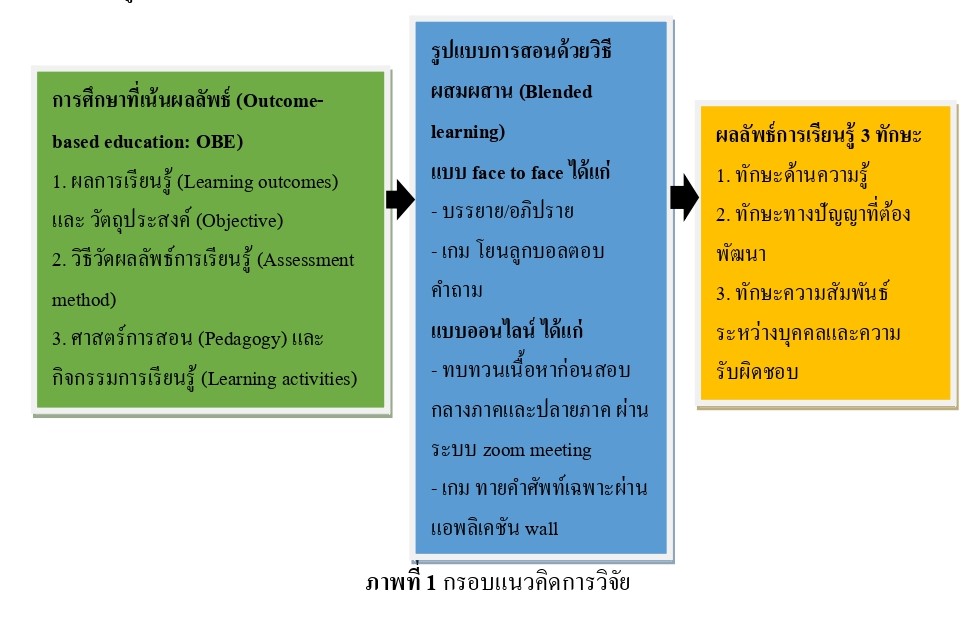
This research and development aim to: 1) Study the current situation of outcome-based education in the Maternal and Newborn Nursing course. 2) Develop a teaching model using a blended method. 3) Examine the effectiveness of the blended teaching model. The process includes three steps: 1) Study the current situation of outcome-based education. 2) Review and develop a draft of the blended teaching model based on the findings from step 1, then have it reviewed by three experts to consider its feasibility, appropriateness and alignment. 3) Study the effectiveness of the blended teaching model on learning outcomes. The sample group consists of third-year nursing students from Prince of Songkla University, Pattani Campus, academic year 2023. The research tools include: 1) A blended teaching model for the Maternal and Newborn Nursing course. 2) An assessment form for the effectiveness of the teaching model based on three skills as per the learning outcomes of the curriculum: knowledge, necessary intellectual development, interpersonal relationships, and responsibility. The research findings are as follows: 1) The blended teaching model includes playing games interspersed with lectures and content reviews, both online and face-to-face. 2) The learning outcomes in the three skills after participating in the blended teaching model showed that students had a significantly higher average than before participation, with p < 0.001. The average knowledge score was significantly higher than before participation, with p < 0.001. The average score for necessary intellectual development was significantly higher than before participation, with p < 0.001. The average score for interpersonal relationships and responsibility was significantly higher than before participation, with p = 0.001. In conclusion, the blended teaching model promotes learning, but some topics still have moderate achievement levels at the end of the course. Instructors need to design learning activities to ensure that the learning outcomes in all areas are at a higher level.
References
Al - Kassab, M, M., & Majeed, H, A. (2022). The use of two-sample t-test in the real data; Advances and application in statistic. Pushpa Publishing House. https://www.researchgate.net
Chooha, U., Somchoe, P., Naksukhum, S., Poungsamai, P., Prayoonsirisak, R., & Mongkolsawad, J. (2019). How to produce nursing to meet the needs of graduate user in the 21st century: challenges of Thai nursing instructors. Mahasarakham Hospital Journal, 16(2), 176 – 186. https://he02.tci-thaijo.org/index.php/MKHJ/article/view/219499
Chubkhuntod, P., ThasanohElter, P., Gaewgoonto, N., & Potchana, R. (2020). Effects of simulation-based learning model on knowledge, self-efficacy and abilities of applying nursing process skills during intrapartum care of nursing student. Journal of Health Science Research, 29(6), 1062 – 1072. https://thaidj.org/index.php/JHS/article/view/9623
Chubkhuntod, P., ThasanohElter, P., & Ubonsr, P. (2017). Effect of learning using mind map in maternal-newborn nursing and midwifery on learning achievement and satisfaction of nursing students. Journal of Health Science Research, 11(2), 39 – 48. https://he01.tci-thaijo.org/ index.php/JHR/article/view/107876
Graham, C.R. (2012, October 10). Introduction to Blended Learning. http://www.media.wiley.com
Judge, S, D., & Murray, B., (2017). Student and faculty transition to a new online learning management system. Teaching and Learning in Nursing, United states, 12(4), 277 – 280. https://doi.org/10.1016/j.teln.2017.06.010
Kaeomaungfang, K., Sukhawadee, B., Anansirikasem, P., Thanachawengsakul, N., & Prarom, S. (2021). The effects of teaching and learning management using MIAP learning process on learning achievement, teamworks skills and the satisfaction of nursing students at the Boromarajonani College of Nursing Chakrirak in the maternal infant and midwifery nursing course 1. Journal of Buddhistic
Anthropology, 6(8), 147 – 162. https://so04.tci-thaijo.org/ index.php/JSBA/article/view/253413
Khonboon, R., Pangpraseart, K., Siriwat, W., & Nachaiphoom, J. (2020). The guidelines on development of learning achievement of nursing students in maternal and newborn nursing and midwifery 2, College of Asia Scholars. College of Asian Scholar Journal,10(1), 147-155. https://so01.tci-thaijo.org/index.php/CAS/issue/view/17741/4932
Kimsungneon, N., Petchtang, S., & Yantaporn, C. (2018). Learning style and academic achievement of undergraduate nursing students of Rangsit University. (Research Report). Creating Pathways to Transform Your Life. https://rsuir-library.rsu.ac.th/handle/123456789/170
Kruachottikul, S., & Oatme, S., (2020). The effects of using role-playing to self-efficiency in maternal-child nursing and midwifery 1 student nurses of Saint Louis College. Journal of Health and Health management, 6(2), 28 – 39. https://he01.tci-thaijo.org/index.php/slc/ article/view/243977
Laoha, R., & Chinsook, K. (2018). The development of flipped classroom model using connectivism theory with virtual classroom to develop critical thinking skill for students in higher education. (Research Report). Rajabhat Maha Sarakham University. https://uc.thailis.or.th/ bibitem?bibid=b03177661
Lersthavorntham, K., Kitnopkiet, K., & Sawangwattanasait, O. (2014). Factors influencing learning achievement of nursing students in Bachelor of Nursing Science curriculum, Borommarajonani college of nursing, Ratchaburi. Journal of Nursing and Education, 7(4), 13 – 24. https://he01.tci-thaijo.org/index.php/JNAE/article/view/29771
Lertsakornsiri, M., & Puengsema, R. (2021). Learning behaciors of nursing students to study online during the COVID-19 situation, Journal of Nursing and Education, 14(1), 33 – 47. https://he01.tci-thaijo.org/index.php/JNAE/article/view/248495
Ngoenthong, P., Supata, W., Changpean, S., Panya, P., Phetcharat, K., Kaewta, Y., & Chaisiriphuwadol, T. (2022). The development of a bachelor of nursing science outcome-based education program: faculty of nursing, Chiang rai College. Nursing Journal CMU. 49(3), 376-388. https://he02.tci-thaijo.org/index.php/cmunursing/article/view/257360
Phattarasatjatum, P., & Phromreungrit, K. (2018). The effectiveness of using backward design for developing learning outcomes according to Thai qualifications framework for higher education among nursing students. Journal of nursing and education, 11(3), 64 – 78. https://he01.tci-thaijo.org/index.php/JNAE/article/view/152562
Poonperm, R., Proyngern, J., Sunuanta, S., & Prompeng, N. (2018). Effectiveness of question-based learning of nursing students at the Royal Thai Army Nursing College. Journal of The Royal Thai Army Nurses, 19(3), 126 - 136. https://he01.tci-thaijo.org/index.php/JRTAN/ article/view/ 161542
Ratchapakdee, P., Sirichantra, N., Chaimekhieo, N., Saowaphan, J., Sukanya, K., & Iniam, P. (2021). Effects of flipped classroom learning management to enhance the self-directed learning and learning achievement of nursing students in nursing process and health assessment course. Journal of Curriculum and Instructure Sakon Nakhon Rajabhat University, 13(38), 121 – 130. https://jci.snru.ac.th/ArticleView?ArticleID=947
Sinsawad, P., (2021). Learning management to develop cognitive skills of nursing students. Journal of Research and Curriculum Development, 11(2), 35 – 47. https://so03.tci-thaijo.org/index. php/jrcd/article/view/249535
Srisuying, A., Phanmuang, S., Toontam, K., Wirifai, S., & Wanchooserm, P. (2018). Midwifery nursing competencies among nursing students of Srimahasarakham Nursing College. Mahasarakham Hospital Journal, 15(3), 142 – 150. https://he02.tci-thaijo.org/index.php/ MKHJ/article/view/196247
Sukontrakoon, P., Pongrua, P., & Poonyathalang, T. (2019). The relationship among perception of nursing students in readiness for self-directed learning, readiness to group work and learning achievement in the maternal-newborn nursing and midwifery courses. Ramathibodi Nursing Journal, 25(2), 195-207, from https://he02.tci-thaijo.org
Tancharoen, P., & Yotsurin, P. (2023). The effective of using gamification learning activities on learning motivation and academic achievement of courses, principles, and techniques of nursing among nursing students. Journal of Nursing and Education, 16(4), 1 – 12. https://he01.tci-thaijo.org/index.php/JNAE/article/view/261109
Thammakijpirote, K., Maneewong, J., & Sanongyard, J. (2023). Simulation-based learning on critical thinking of nursing students in Thailand: A Systematic Review. The Journal of Boromarajonani college of nursing, Suphanburi, 6(1), 5 - 28. https://he02.tci-thaijo.org/index .php/SNC/article/view/263746
Thongmeekhaun, T., Dechpichai, W., & Suwannatachote, R. (2023). Structural equation modeling of factors affecting intellectual skills of students in the Bachelor of Nursing Science program of the southern nursing college network under Praboromarajchanok institute. The southern college network journal of nursing and public health, 10(1), 153-169. from https://he01.tci-thaijo.org
Wongsaree, C., & Sirilukananan, K. (2019). Instruction design and achievement test construction in 21st century in theoretical subjects in the field of nursing education. Journal of Health and Health management, 5(2), 1 – 22. https://he01.tci-thaijo.org/index.php/slc/article/view/240090
Yanawongsa, Y., Intasingh, S., Nguenyuang, S., & Intanet, N. (2021). Outcome-based curriculum: new approach for higher education curriculum. Humanities and Social Sciences Journal of Pibulsongkram Rajabhat University, 15(2), 279 – 291. https://so01.tci-thaijo.org/index.php/ GraduatePSRU/article/view/242250
Downloads
Published
How to Cite
Issue
Section
License
Copyright (c) 2024 Princess of Naradhiwas University Journal

This work is licensed under a Creative Commons Attribution-NonCommercial-NoDerivatives 4.0 International License.