
การศึกษาพฤติกรรมสุขภาพที่มีความสัมพันธ์กับพฤติกรรมการบริโภคอาหาร ของนักศึกษา มหาวิทยาลัยนราธิวาสราชนครินทร์
คำสำคัญ:
พฤติกรรมสุขภาพ, พฤติกรรมการบริโภคอาหาร, นักศึกษาบทคัดย่อ
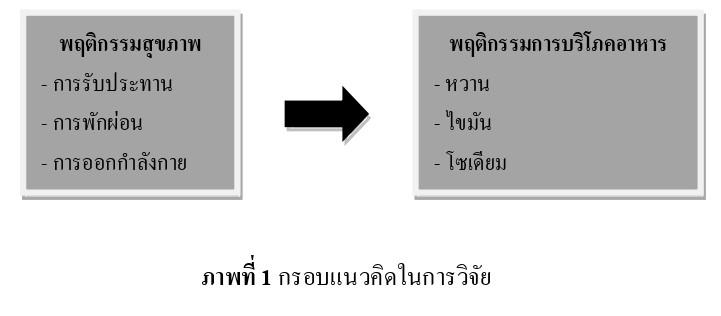
การวิจัยครั้งนี้มีวัตถุประสงค์เพื่อ 1) ศึกษาพฤติกรรมสุขภาพและพฤติกรรมการบริโภคอาหาร และ 2) หาความสัมพันธ์ระหว่างพฤติกรรมสุขภาพและพฤติกรรมการบริโภคอาหารของนักศึกษา มหาวิทยาลัยนราธิวาสราชนครินทร์ ประจำปีการศึกษา 2567 จำนวน จำนวน 354 คน เครื่องมือที่ใช้ในการวิจัย คือ แบบสอบถามพฤติกรรมสุขภาพและพฤติกรรมการบริโภคอาหารของนักศึกษา ซึ่งได้ค่าสัมประสิทธิ์อัลฟ่าของครอนบาค ทั้งชุด เท่ากับ 0.801 โดยค่าความเชื่อมั่นพฤติกรรมสุขภาพ เท่ากับ 0.830 และพฤติกรรมการบริโภค เท่ากับ 0.706 วิเคราะห์ข้อมูลโดยใช้ ค่าเฉลี่ย () ค่าร้อยละ (Percentage) ค่าส่วนเบี่ยงเบนมาตรฐาน (S.D.) ค่าสัมประสิทธิ์การกระจาย (CV) ค่าความเบ้ (Skewness) ค่าความโด่ง (Kurtosis) และค่าสัมประสิทธิ์สหสัมพันธ์ของเพียร์สัน (Pearson Correlation Coefficient)
ผลการวิจัย พบว่า 1) นักศึกษามีพฤติกรรมสุขภาพปานกลางมากที่สุด (ร้อยละ 57.63) พฤติกรรมการบริโภคอาหารหวานมีความเสี่ยงปานกลาง มากที่สุด (ร้อยละ 62.43) พฤติกรรมการบริโภคอาหารไขมันมีความเสี่ยงสูง มากที่สุด (ร้อยละ 75.70) และพฤติกรรมการบริโภคอาหารโซเดียมมีความเสี่ยงสูง มากที่สุด (ร้อยละ 61.30) และ 2) พฤติกรรมสุขภาพที่มีความสัมพันธ์กับพฤติกรรมการบริโภคอาหารหวานในทางบวก ในระดับต่ำ(r = 0.106) ส่วนความสัมพันธ์กับพฤติกรรมการบริโภคอาหารไขมันในทางลบ ในระดับต่ำ(r = -0.110) และพฤติกรรมการบริโภคอาหารโซเดียมในทางลบ
ในระดับต่ำ (r= -0.122)
เอกสารอ้างอิง
A Committee will draft a Report on the Thai Health Report. (2023). The percentage of "food consumption that is risky to health" among Thai individuals is disclosed. Thai Health Report (EN).
Boonyoung, P., & Boonchuaythanasit, K. (2021). Causal Factors Model of Fruit and Vegetable Consumption Behavior of University Students: Self-Efficacy and Health Literacy. BCNNON Health cience Research Journal, 15(1), 151 - 163. https://he01.tcithaijo.org/index.php/JHR/article/view/241749/168824
Chusaengsri, P. (2023). Non-Good Food Consumption Behavior of Mahasarakham Rajabhat University Students. Journal of Organizational Management Excellence, 1(1), 1 - 16. https://so16.tci-haijo.org/index.php/JOME/article/download/575/440/3677
Cronbach, L. J. (1990). Essentials of Psychological Test (5th ed.). Harper Collins.
Hudthagosol, C. (2022). Healthy eating by decrease the consumption of sweet salty and fatty food. https://www.rama.mahidol.ac.th/atrama/sites/default/files/public/pdf/column/@rama2_E05.pdf
Kasapa, J., Sriruksa, N., Natee, S., & Lertwiriyaprasith, P. (2023). Behaviour of choosing to use cafe in Sukhumvit, Bangkok for Thai Tourists. Western University Research Journal of Humanities and Social Science, 9(1), 27 - 40. https://so04.tcithaijo.org/index.php/WTURJ/ article/view/261635
Kawjaratwilai, T., Tanphanich, T., Vongsrangsap, S., Makajae, N., Tanphanich, A., Phunsawat, P., Kusolwong, P., & Chai-on, T. (2021). The Guidelines on Exercise Activities in the Spread Period of CoronavirusDisease 2019 (COVID-19). Thai Journal of Health, Physical Education and Recreation, 17(1), 14 - 26. https://so03.tci-thaijo.org/index.php/tahper/article/view/252320/169123
McClain, A. D., Chappuis, C., Nguyen-Rodriguez, S. T., Yaroch, A. L., & Spruijt-Metz, D. (2009). Psychosocial Correlates of Eating Behavior in Children and Adolescents: A Review. International Journal of Behavioral Nutrition and Physical Activity, 6, 54, 1 - 20. https://ijbnpa.biomedcentral.com/articles/10.1186/1479-5868-6-54
Ministry of Public Health, Department of Health, Bureau of Nutrition. (2011). Manual for Project OperationCommunities and villages cut back on sugary, fatty, and salty foods, as well as obesity nd illness. Bureau of Nutrition, Department of Health, Ministry of Public Health. https://nutrition2.anamai.moph.go.th/th/book/download/?did=194022&id=46344&reload
Ministry of Public Health, Department of Health. (2019, April 12). Health Effects of Consuming Sodium or Salt. Bureau of Nutrition, Department of Health, Ministry of Public Health. https://nutrition2.anamai.moph.go.th/th/dm-km/downloadid=40490&mid=31943&mkey=m_ document&lang=th&did=14334
National Statistical Office. (2018). 2017 population survey on food consumption patterns. National Statistical Office.
Palank, C. L. (1991). Determinants of health-promotive behavior: A review of current research. Nursing Clinics of North America, 26(4), 815 - 832. https://doi.org/10.1016/S0029-6465(22) 00296-1
Phimphakarn, K., Tongtub, K., Phaowiriya, H., Cheumnok,W., & Phoomilun, P. (2023). Motivation, Attitude, and Alcohol Drinking Behavior of Students at One University. Journal of Educational Measurement Educational and Psychological Test Bureau, 40(108), 51 - 63. https://so06.tci-thaijo.org/index.php/JEMEPTB/article/view/270004/181000
Rongpan, S., Trisuvan, P., Suwannarat, N., Santiparadon, M., & Hounkong, K. (2021). Fast Food Consumption Behavior of Undergraduate Students of Princess of Naradhiwas University. Princess of Naradhiwas University Journal, 13(2), 48 - 64. https://li01.tci-thaijo.org/index.php/pnujr/article/view/248178/171514
Surapolchai, P. (2022). The Survey of University Studetnt's Health Behavior. Thai Health Promotion Foundation (Thai Health). https://dol.thaihealth.or.th/Media/Index/87a526d4-e2b0-ed11-80fd-00155d1aab66#
Thai Dietetic Association. (2020, April 22). Fruits and Diabetes: Appropriate Food Selection. Thai Dietetic Association. https://www.thaidietetics.org/?p=6161
Thai Health Promotion Foundation. (2022, August 16). Screening Form for Food Intake Habit (Sweet, Fatty, Salty). Siriraj Piyamaharajkarun Hospital. https://www.siphhospital.com/th/news/article/share/eat-test.
Yamane, T. (1973). Statistics: An Introductory Analysis (3rd ed.). Harper & Row.
ดาวน์โหลด
เผยแพร่แล้ว
รูปแบบการอ้างอิง
ฉบับ
ประเภทบทความ
สัญญาอนุญาต
ลิขสิทธิ์ (c) 2025 วารสารมหาวิทยาลัยนราธิวาสราชนครินทร์

อนุญาตภายใต้เงื่อนไข Creative Commons Attribution-NonCommercial-NoDerivatives 4.0 International License.