
Effects of Nursing Care using Neuman's Theory on the amount of Analgesic Drug, Sedative Drug, and Drug Withdrawal Syndromes in Critically Ill Pediatric Patients on Mechanical Ventilation at Songklanagarind Hospital
Keywords:
Neuman's Theory, Withdrawal Syndrome, Critically Ill Pediatric Patients on Mechanical VentilationAbstract
Background and Objectives The Pediatric Intensive Care Unit at Songklanagarind Hospital has critically ill pediatric patients on ventilators who receive continuous pain and sedative medications for extended periods, increasing the high risk of withdrawal. Finding ways to reduce the amount of pain and sedative medications will help mitigate the severity and incidence of withdrawal. This research aimed to compare the amounts of pain and sedative medications and to compare the occurrence of withdrawal symptoms between critically ill pediatric patients on ventilators who receive nursing care based on Neuman's theory and those who receive standard nursing care.
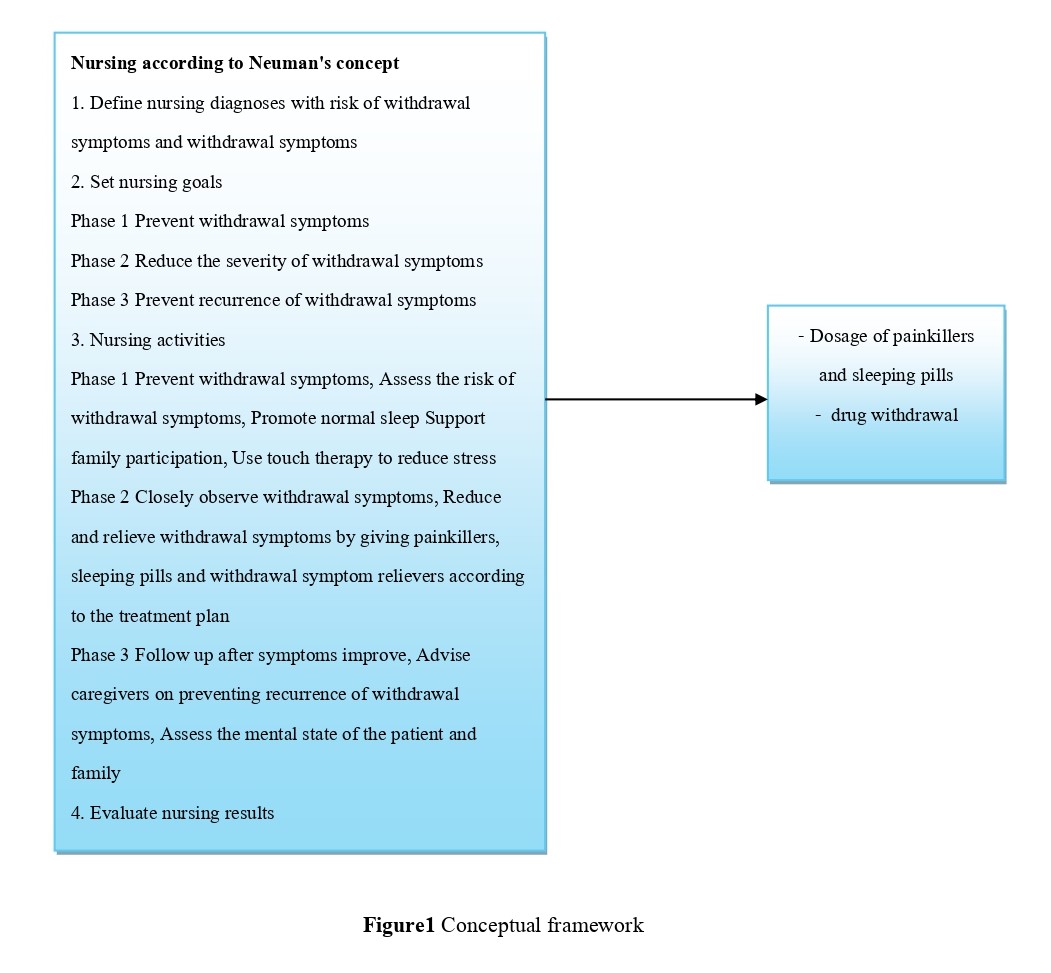
Methods This study was a quasi-experimental study conducted on 64 critically ill pediatric patients aged 1 month to 15 years receiving mechanical ventilation and opioid and benzodiazepine medications. The patients were divided into two groups: a control group of 32 patients and an experimental group of 32 patients. Data was collected group by group, starting with the control group. Research tools included 1) data collection tools, such as pediatric patient personal data records, analgesic and sedative drug dosage records, and the Withdrawal Assessment Tools (WAT-I) for assessing withdrawal symptoms; and 2) the experimental intervention, which was a nursing program based on Neuman's theory, including sleep promotion, touch, and speaking with critically ill pediatric patients by parents or carers. Data were analyzed using descriptive statistics, chi-square, Wilcoxon, and Fisher's exact test.
Results There was no significant difference in the amount of analgesic and sedative drug and withdrawal symptoms between the experimental group receiving nursing care based on Neuman's theory and the control group receiving standard nursing care (p>.05). However, when comparing the total amount of medication received, the experimental group was able to reduce the use of the analgesic drug, as the fentanyl painkiller better than the control group (p<.05).
Conclusion and Recommendation The nursing intervention based on Newman's theory was not able to reduce the average amount of analgesic and sedative drugs, including drug withdrawal symptoms. However, when comparing the total amount of medication received, it was found that the use of the analgesic drug Fentanyl could be reduced, and the average score for withdrawal symptoms was low. Nevertheless, a program based on Newman's theoretical concepts should be developed for nursing care for this pediatric patient group to improve its effectiveness.
References
Alibrahim O., Rehder, J.K., Miller, G.A., & Rotta, T.A. (2022). Mechanical Ventilation and Respiratory Support in the Pediatric Intensive Care Unit. Pediatric Clinics of North America, 69(3), 587 - 605. http://doi.org/10.1016/j.pcl.2022.02.004
Amigoni, A., Conti, G., Conio, A., Corno, M., Fazio, C.P., Ferrero, F., Gentili, M., Giugni, C., Erario, M., Masola, M., Moliterni, P., Pagano, G., Ricci, Z., Romagnoli, S., Vasile B., Vitale, F., Marinosci, Z.G., & Mondardini, C.M. (2022). Recommendations for analgesia and sedation in critically ill children admitted to intensive care unit. National Library of Medicine, 2(1), 9. http://doi.org/10.1186/s44158-022-00036-9
Anand, K.J., Wilson, D.F., Berger, J., Harrison, R., Meert, K.L., Zimmerman, J., & Dean, J.M. (2010). Tolerance and withdrawal from prolonge opioid use in critically ill children. Pediatrics, 125(5), e1208 - e1225. http://doi.org/10.1542/peds.2009-0489
Anjali, M.M., & Unnikrishnan, T.D. (2023). Effectiveness of PRISM III score in predicting the severity of illness and mortality of children admitted to pediatric intensive care unit: a cross-sectional study. Egyptian Pediatric Association Gazette, 71(25). https://doi.org/10.1186/ s43054-023-00171-0
Blackwood, B., Tume, N.L., Morris, P.K., Clarke, M., McDowell, C., Hemming, K., Peters, J.M., McIlmurray, L., Jordan, J., Agus, A., Murray, M., Parslow, R., Walsh, S.T., Macrae, D., Easter, C., Feltbower, G R., & McAuley, F.D. (2021). Effect of a Sedation and Ventilator Liberation Protocol vs Usual Care on Duration of Invasive Mechanical Ventilation in Pediatric Intensive Care Units: A Randomized Clinical Trial. JAMA, 326(5), 401 - 410. http://doi.org/10.1001/jama.2021.10296.
Chantra, M., Lertboonlian, R., & Yam, (2013). A. Analgesic, sedation, and neuromuscular blockade. In KositSethi A, Phutthiphan A, Limrangsikul A, Kongkatitham C, Pandi U, Lertboonleng R. (Eds.), Pediatric Critical Care Medicine (4th ed.). (pp.229-250). D-One Book.
Chettha, T., & Trinai, S. (2019). The effect of nursing care using Neuman's theory in pediatric patients using ventilators on the amount of sedatives, pain relievers and withdrawal symptoms. MCU Journal of Academic. 23(1), 60 - 76. https://he01.tci-thaijo.org/index.php/ HCUJOURNAL/article/view/176534
Franck, S.L., Vilardi, J., Durand, D., & Powers, R. (1998). Opioid withdrawal in neonates after continuous infusions of morphine or fentanyl during extracorporeal membrane oxygenation.American Assiciation of Critical-Care Nurses (AACN), 7(5), 364. https://pubmed.ncbi.nlm.nih.gov/9740886/
Gopisetti, S., & Playfor, S.D. (2019). Sedation and analgesia for critically ill children. Pediatrics and Child Health, 25(5), 228 - 233. https://doi.org/10.1016/j.paed.2019.02.005
Habib, H., Almakadma, H.A., Albarazi, M., Jaimon, S., Almehizia, R., Wadai, A., & Abouelella, R. (2021). Iatrogenic Withdrawal Syndrome in the Pediatric Cardiac Intensive Care Unit: Incidence, Risk Factors and Outcome. Saudi Journal of Anaesthesia, 33(4), 251-260. http://doi.org/10.37616/2212-5043.1268
Hannoodee, S., & Dhamoon, S.A. (2023). Nursing Neuman Systems Model. Montgomery.
Franck, S. L., Harris, S. K., Soetenga, J. D., Amling, K. J., Curley, AQ. M. (2009). The Withdrawal Assessment Tool - Version 1 (WAT-1). Pediatric Critical Care Medicine 9(6), 573-580. http://doi.org/10.1097/PCC.0b013e31818c8328
Macfarlane, F. (2006). Paediatric Anatomy and Phisiology and The Basic of Paedlatric Aamaestjesia. Anaesthesia UK.
Ngamjarus, C., Chongsuvivatwong V., & McNeil, E. (2014). n4Studies: Sample Size Calculation for an Epidemiological Study on a Smart Device. OriginalArticle, 68(3), 160 - 170. https://he02.tci- thaijo.org/index.php/sirirajmedj/article/view/58342/48170
Pergolizzi, V.J., Raffa, B.R., & Rosenblat, H.M. (2020). Opioid withdrawal symptoms, a consequence of chronic opioid use and opioid use disorder: Current understanding and approaches to management. Journal of Clinical Pharmacy and Therapeutics, 45(5), 892 - 903. http://doi.org/10.1111/jcpt.13114.
Porka, K., & Srisumrual, T. (2025). Incidence of Withdrawal Symptoms in Pediatric Intensive Care Units after Using the Guidelines for Prevention and Treatment of Withdrawal from Opioid Analgesics and Benzodiazepine Sedatives of the Queen Sirikit National Institute of Child Health (QSNICH). Journal of the department of medical services, 50(1), 102 - 110. https://he02.tci-thaijo.org/index.php/JDMS/article/view/248652
Sood, S., Ganatra, A. H., Marques, P. F., & Langner, R. T. (2023). Complications during mechanical ventilation—A pediatric intensive care perspective. National Library of Medicine, 10. http://doi.org/10.3389/fmed.2023.1016316
Tiacharoen, D., Lertbunrian, R., Veawpanich, J., Suppalarkbunlue, N., & Anantasit, N. (2020). Protocolized sedative weaning vs usual care in pediatric critically ill patients: a pilot randomized controlled trial. Journal of Critical Care Medicine, 24(6), 451 - 458. http://doi.org/10.5005/jp-journals-10071-23465
Tovar, G., Omira, L., Suarez, D., & Munoz, C.L. (2016). Evidence and Betty Neuman’s Model based nursing care to prevent delirium in the intensive care unit. Enfermeria Global, 15(1), 49 - 63. https://repositorio.unbosque.edu.co/server/api/core/bitstreams/61de4eea-9535-43ae-8b79-cc2194e3f9c0/content
Unubol, B., lzci 1,F., & lzci, S. (2023). Electrocardiographic Abnormalities During and After Withdrawal in Patients Diagnosed with Opioid Use Disorder. National Library of Medicine, 60(4), 304 – 309. http://doi.org/10.29399/npa.28365
Wang, Y., Zheng, Y., Chen; L., Lin, L., Chen, B., Lin, Z., & Bao, S. (2024). Study on Risk Factors and Receiver Operator Characteristic Curve of Iatrogenic Withdrawal Syndrome in Pediatric Intensive Care Units: A Retrospective Study. National Library of Medicine, 109(4), 237 - 242. http://doi.org/10.1159/000538861
Downloads
Published
How to Cite
Issue
Section
License
Copyright (c) 2025 Princess of Naradhiwas University Journal

This work is licensed under a Creative Commons Attribution-NonCommercial-NoDerivatives 4.0 International License.