ประสิทธิภาพการเพิ่มความชุ่มชื้นของเจลทำความสะอาดมือ ที่มีส่วนผสมของสารสกัดใบกรุงเขมา
คำสำคัญ:
ความชุ่มชื้นผิว, เจลทำความสะอาดมือ, ใบกรุงเขมาบทคัดย่อ
ความเป็นมาและวัตถุประสงค์ ใบกรุงเขมาเป็นพืชสมุนไพรพื้นบ้าน แต่มีการใช้ประโยชน์ทางเครื่องสำอางค่อนข้างน้อย การวิจัยครั้งนี้มีวัตถุประสงค์เพื่อสกัดใบกรุงเขมา พัฒนาตำรับ ประเมินความคงตัว และทดสอบประสิทธิภาพในการรักษาความชุ่มชื้นของตำรับเจลทำความสะอาดมือที่ประกอบด้วยสารให้ความชุ่มชื้นจากสารสกัดใบกรุงเขมา
วิธีการวิจัย การวิจัยเชิงทดลอง ศึกษาในกลุ่มตัวอย่างจำนวน 30 ราย ซึ่งคัดเลือกแบบเจาะจง รวบรวมข้อมูลโดยวัดค่าความชุ่มชื้นของผิวด้วยเครื่องวัดความชุ่มชื้นมอยซ์ เซนส์ (Moist Sense®) และประเมินความพึงพอใจของกลุ่มตัวอย่างหลังใช้ผลิตภัณฑ์
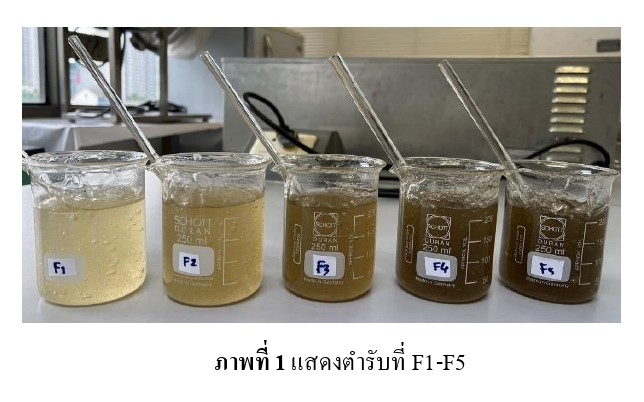
ผลการวิจัย พบว่าพอลิแซ็กคาไรด์ที่สกัดได้จากใบกรุงเขมามีร้อยละของผลผลิตเท่ากับ 30.45 ± 1.18 ของน้ำหนักพืชแห้ง ภายหลังการเตรียมเจลพบว่าเกิดเจลในทุกตำรับ ตำรับ F1 และ F2 มีความ
คงตัวดีภายใต้สภาวะเร่ง โดยตำรับ F2 เป็นสูตรที่มีความเหมาะสมที่สุดเนื่องจากมีเนื้อสัมผัสที่ไม่ข้นจนเกินไปและมีสีของตำรับไม่เข้มมาก จึงเป็นตำรับที่นำไปทดสอบประสิทธิภาพ ผลการทดสอบไม่พบการปนเปื้อนของเชื้อจุลชีพ 4 ชนิด มีประสิทธิภาพในการฆ่าเชื้อ Pseudomonas aeruginosa และ Staphylococcus aureus ได้ร้อยละ 99.99 ภายใน 1 นาที สำหรับประสิทธิภาพในการรักษาความชุ่มชื้นพบว่า หลังการใช้ผลิตภัณฑ์เป็นเวลา 15, 30, 60, 90 และ 120 นาที พบว่า กลุ่มตัวอย่างที่ใช้ตำรับทดลองมีค่าความชุ่มชื้นของผิวเพิ่มขึ้นอย่างมีนัยสำคัญทางสถิติเมื่อเทียบกับตำแหน่งพื้นฐาน (p < 0.05) นอกจากนี้ยังพบว่าตำรับทดลองมีค่าเฉลี่ยความชุ่มชื้นของผิวสูงกว่าตำรับควบคุมอย่างมีนัยสำคัญทางสถิติในทุกช่วงเวลา (p < 0.05) ทั้งนี้กลุ่มตัวอย่างมีความพึงพอใจต่อตำรับทดลองและตำรับควบคุมอยู่ในระดับมาก
สรุปและข้อเสนอแนะ เจลทำความสะอาดมือที่มีส่วนผสมของสารสกัดใบกรุงเขมา
มีประสิทธิภาพในการรักษาความชุ่มชื้น ควรมีนำสารสกัดไปใช้ในการพัฒนาตำรับผลิตภัณฑ์เพิ่มความชุ่มชื้นชนิดอื่น
เอกสารอ้างอิง
Berardi, A., Cenci-Goga, B., Grispoldi, L., Cossignani, L., & Perinelli, D. R. (2020). Analysis of commercial hand sanitisers amid CoViD-19: Are we getting the products that we need? An Official Journal of the American Association of Pharmaceutical Scientists, 21, 286. https://doi.org/10.1208/s12249-020-01818-6
British Standards Institution. (2019). Chemical disinfectants and antiseptics — Quantitative suspension test for the evaluation of bactericidal activity of chemical disinfectants and antiseptics used in food, industrial, domestic and institutional areas — Test method and requirements (phase 2, step 1) (BS EN 1276:2019). BSI Standards Publication.
Chanpirom, S., Khat-udomkiri, N., Tree-Udom, T., Ditthawutthikul, N., Saewan, N., Vinardell, M. P., & Sripisut, T. (2025). Potential of Cissampelos pareira L. Pectin as a bioactive compound in moisturizing and anti-aging applications. Cosmetics, 12(1), 5. https://doi.org/10.3390/ cosmetics 12010005
International Organization for Standardization. (2015a). Cosmetics — Microbiology — Detection of Pseudomonas aeruginosa (ISO 22717:2015). ISO.
International Organization for Standardization. (2015b). Cosmetics — Microbiology — Detection of Staphylococcus aureus (ISO 22718:2015). ISO.
International Organization for Standardization. (2015c). Cosmetics - Microbiology - Detection of Candida albicans (ISO Standard No. 18416:2015(E)). https://www.iso.org
Jing, J.L., Pei Yi, T., Bose, R.J., McCarthy, J.R., Tharmalingam, N., & Madheswaran, T. (2020). Hand sanitizers: A review on formulation aspects, adverse effects, and regulations. International Journal of Environmental Research Public Health, 17(9), 3326. https://doi.org/ 10.3390/ijerph17093326
Jitcharoentham, A. (2022). The effects of Cissampelos pareira L. extract for common pathogenic bacteria in hospital. Udonthani Hospital Medical Journal, 30(1), 121-130. https://he02.tci-thaijo.org/index.php/udhhosmj/article/view/257565/175450
Khampha-in, V. (2019). Preparation of natural gelling agents from Krungkhema leaves [Master’s thesis]. Mae Fah Luang University.
Lourith, N., Pungprom, S., & Kanlayavattanakul, M. (2021). Formulation and efficacy evaluation of the safe and efficient moisturizing snow mushroom hand sanitizer. Journal of Cosmetic Dermatology, 20(2), 554-560. https://doi.org/10.1111/jocd.13543
Matatiele, P., Southon, B., Dabula, B., Marageni, T., Poongavanum, P., & Kgarebe, B. (2022). Assessment of quality of alcohol-based hand sanitizers used in Johannesburg area during the CoViD-19 pandemic. Scientific Reports, 12(1), 4231. https://doi.org/10.1038/s41598-022-08117-z
Methajit, S. (2017). Development of facial mask containing Cissampelos pareira extract [Master’s thesis]. Mae Fah Luang University.
Ministry of Public Health. (2016). Determining the characteristics of cosmetics that are prohibited from being manufactured, imported or sold in 2016. Author.
Ministry of Public Health. (2020). Determining the characteristics of cosmetics containing alcohol for hand hygiene that are prohibited from being manufactured, imported or sold in 2020. Author.
Minzanova, S. T., Mironov, V. F., Arkhipova, D. M., Khabibullina, A. V., Mironova, L. G., Zakirova, Y. M., & Milyukov, V. A. (2018). Biological activity and pharmacological application of pectic polysaccharides: A review. Polymers, 10(12), 1407. https://doi.org/10.3390/polym 10121407
Nachengtai, N., & Thatbudh, Y. (2007). Effect of pH and temperature on the quality of pectin extracted from Moringa leaves [Master’s thesis]. Khon Kaen University.
Pharmacopeia, U. S. (2009). 62. Microbiological examination of nonsterile products: tests for specified microorganims. In Usp Pharmacists’ Pharmacopeia; United States Pharmacopeial Convention. Rockville.
Rodchua, C. (2009). Dry hand washing product containing moisturizer from okra [Master of Science Thesis]. Mae Fah Luang University.
Rungrojnawakul, T. (2023). Development of polysaccharide extraction methods from Tremella fuciformis for industrial application [Master’s thesis]. Mae Fah Luang University.
Singthong, J., Ningsanond, S., Cui, S. W., & Goff, H. D. (2005). Extraction and physicochemical characterization of Krueo Ma Noy pectin. Food Hydrocolloids, 19(5), 793 - 801. https://doi.org/10.1016/j.foodhyd.2004.09.007
Soonthararuk, S., & Prungraenu, P. (2019). Study of the effectiveness of herbal facial masks using Moringa oleifera leaves and sericin protein extracted from silk cocoon waste [Paper presentation]. The 14th National Academic Conference of the National Higher Education Research Network, Office of the Education Council, Ministry of Education.
Sri Mahasarakham Nursing College. (2019). Summary report of the practical training results of the adult nursing practice course 1. https://misn.pbri.ac.th/FONMIS/public/uploads/faculty/ 1707552663_941f4a9c6b525fb342e6.pdf
Stutz, N., Becker, D., Jappe, U., John, S. M., Ladwig, A., Spornraft-Ragaller, P., Uter, W., & Löffler, H. (2009). Nurses’ perceptions of the benefits and adverse effects of hand disinfection: Alcohol‐based hand rubs vs. hygienic handwashing: A multicentre questionnaire study with additional patch testing by the German Contact Dermatitis Research Group. British Journal of Dermatology, 160(3), 565-572. https://doi.org/10.1111/j.1365-2133.2008.08951.x
Visscher, M., & Randall, R. (2012). Hand hygiene compliance and irritant dermatitis: A juxtaposition of healthcare issues. International Journal of Cosmetic Science, 34(5), 402 - 415. https://doi.org/10.1111/j.1468-2494.2012.00733.x
Yuan, H., Dong, L., Zhang, Z., He, Y., & Ma, X. (2022). Production, structure, and bioactivity of polysaccharide isolated from Tremella fuciformis. Food Science and Human Wellness, 11(4), 1010 - 1017. https://doi.org/10.1016/j.fshw.2022.03.030
Zhang, T., Guo, Q., Xin, Y., & Liu, Y. (2022). Comprehensive review in moisture retention mechanism of polysaccharides from algae, plants, bacteria and fungus. Arabian Journal of Chemistry, 15(10), 104163. https://doi.org/10.1016/j.arabjc.2022.104163
ดาวน์โหลด
เผยแพร่แล้ว
รูปแบบการอ้างอิง
ฉบับ
ประเภทบทความ
สัญญาอนุญาต
ลิขสิทธิ์ (c) 2025 วารสารมหาวิทยาลัยนราธิวาสราชนครินทร์

อนุญาตภายใต้เงื่อนไข Creative Commons Attribution-NonCommercial-NoDerivatives 4.0 International License.