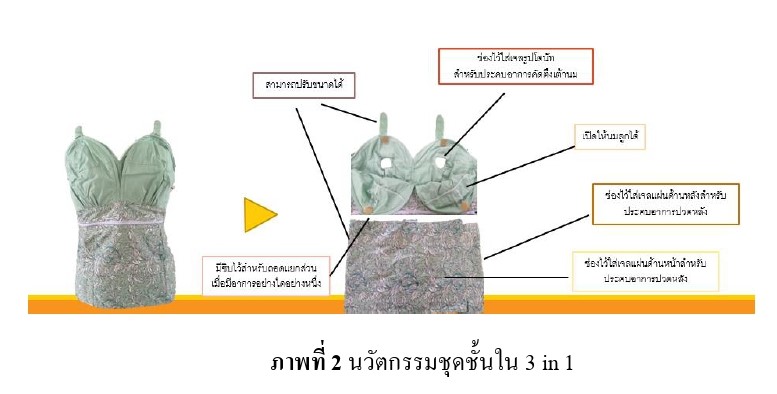
ประสิทธิภาพของนวัตกรรมชุดชั้นใน 3 in 1 สานใยรักต่อการลดอาการคัดตึงเต้านม ปวดหลัง และปวดมดลูกในมารดาหลังคลอด
คำสำคัญ:
คัดตึงเต้านม, ปวดหลัง, ปวดมดลูก, มารดาหลังคลอด, ชุดชั้นใน 3 in 1 สานใยรักบทคัดย่อ
ความเป็นมาและวัตถุประสงค์ มารดาหลังคลอดปกติ ในโรงพยาบาลนราธิวาสราชนครินทร์
มีอาการคัดตึงเต้านม ปวดหลัง และปวดมดลูก และมารดาหลังคลอดต้องการบรรเทาอาการเหล่านี้ ผู้วิจัยจึงได้นำนวัตกรรมชุดชั้นใน 3 in 1 สานใยรัก มาใช้ในงานวิจัย การวิจัยครั้งนี้เป็นการวิจัยแบบกึ่งทดลอง วัดก่อนและหลังการใช้ชุดชั้นใน 3 in 1 สานใยรัก มีวัตถุประสงค์ เพื่อศึกษา 1) อาการคัดตึงเต้านม
ปวดหลัง และปวดมดลูกในมารดาหลังคลอด 2) เพื่อเปรียบเทียบอาการคัดตึงเต้านม ปวดหลัง
ปวดมดลูก ในมารดาหลังคลอด ก่อนและหลังการใช้นวัตกรรมชุดชั้นใน 3 in 1 สานใยรัก 3) เพื่อศึกษาความพึงพอใจต่อการใช้นวัตกรรมชุดชั้นใน 3 in 1 สานใยรัก
วิธีการวิจัย กลุ่มตัวอย่าง คือ มารดาหลังคลอด จำนวน 60 ราย รวบรวมข้อมูลโดยใช้ แบบสอบถามข้อมูลส่วนบุคคล แบบสอบถามอาการคัดตึงเต้านม อาการปวดหลัง อาการปวดมดลูก และแบบประเมินความพึงพอใจต่อการใช้นวัตกรรมชุดชั้นใน 3 in 1 สานใยรัก ต่ออาการคัดตึงเต้านม ปวดหลัง และปวดมดลูก ค่าความเชื่อมั่นสัมประสิทธิ์อัลฟ่าของครอนบาคของแบบสอบถามอาการคัดตึงเต้านม ปวดหลังและปวดมดลูก และแบบประเมินความพึงพอใจต่อการใช้นวัตกรรมชุดชั้นใน 3 in 1 สานใยรัก เท่ากับ 0.91 และ 0.86 ตามลำดับ วิเคราะห์ข้อมูลโดยใช้สถิติเชิงพรรณนา และ Paired t-test
ผลการวิจัย พบว่ามารดาหลังคลอดก่อนการใช้นวัตกรรมชุดชั้นใน 3 in 1 สานใยรัก มีคะแนนอาการคัดตึงเต้านม อยู่ในระดับเล็กน้อย ร้อยละ 45 และอยู่ในระดับปานกลาง ร้อยละ 45 มีคะแนนปวดหลังอยู่ในระดับปวดเล็กน้อย ร้อยละ 95 และมีคะแนนปวดมดลูกอยู่ในระดับปวดเล็กน้อย ร้อยละ 45 และอยู่ในระดับปวดปานกลาง ร้อยละ 45 มารดาหลังคลอดภายหลังการใช้นวัตกรรมชุดชั้นใน 3 in 1 สานใยรัก มีค่าเฉลี่ยคะแนนอาการคัดตึงเต้านม ปวดหลังและปวดมดลูกน้อยกว่าก่อนใช้อย่างมีนัยสำคัญทางสถิติที่ระดับ .05 (t = 2.15, 2.65, 2.85, p <.05) และความพึงพอใจของมารดาหลังคลอด ภายหลังการใช้นวัตกรรมชุดชั้นใน 3 in 1 สานใยรัก เพื่อลดอาการคัดตึงเต้านม ปวดหลัง ปวดมดลูก อยู่ในระดับมาก (M = 2.65, S.D. = 0.36)
สรุปและข้อเสนอแนะ นวัตกรรมชุดชั้นใน 3 in 1 สานใยรัก สามารถใช้ลดอาการคัดตึงเต้านม อาการปวดหลัง และอาการปวดมดลูกในมารดาหลังคลอดปกติ โดยเป็นการบรรเทาความเจ็บปวดโดยไม่ใช้ยา และสามารถนำนวัตกรรมนี้ไปปรับใช้โดยการนำสมุนไพรพื้นบ้านในสามจังหวัดชายแดนภาคใต้ที่มีคุณสมบัติบรรเทาอาการคัดตึงเต้านม ปวดหลัง และอาการปวดมดลูกมาแทนเจลได้ในงานวิจัยครั้งต่อไป
เอกสารอ้างอิง
Amudha, N., & Prakash, D. (2023). Gua-sha therapy on breast engorgement among Indian postnatal mothers. Bioinformation, 19(8), 853 - 859. https://pmc.ncbi.nlm.nih.gov/articles/PMC106 13815/pdf/97320630019853.pdf
Butdapan, P., Saeheng, P., Pongpanich, P., Maneechai, K., Duangdee, T., Suwannatrai, U., Akaraseenont, P., & Tachaviriya, O. (2024). Relieving breast engorgement in postpartum women with Thai traditional massage and hot herbal compression. Siriraj Medical Bulletin, 17(3), 339-345. https://he02.tci-thaijo.org/index.php/simedbull/article/view/269752/184781
Chan, J., Sultana, R., Mathur, D., Tan, C., & Sng, B. (2025). The association of pain and psychological vulnerabilities with postpartum pain catastrophizing: A secondary analysis of a randomized controlled trial association de la douleur et des vulne´rabilite´s psychologiques avec la catastrophisation de la douleur en post-partum: une analyse secondaire d’une e´tude randomise´e controˆle´e. Canadian Journal of Anesthesia-Journal canadien d anesthesie, 72, 603 - 614. https://doi.org/10.1007/s12630-025-02920-8
Coad, J., & Dunstall, M. (2011). Anatomy and physiology for midwives (3rded.). ChurchillLivingstone. https://www.scirp.org/reference/referencespapers?referenceid=2873841
Ekthamasuth, C., & Suvithayasiri, K. (2017). Nursing during childbirth. Pimdeekarnpin.
Faul, F., Erdfelder, E., Lang, A., & Buchner, A. (2007). G*Power 3: A flexible statistical power analysis program for the social, behavioral, and biomedical sciences. Behavior Research Methods, 39(2), 175 - 191. https://link.springer.com/article/10.3758/BF03193146
Ghattas, V., Ali, Z., & Farahat, M. (2024). Effect of effleurage massage versus heat patch on afterpain level among multipara postnatal women. Assiut Scientific Nursing Journal, 12(44), 131-140. https://doi.org/10.21608/asnj.2024.283041.1811
Hasanah, N., Susanti, R., Manurung, B., Sinaga, R., Ginting, S., & Angkat, R. (2024). Management of postpartum midwifery care on Mrs. J with engorgement of the breast. The 4rd Mitra Husada Health International Conference (MiHHICo), 4, 79 - 86. https://prosidingmhm.mitrahusada. ac.id/index.php/mihhico/article/view/197
Indrani, D., & Sowmya, M. (2019). A study to find the prevalence of breast engorgement among lactating mothers. HSOA Journal of Reproductive Medicine, Gynaecology & Obstetrics, 4(023), 1 - 5. https://www.heraldopenaccess.us/article_pdf/63/a-study-to-find-the-prevalence-of-breast-engorgement-among-lactating-mothers.pdf
Kennell, J., & Klaus, M. (1984). Mother-infant bonding: Weighing the evidence. Developmental Review, 4(3), 275 - 282. https://doi.org/10.1016/S0273-2297(84)80008-8
Klaus, M., & Kennell, J. (1982). Parent-infant bonding (2nd ed.). Mosby.
Kontiang, C., & Prachusilpa, G. (2007). The effect of using the preventive breast engorgement program in post-cesareen delivery. Journal of Nursing Science Chulalongkorn University, 19(2), 60 - 71. https://index.library.tu.ac.th/cgi-bin/koha/opac-detail.pl?biblionumber=141946
Lertsakornsiri, M. (2023). Mindfulness concepts and methods. Suan Sunandha Academic & Research Review Journal, 17(2), 105-117. https://so05.tci-thaijo.org/index.php/ssajournal/article/ view/257628/180338
Maega, S. (2025). Registered nurse, professional level, Naradhiwasrajanagarindra Hospital. Interview.
Melzack, R., & Wall, P. (1965). Pain mechanisms: A new theory. Science, 150(3699), 971 - 979.
https://doi.org/10.1126/science.150.3699.971
Ngestiningrum, A., & Nuryani, N. (2025). Effectiveness of couple classes in increasing breastfeeding rates and preventing breast engorgement. Health Dynamics, 2(2s), 31 - 37. https://journals.indexcopernicus.com/api/file/viewByFileId/2295112
Nootara, K., Panthong, S., & Wongtao, C. (2022). Postpartum mothers: The effectiveness of a Thai herbal compress with nano fabrics on breast engorgement and milk ejection. Journal or Nursing and Education, 15(4), 57 - 68. https://he01.tcithaijo.org/index.php/JNAE/article/ view/256590/174996
Ojha, A. (2025). A study to evaluate the effectiveness of cabbage leaves application on breast engorgement among post-natal mothers in Sultaniya Hospital, Bhopal. International Journal of Nursing Didactics, 15(03), 1-3. https://nursingdidactics.com/index.php/ijnd/article/view/3404
Pagare, V., Jackson, K., Shreif, K., Thomas, E., Willis, R., Buxton, S., Rhule, V., Lopez, L., Coetsee, M. (2024, August 5). Visual Analogue Scale. Physiopedia. https://www.physiopedia.com/ Visual_Analogue_Scale
Prastyoningsih, A., Wijayanti., Prawistya, A., & Julia, J. (2023). Management application of aloe vera compresses and back massage for breast engagement in postpartum mothers: Experiment study. International Journal of Public Health Excellence (IJPHE), 3(1), 200 - 205. https://ejournal.ipinternasional.com/index.php/ijphe/article/view/550/532
Rodgers, R., Campagna, J., Hayes, G., Sharma, A., Runquist, E., Fiuza, A., Coburn-Sanderson, A., Zimmerman, E., & Piran, N. (2024). Experiences of embodiment during pregnancy and the postpartum period: A qualitative study. Body Image, 48. https://www.sciencedirect.com/ science/article/abs/pii/S1740144523001882?via%3Dihub
Ruchat, S., Beamish, N., Pellerin, S., Usman, M., Dufour, S., Meyer, S., Sivak, A., & Davenport, M. (2025). Impact of exercise on musculoskeletal pain and disability in the postpartum period: A systematic review and meta-analysis. BMJ Journal of Sports Medicine, 59(8), 594 - 604. https://bjsm.bmj.com/content/59/8/594
Sendas, M., & Freitas, M. (2024). The needs of women in the postpartum period: A scoping review. Midwifery, 136. https://www.sciencedirect.com/science/article/abs/pii/S0266613824001815
Siriphan, S., Chaiprasit, K., Chemama, N., Kaleang, N., Suphantaworachat, N., Sawan, S., Niyomdeeha, N., Chiddee, K., & Thanthadaphan, R. (2022). Study on the effectiveness of managing a project to produce 3-in-1 bras, designed to alleviate breast engorgement,back pain, and uterine pain in postpartum mothers, to promote employment opportunities for unemployed housewives in Narathiwat Province. Faculty of Nursing, Naradhiwat Rajanagarind University.
Song, J., & Hur, M. (2019). A systematic review of breast care for postpartum mothers. Korean Journal of Women Health Nursing, 25(3), 258 - 272. https://doi.org/10.4069/kjwhn.2019.25. 3.258
Tantinantrakun, A., Sukwanit, S., Thompson, A., & Teerachaichayut, S. (2023). Nondestructive evaluation of SW-NIRS and NIR-HSI for predicting the maturity index of intact pineapples. Postharvest Biology and Technology, 195, 112141. https://doi.org/10.1016/j. postharvbio.2022.112141
Tongprasert, F. (2021). Puerperium. In T. Thongsong (Eds.), Obstetrics (pp. 193). Laxmirung.
ดาวน์โหลด
เผยแพร่แล้ว
รูปแบบการอ้างอิง
ฉบับ
ประเภทบทความ
สัญญาอนุญาต
ลิขสิทธิ์ (c) 2025 วารสารมหาวิทยาลัยนราธิวาสราชนครินทร์

อนุญาตภายใต้เงื่อนไข Creative Commons Attribution-NonCommercial-NoDerivatives 4.0 International License.