The ปัจจัยที่มีผลต่อพฤติกรรมเสี่ยงทางเพศของนักศึกษาพยาบาล มหาวิทยาลัยรัฐแห่งหนึ่งในภาคใต้
คำสำคัญ:
พฤติกรรมเสี่ยงทางเพศ, นักศึกษาพยาบาล, ปัจจัยทำนายบทคัดย่อ
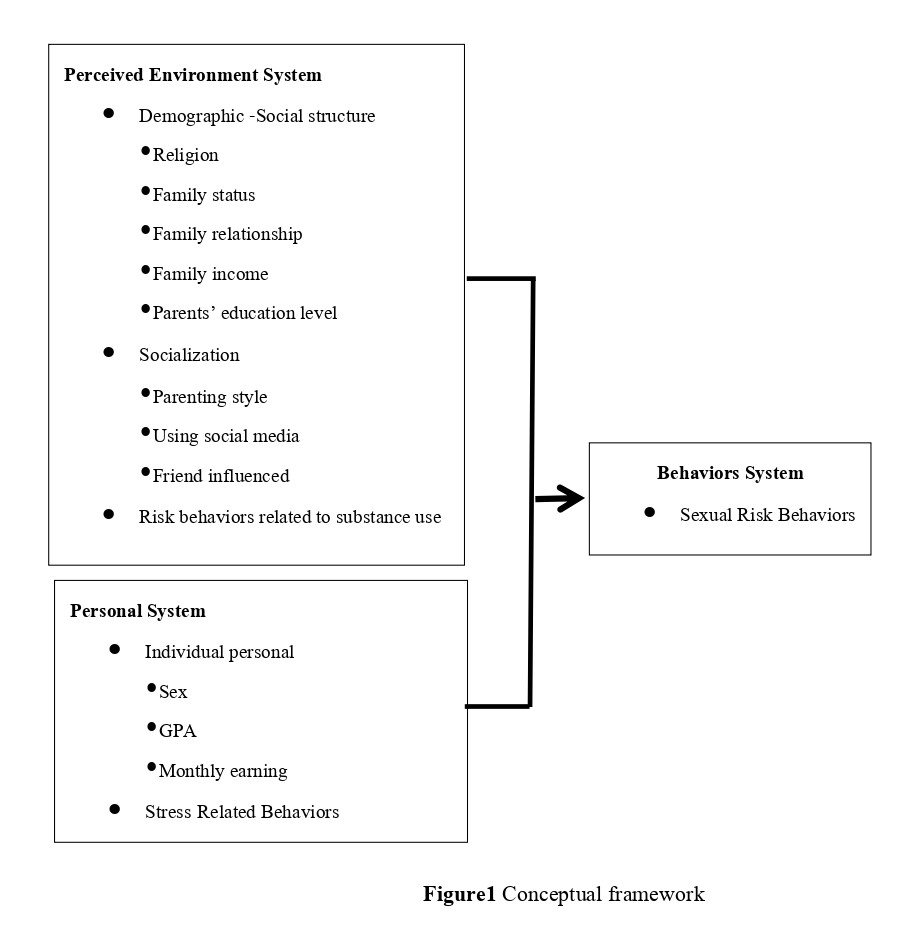
ความเป็นมาและวัตถุประสงค์ ปัญหาพฤติกรรมเสี่ยงทางเพศในกลุ่มวัยรุ่น ยังคงเป็นประเด็นสำคัญด้านสาธารณสุขของไทย ส่งผลให้เกิดการตั้งครรภ์ที่ไม่พึงประสงค์ การติดเชื้อทางเพศสัมพันธ์ และผลกระทบด้านจิตสังคม นักศึกษาพยาบาลซึ่งอยู่ในช่วงวัยรุ่นตอนปลายถึงวัยผู้ใหญ่ตอนต้นถือเป็นกลุ่มที่มีความเสี่ยง อีกทั้งยังเป็นบุคลากรสุขภาพในอนาคตที่ต้องเป็นแบบอย่างด้านพฤติกรรมสุขภาพ การศึกษานี้ มีวัตถุประสงค์เพื่อระบุปัจจัยที่มีผลต่อพฤติกรรมเสี่ยงทางเพศของนักศึกษาคณะพยาบาลศาสตร์ มหาวิทยาลัยรัฐแห่งหนึ่งในภาคใต้
วิธีการวิจัย การศึกษาหาปัจจัยทำนาย กลุ่มตัวอย่างคือนักศึกษาพยาบาล ชั้นปีที่ 1 - 4 จำนวน 143 คน เครื่องมือวิจัยประกอบด้วย 4 ส่วน คือ แบบสอบถามข้อมูลส่วนบุคคล แบบสอบถามพฤติกรรมเสี่ยงต่อการใช้สารเสพติด แบบสอบถามพฤติกรรมเสี่ยงทางเพศ และแบบประเมินความเครียด ตรวจสอบความตรงเชิงเนื้อหา (IOC) โดยให้ผู้ทรงคุณวุฒิ 3 ท่าน ค่าอยู่ระหว่าง 0.75 – 0.98 และหาค่าความเชื่อมั่นด้วย Cronbach’s Alpha ของแบบสอบถามพฤติกรรมเสี่ยงต่อการใช้สารเสพติดและแบบประเมินความเครียดได้ เท่ากับ 0.75 และ 0.85 ตามลำดับ แบบสอบถามพฤติกรรมเสี่ยงทางเพศได้ค่า KR-20 เท่ากับ 0.84 วิเคราะห์ข้อมูลโดยใช้สถิติพรรณนา ค่าเฉลี่ย ส่วนเบี่ยงเบนมาตรฐาน สถิติสหสัมพันธ์ของเพียร์สัน (Pearson Correlation Coefficient) และการวิเคราะห์การถดถอยพหุคูณแบบปกติ (Enter Regression Analysis)
ผลการวิจัย พบว่า ปัจจัยที่มีผลต่อพฤติกรรมเสี่ยงทางเพศของนักศึกษาพยาบาล ได้แก่ พฤติกรรมเสี่ยงต่อการใช้สารเสพติด (B = .27, β = .28, t = 4.31) อย่างมีนัยสำคัญทางสถิติ โดยสามารถร่วมกันทำนายพฤติกรรมเสี่ยงทางเพศได้ร้อยละ 11 (R2= .11, F=9.29)
สรุปและข้อเสนอแนะ ผลการวิจัยนี้ชี้ให้เห็นปัจจัยที่มีผลต่อพฤติกรรมเสี่ยงทางเพศ คือ พฤติกรรมเสี่ยงต่อการใช้สารเสพติด ซึ่งควรนำไปพิจารณาในการวางแผนการป้องกันและแก้ไขปัญหาพฤติกรรมเสี่ยงทางเพศในกลุ่มนักศึกษาพยาบาลต่อไป
เอกสารอ้างอิง
Al-Husban, R. Y., Altwalbeh, D., & Shoaib, H. (2022). Psychological distress among healthcare students: A cross-sectional study during the COVID-19 pandemic. PLOS ONE, 17(5), e0267399. https://doi.org/10.1371/journal.pone.0267399
Benchamas, J., Senahad, N., Padchasuwan, NH., Laoraksawong, P., Phimha, S., & Banchonhattakit, P. (2024). Factors associated with risky sexual behaviors among undergraduate students in Thailand. BMC Public Health, 24, 2967. https://doi.org/10.1186/s12889-024-20429-5
Choi, H., Kim, Y., & Park, S. (2022). Influence of peer pressure, parental monitoring, and media exposure on adolescent substance use in South Korea: A national survey. BMC Public Health, 22(1), 1157. https://doi.org/10.1186/s12889-022-13415-1
Department of Mental Health. (2021). Thai Adolescent Mental Health Report 2021. Ministry of Public Health. https://www.dmh.go.th
Espada, J. P., Morales, A., Orgiles, M., & Mendez, X. (2020). Substance use among college students: The role of stress and psychological distress. Journal of American College Health, 68(8), 813 – 819. https://doi.org/10.1080/07448481.2019.1635591
Hansen, W. B., Paskett, E. D., & Carter, L. J. (1999). The Adolescent Sexual Activity Index (ASAI): A standardized strategy for measuring interpersonal heterosexual behaviors among youth. Health Education Research, 14(4), 485 – 490. https://doi.org/10.1093/her/14.4.485
Jessor, R. (1991). Risk behavior in adolescence: A psychosocial framework for understanding and action. Journal of Adolescent Health, 12(8), 597 – 605. http://doi.org/10.1016/1054-139x(91)90007-k
Landa-Blanco, M., Va squez, G., Portillo, G., Sproviero, F., & Echenique, Y. (2024). The impact of Adverse childhood experiences on mental health, sexual risk behaviors, and alcohol consumption in adulthood. Front. Psychiatry, 15, 1352824. http://doi.org/10.3389/fpsyt. 2024.1352824
Leyatikul, P., Kanato, M., Wonguppa, R., & Kompudsa, J. (2025). The Relationship between Substance Abuse with Risk Behaviors among Youth in Schools in Nakhon Ratchasima Province. Journal of Vongchavalitkul University, 38(1), 90 - 104. https://ph01.tcithaijo.org/index.php/ vujournal/article/view/262719/174658
Luna, D., Vargas de la Cruz, I., Barrera Hernandez, L. F., Figuerola Escoto, R.P., Gomez Cotero, A.G., & Toledano-Toledano, F. (2024). Risky Sexual Behaviors in Women and Their Relationship with Alcohol Consumption, Tobacco, and Academic Stress: A Multiple Correspondence Analysis Approach. Sexes, 5, 498 – 520. https://doi.org/10.3390/ sexes5040035
Panich, P. (2025). Factors Associated with Sexual Behavior Among Vocational Students in the Second Year of the Certificate Program in Trang Province. Academic. Journal for Primary Care and Public Health Development, 3(1), 185 - 201. https://he03.tcithaijo.org/index.php/AJHSD/article/view/ 4296/3145
Peng, S., & Zeng, C. (2025). Student academic performance: the influence of peers ‘problem behaviors and moderating effect of educational expectation. Journal of Humanities and Applied Social Sciences, 2632-279X. https://doi.org/10.1108/JHASS-05-2025-0089
Pichaisongkram, S. (2024). A development model of preventing sexual risk behaviors for early adolescence Thai Muslim girls [Doctoral dissertation, Thammasat University]. Thammasat University Digital Collections. https://ethesisarchive.library.tu.ac.th/thesis/2024/ TU_2024_6114320051_16552_ 29483.pdf
Pichaisongkram, S., Kongvattananon, P., Shu, BC. & Wacharasin, C. (2025). Effectiveness of a Sexual Risk Behaviors Prevention Program among Early Adolescent Thai Muslim Girls: A Quasi-Experimental Study. Pacific Rim Int J Nurs Res, 29(1), 165-183. https://doi.org/10.60099/ prijnr.2025.270729
Saeed, H., Hassan, A., & Niazi, S. K. (2021). Risky sexual behavior and associated factors among universities students: A cross-sectional study. BMC Public Health, 21, 1674. https://doi.org/10.1186/ s12889-021-11702-z
Soontonmalai, K. & Chanjaem, P. (2024). Factors Related to Stress and Coping with Stress of Fundamental Nursing Practicum Practices Students in Private University. Journal of Research for Health Improvement and Quality of Life, 4(3), 99 - 110. https://he02.tci-thaijo.org/index.php/RHQJ/article/view/269936/185896
Thai Health Promotion Foundation. (2020). Report on risk behaviors of Thai youth 2020. https://resourcecenter.thaihealth.or.th
UNESCO. (2021). International technical guidance on sexuality education: An evidence-informed approach. https://unesdoc.unesco.org/ark:/48223/pf0000373348
World Health Organization. (2022). Youth and health risks: Global evidence overview. https://www.who.int/publications/i/item/youth-risk-behavior
ดาวน์โหลด
เผยแพร่แล้ว
รูปแบบการอ้างอิง
ฉบับ
ประเภทบทความ
สัญญาอนุญาต
ลิขสิทธิ์ (c) 2025 วารสารมหาวิทยาลัยนราธิวาสราชนครินทร์

อนุญาตภายใต้เงื่อนไข Creative Commons Attribution-NonCommercial-NoDerivatives 4.0 International License.