การพัฒนาโปรแกรมส่งเสริมการเลี้ยงลูกด้วยนมแม่ในชุมชน โดยการมีส่วนร่วมของภาคีเครือข่ายสุขภาพ
คำสำคัญ:
การเลี้ยงลูกด้วยนมแม่, การมีส่วนร่วม, ชุมชน, ภาคีเครือข่ายสุขภาพ, การพัฒนาโปรแกรมบทคัดย่อ
ความเป็นมาและวัตถุประสงค์ อัตราการเลี้ยงลูกด้วยนมแม่อย่างเดียวในชุมชนยังไม่บรรลุเป้าหมาย เนื่องจากการขาดระบบสนับสนุนและการติดตามในชุมชน การวิจัยนี้มีวัตถุประสงค์เพื่อพัฒนาโปรแกรมส่งเสริมการเลี้ยงลูกด้วยนมแม่ในชุมชนโดยการมีส่วนร่วมของภาคีเครือข่ายสุขภาพ
วิธีการวิจัย การพัฒนาโปรแกรม ฯ ดำเนินการ 3 ขั้นตอน ได้แก่ 1) การออกแบบโปรแกรมโดยศึกษาสภาพปัญหาและความต้องการของชุมชน 2) การตรวจสอบคุณภาพ และ 3) การประเมินผลการทดลองใช้โปรแกรมกับกลุ่มตัวอย่าง ได้แก่ พยาบาลวิชาชีพ 4 คน อสม. 24 คน และมารดาหลังคลอด 5 คน เครื่องมือวิจัย ได้แก่ โปรแกรมส่งเสริมการเลี้ยงลูกด้วยนมแม่ในชุมชน แบบประเมินความรู้ แบบสังเกตทักษะการเลี้ยงลูกด้วยนมแม่ แบบบันทึก / ติดตามการให้อาหารทารก และแบบสัมภาษณ์
การเลี้ยงลูกด้วยนมแม่อย่างเดียว วิเคราะห์ข้อมูลเชิงเนื้อหาและเชิงปริมาณโดยใช้สถิติพรรณนา
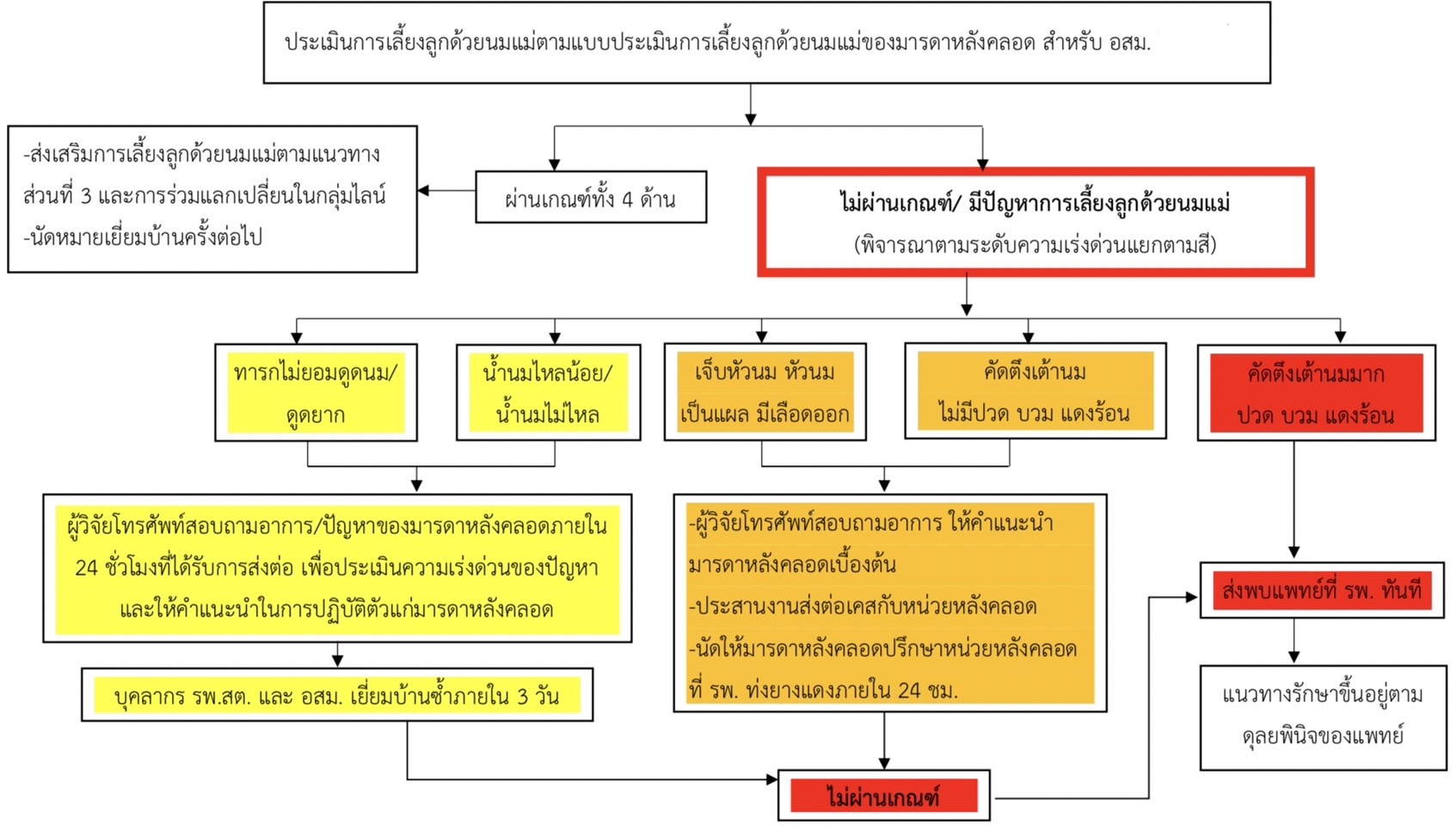
ผลการวิจัย พบว่า โปรแกรมส่งเสริมการเลี้ยงลูกด้วยนมแม่ในชุมชนโดยการมีส่วนร่วมของภาคีเครือข่ายสุขภาพ มี 2 องค์ประกอบหลัก คือ 1) ขั้นตอนของโปรแกรม แบ่งเป็นระยะเตรียมภาคีเครือข่ายสุขภาพเพื่อพัฒนาความรู้และทักษะด้านการเลี้ยงลูกด้วยนมแม่ และระยะดำเนินงานในชุมชนโดยการเยี่ยมบ้านในสัปดาห์ที่ 1, 2 และ 6 หลังคลอด ร่วมกับการสนับสนุนมารดาหลังคลอดผ่านกลุ่มไลน์ และ
2) เครื่องมือที่ใช้ในโปรแกรม ประกอบด้วย เครื่องมือดำเนินการทดลอง และเครื่องมือเก็บรวบรวมข้อมูลการตรวจสอบคุณภาพ พบว่า ขั้นตอนโปรแกรม ฯ และเครื่องมือดำเนินการทดลอง 4 ส่วน ได้แก่ แผนการเตรียมภาคีเครือข่ายสุขภาพ คู่มือการเลี้ยงลูกด้วยนมแม่ในชุมชน แผนการสนับสนุนมารดาหลังคลอดผ่านกลุ่มไลน์ และแผนการเยี่ยมบ้านมารดาหลังคลอด มีค่าดัชนีความตรงเชิงเนื้อหา 1.00 ขณะที่เครื่องมือเก็บรวบรวมข้อมูล ได้แก่ แบบประเมินความรู้ แบบสังเกตทักษะการเลี้ยงลูกด้วยนมแม่ แบบบันทึก / ติดตามการให้อาหารทารก และแบบสัมภาษณ์การเลี้ยงลูกด้วยนมแม่อย่างเดียว
ผ่านการตรวจสอบคุณภาพเชิงเนื้อหาและความเที่ยงตามเกณฑ์มาตรฐานการประเมินผลการทดลองใช้โปรแกรม ฯ พบว่า คะแนนความรู้การเลี้ยงลูกด้วยนมแม่ของอาสาสมัครสาธารณสุขประจำหมู่บ้าน (อสม.) เพิ่มขึ้นจาก 16.33 (S.D. = 0.66) เป็น 18.46 (S.D. = 0.25) ขณะที่กลุ่มพยาบาลวิชาชีพเพิ่มจาก 19.75 (S.D. = 0.25) เป็น 20.00 (S.D. = 0.00) ทั้งสองกลุ่มมีคะแนนทักษะการเลี้ยงลูกด้วยนมแม่ทุกทักษะ ร้อยละ 100 และเมื่อนำโปรแกรมไปดำเนินงานในชุมชนกับมารดาหลังคลอดภายใน 6 สัปดาห์แรก พบว่า มีอัตราการเลี้ยงลูกด้วยนมแม่อย่างเดียวที่ 6 สัปดาห์ผ่านเกณฑ์ที่ตั้งไว้ร้อยละ 80 โดยมีระยะเวลาเฉลี่ย 37.40 วัน (S.D. = 10.28)
สรุปและข้อเสนอแนะ โปรแกรมส่งเสริมการเลี้ยงลูกด้วยนมแม่โดยภาคีเครือข่ายสุขภาพช่วยเพิ่มความรู้และทักษะแก่ทั้ง อสม. และพยาบาลวิชาชีพ มารดาหลังคลอดที่ได้รับการดูแลในโปรแกรมมีอัตราการเลี้ยงลูกด้วยนมแม่อย่างเดียวร้อยละ 80 และระยะเวลาการเลี้ยงลูกด้วยนมแม่ที่ต่อเนื่องในช่วงที่ศึกษา จึงควรประยุกต์ใช้ในชุมชนที่มีบริบทใกล้เคียง และศึกษาผลระยะยาวในกลุ่มตัวอย่างขนาดใหญ่ขึ้น
เอกสารอ้างอิง
Abdulahi, M., Fretheim, A., Argaw, A., & Magnus, J. H. (2021). Breastfeeding education and support to improve early initiation and exclusive breastfeeding practices and infant growth: A cluster randomized controlled trial from a rural Ethiopian setting. Nutrients, 13(4), 1204. https://doi.org/10.3390/nu13041204
Aldalili, A. Y. A., & El Mahalli, A. A. (2021). Factors associated with cessation of exclusive breastfeeding. Journal of Multidisciplinary Healthcare, 14, 239 – 246. https://doi.org/10.2147/JMDH.S277819
Cetthakrikul, N., Voramongkol, N., Siritanaratkul, S., & Hangchaovanich, Y. (2024). Mothers’ needs and wishes for breastfeeding support in workplaces in Thailand: A qualitative study. International Breastfeeding Journal, 19, 67. https://doi.org/10.1186/s13006-024-00674-5
Chambers, A., Emmott, E. H., Myers, S., & Page, A. E. (2023). Emotional and informational social support from health visitors and breastfeeding outcomes in the UK. International Breastfeeding Journal, 18(1), 14. https://doi.org/10.1186/s13006-023-00551-7
Chang, Y. S., Beake, S., Kam, J., Lok, K. Y. W., & Bick, D. (2022). Views and experiences of women, peer supporters and healthcare professionals on breastfeeding peer support: A systematic review of qualitative studies. Midwifery, 108, 103299. https://doi.org/10.1016/ j.midw.2022.103299
Chainok, L. (2015). Factors Influencing Breast Feeding Behaviors of Postpartum Adolescent Mothers in Maharat Nakhonratchasima Hospital. Institute of Nursing: Suranaree University of Technology. http://sutir.sut.ac.th:8080/teachingpub/bitstream/123456789/5712/2/fulltext.pdf
Chemama, N., Hayee, F., Siriphan, S., Yodkaew, U., Maropi, A., Walohtae, W. F., Jarintanan, P., & Doloh, S. (2025). Anemia management among pregnant and postpartum women in Thailand’s southern border provinces: An ethnographic study. Princess of Naradhiwas University Journal, 18(1), 70–91. https://li01.tci-thaijo.org/index.php/pnujr/article/view/269700
Chiablam, P., Sinsuksai, N., & Thananowan, N. (2022). Effects of breastfeeding promotion–father’s involvement program on 1-month exclusive breastfeeding and perceived father’s support among first-time mothers. Nursing Science Journal of Thailand, 40(4), 33 – 48. https://he02.tci-thaijo.org/index.php/ns/article/view/253296
Chuenban, P., & Yaebkai, Y. (2024). A model of breastfeeding and maternal and child health performance among village health volunteers. Journal of Social Science and Cultural, 8(12), 184 – 197. https://so06.tci-thaijo.org/index.php/JSC/article/view/279258
Cohen, J. M., & Uphoff, N. T. (1980). Participation’s place in rural development: Seeking clarity through specificity. World Development, 8(3), 213 – 235. https://doi.org/10.1016/0305-750X(80)90011-X
Couto, C., Prata, A. P., Souto, S. P., Machado, J., & Viana, C. R. (2025). Nurse and midwife interventions to protect, promote and support breastfeeding: An umbrella review. Midwifery, 144, 104337. https://doi.org/10.1016/j.midw.2025.104337
Couto, G. R., Dias, V., & de Jesus Oliveira, I. (2020). Benefits of exclusive breastfeeding: An integrative review. Nursing Practice Today, 7(4), 245 – 254. https://doi.org/10.18502/npt. v7i4.4034
Department of Health. (2024). Department of Health Action Plan for 2024. https://planning.anamai.moph.go.th/th/monitoring6m67/download?id=118163&mid=39230&mkey=m_document&lang=th&did=34964
Fallahnejad, R., Zarshenas, M., Valiani, M., Saysdi, M., & Akbarzadeh, M. (2021). Investigation of the effect of postpartum home visit intervention on promoting mothers’ exclusive breastfeeding in Falavarjan, Isfahan Province: Clinical trial research. Family Medicine & Primary Care Review, 23(3), 301 – 306. https://doi.org/10.5114/fmpcr.2021.108194
Grimes, H. A., Shafiei, T., McLachlan, H. L., & Forster, D. A. (2020). Volunteers’ experiences of providing telephone‑based breast‑feeding peer support in the RUBY randomised controlled trial. Public Health Nutrition, 23(16), 3005–3015. https://doi.org/10.1017/S136898002000124X
Health Data Center (2024, March 12). Exclusive breastfeeding rate among infants under 6 months. https://hdcservice.moph.go.th/hdc/reports/report.phpcat_id=1ed90bc32310b503b7ca9b32af425ae5&id=4164a7c49fcb2b8c3ccca67dcdf28bd0
House, J. S. (1987). Social support and social structure. Sociological Forum, 2(1), 135 – 146. https://doi.org/10.1007/BF01107897
Huang, R., Wan, Y., Yao, X., Wang, H., Cai, C., Xu, Y., & Jiang, H. (2023). Predictive factors of exclusive breastfeeding attrition at week 6 postpartum among mothers of preterm infants based on the theory of planned behaviour. Maternal & Child Nutrition, 19(2), e13470. https://doi.org/10.1111/mcn.13470
Kala, S., Khaonark, R., Tienmontree, K., Chairat, N., Sreepetch, S., & Damchuti, I. (2018). Development of a volunteer training program to promote breastfeeding in community. The Southern College Network Journal of Nursing and Public Health, 5(2), 16 – 29. https://he01.tci-thaijo.org/index.php/scnet/article/view/130677/97996
Kanjanawasee, S. (2016). Research and development for Thai education. Silpakorn Educational Research Journal, 8(2), 1 – 18. https://so05.tci-thaijo.org/index.php/suedureasearchjournal/ article/view/77495
Khanal, V., Nepal, M., & Subedi, N. (2023). Community-based peer support for exclusive breastfeeding in rural Nepal: A Quasi-experimental study. BMC Pregnancy and Childbirth, 23, 231. https://doi.org/10.1186/s12884-023-05678-9
Kultanan, J., Chunuan, S., Suwanruangsri, S., & Leelatiwanon, T. (2022). Factors affecting the participation of maternal and child health promotion among village health volunteers in lower-southern provinces. Journal of Research in Nursing-Midwifery and Health Sciences, 42(1), 73 – 84. https://he02.tci-thaijo.org/index.php/nur-psu/article/view/254996
LoCasale-Crouch, J., Wallace, M. K., Heeren, T., Kerr, S., Yue, Y., Deeken, G., Turnbull, K., Jaworski, B., Cubides Mateus, M., Moon, R., Hauck, F. R., Kellams, A., Colson, E., & Corwin, M. J. (2024). The importance of community Resources for breastfeeding. International Breastfeeding Journal, 19(1), 16. https://doi.org/10.1186/s13006-024-00623-2
Mekkamol, K., Wichainprapha, A., Nitirat, P., Ngamkan, W., & Sitthichocke, S. (2020). The effectiveness of breastfeeding promotion by a volunteer mother group program on the knowledge, attitude, and behavior related to exclusive breastfeeding for 6 months and opinions toward breastfeeding promotion among a group of volunteer postpartum mothers. Journal of Health and Nursing Education, 26(1), 28 – 44. https://he02.tci-thaijo.org/index.php/Jolbcnm/article/view/242916
Modak, A., Ronghe, V., & Gomase, K. P. (2023). The psychological benefits of breastfeeding: Fostering maternal well-being and child development. Cureus, 15(10), e46730. https://doi.org/10.7759/cureus.46730
Morse, H., & Brown, A. (2022). The benefits, challenges and impacts of accessing social media group support for breastfeeding: A systematic review. Maternal & Child Nutrition, 18(4), e13399. https://doi.org/10.1111/mcn.13399
Olga, L., van Diepen, J. A., Gross, G., Dunger, D. B., & Ong, K. K. (2022). Early weight gain influences duration of breast feeding: Prospective cohort study. Archives of Disease in Childhood, 107(11), 1034 - 1037. http://doi.org/10.1136/archdischild-2022-323999
Polit, D. F., & Beck, C. T. (2021). Nursing research: Generating and assessing evidence for nursing practice (11th ed.). Wolters Kluwer.
Puttaraksa, S. (2024). Effects of social support program via electronic media on breastfeeding during 6 weeks postpartum among first-time mothers. Journal of Environmental and Community Health, 9(5), 585 – 594. https://he03.tcithaijo.org/index.php/ech/article/view/3451
Sinthuthai, S., & Nuiman, N. (2023). Development of a breastfeeding promotion model in Pattani Hospital. Journal of Health and Nursing Education, 29(1), e260259. https://he02.tci-thaijo.org/index.php/Jolbcnm/article/view/260259
Somsuk, C. (2020). Study on Period and Major Factors for Mothers and Babysitters in the Beginning of Baby Feeding with Powdered Milk or Other Foods in Bangkok. https://hp.anamai.moph.go.th/researchperson/downloadid=73767&mid=35022&mkey=m_document&lang=th&did=24070
Sukarawan, S., Thapinta, D., Xuto, P., & Chaloumsuk, N. (2024). Determinants and prevalence of exclusive breastfeeding among Thai Muslim mothers: A cross-sectional analysis. Pacific Rim International Journal of Nursing Research, 28(2), 390 – 406. https://doi.org/10.60099/prijnr.2024.265857
Suthasmalee, P., & Phaloprakarn, C. (2024). Association between breastfeeding and postpartum metabolic outcomes among women with prior gestational diabetes mellitus in Thailand. International Breastfeeding Journal, 19, 25. https://doi.org/10.1186/s13006-024-00632-1
Wang, Y., Mao, K., Chu, M., & Lu, X. (2024). Perinatal maternal factors influencing postpartum feeding practices at six weeks. BMC Pregnancy and Childbirth, 24, 1 – 12. https://doi.org/10.1186/s12884-024-06711-9
World Health Organization. (2022). Global Breastfeeding Scorecard 2022: Protecting Breastfeeding through Further Investments and Policy Actions. https://www.who.int/publications/i/item/ WHO-HEP-NFS-22.6
ดาวน์โหลด
เผยแพร่แล้ว
รูปแบบการอ้างอิง
ฉบับ
ประเภทบทความ
สัญญาอนุญาต
ลิขสิทธิ์ (c) 2026 วารสารมหาวิทยาลัยนราธิวาสราชนครินทร์

อนุญาตภายใต้เงื่อนไข Creative Commons Attribution-NonCommercial-NoDerivatives 4.0 International License.