
ปัจจัยที่มีผลต่อการเกิดภาวะซึมเศร้าของหญิงตั้งครรภ์ในชุมชนชายแดนภาคใต้
คำสำคัญ:
ภาวะซึมเศร้า, หญิงตั้งครรภ์, ชุมชนชายแดนภาคใต้, สัมพันธภาพคู่สมรส, ครอบครัวบทคัดย่อ
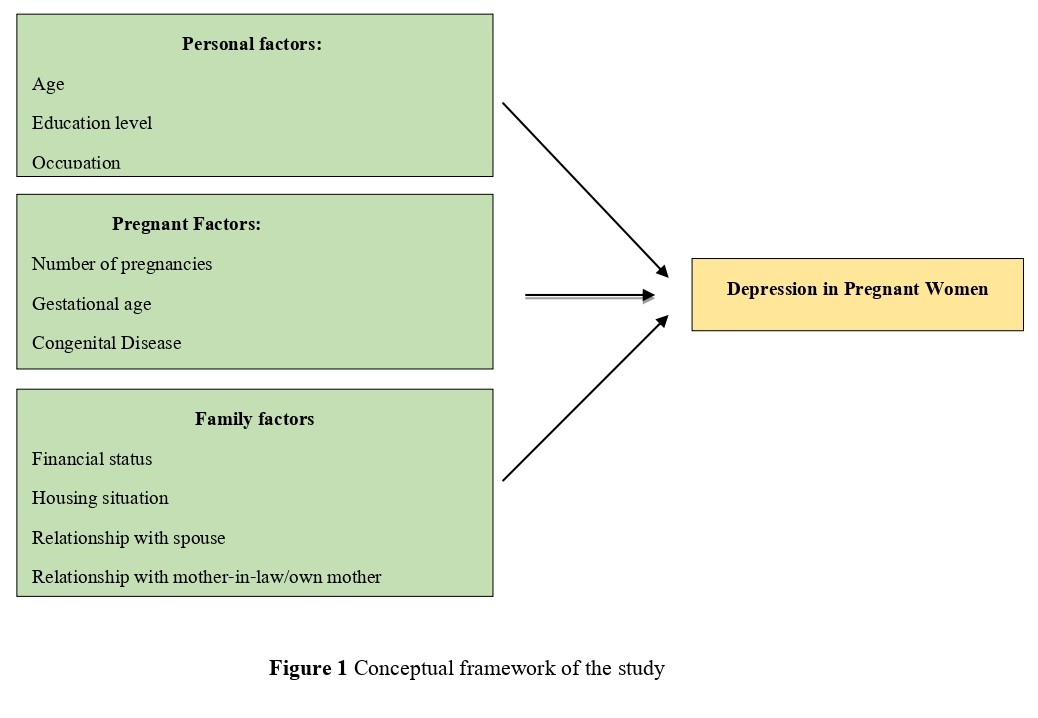
ความเป็นมาและวัตถุประสงค์ หญิงตั้งครรภ์ในชุมชนชายแดนภาคใต้ มีความเสี่ยงที่จะเกิดภาวะซึมเศร้าจากปัจจัยส่วนบุคคล ปัจจัยการตั้งครรภ์และปัจจัยครอบครัว ซึ่งจำเป็นต้องได้รับการดูแลเพื่อป้องการเกิดปัญหาสุขภาพจิตที่รุนแรง การศึกษานี้มีวัตถุประสงค์เพื่อศึกษาภาวะซึมเศร้าและปัจจัยที่มีผลต่อการเกิดภาวะซึมเศร้าในหญิงตั้งครรภ์ในชุมชนชายแดนภาคใต้
วิธีการวิจัย กลุ่มตัวอย่างคือหญิงตั้งครรภ์จำนวน 150 ราย คัดเลือกแบบเฉพาะเจาะจงตามเกณฑ์
ที่กำหนด เครื่องมือที่ใช้ประกอบด้วย แบบสอบถามปัจจัยส่วนบุคคล ปัจจัยครอบครัว ปัจจัยการตั้งครรภ์ ผ่านการตรวจสอบด้านเนื้อหาจากผู้ทรงคุณวุฒิ 3 ท่าน และค่าสัมประสิทธิ์ความเชื่อมั่นของครอนบาช เท่ากับ 0.82 และแบบประเมินภาวะซึมเศร้า (9Q) ของกรมสุขภาพจิต วิเคราะห์ข้อมูลด้วยสถิติเชิงพรรณนา และการถดถอยโลจิสติกพหุตัวแปร
ผลการวิจัย กลุ่มตัวอย่างร้อยละ 68.00 มีภาวะซึมเศร้า โดยในกลุ่มที่มีภาวะซึมเศร้า ส่วนใหญ่อยู่ในระดับปานกลาง (ร้อยละ 38.70) รองลงมาคือระดับน้อย (ร้อยละ 29.30) และไม่พบภาวะซึมเศร้าระดับรุนแรง ปัจจัยที่มีผลต่อการเกิดภาวะซึมเศร้าอย่างมีนัยสำคัญทางสถิติ (p < .05) ได้แก่ ระดับอายุ โดยกลุ่มที่มีอายุต่ำกว่า 20 ปี มีโอกาสเกิดภาวะซึมเศร้าเป็น 3.67 เท่า เมื่อเทียบกับกลุ่มอายุ 35 ปีขึ้นไป (OR = 3.67, 95 % CI = 0.87 – 15.38) และปัจจัยครอบครัว ด้านสัมพันธภาพกับคู่สมรส โดยกลุ่มที่สัมพันธภาพไม่ดีกับคู่สมรส มีโอกาสเกิดภาวะซึมเศร้าสูงถึงร้อยละ 87.0 และมีโอกาสเกิดภาวะซึมเศร้าเป็น 3.66 เท่า เมื่อเทียบกับกลุ่มที่มีสัมพันธภาพที่ดีกับคู่สมรส (OR = 3.66, 95 % CI = 1.03 - 12.99)
สรุปและข้อเสนอแนะ ผลการศึกษาสะท้อนให้เห็นว่าปัจจัยด้านอายุ และปัจจัยครอบครัวด้านสัมพันธภาพกับคู่สมรส มีความสำคัญอย่างมากต่อภาวะซึมเศร้าของหญิงตั้งครรภ์ ในชุมชนพื้นที่ชายแดนภาคใต้ จึงควรมีการส่งเสริมและดูแลสุขภาพจิตอย่างรอบด้านเพื่อป้องกันภาวะซึมเศร้าในระยะตั้งครรภ์
เอกสารอ้างอิง
American College of Obstetricians and Gynecologists. (2023). Treatment and Management of Mental Health Conditions During Pregnancy and Postpartum. Obstetrics & Gynecology, 141(6), 1262 – 1288. http://doi.org/10.1097/AOG.0000000000005202
Anusornteerakul, S., Sitthi, K., Ounkaew, A., Hanklar, S., & Mokarat, P. (2022). The prevalence and coherence of stress, risk of depression, and depression among pregnant women. Journal of Nursing Science & Health, 45(3), 37 – 47. https://he01.tci-thaijo.org/index.php/nah/article/view/256018
Boonpaisarnbundarn, P., & Bangoen, P. (2025). Prevalence and factors associated with depression among pregnant women attending antenatal care at Prakhon Chai Hospital, Buriram Province. Mahasarakham Hospital Journal, 22(2), 87 – 97. https://he02.tcithaijo.org/index.php/MKHJ/article/view/273713
Bornstein, M.H., Henry, L.M., & Manian, N. (2021). Language development in children of clinically depressed mothers in remission: Early experience effects. Developmental Psychology, 57(6), 876 – 887. https://doi.org/10.1037/dev0001182
Buranacharoenkit, D. (2021). The situation of children, youth and women in the Southern Border Provinces. https://peaceresourcecollaborative.org/wp-content/uploads/2021/11/2021_Duanghatai_Situation.of_.Women_.Youth_.Children_DeepSouth.Thailand.pdf
Department of Mental Health. (2018). Handbook for surveillance and management of depression. Ministry of Public Health.
Department of Mental Health. (2020). Depression screening tool (9Q and 8Q). https://dmh.go.th/test/download/files/2Q%209Q%208Q%20(1).pdf
Khamngoen, R., Soparat, P., Pongsiri, D., & Klaokla, J. (2022). Factors associated with depression among pregnant adolescents. Journal of Network in Nursing and Midwifery of Southern Region, 9(1), 29 – 41. https://he01.tci-thaijo.org/index.php/scnet/article/view/244512
Namsorot, Y. (2021). Screening for depression and factors associated with depression in pregnant women visiting for the first antenatal care visit at Public Health Center 7, Khon Kaen [Master’s thesis]. KhonKaen University.
Narathiwat Provincial Office. (2018). Narathiwat provincial development plan 2018 - 2021. https://narathiwat.nso.go.th/images/stitic/t1.pdf
Okagbue, H. I., Adamu, P. I., Bishop, S. A., Oguntunde, P. E., Opanuga, A. A., & Akhmetshin, E. M. (2019). Systematic review of prevalence of antepartum depression during the trimesters of pregnancy. Open Access Macedonian Journal of Medical Sciences, 7(9), 1555 – 1560. https://pmc.ncbi.nlm.nih.gov/articles/PMC6542400/
Public Health Department, Narathiwat Provincial. (2022). Medical and public health data warehouse system Health Region 12: Screening for depression (2Q) in pregnant women. Author.
Quiñones, F., Winters, C., Hu, L., & Suvarnakar, A. (2023). Untreated major depression during gestation: The physical and mental implications in women and their offspring. Georgetown Medical Review, 7(1), e2023015. https://doi.org/10.52504/001c.83340
Seakarmela, K.P., Mashaba, R.G., Ntimana, C.B., Mbombi, M.O., Tlouyamma, J., Mphekgwana, P., Nemuramba, R., Mothapo, K., & Maimela, E. (2023). Prevalence and associated factors of probable depression amongst pregnant and parenting young females: A comparison of adolescents and young adults in rural South Africa. Frontiers in Child and Adolescent Psychiatry, 2, 1200759. https://doi.org/10.3389/frcha.2023.1200759
Smith, A., Twynstra, J., & Seabrook, J. (2019). Antenatal depression and offspring health outcomes. Obstetric Medicine, 13(2), 55 – 61. https://doi.org/10.1177/1753495X19843015
Thongsomboon, W., Kaewkiattikun, K., & Kerdcharoen, N. (2020). Perceived stress and associated factors among pregnant women attending antenatal care in urban Thailand. Psychology Research and Behavior Management, 13, 1115 – 1122. https://doi.org/10.2147/PRBM.S290196
Thorndike, R. L. (1978). Correlational procedures for research. Gardner Press.
Vongpradit, S., Chuennuan, S., & Yangwanichseth, S. (2022). Factors associated with depression in adolescent pregnant women. The Southern College Network Journal of Nursing and Public Health, 9(1), 29 – 41. https://he01.tci-thaijo.org/index.php/scnet/article/view/244512
Wongchantorn, N., Poomcharoen, R., & Seesuponkornkul, A. (2023). Stress and coping behavior among teenage pregnancy. Christian University Journal, 29(4), 103 – 117. https://he01.tci-thaijo.org/index.php/CUTJ/article/view/267034
World Health Organization. (2023, August 29). Depressive disorder (depression). https://www.who.int/news-room/fact-sheets/detail/depression
Zhang, L., Wang, L., Cui, S., Yuan, Q., Huang, C., & Zhou, X. (2021). Prenatal depression in women in the third trimester: Prevalence, predictive factors, and relationship with maternal-fetal attachment. Frontiers in Public Health, 8, 602005. https://doi.org/10.3389/fpubh. 2020.602005
ดาวน์โหลด
เผยแพร่แล้ว
รูปแบบการอ้างอิง
ฉบับ
ประเภทบทความ
สัญญาอนุญาต
ลิขสิทธิ์ (c) 2026 วารสารมหาวิทยาลัยนราธิวาสราชนครินทร์

อนุญาตภายใต้เงื่อนไข Creative Commons Attribution-NonCommercial-NoDerivatives 4.0 International License.