
ปัจจัยทำนายพัฒนาการด้านการคิดเชิงบริหารของเด็กวัยก่อนเรียนในสถานสงเคราะห์
คำสำคัญ:
พัฒนาการด้านการคิดเชิงบริหาร, เด็กวัยก่อนเรียน, สถานสงเคราะห์, พฤติกรรมการนอนหลับ, พัฒนาการด้านภาษาบทคัดย่อ
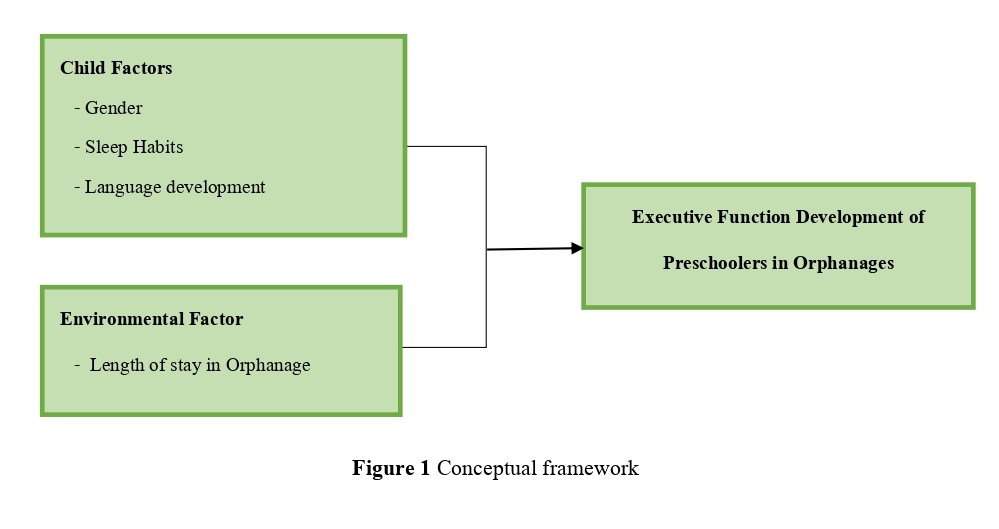
ความเป็นมาและวัตถุประสงค์ พัฒนาการด้านการคิดเชิงบริหารเป็นพื้นฐานสำคัญของการเรียนรู้ การควบคุมอารมณ์และพฤติกรรม เด็กวัยก่อนเรียนที่มีพัฒนาการด้านการคิดเชิงบริหารดีจะสามารถคิดวิเคราะห์ แก้ปัญหา ไม่หุนหันพลันแล่น และปรับตัวในสังคมได้ดีต่อไปในอนาคต การศึกษาครั้งนี้มีวัตถุประสงค์เพื่อศึกษาปัจจัยทำนายพัฒนาการด้านการคิดเชิงบริหารของเด็กวัยก่อนเรียนในสถานสงเคราะห์
วิธีการวิจัย การศึกษาแบบหาความสัมพันธ์เชิงทำนาย กลุ่มตัวอย่าง คือ เด็กวัยก่อนเรียนอายุระหว่าง 3 - 6 ปี ในสถานสงเคราะห์ของรัฐบาลในเขตกรุงเทพมหานครและปริมณฑล จำนวน 3 แห่ง จำนวน 85 ราย คัดเลือกกลุ่มตัวอย่างด้วยวิธีการสุ่มแบบหลายขั้นตอน เครื่องมือวิจัยประกอบด้วย แบบสอบถามข้อมูลทั่วไป แบบสอบถามพฤติกรรมการนอนหลับของเด็กฉบับภาษาไทย (ฉบับย่อ) แบบสอบถามพัฒนาการด้านภาษาของเด็กวัยก่อนเรียน และแบบสอบถามพัฒนาการด้านการคิดเชิงบริหารในเด็กปฐมวัย โดยแบบสอบถามชุดที่ 2 และ 4 มีค่าความเชื่อมั่นแอลฟาของครอนบาคเท่ากับ 0.78 และ 0.96 ส่วนแบบสอบถามพัฒนาการด้านภาษามีค่า Sensitivity ร้อยละ 41.70 และ Specificity ร้อยละ 75.50 วิเคราะห์ข้อมูลด้วยสถิติเชิงพรรณนา และการวิเคราะห์ถดถอยพหุคูณแบบขั้นตอน
ผลการวิจัย พบว่า พัฒนาการด้านการคิดเชิงบริหารโดยรวมของเด็กวัยก่อนเรียนในสถานสงเคราะห์อยู่ในระดับปานกลาง โดยรวมมีคะแนนเฉลี่ย 81.61 (S.D. = 25.20, range 14-127) ค่าเฉลี่ยคะแนน T-score เท่ากับ 51 และพบว่า เพศเป็นปัจจัยเดียวที่สามารถทำนายพัฒนาการด้านการคิดเชิงบริหารของเด็กวัยก่อนเรียนในสถานสงเคราะห์ได้ร้อยละ 33.40 (R² = .334, p < .001) เด็กเพศชาย
มีพัฒนาการด้านการคิดเชิงบริหารน้อยกว่าเด็กเพศหญิง (β = -.578, p < .001)
สรุปและข้อเสนอแนะ เพศเป็นปัจจัยที่สามารถทำนายทักษะการคิดเชิงบริหารในเด็กวัยก่อนเรียนในสถานสงเคราะห์ พยาบาลเด็กหรือผู้ดูแลเด็กควรจัดกิจกรรมเพื่อส่งเสริมทักษะการคิดเชิงบริหารโดยเฉพาะในเด็กเพศชาย
เอกสารอ้างอิง
Cohen, J. (1992). A power primer. Psychological Bulletin, 112(1), 155-159. https://doi.org/10.1037/0033-2909.112.1.155
Chutabhakdikul, N., Thanasetkorn, P., Lertawasdatrakul, O., & Ruksee, N. (2017). Develop tools and to construct the normative criteria for Assessing Executive function skill in Preschooler [Master’s thesis]. Mahidol University.
Chutabhakdikul, N. (2018). Executive function skill handbook for early childhood teachers. Matichon Public Company Limited.
Chutabhakdikul, N. (2020). Executive Functions Development Assessment Tool for Early Childhood (MU.EF-101) [Master’s thesis]. Mahidol University.
Department of Children and Youth. (2024). Statistics on Beneficiaries in Shelters, Fiscal Years 2021-2023. https://www.dcy.go.th/publication/1646639100012
Diamond, A. (2013). Executive functions. Annual Review of Psychology, 64, 135–168. https://doi.org/ 10.1146/annurev-psych-113011-143750
Faul, F., Erdfelder, E., Buchner, A., & Lang, A.-G. (2009). Statistical power analyses using G*Power 3.1: Tests for correlation and regression analyses. Behavior Research Methods, 41, 1149-1160. https://doi.org/10.3758/BRM.41.4.1149
Herbers, J.E., Cutuli, J.J., Keane, J.N., & Leonard, J.A. (2020). Childhood homelessness, resilience, and adolescent mental health: A prospective, person-centered approach. Psychology in the Schools, 57(12), 1830–1844. https://doi.org/10.1002/pits.22331
Kaewlin, W. (2021). Comprehensive Loving Care for Neglected Children: A Team Based Approach. In Suphapeetiporn, K., Chongsrisawat, V., Deekajorndech, V., Chatrproedprai, S., Sosothikul, D., Rianthavorn, P., Chomtho, S., Tempark, T., Sintusek, P., Kongkiattikul, L., & Anugulruengkitt, S. (Eds.), Interprofessional Team Care in Pediatrics: Learn and Work Together. (p1-13). https://ped.md.chula.ac.th/wp-content/uploads/2021/09/00_CUPA2021-ebook.pdf
Lanais, K., Gnanamanickam, E., Maclean, M., & Segal, L. (2024). Investigating the impact of out-of-home care on early childhood development. Child Abuse & Neglect, 154, 106856. http://doi.org/10.1016/j.chiabu.2024.106856
Lawrence, C. R., Carlson, E. A., & Egeland, B. (2006). The impact of foster care on development. Development and Psychopathology, 18(1), 57 – 76. https://www.cambridge.org/core/ journals/development-and-psychopathology/article/abs/impact-of-foster-care-on-development/9B6A8059208B7FA5F677E2A063968C5B
Leungratanamart, L., Sudjainark, S., Wattanaviroj, N., & Meelai, W. (2021). Factors Influencing the Executive Function in Preschool-Age Children. Nursing Journal of the Ministry of Public Health, 31(3), 15–27. https://he02.tci-thaijo.org/index.php/tnaph/article/view/255634
Lim, S., Han, C. E., Uhlhaas, P. J., & Kaiser, M. (2015). Preferential detachment during human brain development: Age- and sex-specific structural connectivity in diffusion tensor imaging (DTI) data. Cerebral Cortex, 25(5), 1477–1489. https://doi.org/10.1093/cercor/bht333
McHugh, M.L. (2012). Interrater reliability: The kappa statistic. Biochemia Medica, 22(3), 276 – 282. https://doi.org/10.11613/BM.2012.031
McLaughlin, K.A., Sheridan, M.A., & Nelson, C.A. (2017). Neglect as a violation of species-expectant experience: Neurodevelopmental Consequences. Biological Psychiatry, 82(7), 462 – 471. https://pmc.ncbi.nlm.nih.gov/articles/PMC5572554/
Ministry of Public Health. (2023). Developmental Surveillance and Promotion Manual. Author.
Nelson, C. A., Fox, N. A., & Zeanah, C. H. (2019). Romania’s abandoned children: Deprivation, brain development, and the struggle for recovery. Harvard University Press.
Owens, J.A., Spirito, A., & McGuinn, M. (2000). The Children's Sleep Habits Questionnaire (CSHQ): Psychometric Properties of A Survey Instrument for School-Aged Children. Sleep, 23(8), 1 - 9. https://doi.org/10.1093/sleep/23.8.1d
Özsoy, Ş.Ö., Dağlı, H., & Dağlıoğlu, H.E. (2025). The relationship between executive function skills and motivation in preschool children. Journal of Pedagogical Research, 9(4), 35 – 52. https://doi.org/10.33902/JPR.202534723
Piaget, J. (1976). Piaget’s theory. In B. Inhelder, H. H. Chipman, & C. Zwingmann (Eds.), Piaget and his school (pp. 11–23). Springer.
Phianthanyakam, N., Santati, S., & Pookboonmee, R. (2021). Factors predicting sleeping habits in pre-school children in Bangkok Metropolis. The BCNNON Health Science Research Journal, 15(1), 59 – 69. https://he01.tci-thaijo.org/index.php/JHR/article/view/242861
Slot, P. L., & von Suchodoletz, A. (2018). Bidirectionality in preschool children’s executive functions and language skills: Is one developing skill the better predictor of the other?. Early Childhood Research Quarterly, 42, 205-214. https://doi.org/10.1016/j.ecresq.2017.10.005
Sirithongthaworn, S. (2018). The Development of Developmental Surveillance and Promotion Manual; DSPM. Journal of the Psychiatric Association of Thailand, 63(1), 3 – 12. https://he01.tci-thaijo.org/index.php/JPAT/article/view/117142
Sukjai, K. (2019). Single parent families: Challenges to overcome in contemporary Thai society. Committee for the Study and Development of Psychological and Social Knowledge.
Tangwijitsakul, H., Likhitweerawong, N., Boonchooduang, N., Chonchaiya, W., & Louthrenoo, O. (2024). Sleep problems and executive dysfunctions in pre-school children. Journal of Paediatrics and Child Health, 60(11), 703–708. https://doi.org/10.1111/jpc.16662
Thato, R. (2025). Nursing research: concepts to application (9th ed.). Chulalongkorn University Press.
UNICEF Thailand. (2023). No child left behind: No less than 120,000 Children in Institutional Care in Thailand. https://shorturl.asia/YJlPx
Wade, M., Fox, N. A., Zeanah, C. H., & Nelson, C. A. (2019). Long-term effects of institutional rearing, foster care, and brain activity on memory and executive functioning. Proceedings of the National Academy of Sciences of the United States of America, 116(5), 1808–1813. https://doi.org/10.1073/pnas.1809145116
ดาวน์โหลด
เผยแพร่แล้ว
รูปแบบการอ้างอิง
ฉบับ
ประเภทบทความ
สัญญาอนุญาต
ลิขสิทธิ์ (c) 2026 วารสารมหาวิทยาลัยนราธิวาสราชนครินทร์

อนุญาตภายใต้เงื่อนไข Creative Commons Attribution-NonCommercial-NoDerivatives 4.0 International License.