ปัจจัยส่วนบุคคลที่มีผลต่อประสิทธิภาพการปฏิบัติงาน ของเจ้าหน้าที่ลาดตระเวนอุทยานแห่งชาติตาพระยา
Article Sidebar
Main Article Content
บทคัดย่อ
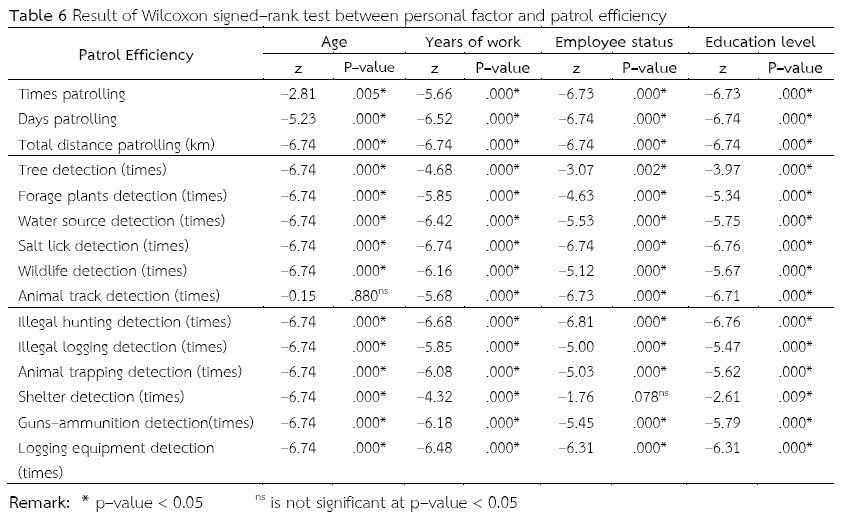
อุทยานแห่งชาติตาพระยา เป็นส่วนหนึ่งของผืนป่ามรดกโลกดงพญาเย็น–เขาใหญ่ ซึ่งยังพบปัญหาการลักลอบล่าสัตว์และตัดไม้สูง สาเหตุเนื่องจากลักษณะภูมิประเทศซึ่งเป็นเทือกเขาสูงทั้งยังติดต่อกับแนวชายแดน การวิจัยนี้มีวัตถุประสงค์เพื่อศึกษาปัจจัยส่วนบุคคลที่มีผลต่อประสิทธิภาพการปฏิบัติงานของเจ้าหน้าที่ลาดตระเวนอุทยานแห่งชาติตาพระยา เป็นการวิจัยเชิงปริมาณ โดยศึกษาผลการปฏิบัติงาน ของเจ้าหน้าที่ลาดตระเวนจำนวน 60 คน จากฐานข้อมูล SMART ตั้งแต่ตุลาคม พ.ศ. 2559 ถึงกันยายน พ.ศ. 2564 ใช้การวิเคราะห์สถิติเชิงพรรณนา ได้แก่ ความถี่ ร้อยละ ค่าเฉลี่ย ส่วนเบี่ยงเบนมาตรฐาน ตลอดจน Wilcoxon Sign Rank Test ผลการวิจัยพบว่าเจ้าหน้าที่ลาดตระเวนส่วนใหญ่มีอายุ 40–49 ปี อายุงานน้อยกว่า 5 ปี สถานะการจ้างงานเป็นบุคคลภายนอกฯ และการศึกษามัธยมศึกษาตอนปลาย ผลการปฏิบัติงานลาดตระเวนเชิงคุณภาพจำนวน 9,386 ครั้ง รวม 23,145 วัน ระยะทางรวม 176,519 กิโลเมตร ตรวจพบต้นไม้ 374 ครั้ง พืชอาหารสัตว์ 288 ครั้ง โป่ง 368 ครั้ง แหล่งน้ำ 132 ครั้ง สัตว์ป่า 394 ครั้ง ร่องรอยสัตว์ 18,890 ครั้ง การล่า 29 ครั้ง การทำไม้ 248 ครั้ง ปางพัก ห้าง 226 ครั้ง กับดักสัตว์ 670 ครั้ง ปืน เครื่องกระสุน 248 ครั้ง และอุปกรณ์ตัดไม้ 117 ครั้ง ปัจจัยส่วนบุคคลที่มีผลต่อประสิทธิภาพการปฏิบัติงานสูงสุดทั้ง 3 ด้าน 1) ด้านการเดินลาดตระเวนคือ อายุ 20–29 ปี อายุงานน้อยกว่า 5 ปี สถานะการจ้างงานเป็นบุคคลภายนอกฯ การศึกษาประถมศึกษา 2) ด้านการตรวจพบปัจจัยนิเวศคือ อายุ 20–29 ปี อายุงาน 5–9 ปี สถานะการจ้างงานเป็นบุคคลภายนอกฯ การศึกษาไม่เกินมัธยมศึกษา 3) ด้านการตรวจพบปัจจัยคุกคามคือ อายุ 20–29 ปี อายุงานน้อยกว่า 5 ปี สถานะการจ้างงานเป็นพนักงานจ้างเหมาฯ การศึกษามัธยมศึกษาตอนต้น และพบว่าปัจจัยส่วนบุคคลของเจ้าหน้าที่ลาดตระเวน ที่ต่างกันส่งผลต่อประสิทธิภาพการปฏิบัติงาน จากการศึกษาครั้งนี้สามารถนำไปใช้เป็นแนวทางในการจัดการทรัพยากรบุคคลของหน่วยงาน เพื่อให้การคัดเลือกเจ้าหน้าที่และการจัดชุดลาดตระเวนเป็นไปอย่างเหมาะสม โดยคำนึงถึงศักยภาพ และนำปัจจัยส่วนบุคคลของเจ้าหน้าที่แต่ละคนมาเป็นข้อพิจารณาจัดกำลัง เพื่อให้การปฏิบัติงานลาดตระเวนเชิงคุณภาพเกิดผลสูงสุด และผลของการอนุรักษ์คุ้มครองพื้นที่อย่างยั่งยืน
Downloads
Article Details

อนุญาตภายใต้เงื่อนไข Creative Commons Attribution-NonCommercial-NoDerivatives 4.0 International License.
ข้าพเจ้าและผู้เขียนร่วม (ถ้ามี) ขอรับรองว่า ต้นฉบับที่เสนอมานี้ยังไม่เคยได้รับการตีพิมพ์และไม่ได้อยู่ในระหว่างกระบวนการพิจารณาตีพิมพ์ลงในวารสารหรือสิ่งตีพิมพ์อื่นใด ข้าพเจ้าและผู้เขียนร่วม (ถ้ามี) ยอมรับหลักเกณฑ์และเงื่อนไขการพิจารณาต้นฉบับ ทั้งยินยอมให้กองบรรณาธิการมีสิทธิ์พิจารณาและตรวจแก้ต้นฉบับได้ตามที่เห็นสมควร พร้อมนี้ขอมอบลิขสิทธิ์ผลงานที่ได้รับการตีพิมพ์ให้แก่วารสารวนศาสตร์ คณะวนศาสตร์ มหาวิทยาลัยเกษตรศาสตร์ กรณีมีการฟ้องร้องเรื่องการละเมิดลิขสิทธิ์เกี่ยวกับภาพ กราฟ ข้อความส่วนใดส่วนหนึ่ง หรือ ข้อคิดเห็นที่ปรากฏในผลงาน ให้เป็นความรับผิดชอบของข้าพเจ้าและผู้เขียนร่วม (ถ้ามี) แต่เพียงฝ่ายเดียว และหากข้าพเจ้าและผู้เขียนร่วม (ถ้ามี) ประสงค์ถอนบทความในระหว่างกระบวนการพิจารณาของทางวารสาร ข้าพเจ้าและผู้เขียนร่วม (ถ้ามี) ยินดีรับผิดชอบค่าใช้จ่ายทั้งหมดที่เกิดขึ้นในกระบวนการพิจารณาบทความนั้น”
เอกสารอ้างอิง
Anagnostou, M., Gunn, V., Nibbs, O., Muntaner, C., Doberstein, B. 2022. An international scoping review of rangers: precarious employment. Environment Systems and Decisions, 42: 479–503. doi: 10.1007/s10669–022–09845–3
Ariyaphithaka, C., Pongpattananurak, A., Pattanaviboolb, A., Podchongc S., Chankhao, A.2020. Applying SMART patrol database for creating species distribution model of Panthera tigris corbetti in Thailand western forest complex. Journal of Environmental Management, 16(2): 42–59. doi: 10.14456/jem.2020.10 (in Thai)
Critchlow, R., Plumptre, A.J., Alidria, B., Nsubuga, M., Driciru M., Rwetsiba, A., Wanyama, F., Beale C.M. 2016. Improving law–enforcement effectiveness and efficiency in protected areas using ranger–collected monitoring data. Conservation Letter, 10(5): 1–9. doi: 10.1111/conl.12288
Department of National Parks, Wildlife and Plant Conservation (DNP). 2017. SMART Patrol Techniques for Conservation Area Management. Bangkok, Thailand. (in Thai)
Department of National Parks, Wildlife and Plant Conservation (DNP). 2018.Tha Praya National Park Management Masterplan. Bangkok, Thailand. (in Thai)
Department of National Parks, Wildlife and Plant Conservation (DNP). 2021. Reports of Smart Patrol in TaPhraya National Park, September 2021. Office of 1stst. Area Administration Conservation (Prachinburi). Bangkok, Thailand. (in Thai)
Department of National Parks, Wildlife and Plant Conservation (DNP). 2022. Summary of Statistical Reports on Forest and Wildlife Cases of National Park Wildlife and Plant Conservation Department Years 2021. Bangkok, Thailand. (in Thai)
Herzberg, F., Mausner, B., Snyderman, B. 1959. The Motivation to Work, 2nd ed. John Wiley. New Brunswick, U.S.A., and London, UK.
Maslow, A.H. 1954. Motivation and Personality. Harpers. Michigan, U.S.A.
Maneerat, S., Pattanavibool, A., Duengkae, P. 2016. Affecting SMART Patrol System Protection Efficiency on Endangered Species in HuaiKhaKhaeng Wildlife Sanctuary, Master of Science and Program in Forest Resource and Environmental Administration. M.S. Thesis, Kasetsart University, Bangkok, Thailand. (in Thai)
Saleepol, P. 2017. Guidelines for Increasing Working Efficiency to Reduce the Loss of Personnel of the Mobile Development Unit in 3 Southern Border Provinces Thailand. Thai National Defence College, Bangkok, Thailand. (in Thai)
Thai Public Broadcasting Service. 2022. Reason for Termination 1,731 "Forest Rangers" Agree to Take a 25% Pay Cut. https://www.thaipbs.or.th/news/content/311633, 18 November 2022.
Wongwijit, M. 2020. Motivation Affecting Forest Ranger Performance: a Case Study of the Thaplan National Park. Forest Rangers. M.S. Thesis, Thammasat University, Bangkok, Thailand. (in Thai)
