
ผลของปุ๋ยสังกะสีต่อการเจริญเติบโตและผลผลิตของมะเขือเทศเชอรี่พันธุ์ปลูก CH154
Article Sidebar
Main Article Content
บทคัดย่อ
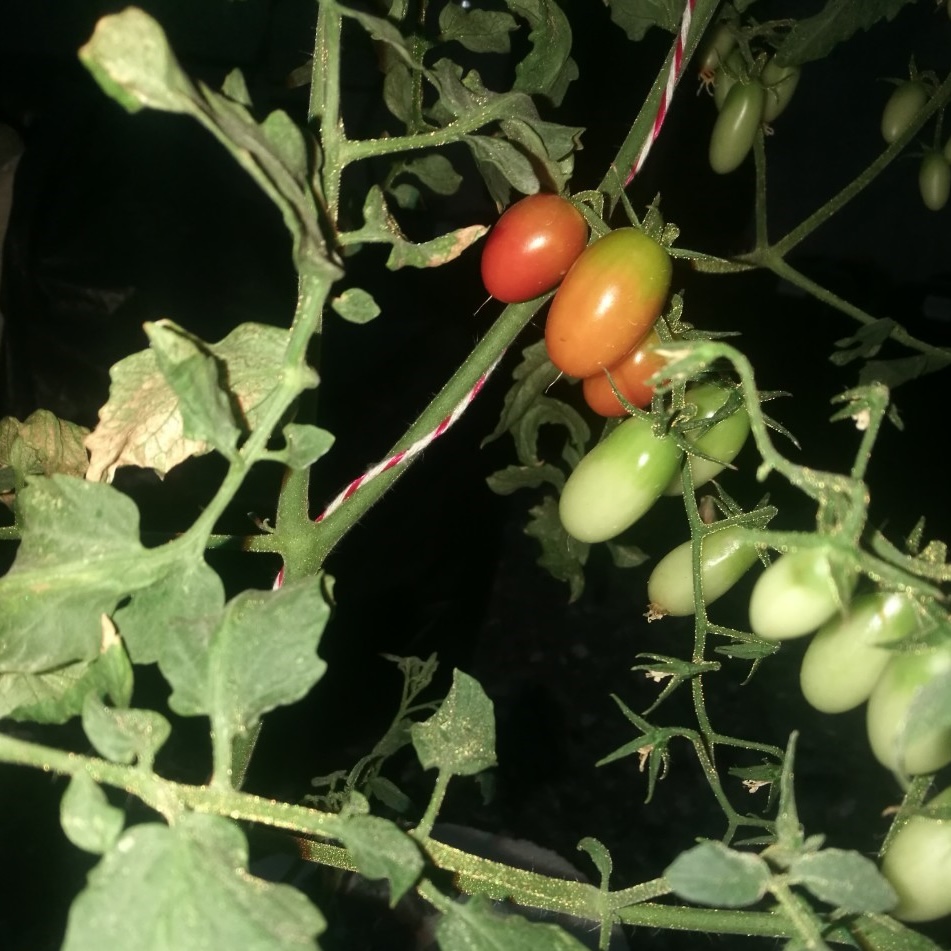
ความเป็นมาและวัตถุประสงค์: มะเขือเทศเชอรี่นิยมปลูกแบบไม่ใช้ดินมักประสบปัญหาการขาดจุลธาตุเป็นสาเหตุทำให้ปริมาณและคุณภาพของผลผลิตลดลง ในการศึกษาครั้งนี้มีวัตถุประสงค์เพื่อเปรียบเทียบชนิดของปุ๋ยสังกะสีและวิธีการให้ปุ๋ยต่อการเจริญเติบโตและผลผลิตของมะเขือเทศเชอรี่
วิธีดำเนินการวิจัย: ทดลองในมะเขือเทศเชอรี่ที่ปลูกด้วยระบบไฮโดรพอนิกส์ประกอบด้วย 6 ทรีตเมนต์ ได้แก่ ชุดควบคุมที่ปลูกในสารละลายธาตุอาหารที่มีสังกะสี ชุดควบคุมที่ปลูกในสารละลายธาตุอาหารที่ไม่มีสังกะสี สารละลายธาตุอาหารที่ให้ปุ๋ย Zn-EDTA หรือ ZnSO4 ทางใบความเข้มข้น 250 ppm หรือทางรากความเข้มข้น 50 ppm โดยการพ่นทางใบหรือให้ทางราก 2 ครั้ง เมื่อมะเขือเทศอายุ 40 และ 47 วันหลังจากเพาะเมล็ด บันทึกข้อมูลทุกสัปดาห์เมื่อต้นมะเขือเทศเชอรี่อายุ 40 วันหลังจากเพาะเมล็ด และบันทึกข้อมูลผลผลิตหลังการเก็บเกี่ยว
ผลการวิจัย: การให้ปุ๋ยสังกะสีทั้งสองชนิดทางใบหรือทางรากมีแนวโน้มทำให้จำนวนดอกเพิ่มขึ้น ซึ่ง Zn-EDTA สามารถเพิ่มจำนวนผลต่อต้นและน้ำหนักผลต่อต้นสูงกว่าการให้ปุ๋ย ZnSO4 12–89 เปอร์เซ็นต์ และ 11–55 เปอร์เซ็นต์ ตามลำดับ ซึ่งการให้ปุ๋ยสังกะสีทั้งสองชนิดช่วยฟื้นฟูต้นมะเขือเทศจากการขาดธาตุสังกะสี การให้ปุ๋ยสังกะสีทางรากส่งผลให้เกิดการสะสมสังกะสีในใบน้อยกว่าการให้ปุ๋ยทางใบ ซึ่งจะลดผลกระทบจากความเป็นพิษของปริมาณสังกะสีที่มากเกินไปได้ อย่างไรก็ตาม ปุ๋ยสังกะสีทั้งสองชนิดไม่มีผลต่อความสูงของต้น ดัชนีความเขียวของใบ ปริมาณของแข็งที่ละลายน้ำได้ทั้งหมดในผล และน้ำหนักแห้งของต้นและราก
สรุป: การให้ปุ๋ย Zn-EDTA หรือ ZnSO4ทางใบหรือทางรากช่วยเพิ่มผลผลิตมะเขือเทศเชอรี่ในสภาวะขาดสังกะสีได้ แต่ควรให้ทางรากเพื่อลดการสะสมสังกะสีและความเสี่ยงต่อความเป็นพิษในพืช
Article Details

อนุญาตภายใต้เงื่อนไข Creative Commons Attribution-NonCommercial-NoDerivatives 4.0 International License.
เอกสารอ้างอิง
Asaduzzaman, M., M. Saifullah, A.S.R. Mollick, M.M. Hossain, G. Halim and T. Asao. 2015. Influence of soilless culture substrate on improvement of yield and produce quality of horticultural crops, pp. 1–32. In M. Asaduzzaman, ed. Soilless Culture - Use of Substrates for the Production of Quality Horticultural Crops, London, UK.
Behura, A.K., M. Mohapatra and B.K. Mohanty. 2018. Ecophysiological studies of a cereal crop Oryza sativa L. with zinc stress. J. Environ. Sci. Pollut. Res. 4(4): 311–313. https://doi.org/10.30799/JESPR.147.18040402.
Cakmak, I., H. Marschner and F. Bangerth. 1989. Effect of zinc nutritional status on growth, protein metabolism and levels of indole-3-acetic acid and other phytohormones in bean (Phaseolus vulgaris L.). J. Exp. Bot. 40(3): 405–412. https://doi.org/10.1093/jxb/40.3.405.
Carillo, P., M.C. Kyriacou, C. El-Nakhel, A. Pannico, E. dell’Aversana, L. D’Amelia, G. Colla, G. Caruso, S. De Pascal and Y. Rouphael. 2019. Sensory and functional quality characterization of protected designation of origin ‘Piennolo del Vesuvio’ cherry tomato landraces from Campania-Italy. Food Chem. 292: 166–175. https://doi.org/10.1016/j.foodchem.2019.04.056.
Choi, S.H., H.R. Kim, H.J. Kim, I.S. Lee, N. Kozukue, C.E. Levin and M. Friedman. 2011. Free amino acid and phenolic contents and antioxidative and cancer cell-inhibiting activities of extracts of 11 greenhouse-grown tomato varieties and 13 tomato-based foods. J. Agric. Food Chem. 59(24): 12801–12814. https://doi.org/10.1021/jf202791j.
Doolette, C.L., T.L. Read, C. Li, K.G. Scheckel, E. Donner, P.M. Kopittke, J.K. Schjoerring and E. Lombi. 2018. Foliar application of zinc sulphate and zinc EDTA to wheat leaves: Differences in mobility, distribution, and speciation. J. Exp. Bot. 69(18): 4469–4481. https://doi.org/10.1093/jxb/ery236.
Ebbs, S. and S. Uchil. 2008. Cadmium and zinc induced chlorosis in Indian mustard [Brassica juncea (L.) Czern] involves preferential loss of chlorophyll b. Photosynthetica. 46: 49–55. https://doi.org/10.1007/s11099-008-0010-3.
Gupton, C.L. and J.M. Spiers. 1996. High zinc concentrations in the growing medium contribute to chlorosis in blueberry. HortScience. 31(6): 955–956. https://doi.org/10.21273/HORTSCI.31.6.955.
Hänsch, R. and R.R. Mendel. 2009. Physiological functions of mineral micronutrients (Cu, Zn, Mn, Fe, Ni, Mo, B, Cl). Curr. Opin. Plant Biol. 12(3): 259–266. https://doi.org/10.1016/j.pbi.2009.05.006.
Haque, M.E., M.A. Islam and S.T. Ahmed. 2011. Effect of nitrogen and boron on the growth and yield of tomato (Lycopersicon esculentum MILL.). J. Sher-e-Bangla Agric. Univ. 5(2): 1–9.
Jiang, C., M. Johkan, M. Hohjo, S. Tsukagoshi and T. Maruo. 2017. A correlation analysis on chlorophyll content and SPAD value in tomato leaves. HortResearch. 71: 37–42. http://doi.org/10.20776/S18808824-71-P37.
Jitpong, P., J. Jannoi, W. Sastawittaya, R. Mega, P. Chulaka and J. Thussagunpanit. 2025. Impact of greenhouse height on growth, physiological changes, and yield of two cherry tomatoes (Solanum lycopersicum) cultivars. Thai J. Agric. Sci. 58(1): 1−16.
Kavitha, L., M.N. Nakhon and S. Suwanwong. 2009. Plant Physiology. 2th edition. Kasetsart University, Faculty of Science, Department of Botany, Bangkok, Thailand. 259 pp. (in Thai)
Khan, H.R., G.K. McDonald and Z. Rengel. 1998. Chickpea genotypes differ in their sensitivity to Zn deficiency. Plant Soil. 198: 11–18. https://doi.org/10.1023/A:1004241826907.
Khettala, S. 2015. Tomato Production Technology. Research Project, Department of Agriculture, Bangkok, Thailand. (in Thai)
Lakchaikun, A. 2013. Tomato. Bureau of Agricultural Commodities Promotion and Management, Bangkok, Thailand. (in Thai)
Ljung, K. 2002. Auxin Biosynthesis and Homeostasis in Arabidopsis thaliana in Relation to Plant Growth and Development. PhD Thesis, Swedish University of Agricultural Sciences.
Matsuda, R., K. Suzuki, Y. Nakano, H. Sasaki and M. Takaichi. 2011. Nutrient supply and fruit yields in tomato rockwool hydroponics under daily quantitative nutrient management: Analysis and evaluation based on leaf area index. J. Agric. Meteorol. 67(3): 117–126. https://doi.org/10.2480/agrmet.67.3.6.
Meng, Y., C. Xiang, J. Huo, S. Shen, Y. Tang and L. Wu. 2023. Toxicity effects of zinc supply on growth revealed by physiological and transcriptomic evidences in sweet potato (Ipomoea batatas (L.) Lam). Sci. Rep. 13: 19203. https://doi.org/10.1038/s41598-023-46504-2.
Ngennoy, S. 2014. Effect of Humic Acid Extracted from Leonardite on Growth and Development, Yield and Plant Nutrition of Maize (Zea mays L.). MS Thesis, Kasetsart University, Bangkok. (in Thai)
Nielsen, F.H. 2012. History of zinc in agriculture. Adv. Nutr. 3(6): 783–789. https://doi.org/10.3945/an.112.002881.
Osman, I.M., M.H. Hussein, M.T. Ali, S.S. Mohamed, M.A. Kabir and B.C. Halder. 2019. Effect of boron and zinc on the growth, yield and yield contributing traits of tomato. IOSR. J. Agric. Vet. Sci. 12(2): 25–37.
Osotspa, Y. 2009. Foliar Fertilization. Kasetsart University, Bangkok, Thailand. 164 pp. (in Thai)
Ounpipat, B., N. Chittamart and S. Tawornpruek. 2018. Intensification of zinc availability by Zn-Humate prepared from peat for sweet corn grown on a calcareous soil. Khon Kaen Agr. J. 46(Suppl. 1): 301–307. (in Thai)
Phuphong, P., I. Cakmak, B. Dell and C. Prom-u-thai. 2018. Effects of foliar application of zinc on grain yield and zinc concentration of rice in farmers’ fields. CMU J. Nat. Sci. 17(3): 181–190. https://doi.org/10.12982/CMUJNS.2018.0013.
Prasad, R., Y.S. Shivay and D. Kumar. 2016. Interactions of zinc with other nutrients in soils and plants - A review. Indian J. Fertil. 12(5): 16–26.
Ranc, N., S. Muños, S. Santoni and M. Causse. 2008. A clarified position for Solanum lycopersicum var. cerasiforme in the evolutionary history of tomatoes (solanaceae). BMC Plant Biol. 8: 130. https://doi.org/10.1186/1471-2229-8-130.
Resh, H.M. 1978. Hydroponic Food Production. Woodbridge Press Publishing Company, California, USA.
Sadeghzadeh, B. 2013. A review of zinc nutrition and plant breeding. J. Soil Sci. Plant Nutr. 13(4): 905–927. http://dx.doi.org/10.4067/S0718-95162013005000072.
Sainju, U.M., R. Dris and B. Singh. 2003. Mineral nutrition of tomato. J. Food Agric. Environ. 1: 176–183.
Schulte, E.E. 2004. Soil and Applied Zinc. WIS-PUBS, USA.
Sharma, A., B. Patni, D. Shankhdhar and S.C. Shankhdhar. 2013. Zinc – an indispensable micronutrient. Physiol. Mol. Biol. Plants. 19(1): 11–20. https://doi.org/10.1007/s12298-012-0139-1.
Shibaeva, T.G., A.V. Mamaev and E.G. Sherudilo. 2020. Evaluation of a SPAD-502 plus chlorophyll meter to estimate chlorophyll content in leaves with interveinal chlorosis. Russ. J. Plant Physiol. 67(4): 690–696. https://doi.org/10.1134/s1021443720040160.
Singh, B., S. Kasera, S.K. Mishra, S. Roy, S. Rana and D. Singh. 2017. Growth, yield and quality of cherry tomato (Lycopersicon esculentum var. cerasiforme) as influenced by foliar application of zinc and boron. J. Pharmacogn. Phytochem. SP1: 911–914.
Stewart, A.J., S. Bozonnet, W. Mullen, G.I. Jenkins, M.E.J. Lean and A. Crozier. 2000. Occurrence of flavonols in tomatoes and tomato-based products. J. Agric. Food Chem. 48(7): 2663–2669. http://dx.doi.org/10.1021/jf000070p.
Stuiver, C.E.E., F.S. Posthumus, S. Parmar, M. Shahbaz, M.J. Hawkesford and L.J. De Kok. 2014. Zinc exposure has differential effects on uptake and metabolism of sulfur and nitrogen in Chinese cabbage. J. Plant Nutr. Soil Sci. 177(5): 748–757.
Sutradhar, A.K. 2016. Zinc for Crop Production. University of Minnesota Extension, Minnesota, USA.
Yadav, K.L., R.S. Meena, A. Mishra, S. Singh, U. Joshi and K.K. Yadav. 2024. Impact of zinc application on growth, yield, and quality of African marigold in semi-arid conditions. J. Sci. Res. Rep. 30(10): 693–705. https://doi.org/10.9734/jsrr/2024/v30i102495.
Yodprang, W. 2010. The Effects of Foliar Application of Amino Acid Chelated Secondary and Micro-Nutrients on Nutrient Uptake, Growth and Yield of Chili (Capsicum frutescens L.). MS Thesis, Suranaree University of Technology, Nakhon Ratchasima. (in Thai)
