
การใช้น้ำควันและคาร์ริคินเพื่อเพิ่มผลผลิตของมะเขือเทศเชอรี่ที่ปลูกในโรงเรือน
Article Sidebar
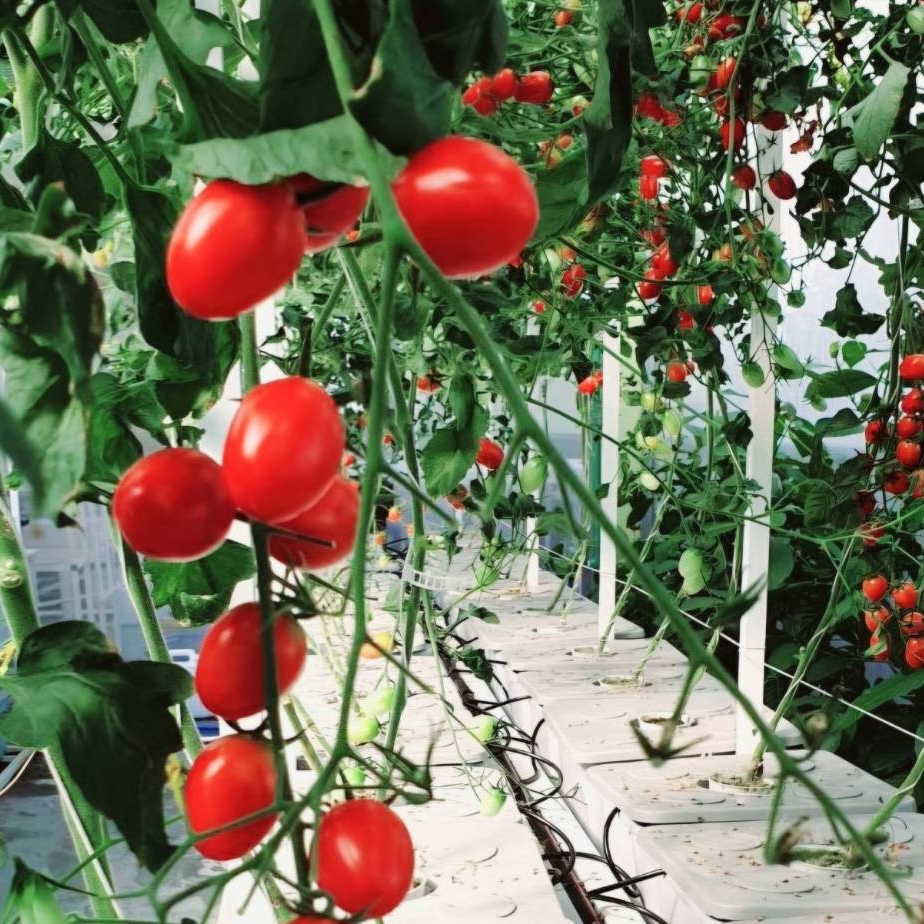
Main Article Content
บทคัดย่อ
ความเป็นมาและวัตถุประสงค์: น้ำควันเป็นแหล่งของคาร์ริคินซึ่งเป็นสารกระตุ้นการเจริญเติบโตของพืชกลุ่มหนึ่ง คาร์ริคินเกิดจากการเผาไหม้ของเซลลูโลสและเฮมิเซลลูโลส ซึ่งสามารถกระตุ้นการงอกของเมล็ด ควบคุมการแตกกิ่งแขนง และเพิ่มปริมาณคลอโรฟิลล์ งานวิจัยนี้มีวัตถุประสงค์เพื่อเปรียบเทียบประสิทธิภาพของน้ำควันที่ผลิตจากวัสดุเหลือใช้ทางการเกษตรชนิดต่าง ๆ ต่อการเจริญเติบโตและผลผลิตของมะเขือเทศเชอรี่
วิธีดำเนินการวิจัย: ผลิตน้ำควันจากวัสดุเหลือใช้ทางการเกษตร ได้แก่ ฟางข้าว ชานอ้อย และกาบมะพร้าว นอกจากนี้ผลิตจาก D-xylose ซึ่งเป็นหน่วยย่อยของเฮมิเซลลูโลส ทำการทดลองในมะเขือเทศเชอรี่พันธุ์ CH154 (Solanum esculentum L. ‘CH154’) ให้น้ำกลั่น (ชุดควบคุม) KAR1 (คาร์ริคิน) และน้ำควันชนิดต่าง ๆ แก่มะเขือเทศ 3 ครั้ง โดยการแช่เมล็ดและการพ่นทางใบเมื่อต้นมะเขือเทศอายุ 3 และ 8 สัปดาห์หลังย้ายปลูก ตามลำดับ บันทึกการเจริญเติบโตทุกสัปดาห์หลังย้ายปลูก และบันทึกข้อมูลผลผลิตหลังการเก็บเกี่ยว
ผลการวิจัย: การใช้น้ำควันทุกชนิด และ KAR1 เพิ่มเปอร์เซ็นต์การติดผลของมะเขือเทศ 14–21% เมื่อเปรียบเทียบกับชุดควบคุม นอกจากนี้ การใช้น้ำควันจากกาบมะพร้าวและน้ำควันจาก D-xylose เพิ่มน้ำหนักผลผลิตต่อต้นมากกว่าชุดควบคุม 84% และ 77% ตามลำดับ การใช้น้ำควันทุกชนิดและ KAR1 มีแนวโน้มเพิ่มน้ำหนักผล และเพิ่มขนาดผลมะเขือเทศอย่างมีนัยสำคัญ อย่างไรก็ตาม น้ำควันทุกชนิดไม่ส่งผลต่อความสูงของต้น เส้นผ่านศูนย์กลางลำต้น และจำนวนใบ
สรุป: การใช้น้ำควันมีความสามารถเช่นเดียวกับคาร์ริคินในการเพิ่มผลผลิตของมะเขือเทศเชอรี่
Article Details

อนุญาตภายใต้เงื่อนไข Creative Commons Attribution-NonCommercial-NoDerivatives 4.0 International License.
เอกสารอ้างอิง
Al-Babili, S. and H.J. Bouwmeester. 2015. Strigolactones, a novel carotenoid-derived plant hormone. Annu. Rev. Plant Biol. 66: 161–186. https://doi.org/10.1146/annurev-arplant-043014-114759.
Aremu, A.O., M.W. Bairu, J.F. Finnie and J. Van Staden. 2012. Stimulatory role of smoke–water and karrikinolide on the photosynthetic pigment and phenolic contents of micropropagated ‘Williams’ bananas. Plant Growth Regul. 67: 271–279. https://doi.org/10.1007/s10725-012-9685-3.
Du, Q.J., H.J. Xiao, J.Q. Li, J.X. Zhang, L.Y. Zhou and J.Q. Wang. 2021. Effects of different fertilization rates on growth, yield, quality and partial factor productivity of tomato under non-pressure gravity irrigation. PLoS ONE. 16(3): e0247578. https://doi.org/10.1371/journal.pone.0247578.
Elsadek, M.A. and E.A.A. Yousef. 2019. Smoke-water enhances germination and seedling growth of four horticultural crops. Plants. 8(4): 104. https://doi.org/10.3390/plants8040104.
Flematti, G.R., A. Scaffidi, K.W. Dixon, S.M. Smith and E.L. Ghisalberti. 2011. Production of the seed germination stimulant karrikinolide from combustion of simple carbohydrates. J. Agric. Food Chem. 59(4): 1195–1198. https://doi.org/10.1021/jf1041728.
Flematti, G.R., K.W. Dixon and S.M. Smith. 2015. What are karrikins and how were they ‘discovered’ by plants? BMC Biol. 13: 108. https://doi.org/10.1186/s12915-015-0219-0.
Flematti, G.R., M.T. Waters, A. Scaffidi, D.J. Merritt, E.L. Ghisalberti, K.W. Dixon and S.M. Smith. 2013. Karrikin and cyanohydrin smoke signals provide clues to new endogenous plant signaling compounds. Mol. Plant. 6(1): 29–37. https://doi.org/10.1093/mp/sss132.
International Plant Genetic Resources Institute (IPGRI). 1996. Descriptors for Tomato (Lycopersicon spp.). International Plant Genetic Resources Institute. Available Source: https://hdl.handle.net/10568/73041.
Jirajitmeechai, T., P. Kaewsorn and J. Thussagunpanit. 2021. The properties of smoke waters containing biological effects on tomato seed. In Proc. the 9th Suan Sunandha National Academic Conference on “Raising Research Levels to Innovation”, June 17–18, 2021. p. 305. (in Thai)
Jirajitmeechai, T. 2022. Effect of Smoke Waters on Seed Quality and Yield in Cherry Tomato. MS Thesis, Kasetsart University, Bangkok. (in Thai)
Kamran, M., K.T. Melville and M.T. Waters. 2024. Karrikin signalling: Impacts on plant development and abiotic stress tolerance. J. Exp. Bot. 75(4): 1174–1186. https://doi.org/10.1093/jxb/erad476.
Keeley, S.C. and M. Pizzorno. 1986. Charred wood stimulated germination of two fire-following herbs of the California chaparral and the role of hemicellulose. Am. J. Bot. 73(9): 1289–1297. https://doi.org/10.2307/2444063.
Kuankid, S., K. Chaarmart and V. Sanyod. 2019. Irrigation control system for drip irrigated tomato in greenhouse using timer-based control method and crop water requirement. J. Sci. Technol MSU. 38(2): 187–196. (in Thai)
Kulkarni, M.G., G.D. Ascough and J. Van Staden. 2007. Effects of foliar applications of smoke-water and a smoke-isolated butenolide on seedling growth of okra and tomato. HortScience. 42(1): 179–182. https://doi.org/10.21273/HORTSCI.42.1.179.
Kulkarni, M.G., G.D. Ascough and J. Van Staden. 2008. Smoke-water and a smoke-isolated butenolide improve growth and yield of tomatoes under greenhouse conditions. HortTechnology. 18(3): 449–454. https://doi.org/10.21273/HORTTECH.18.3.449.
Land Development Department. 2024. Agricultural areas of Thailand. Available Source: https://webapp.ldd.go.th/lpd/node_modules/img/Download/zonmap/zonmap2/agri_zone_th.pdf, July 22, 2024. (in Thai)
Maneechote, P. 2020. The Physiological Response and Drought Tolerant Gene Expression of Tomato (Solanum lycopersicum cv. CH154) by Brassinosteroids Mimic. MS Thesis, Srinakharinwirot University, Bangkok. (in Thai)
Morffy, N., L. Faure and D.C. Nelson. 2016. Smoke and hormone mirrors: Action and evolution of karrikin and strigolactone signaling. Trends Genet. 32(3): 176–188.
Nimnoy, N. and S. Sakhonwasee. 2019. Role of glycinebetaine, calcium and potassium on induction of heat tolerance in tomato seedlings. J. Agri. Prod. 1(2): 39–50. (in Thai)
Pattanachatchai, N., P. Promata and R. Ruamjai. 2020. Effect of gibberellic acid (GA3) on fruit set and fruit development of commercial variety tomato (Lycopersicon esculentum Mill) grown in pot under summer condition. Journal of Agri. Research & Extension. 37(2): 1–11. (in Thai)
Pinit, S., L. Ariyakulkiat and J. Chaiwanon. 2023. Rice straw-derived smoke water promotes rice root growth under phosphorus deficiency by modulating oxidative stress and photosynthetic gene expression. Sci. Rep. 13: 14802. https://doi.org/10.1038/s41598-023-41987-5.
Pongpiachan, S. 2015. Impacts of agricultural waste burning on the enhancement of PM2.5-bound polycyclic aromatic hydrocarbons in northern Thailand, pp. 3–14. In J.W.S. Longhurst, C. Capilla, C.A. Brebbia and J. Barnes, eds. Air Pollution XXIII: Twenty-third International Conference on Modelling, Monitoring and Management of Air Pollution. WIT Press, Boston, UK.
Resh, H.M. 1978. Hydroponic Food Production. Woodbridge Press Publishing Company, California, USA.
Sangmanee, P., V. Somniyam and P. Chaikla. 2022. Chlorophyll content and nutrient status in durian leaves and soil growing under agroforestry system. Journal of Agriculture. 38(2): 209–221. (in Thai)
Singh, S., M. Uddin, M.M.A. Khan, S.A. Chishti, S. Singh and U.H. Bhatt. 2022. Role of MORE AXILLARY GROWTH2 (MAX2) protein in regulation of karrikin and strigolactone signalling pathways. Turk. J. Botany. 46(5): 417–434. https://doi.org/10.55730/1300-008X.2720.
Srisuk, W. 2010. How to eat tomatoes to get high lycopene. Available Source: https://pharmacy.mahidol.ac.th/th/knowledge/article/1/, May 14, 2020. (in Thai)
Thaenkaew, P., P. Chulaka and P. Kaewsorn. 2018. Effects of electrical conductivity pattern of nutrient solution and foliar apply calcium on yield and quality of tomato grown in greenhouse. Agricultural Sci. J. 49(Suppl. 2): 557–560. (in Thai)
Waters, M.T., D.C. Nelson, A. Scaffidi, G.R. Flematti, Y.K. Sun, K.W. Dixon and S.M. Smith. 2012. Specialisation within the DWARF14 protein family confers distinct responses to karrikins and strigolactones in Arabidopsis. Development. 139(7): 1285–1295. https://doi.org/10.1242/dev.074567.
