Anxiolytic, antidepressant, and memory-enhancing effects of aqueous extract of Pluchea indica leaves in male mice
Keywords:
Anxiety, Depression, Memory, Pluchea indica leaf extractAbstract
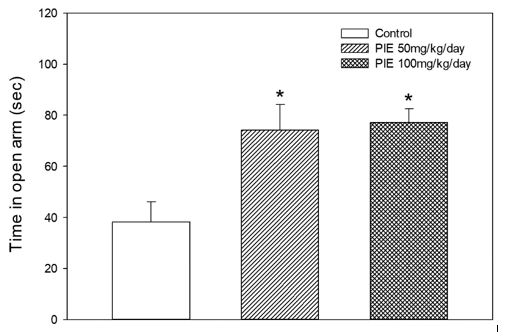
Anxiety, depression, and memory impairment are among the most common neurological and psychological disorders affecting mental health worldwide. Although several pharmacological treatments are currently available to manage these conditions, the use of medicinal plants as alternative or complementary therapies has gained considerable attention. Various herbs have been scientifically reported to exert beneficial effects through the modulation of neurotransmitter levels in the brain and/or by exhibiting antioxidant properties that protect neurons from oxidative damage and degeneration. Since Pluchea indica leaves are traditionally consumed as a health-promoting tea and are rich in flavonoids known for their antioxidant and neuroprotective activities, the aqueous extract of Pluchea indica leaves (PIE) was investigated in this study for both its phytochemical composition and its biological activities related to brain function. Specifically, the total phenolic content, total flavonoid content, and antioxidant activity of PIE were determined, and its effects on anxiety, depression, and memory were evaluated in male mice using elevated plus maze (EPM), forced-swim test (FST) and Morris water maze test (MWT), respectively. The results showed that PIE contained a total phenolic content of 159.05 mg gallic acid equivalents (GAE) per gram of the extract and a total flavonoid content of 48.49 mg quercetin equivalents (QE) per gram of the extract. Antioxidant analysis, assessed by the 2,2-diphenyl-1-picrylhydrazyl (DPPH) radical scavenging assay, showed an IC50 value of 34.50 µg/mL compared with 15.31 µg/mL for ascorbic acid. Oral administration of PIE, at doses of 50 or 100 mg/kg body weight/day, significantly reduced anxiety-like behavior, alleviated depressive-like symptoms, and enhanced memory performance. These findings suggest that Pluchea indica tea, commonly consumed as an herbal infusion, may have some benefits on brain health.
References
Ibrahim SRM, Bagalagel AA, Diri RM, Noor AO, Bakhsh HT, Mohamed GA. Phytoconstituents and Pharmacological Activities of Indian Camphorweed (Pluchea indica): A Multi-Potential Medicinal Plant of Nutritional and Ethnomedicinal Importance. Molecules. 2022;27(8):1-49.
Senvorasinh K, Phunikhom K, Sattayasai J. Anti-Hemorrhoidal Activity of Pluchea indica Leaves Aqueous Extract in Croton Oil-Induced Hemorrhoids in Experimental Animals. Srinagarind Med J 2019;34(6):590-594.
Ozgen U, Ahmet M, Zeynep T, Maksut C, Ali Y. Antioxidant activities and Total Phenolic Compound amount of Some Asteraceae Species. Turkish J Pharm Sci 2004;1(3):203-16.
Jia S, Hou Y, Wang D, Zhao X. Flavonoids for depression and anxiety: a systematic review and meta-analysis. Crit Rev Food Sci Nutr 2023;63(27):8839-49.
Hasan S, Khatri N, Rahman ZN, Menezes AA, Martini J, Shehjar F, et al. Neuroprotective potential of flavonoids in brain disorders. Brain Sci 2023;13:1258. https://doi.org/10.3390/brainsci13091258.
Buapool D, Mongkol N, Chantimal J, Roytrakul S, Srisook E, Srisook K. Molecular mechanism of anti-inflammatory activity of Pluchea indica leaves in macrophages RAW 264.7 and its action in animal models of inflammation. J Ethnopharmacol 2013;146(2):495-504.
Sen T and Chaudhuri KN. Studies on the neuropharmacological aspects of Pluchea indica root extract. Phytother Res 1992;6(4):175-179.
Thongpraditchote S, Matsumoto K, Temsiririrkkul R, Tohda M, Murakami Y, Watanabe H. Neuropharmacological actions of Pluchea indica Less root extract in socially isolated mice. Biol Pharm Bull 1996;19(3):379-83.
Noridayu AR, Hii YF, Faridah A, Khozirah S, Lajis N. Antioxidant and antiacetylcholinesterase activities of Pluchea indica Less. Int Food Res J 2011;18:925-9.
Chandra S, Khan S, Avula B, Lata H, Yang MH, Elsohly MA, et al. Assessment of total phenolic and flavonoid content, antioxidant properties, and yield of aeroponically and conventionally grown leafy vegetables and fruit crops: a comparative study. Evid Based Complement Alternat Med 2014;253875.
Sattayasai J, Tiamkao S, Puapairoj P. Biphasic Effects of Morus alba Leaves GreenTea Extract on Mice in Chronic Forced Swimming Model. Phytother Res 2008;22:487-92.
Srisuwan S, Arkaravichien T, Mahatheeranont S, Puangsombat P, Seekhaw P, Noenplab ANL, et al. Effects of aqueous extract of unpolished dark purple glutinous rice, var Luem Pua, on ROS in SK N SH cells and scopolamine induced memory deficit in mice. Trop J Pharm Res 2015;14(9):1635-41.
Nilvises N, Vamnatjinda V, Vanveerakul B, Pidech P. Diuretic Effect of Pluchea indica. Thai J Pharmacol 1989;11:1-8. (in Thai)
Xiao W, Mindrinos MN, Seok J, Cuschieri J, Cuenca AG, Gao H, et al. A genomic storm in critically injured humans. J Exp Med 2011;208:2581-90.
Suriyaphan O. Nutrition, Health Benefits and Applications of Pluchea indica (L.) Less Leaves. Mahidol University Journal of Pharmaceutical Sciences 2014;41:1-10.
Downloads
Published
How to Cite
Issue
Section
License
Copyright (c) 2026 University of Phayao

This work is licensed under a Creative Commons Attribution-NonCommercial-NoDerivatives 4.0 International License.
ผู้นิพนธ์ต้องรับผิดชอบข้อความในบทนิพนธ์ของตน มหาวิทยาลัยพะเยาไม่จำเป็นต้องเห็นด้วยกับบทความที่ตีพิมพ์เสมอไป ผู้สนใจสามารถคัดลอก และนำไปใช้ได้ แต่จะต้องขออนุมัติเจ้าของ และได้รับการอนุมัติเป็นลายลักษณ์อักษรก่อน พร้อมกับมีการอ้างอิงและกล่าวคำขอบคุณให้ถูกต้องด้วย
The authors are themselves responsible for their contents. Signed articles may not always reflect the opinion of University of Phayao. The articles can be reproduced and reprinted, provided that permission is given by the authors and acknowledgement must be given.