สบู่ก้อนสมุนไพรจากสารสกัดใบคนทีสอทะเล: การพัฒนาผลิตภัณฑ์ การวิเคราะห์ปริมาณสารสำคัญ และการศึกษาความคงตัวของผลิตภัณฑ์
คำสำคัญ:
สบู่ก้อนสมุนไพร, คนทีสอทะเล, ความคงตัวของผลิตภัณฑ์บทคัดย่อ
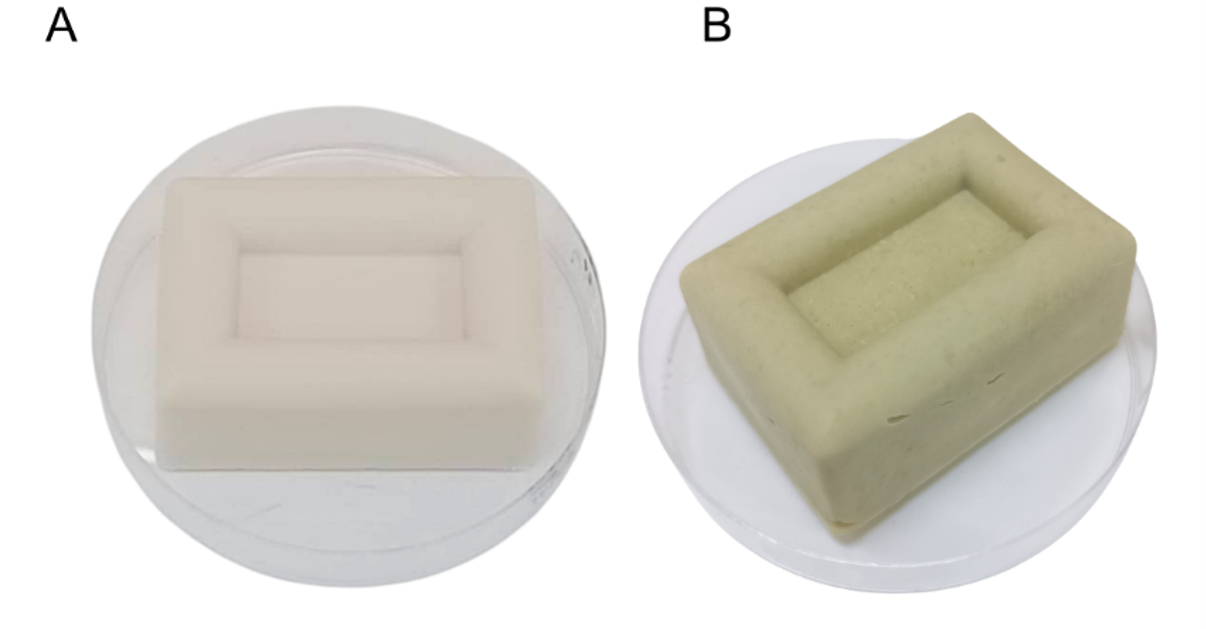
คนทีสอทะเล (Vitex trifolia L.) เป็นพืชสมุนไพรอยู่ในวงศ์ Lamiaceae มีการกระจายในแถบเอเชียรวมถึงประเทศไทย ในทางการแพทย์แผนไทยใช้คนทีสอทะเลแก้ฟกบวม รักษาริดสีดวงจมูก ภูมิปัญญาชาวบ้านใช้ใบคนทีสอทะเล ต้มน้ำอาบ แก้โรคผิวหนัง ฆ่าเชื้อรา กลากเกลื้อน และชันนะตุ รายงานก่อนหน้าพบว่าสารสกัดใบคนทีสอทะเลมีสารออกฤทธิ์ทางชีวภาพที่หลากหลาย มีฤทธิ์ต้านอนุมูลอิสระ และต้านการอักเสบ การศึกษาครั้งนี้มีวัตถุประสงค์เพื่อพัฒนาผลิตภัณฑ์สบู่ก้อนคนทีสอทะเล วิเคราะห์ปริมาณสารประกอบฟีนอลิกรวม สารประกอบฟลาโวนอยด์รวม สารโปรแอนโทรไซยานิดินรวมของผลิตภัณฑ์สบู่ก้อนคนทีสอทะเลด้วยวิธี Folin-Ciocalteu method วิธี aluminum chloride colorimetric method และวิธี vanillin-HCl assay ตามลำดับ รวมทั้งศึกษาความคงตัวของผลิตภัณฑ์ โดยทำศึกษาความคงตัวของผลิตภัณฑ์ ศึกษาลักษณะทางกายภาพ ความเป็นกรด-ด่าง ปริมาตรและความคงทนของฟองสบู่ อัตราการสึกกร่อนของสบู่ ทดสอบความคงตัวของสบู่ก้อนในสภาวะเร่ง และที่อุณหภูมิต่าง ๆ (4˚C, 30˚C และ 45˚C ) เป็นเวลา 90 วัน ผลการทดลองพบว่า ผลิตภัณฑ์สบู่ก้อนที่มีส่วนผสมของสารสกัดคนทีสอทะเล 0.4% (w/v) ตำรับที่ 2 ที่พัฒนาขึ้นมีลักษณะทางกายภาพและทางเคมีที่ดี มีความคงตัวที่ดีทั้งในสภาวะเร่ง และสภาวะปกติที่อุณหภูมิต่างๆ นอกจากนี้การวิเคราะห์ปริมาณสารสำคัญ ได้แก่ สารประกอบฟีนอลิกรวม สารประกอบฟลาโวนอยด์รวม และสารประกอบโปรแอนโทรไซยานิดินรวม ไม่พบการเปลี่ยนแปลงของสารดังกล่าวอย่างมีนัยสำคัญทางสถิติ (p<0.05) ในทุกช่วงเวลาของการทดสอบ การศึกษาครั้งนี้แสดงให้เห็นว่าสบู่ก้อนคนทีสอทะเลที่พัฒนาในการศึกษาครั้งนี้เป็นผลิตภัณฑ์ที่มีความคงตัวที่ดี มีปริมาณสารสำคัญที่คงที่ เหมาะในการพัฒนาต่อยอดเพื่อนำไปใช้ประโยชน์เชิงกว้างต่อไปได้
เอกสารอ้างอิง
Baki G, Alexander KS. Introduction to cosmetic formulation and technology. Hoboken: John Wiley & Sons; 2015.
Draelos ZD. Cosmetic dermatology: products and procedures. 2nd ed. Hoboken: Wiley-Blackwell; 2018.
Mukherjee PK, Maity N, Nema NK, Sarkar BK. Bioactive compounds from natural resources against skin
aging. Phytomedicine. 2011;19(1):64-73.
World Health Organization. WHO guidelines on good manufacturing practices (GMP) for herbal medicines.
Geneva: WHO; 2007.
Chantaranothai P. A revision of the genus Vitex (Lamiaceae) in Thailand. Trop Nat Hist. 2011;11(2):91–118.
Ministry of Public Health. Textbook of General Thai Traditional Medicine: Pharmacy. n.p.: Division of Medical Practice, Office of the Permanent Secretary, Ministry of Public Health; n.d. (in Thai)
Kamal N, Mio Asni NS, Rozlan INA, Mohd Azmi MAH, Mazlan NW, Mediani A, Baharum SN, Latip J,
Assaw S, Edrada-Ebel RA. Traditional medicinal uses, phytochemistry, biological properties, and health applications of Vitex sp. Plants (Basel). 2022;11(15):2000.
Kamal N, Mio Asni NS, Rozlan INA, Mohd Azmi MAH, Mazlan NW, Mediani A, et al. Traditional medicinal uses, phytochemistry, biological properties, and health applications of Vitex sp. Plants. 2022;11(15).
Das N, Salgueiro ACF, Choudhury DR, Mandal SK, Logesh R, Hassan MM, Devkota HP. Traditional
uses, phytochemistry, and pharmacology of genus Vitex (Lamiaceae). Phytother Res. 2022;36(2):571-671.
Hossain MM, Paul N, Sohrab MH, Rahman E, Rashid MA. Antibacterial activity of Vitex trifolia.
Fitoterapia. 2001;72(6):695-697.
Liou CJ, Len WB, Wu SJ, Lin CF, Wu XL, Huang WC. Casticin inhibits COX-2 and iNOS expression via
suppression of NF-κB and MAPK signaling in lipopolysaccharide-stimulated mouse macrophages. J Ethnopharmacol. 2014;158:310-316.
Saklani S, Mishra AP, Chandra H, Atanassova MS, Stankovic M, Sati B, Shariati MA, Nigam M, Khan
MU, Plygun S, Elmsellem H, Suleria HAR. Comparative evaluation of polyphenol contents and antioxidant activities between ethanol extracts of Vitex negundo and Vitex trifolia L. leaves by different methods. Plants (Basel). 2017;6(4):45.
Tamim Ghafari A, Hasyila Jahidin A, Zakaria Y, Hazizul Hasan M. Vitex trifolia molecular anti-
inflammatory effect: a review. Sci Eng Health Stud. 2021;15:21010006.
Tiwari N, Thakur J, Saikia D, Gupta MM. Antitubercular diterpenoids from Vitex trifolia. Phytomedicine.
;20(7):605-610.
Chan EWC, Wong SK, Chan HT. Casticin from Vitex species: a short review on its anticancer and anti-
inflammatory properties. J Integr Med. 2018;16(3):147-152.
Wee HN, Neo SY, Singh D, Yew HC, Qiu ZY, Tsai XRC, How SY, Yip KYC, Tan CH, Koh HL. Effects of
Vitex trifolia L. leaf extracts and phytoconstituents on cytokine production in human U937 macrophages. BMC Complement Med Ther. 2020;20(1):1-15.
Barel AO, Paye M, Maibach HI. Handbook of cosmetic science and technology. 4th ed. New York: CRC
Press; 2014.
Sharma D, Gupta R, Kumar S. Formulation and evaluation of herbal soap containing plant extracts. Int J
Pharm Sci Rev Res. 2017;45(2):132-137.
Organisation for Economic Co-operation and Development (OECD). OECD guidelines for the testing of
chemicals: skin irritation/corrosion. Paris: OECD Publishing; 2015.
ASEAN Cosmetic Committee. ASEAN guidelines for the safety assessment of a cosmetic product. Jakarta:
ASEAN Secretariat; 2016.
Thai Industrial Standards Institute. Community Product Standard: Bar Soap, TIS 13-2562. Bangkok: Thai Industrial Standards Institute; 2019. (in Thai)
Patcharaporn T, Saowaluck W, Wijittra J. Antibacterial soap containing the crude extracts of Phyllanthus emblica Linn. Fruits. SWU Journal. 2016;8(15):27–39. (in Thai)
Hathaiorn K, Nattaya L. Development of bar soap containing amla seed oil. 2022;1-10. (in Thai)
Tarun J, Susan J, Suria J, Susan VJ, Criton S. Evaluation of pH of bathing soaps and shampoos for skin
and hair care. Indian J Dermatol. 2014;59(5):442-4.
Hsieh MC, Shen YJ, Kuo YH, Hwang LS. Antioxidative activity and active components of longan
(Dimocarpus longan Lour.) flower extracts. J Agric Food Chem. 2008;56(16):7010-6.
Zhishen J, Mengcheng T, Jianming W. The determination of flavonoid contents in mulberry and their scavenging effects on superoxide radicals. Food Chem. 1999;64(4):555-9.
Ariffin F, Heong Chew S, Bhupinder K, Karim AA, Huda N. Antioxidant capacity and phenolic composition of fermented Centella asiatica herbal teas. J Sci Food Agric. 2011;91(15):2731-9.
Abbas S, Goldberg JW, Massaro M. Personal cleanser technology and clinical performance. Dermatol Ther. 2004;17(1):35-42.
Marina AM, Che Man YB, Nazimah SAH, Amin I. Chemical properties of virgin coconut oil. J Am Oil Chem Soc. 2009;86:301-7.
Edem DO. Palm oil: Biochemical, physiological, nutritional, hematological and toxicological aspects: A review. Plant Foods Hum Nutr. 2002;57:319-41.
ScienceDirect. Sunflower oil [Internet]. Amsterdam: Elsevier; [cited 2026 May 13]. Available from: ScienceDirect Topics: Sunflower oil.
Chokpaisarn J, Paduka W, Sotthibandhu DS, Phoopha S, Limsuwan S, Maneenoon K, Mahaprom K, Chaiwong K. Evaluation of biological properties and phytochemical profile of Vitex trifolia L. extract and its infused oil as a value-added product for health promotion. S Afr J Bot. 2024;169:543-552.
Tixier JM, Godeau G., Robert AM, & Hornebeck W. Evidence by in vivo and in vitro studies that binding of pycnogenols to elastin affects its rate of degradation by elastases. Bioche Pharmacol. 1984;33(24):3933-9.
Phetdee K, Rattanaman K, Teaktong T, Viyoch J. Tamarind seed coat extract reduces melanin production via tyrosinase in melanocyte. J Biol Sci. 2012;12:239-245.
Zhang LL, Chen J, Liao HJ, Li CH, & Chen MS. Anti-inflammatory effect of lipophilic grape seed proanthocyanidin in RAW 264.7 cells and a zebrafish model. J Funct Foods. 2020;75:104217.
ดาวน์โหลด
เผยแพร่แล้ว
รูปแบบการอ้างอิง
ฉบับ
ประเภทบทความ
สัญญาอนุญาต
ลิขสิทธิ์ (c) 2026 มหาวิทยาลัยพะเยา

อนุญาตภายใต้เงื่อนไข Creative Commons Attribution-NonCommercial-NoDerivatives 4.0 International License.
ผู้นิพนธ์ต้องรับผิดชอบข้อความในบทนิพนธ์ของตน มหาวิทยาลัยพะเยา ไม่จำเป็นต้องเห็นด้วยกับบทความที่ตีพิมพ์เสมอไป ผู้สนใจสามารถคัดลอก และนำไปใช้ได้ แต่จะต้องขออนุมัติเจ้าของ และได้รับการอนุมัติเป็นลายลักษณ์อักษรก่อน พร้อมกับมีการอ้างอิงและกล่าวคำขอบคุณให้ถูกต้องด้วย