ฟลาโวนอยด์และฟินอลิกในส่วนต่างๆของต้นกำลังช้างเผือกและผลต่อลิมโฟไซต์และโมโนไซต์ในหนู
คำสำคัญ:
กำลังช้างเผือก, หนู, BALB/cAJcl, ลิมโฟไซต์, โมโนไซต์บทคัดย่อ
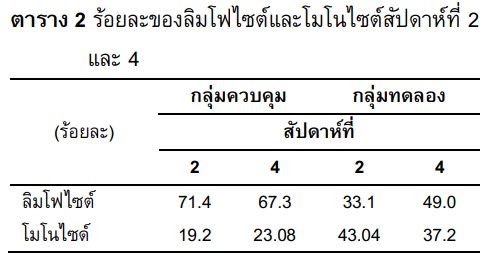
การศึกษามุ่งหมายกำหนดหาปริมาณฟลาโวรินอยด์และฟินอลิกของราก ลำต้น และใบ ต้นกำลังช้างเผือก (Hiptage candicans Hook.f.) รากมีสารทั้งสองปริมาณสูงสุดเท่ากับ 13.7 ± 0.04 และ 20.0 ± 0.7 มก. ต่อ 100 มิลลิกรัมของสารสกัด ให้สารสกัดแก่หนู BALB/cAJcl ทุกวัน ระหว่างกลุ่มควบคุมต่อกลุ่มทดลองร้อยละของลิมโฟไซต์ลดลงเท่ากับ 71.4 ต่อ 33.1 และ 67.3 ต่อ 49.0 ส่วนโมโนไซต์เพิ่มขึ้นเท่ากับ 19.2 ต่อ 43.0 และ 23.0 ต่อ 37.2 ที่ 2 และ 4 สัปดาห์ ตามลำดับ สรุปสารสกัดมีผลให้ลิมโฟไซด์ลดลง ขณะที่โมโนไซต์เพิ่มขึ้น
เอกสารอ้างอิง
1. Kühnau, J. The flavonoids. A class of semi-essential food components: Their role in human nutrition. World Rev Nutr Diet. 1976;24:117–191.
2. Fantini M, Benvenuto M, Masuelli L, Frajese GV, Tresoldi I, Modesti, et al. In vitro and in vivo antitumoral effects of combinations of polyphenols, or polyphenols and anticancer drugs: Perspectives on cancer treatment. Int J Mol Sci. 2015;16:9236–9282.
3. Farzaei MH, Bahramsoltani R, Rahimi R. Phytochemicals as adjunctive with conventional anticancer therapies. Curr Pharm Des. 2016;22:4201–4218.
4. El Haouari M, Rosado JA. Medicinal plants with antiplatelet activity. Phyther Res. 2016;30:1059–1071.
5. Sirtori CR, Arnoldi A, Cicero AFG. Nutraceuticals for blood pressure control. Ann Med. 2015;47:447–456.
6. Grassi D, Desideri G, Mai F, Martella L, De Feo M, Soddu D, et al. Cocoa, glucose tolerance, and insulin signaling: Cardiometabolic protection. J Agric Food Chem. 2015;63:9919–9926.
7. Jain P. Secondary metabolites for antiulcer activity. Nat Prod Res. 2015;30:640–656.
8. Guan LP, Liu BY. Antidepressant-like effects and mechanisms of flavonoids and related analogues. Eur J Med Chem. 2016;121:47–57.
9. Sucher NJ, Carles MC. A pharmacological basis of herbal medicines for epilepsy. Epilepsy Behav. 2015;52:308–318.
10. Diniz TC, Silva JC, de Lima-Saraiva SR, Ribeiro FP, Pacheco AG, de Freitas RM, et al. The role of flavonoids on oxidative stress in epilepsy. Oxid Med Cell Longev. 2015;2015:171756.
11. Spinello A, Bonsignore R, Barone G, Keppler BK, Terenzi A. Metal ions and metal complexes in Alzheimer’s disease. Curr Pharm Des. 2016;22:3996–4010.
12. Bell L, Lamport DJ, Butler LT, Williams CM. A review of the cognitive effects observed in humans following acute supplementation with flavonoids, and their associated mechanisms of action. Nutrients. 2015;7:10290–10306.
13. Wolfe K, Wu X, Liu RH. Antioxidant activity of apple peels. J Agr Food Chem. 2003;51:609-614.
14. Lee Y, Lee SH, Jeong M, Kim JB. In vitro analysis of the immunomodulating effects of Allium Hookeri on lymphocytes, macrophages and tumour Cells. J Poult Sci. 2017;54(2),142-148.
2. Fantini M, Benvenuto M, Masuelli L, Frajese GV, Tresoldi I, Modesti, et al. In vitro and in vivo antitumoral effects of combinations of polyphenols, or polyphenols and anticancer drugs: Perspectives on cancer treatment. Int J Mol Sci. 2015;16:9236–9282.
3. Farzaei MH, Bahramsoltani R, Rahimi R. Phytochemicals as adjunctive with conventional anticancer therapies. Curr Pharm Des. 2016;22:4201–4218.
4. El Haouari M, Rosado JA. Medicinal plants with antiplatelet activity. Phyther Res. 2016;30:1059–1071.
5. Sirtori CR, Arnoldi A, Cicero AFG. Nutraceuticals for blood pressure control. Ann Med. 2015;47:447–456.
6. Grassi D, Desideri G, Mai F, Martella L, De Feo M, Soddu D, et al. Cocoa, glucose tolerance, and insulin signaling: Cardiometabolic protection. J Agric Food Chem. 2015;63:9919–9926.
7. Jain P. Secondary metabolites for antiulcer activity. Nat Prod Res. 2015;30:640–656.
8. Guan LP, Liu BY. Antidepressant-like effects and mechanisms of flavonoids and related analogues. Eur J Med Chem. 2016;121:47–57.
9. Sucher NJ, Carles MC. A pharmacological basis of herbal medicines for epilepsy. Epilepsy Behav. 2015;52:308–318.
10. Diniz TC, Silva JC, de Lima-Saraiva SR, Ribeiro FP, Pacheco AG, de Freitas RM, et al. The role of flavonoids on oxidative stress in epilepsy. Oxid Med Cell Longev. 2015;2015:171756.
11. Spinello A, Bonsignore R, Barone G, Keppler BK, Terenzi A. Metal ions and metal complexes in Alzheimer’s disease. Curr Pharm Des. 2016;22:3996–4010.
12. Bell L, Lamport DJ, Butler LT, Williams CM. A review of the cognitive effects observed in humans following acute supplementation with flavonoids, and their associated mechanisms of action. Nutrients. 2015;7:10290–10306.
13. Wolfe K, Wu X, Liu RH. Antioxidant activity of apple peels. J Agr Food Chem. 2003;51:609-614.
14. Lee Y, Lee SH, Jeong M, Kim JB. In vitro analysis of the immunomodulating effects of Allium Hookeri on lymphocytes, macrophages and tumour Cells. J Poult Sci. 2017;54(2),142-148.
ดาวน์โหลด
เผยแพร่แล้ว
2019-04-24
รูปแบบการอ้างอิง
1.
พันแสง ส, แก้วกรม พ. ฟลาโวนอยด์และฟินอลิกในส่วนต่างๆของต้นกำลังช้างเผือกและผลต่อลิมโฟไซต์และโมโนไซต์ในหนู. Health Sci Tech Rev [อินเทอร์เน็ต]. 24 เมษายน 2019 [อ้างถึง 24 ตุลาคาม 2026];12(1):10-2. available at: https://li01.tci-thaijo.org/index.php/journalup/article/view/202871
ฉบับ
ประเภทบทความ
บทความวิจัย
สัญญาอนุญาต
ผู้นิพนธ์ต้องรับผิดชอบข้อความในบทนิพนธ์ของตน มหาวิทยาลัยพะเยา ไม่จำเป็นต้องเห็นด้วยกับบทความที่ตีพิมพ์เสมอไป ผู้สนใจสามารถคัดลอก และนำไปใช้ได้ แต่จะต้องขออนุมัติเจ้าของ และได้รับการอนุมัติเป็นลายลักษณ์อักษรก่อน พร้อมกับมีการอ้างอิงและกล่าวคำขอบคุณให้ถูกต้องด้วย