การประเมินความเสี่ยงด้านสุขภาพจากการได้รับฝุ่น PM2.5 จากพื้นที่อุตสาหกรรมในอำเภอปลวกแดง จังหวัดระยอง
คำสำคัญ:
ฝุ่น PM2.5, มลพิษทางอากาศ, การประเมินความเสี่ยงต่อสุขภาพ, ค่าสัดส่วนความเสี่ยง (HQ)บทคัดย่อ
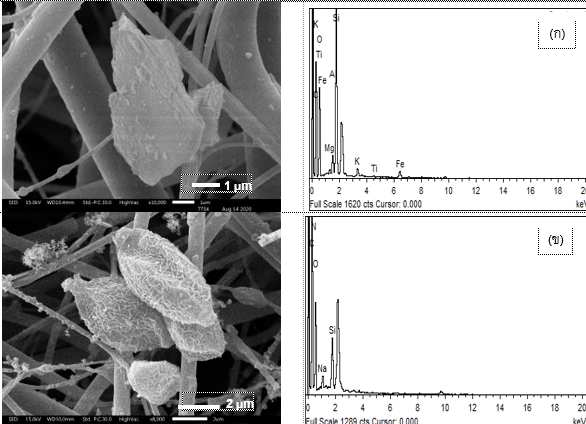
การหายใจรับฝุ่นละเอียดหรือฝุ่น PM2.5 มีผลต่อปัญหาสุขภาพของมนุษย์ ซึ่งส่งผลกระทบต่อระบบทางเดินหายใจและอัตราการเสียชีวิต การวิจัยนี้มีวัตถุประสงค์ เพื่อศึกษาความเข้มข้นของฝุ่น PM2.5 ที่ปลดปล่อยมาจากพื้นที่เขตอุตสาหกรรมในอำเภอปลวกแดง จังหวัดระยอง และนำมาประเมินความเสี่ยงต่อสุขภาพของมนุษย์ โดยตัวอย่างฝุ่น PM2.5 สามารถเก็บบนกระดาษกรองใยหิน ด้วยเครื่องเก็บตัวอย่างฝุ่นละอองปริมาตรต่ำในช่วงฤดูฝนและฤดูแล้ง พบว่า ค่าเฉลี่ยความเข้มข้นของฝุ่น PM2.5 ในช่วงฤดูฝน (38.8±25.2 µg/m3) มีค่าน้อยกว่าในช่วงฤดูแล้ง (52.7±33.9 µg/m3) เมื่อเปรียบเทียบค่าเฉลี่ยความเข้มข้นของฝุ่น PM2.5 ในฤดูฝนและฤดูแล้ง พบว่า ค่าเฉลี่ยความเข้มข้นของฝุ่น PM2.5 ไม่มีความแตกต่างกันอย่างมีนัยสำคัญทางสถิติ (p>0.05) นอกจากนี้ เมื่อทำการประเมินความเสี่ยงต่อสุขภาพด้วยการคำนวณจากค่าสัดส่วนความเสี่ยง (HQ) พบว่า ค่าเฉลี่ย HQ ของฝุ่น PM2.5 ของเด็กในช่วงฤดูฝนและฤดูแล้งมีค่ามากกว่าผู้ใหญ่และมีค่าเกิน 1.0 ซึ่งแสดงว่ามีความเสี่ยงต่อสุขภาพของมนุษย์ ดังนั้นในระยะยาว เด็กมีโอกาสได้รับฝุ่น PM2.5 เข้าสู่ระบบทางเดินหายใจได้มากกว่าผู้ใหญ่ จากการผลศึกษาสัณฐานวิทยาและองค์ประกอบธาตุ พบกลุ่มธาตุออกซิเจน เหล็ก แมกนีเซียม อลูมิเนียม โพแทสเซียม หรือโซเดียม ซึ่งอาจจะระบุได้ว่าฝุ่น PM2.5 ที่พบอาจจะถูกปล่อยมาจากพื้นที่เขตอุตสาหกรรม
เอกสารอ้างอิง
กองจัดการคุณภาพอากาศและเสียง กรมควบคุมมลพิษ, แผนปฏิบัติการขับเคลื่อนวาระแห่งชาติ การแก้ไขปัญหามลพิษด้านฝุ่นละออง. กรุงเทพฯ: กรมควบคุมมลพิษกระทรวงทรัพยากรธรรมชาติและสิ่งแวดล้อม; 2562. หน้า 5-13. 48 หน้า.
World Health Organization (WHO). Health risk of particulate matter from long-range transboundry air pollution [Internet]. Copenhagen, Denmark; 2006 [Cites 20 October 2020]. Assessed from; http://www.euro.who.int/pubrequest.
Koplitz SN, Jacob DJ, Sulprizio MP, Myllyvirta L and Reid C. Burden of Disease from Rising Coal-fired Power plant Emissions in Southeast Asia. Environ Sci Technol. 2017; 51: 1467-1476.
Narita D, Kim Oanh NT, Sato K, Hao M, Permadi DA, Ha Chi NN, Ratanajaratroj T and Pawarmart I. Pollution characteristics and policy actions on fine particulate matter in a growing Asian economy: The case of Bangkok metropolitan region. Atmosphere. 2019; 10(227): 3-18.
Hien TT, Thien Chi ND, Nguyen NT, Vinh LX, Takenaka N and Huy DH. Current status of fine particulate matter (PM2.5) in Vietnam’s most populous city, Ho Chi Minh city. Aerosol Air Qual Res. 2019; 19: 2239-2251.
ธิดารัตน์ ผลพิบูลย์, อิสรีย์ฐิกา ชัยสวัสดิ์ และอนุวัตร รุ่งพิสุทธิพงษ์. ภัยในหน้าหนาวจากฝุ่นละอองขนาดเล็ก (PM2.5). วารสารวิชาการมหาวิทยาลัยอีสเทิร์นเอเชีย ฉบับวิทยาศาสตร์และเทคโนโลยี. 2557; 8(1): 40-46.
Li R, Zhou R and Zhang J. Function of PM2.5 in the pathogenesis of lung cancer and chronic airway inflammatory diseases (Review). Oncol. Lett. 2018; 15: 7506-7514.
Li T, Hu R, Chen Z, Huang M, Li Q-Y, Huang S-X, Zhu Z and Zhou L-F. PM2.5: the culprit for chronic lung diseases in China. CDTM. 2018; 4: 176-186.
World Health Organization-International Agency for Research on Cancer (WHO-IARC). Outdoor Air pollution. The International Agency for Research on Cancer, France: China Foto Press; 2016. 177 p.
สำนักงานคณะกรรมการนโยบายเขตพัฒนาพิเศษภาคตะวันออก (สกพอ.) เขตพัฒนาพื้นที่ระเบียงเศรษฐกิจพิเศษภาคตะวันออก (Eastern Economic Corridor (EEC) office) [Internet]. Bang Kok; 2019 [Cites 20 November 2020]. Assessed from; https://eeco.or.th/th/promotional-zone.
กรมโรงงานอุตสาหกรรม. ข้อมูลโรงงานอุตสาหกรรมสำหรับเจ้าหน้าที่: ข้อมูลสรุปในภาพรวมของอำเภอปลวกแดง จังหวัดระยอง [Internet]. Rayong; 2020 [Cites 15 November 2020]. Assessed from; reg.diw.go.th/executive/Amp3.asp?amp=6&prov=21.
Adamiec E and Jarosz-Krzemińska. Human health risk assessment associated with contaminants in the finest fraction of sidewalk dust collected in proximity to trafficked roads. Sci Rep. 2019; 9(16364): doi; 10.1038/s41598-019-52815-0.
Olufemi AC, Mji A and Mukhola MS. Health risks of exposure to air pollutants among students in schools in the vicinities of coal mines. Energ Explor Exploit. 2019; 37(6): 1638-11656.
Hamastia A, Hermawati E, Marina R and Andrian R. Estimated analysis on environmental health risk of 2.5 microns particulate matter to urban communities in South Jakarta. Indian J Public Health Res Dev. 2019; 10(2): 332-337.
Liang B, Li X-L, Ma K and Liang S-X. Pollution characteristics of metal pollutants in PM2.5 and comparison of risk on human health in heating and non-heating seasons in Baoding, China. Ecotoxicol Environ Saf. 2019; 170: 166-171.
Mo Z, Wang Z, Mao G, Pan X, Wu L, Xu P, Chen S, Wang A, Zhang Y, Luo J, Ye X, Wang X, Chen Z and Lou X. Characterization and health risk assessment of PM2.5-bound polycyclic aromatic hydrocarbons in 5 urban cities of Zhejiang province, China. Sci Rep. 2019; 9(1): 7296. DOI: 10.1038/s41598-019-43557-0.
Labrada-Delgado G, Aragon-Pina A, Campos-Ramos A, Castro-Romero T, Amadór-Munoz O and Villalobos-Pietrini R. Chemical and morphological characterization of PM2.5 collected during MILAGRO campaign using scanning electron microscopy. Atmos Pollut Res. 2012; 3: 289-300.
Xue H, Liu G, Zhang H, Hu R and Wang X. Elemental composition, morphology and sources of fine particulates (PM2.5) in Hefei city, China. Aerosol Air Qual Res. 2019; 19: 1688-1696.
Chithra VS and Shiva Nagendra SM. Impact of outdoor meteorology on indoor PM10, PM2.5 and PM1 concentrations in a naturally ventilated classroom. Urban Clim. 2014; 10: 77-91.
U.S. EPA (United States-Environmental Protection Agency). Exposure Factors Handbook: 2011 edition; National Center for Environmental Assessment [Internet]. Washington, DC; 2011 [Cites 20 December 2020]. Assessed from; http://www.epa.gov/ncea/efh.
Miller MD, Marty MA, Arcus A, Brown J, Morry D, Sandy M. Differences between Children and Adults: implications for Risk Assessment at California EPA. Int J Toxicol. 2002; 21: 403–418.
Li CY, Ding M, Yang Y, Zhang P, Li Y, Wang Y, Huang L, Yang P, Wang M, Sha X, Xu Y, Guo C and Shan Z. Portrait and classification of individual haze particulates. J Environ Prot. 2016; 7: 1355-1379.
ดาวน์โหลด
เผยแพร่แล้ว
รูปแบบการอ้างอิง
ฉบับ
ประเภทบทความ
สัญญาอนุญาต
ลิขสิทธิ์ (c) 2021 วารสารนเรศวรพะเยา

อนุญาตภายใต้เงื่อนไข Creative Commons Attribution-NonCommercial-NoDerivatives 4.0 International License.
ผู้นิพนธ์ต้องรับผิดชอบข้อความในบทนิพนธ์ของตน มหาวิทยาลัยพะเยา ไม่จำเป็นต้องเห็นด้วยกับบทความที่ตีพิมพ์เสมอไป ผู้สนใจสามารถคัดลอก และนำไปใช้ได้ แต่จะต้องขออนุมัติเจ้าของ และได้รับการอนุมัติเป็นลายลักษณ์อักษรก่อน พร้อมกับมีการอ้างอิงและกล่าวคำขอบคุณให้ถูกต้องด้วย