ประสิทธิผลของรูปแบบบริการฟื้นฟูแบบครบวงจรต่อผลลัพธ์ทางคลินิกในผู้ป่วยโรคหลอดเลือดสมองระยะกึ่งเฉียบพลัน
คำสำคัญ:
โรคหลอดเลือดสมอง, การฟื้นฟูสมรรถภาพ, การดูแลต่อเนื่อง, คุณภาพชีวิตบทคัดย่อ
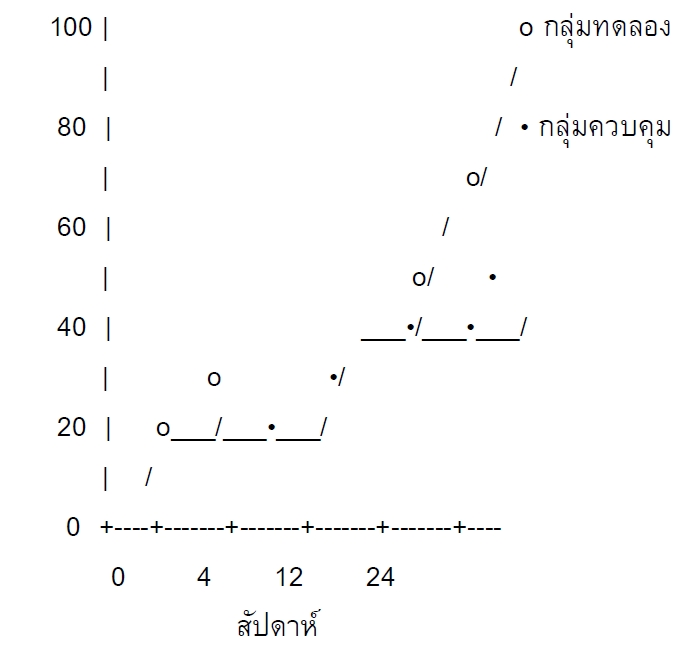
การศึกษานี้มีวัตถุประสงค์เพื่อพัฒนาและประเมินประสิทธิผลของรูปแบบบริการฟื้นฟูในผู้ป่วยโรคหลอดเลือดสมองระยะกึ่งเฉียบพลัน ที่ครอบคลุมการดูแลแบบผู้ป่วยใน ผู้ป่วยนอก และที่บ้าน โดยมีแพทย์เวชศาสตร์ฟื้นฟูเป็นผู้นำทีม การวิจัยเป็นการทดลองแบบสุ่มและมีกลุ่มควบคุม ดำเนินการที่โรงพยาบาลอุตรดิตถ์ ประเทศไทย ระหว่างเดือนมกราคมถึงธันวาคม พ.ศ. 2565 ผู้เข้าร่วมวิจัย 70 รายถูกสุ่มเข้ากลุ่มทดลอง (n=35) และกลุ่มควบคุม (n=35) กลุ่มทดลองได้รับการฟื้นฟูตามรูปแบบที่พัฒนาขึ้น ส่วนกลุ่มควบคุมได้รับการดูแลแบบมาตรฐาน ติดตามผลที่ 4, 12 และ 24 สัปดาห์ ผลการศึกษาพบว่ากลุ่มทดลองมีคะแนน Barthel Index เพิ่มขึ้น 43.7±18.9 เทียบกับ 25.9±17.6 คะแนน (p<0.001) คะแนน Modified Rankin Scale ลดลง 1.6±1.0 เทียบกับ 1.0±0.9 คะแนน (p=0.012) และคะแนน Stroke Specific Quality of Life Scale เพิ่มขึ้น 72.9±30.5 เทียบกับ 41.5±28.6 คะแนน (p<0.001) ที่ 24 สัปดาห์เมื่อเทียบกับกลุ่มควบคุม นอกจากนี้ กลุ่มทดลองยังมีภาวะซึมเศร้าลดลง 5.7±3.5 เทียบกับ 3.0±3.1 คะแนน (p=0.001) และความสามารถในการเดินเพิ่มขึ้น 0.43±0.22 เทียบกับ 0.21±0.18 เมตร/วินาที (p<0.001) มากกว่ากลุ่มควบคุมอย่างมีนัยสำคัญทางสถิติ สรุปได้ว่ารูปแบบบริการฟื้นฟูที่พัฒนาขึ้นมีประสิทธิผลในการเพิ่มความสามารถในการทำกิจวัตรประจำวัน ลดระดับความพิการ และเพิ่มคุณภาพชีวิตของผู้ป่วย จุดเด่นของรูปแบบนี้คือความต่อเนื่องของการฟื้นฟูและการนำเทคโนโลยี telerehabilitation มาใช้ในการติดตามดูแลผู้ป่วยที่บ้าน ซึ่งเหมาะสมกับบริบทพื้นที่ห่างไกลที่มีทรัพยากรจำกัด
เอกสารอ้างอิง
GBD 2019 Stroke Collaborators. Global, regional, and national burden of stroke and its risk factors, 1990-2019: a systematic analysis for the Global Burden of Disease Study 2019. Lancet Neurol. 2021;20(10):795-820.
World Health Organization. Global Health Estimates 2020: Deaths by Cause, Age, Sex, by Country and by Region, 2000-2019. Geneva: World Health Organization; 2020.
Ministry of Public Health, Thailand. Annual Health Statistics Report 2020. Nonthaburi: Ministry of Public Health; 2020. (in Thai)
Cai Y, Towne SD, Bickel CS. Rehabilitation following stroke in patients without early mobilization:
A systematic review and meta-analysis. Arch Phys Med Rehabil. 2020;101(11):1939-50.
Langhorne P, Bernhardt J, Kwakkel G. Stroke care 2: Stroke rehabilitation. Lancet. 2023;401(10379):799-809.
Bernhardt J, Hayward KS, Kwakkel G, et al. Agreed definitions and a shared vision for new standards in stroke recovery research: The Stroke Recovery and Rehabilitation Roundtable taskforce. Int J Stroke. 2021;16(7):756-65.
Veerbeek JM, van Wegen E, van Peppen R, et al. What is the evidence for physical therapy poststroke? A systematic review and meta-analysis. PLoS One. 2022;17(9):e0274835.
Wang J, Hu Y, Chen YL, Lyu SY. Exercise-based rehabilitation for poststroke depression: A systematic review and meta-analysis. Arch Phys Med Rehabil. 2023;104(2):226-37.
Traisang P, Wattanapan P, Kerdsomnuk S, et al. Continuity of care challenges in post-stroke rehabilitation services in Thailand. J Health Sci Med Res. 2021;39(3):217-25. (in Thai)
Panyawong E, Pongvechpaiboon K, Veerapong P. Analysis of stroke care in Tertiary hospitals in the rural areas of Thailand. J Med Assoc Thai. 2021;104(6):860-7. (in Thai)
Saad J, Wattanapan P. Effect of early intensive rehabilitation in acute hospitalized stroke patients: A systematic review and meta-analysis. Arch Phys Med Rehabil. 2022;103(4):752-61.
Chen J, Sun D, Zhang S, et al. Effects of home-based telerehabilitation in patients with stroke: A randomized controlled trial. Neurology. 2022;98(4):e344-e55.
Chan L, Heinemann AW, Roberts J. Elevating the quality of disability and rehabilitation research: Mandatory use of the reporting guidelines. Arch Phys Med Rehabil. 2022;103(2):215-8.
Langhorne P, Wu O, Rodgers H, Ashburn A, Bernhardt J. A Very Early Rehabilitation Trial after stroke (AVERT): a Phase III, multicentre, randomised controlled trial. Health Technol Assess. 2020;21(54):1-120.
Winstein CJ, Wolf SL, Dromerick AW, et al. Effect of a task-oriented rehabilitation program on upper extremity recovery following motor stroke: The ICARE Randomized Clinical Trial. JAMA. 2021;325(3):237-48.
Bernhardt J, Hayward KS, Dancause N, et al. A stroke recovery trial development framework: Consensus-based core recommendations from the second stroke recovery and rehabilitation roundtable. Neurorehabil Neural Repair. 2022;36(1):4-13.
Broderick JP, Adeoye O, Elm J. Evolution of the modified Rankin Scale and its use in future stroke trials. Stroke. 2020;48(7):2007-12.
Chen X, Chen J, Wang X, et al. Effectiveness of intensive rehabilitation for patients with acute and subacute stroke: A systematic review and meta-analysis. Front Neurol. 2022;13:963413.
Winstein CJ, Wolf SL, Dromerick AW, et al. Long-term follow-up of the ICARE randomized clinical trial for upper extremity motor rehabilitation after stroke. JAMA Neurol. 2022;79(12):1271-9.
Hayward KS, Neva JL, Mang CS, et al. Interhemispheric pathways are important for motor outcome in individuals with chronic and severe upper limb impairment post stroke. J Neurosci. 2021;41(5):1092-104.
Broderick JP, Adeoye O, Elm J. The evolution of the modified Rankin Scale as a stroke trial endpoint and its modern usage. Stroke. 2023;54(7):1953-60.
Chen J, Li S, Sun D, et al. Comprehensive rehabilitation service models for stroke patients: A systematic review and network meta-analysis. Front Neurol. 2022;13:801628.
Salter K, Jutai JW, Teasell R, Foley NC, Bitensky J, Bayley M. Issues for selection of outcome measures in stroke rehabilitation: ICF Participation. Disabil Rehabil. 2020;42(3):324-39.
Lin KC, Fu T, Wu CY, et al. Minimal detectable change and clinically important difference of the Stroke Impact Scale in stroke patients. Neurorehabil Neural Repair. 2020;34(2):115-25.
Liu Z, Hsu FC, Trombetti A, et al. Effect of 24-week physical activity on agility, functional mobility, and physical function in older adults: a multicenter randomized controlled trial. J Gerontol A Biol Sci Med Sci. 2021;76(11):1998-2005.
Wang W, Zhang XD, Zhu YH, et al. Effects of comprehensive nursing intervention on quality of life, complications and mood state in elderly patients with acute cerebral infarction. Am J Transl Res. 2021;13(6):6910-7.
Fulk GD, He Y, Boyne P, Dunning K. Predicting home and community walking activity poststroke. Stroke. 2020;48(2):406-11.
Perera S, Mody SH, Woodman RC, Studenski SA. Meaningful change and responsiveness in common physical performance measures in older adults. J Am Geriatr Soc. 2019;67(5):1305-10.
ดาวน์โหลด
เผยแพร่แล้ว
รูปแบบการอ้างอิง
ฉบับ
ประเภทบทความ
สัญญาอนุญาต
ลิขสิทธิ์ (c) 2025 มหาวิทยาลัยพะเยา

อนุญาตภายใต้เงื่อนไข Creative Commons Attribution-NonCommercial-NoDerivatives 4.0 International License.
ผู้นิพนธ์ต้องรับผิดชอบข้อความในบทนิพนธ์ของตน มหาวิทยาลัยพะเยา ไม่จำเป็นต้องเห็นด้วยกับบทความที่ตีพิมพ์เสมอไป ผู้สนใจสามารถคัดลอก และนำไปใช้ได้ แต่จะต้องขออนุมัติเจ้าของ และได้รับการอนุมัติเป็นลายลักษณ์อักษรก่อน พร้อมกับมีการอ้างอิงและกล่าวคำขอบคุณให้ถูกต้องด้วย