Role of HERC5 silencing in modulating apoptosis of EA.hy926 endothelial cells: A Preliminary in vitro study with implications for deep vein thrombosis
คำสำคัญ:
HERC5, Vascular endothelial cells, Apoptosis, EA.hy926, Deep vein thrombosisบทคัดย่อ
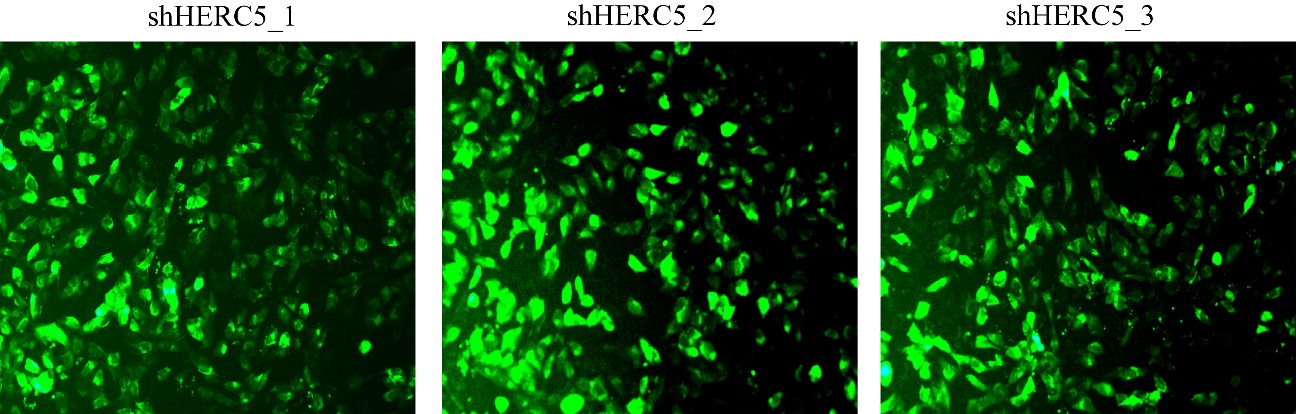
Endothelial cell apoptosis contributes to a variety of vascular pathologies, including endothelial dysfunction implicated in deep vein thrombosis (DVT). HERC5, a HECT-domain E3 ubiquitin ligase tightly regulated in activated endothelial cells, has been reported to participate in inflammatory and immune responses, but its role in endothelial cell apoptosis remains insufficiently characterized. This preliminary in vitro study aimed to investigate the effect of HERC5 silencing on apoptosis of EA.hy926 endothelial cells. Three short hairpin RNAs targeting HERC5 (shHERC5_1, shHERC5_2, and shHERC5_3) were delivered into EA.hy926 cells by lentiviral transduction; non-targeting shRNA (shNC) and untransduced cells (Mock) served as controls. Silencing efficiency was confirmed by RT-qPCR and Western blot. Apoptosis was assessed by Annexin V/Propidium Iodide flow cytometry using shHERC5_3, which produced the greatest protein-level knockdown. Compared with shNC, all three shHERC5 constructs significantly reduced HERC5 mRNA and protein levels (P < 0.05). Flow cytometry showed that HERC5 silencing increased the proportion of late apoptotic cells and decreased the proportion of viable cells relative to shNC. These results provide preliminary in vitro evidence that HERC5 may influence endothelial cell apoptosis. Because endothelial apoptosis is one of several mechanisms associated with endothelial dysfunction and vascular pathologies including DVT, further investigation incorporating thrombosis-related endpoints and in vivo models is warranted to clarify whether HERC5 is mechanistically linked to DVT pathogenesis.
เอกสารอ้างอิง
Carlström M, Weitzberg E, Lundberg JO. Nitric oxide signaling and regulation in the cardiovascular system: recent advances. Pharmacol Rev. 2024;76(6):1038-1062.
Liu W, Tian Z. The application of prostacyclin analogues in arterial occlusive diseases from the perspective of pharmacological mechanism. Natl Med J China. 2018;98(47):3.
Marcus AJ, Broekman MJ, Pinsky DJ. COX inhibitors and thromboregulation. N Engl J Med. 2002;347(13):1025-1026. doi:10.1056/NEJMcibr021805.
Bombeli T, Karsan A, Tait JF, Schwartz BR, Harlan JM. Apoptotic vascular endothelial cells become procoagulant. Blood. 1997;89(7):2429-2442.
Winn RK, Harlan JM. The role of endothelial cell apoptosis in inflammatory and immune diseases. J Thromb Haemost. 2005;3(8):1815-1824.
Zalewski J, Szajna M, Stępień K, Nowak K, Karcińska A, Yika AC, et al. Endothelial cell apoptosis but not necrosis is inhibited by ischemic preconditioning. Int J Mol Sci. 2024;25(2):1238.
Gobé G, Browning J, Howard T, Hogg N, Winterford C, Cross R. Apoptosis occurs in endothelial cells during hypertension-induced microvascular rarefaction. J Struct Biol. 1997;118(1):63-72.
Shen J, San W, Zheng Y, Zhang S, Cao D, Chen Y, et al. Different types of cell death in diabetic endothelial dysfunction. Biomed Pharmacother. 2023;168:115802.
Duan H, Zhang Q, Liu J, Li R, Wang D, Peng W, et al. Suppression of apoptosis in vascular endothelial cell, the promising way for natural medicines to treat atherosclerosis. Pharmacol Res. 2021;168:105599.
Mitsui K, Nakanishi M, Ohtsuka S, Norwood TH, Okabayashi K, Miyamoto C, et al. A novel human gene encoding HECT domain and RCC1-like repeats interacts with cyclins and is potentially regulated by the tumor suppressor proteins. Biochem Biophys Res Commun. 1999;266(1):115-122.
Wong JJY, Pung YF, Sze NSK, Chin KC. HERC5 is an IFN-induced HECT-type E3 protein ligase that mediates type I IFN-induced ISGylation of protein targets. Proc Natl Acad Sci USA. 2006;103(28):10735-10740.
Takeuchi T, Inoue S, Yokosawa H. Identification and Herc5-mediated ISGylation of novel target proteins. Biochem Biophys Res Commun. 2006;348(2):473-477.
Kroismayr R, Baranyi U, Stehlik C, Dorfleutner A, Binder BR, Lipp J. HERC5, a HECT E3 ubiquitin ligase tightly regulated in LPS activated endothelial cells. J Cell Sci. 2004;117(20):4749-4756.
Wrage M, Hagmann W, Kemming D, Uzunoglu FG, Riethdorf S, Effenberger K, et al. Identification of HERC5 and its potential role in NSCLC progression. Int J Cancer. 2015;136(10):2264-2272.
Yau JW, Teoh H, Verma S. Endothelial cell control of thrombosis. BMC Cardiovasc Disord. 2015;15:130.
Edgell CJ, McDonald CC, Graham JB. Permanent cell line expressing human factor VIII-related antigen established by hybridization. Proc Natl Acad Sci USA. 1983;80(12):3734-3737.
Stewart SA, Dykxhoorn DM, Palliser D, Mizuno H, Yu EY, An DS, et al. Lentivirus-delivered stable gene silencing by RNAi in primary cells. RNA. 2003;9(4):493-501.
Rio DC, Ares M Jr, Hannon GJ, Nilsen TW. Purification of RNA using TRIzol (TRI reagent). Cold Spring Harb Protoc. 2010;2010(6):pdb.prot5439.
Livak KJ, Schmittgen TD. Analysis of relative gene expression data using real-time quantitative PCR and the 2(-Delta Delta C(T)) method. Methods. 2001;25(4):402-408.
Mahmood T, Yang PC. Western blot: technique, theory, and trouble shooting. N Am J Med Sci. 2012;4(9):429-434.
Vermes I, Haanen C, Steffens-Nakken H, Reutelingsperger C. A novel assay for apoptosis. Flow cytometric detection of phosphatidylserine expression on early apoptotic cells using fluorescein labelled Annexin V. J Immunol Methods. 1995;184(1):39-51.
Bouïs D, Hospers GA, Meijer C, Molema G, Mulder NH. Endothelium in vitro: a review of human vascular endothelial cell lines for blood vessel-related research. Angiogenesis. 2001;4(2):91-102.
Lin HH, Chen JH, Chou FP, Wang CJ. Protocatechuic acid inhibits cancer cell metastasis involving the down-regulation of Ras/Akt/NF-κB pathway and MMP-2 production by targeting RhoB activation. Br J Pharmacol. 2011;162(1):237-254.
Rayes J, Bourne JH, Brill A, Watson SP. The dual role of platelet-innate immune cell interactions in thrombo-inflammation. Res Pract Thromb Haemost. 2019;4(1):23-35.
Meng Y, Yin Q, Ma Q, Qin H, Zhang J, Zhang B, et al. FXII regulates the formation of deep vein thrombosis via the PI3K/AKT signaling pathway in mice. Int J Mol Med. 2021;47(5):87.
ดาวน์โหลด
เผยแพร่แล้ว
รูปแบบการอ้างอิง
ฉบับ
ประเภทบทความ
สัญญาอนุญาต
ลิขสิทธิ์ (c) 2026 มหาวิทยาลัยพะเยา

อนุญาตภายใต้เงื่อนไข Creative Commons Attribution-NonCommercial-NoDerivatives 4.0 International License.
ผู้นิพนธ์ต้องรับผิดชอบข้อความในบทนิพนธ์ของตน มหาวิทยาลัยพะเยา ไม่จำเป็นต้องเห็นด้วยกับบทความที่ตีพิมพ์เสมอไป ผู้สนใจสามารถคัดลอก และนำไปใช้ได้ แต่จะต้องขออนุมัติเจ้าของ และได้รับการอนุมัติเป็นลายลักษณ์อักษรก่อน พร้อมกับมีการอ้างอิงและกล่าวคำขอบคุณให้ถูกต้องด้วย