
ผลของการพัฒนาฉลากยาฉีดต่อความคลาดเคลื่อนทางยา เหตุการณ์ไม่พึงประสงค์ จากการใช้ยา และมูลค่าการสูญเสียยา โรงพยาบาลสุไหงโก-ลก
คำสำคัญ:
ฉลากยาฉีด, ความคลาดเคลื่อนทางยา, วิศวกรรมปัจจัยมนุษย์บทคัดย่อ
ความเป็นมาและวัตถุประสงค์ ความคลาดเคลื่อนทางยาและเหตุการณ์ไม่พึงประสงค์จากการใช้ยาฉีดเป็นปัญหาสำคัญด้านความปลอดภัยผู้ป่วย โดยเฉพาะในขั้นตอนการผสม เตรียม และบริหารยา ซึ่งเป็นขั้นตอนสุดท้ายก่อนยาถึงผู้ป่วย การออกแบบฉลากยาที่ไม่สอดคล้องกับการใช้งานจริงอาจเพิ่มความเสี่ยงต่อความผิดพลาด งานวิจัยนี้มีวัตถุประสงค์เพื่อศึกษาผลของการพัฒนาฉลากยาฉีดตามแนวคิด Human Factor, Engineering (HFE) ต่อความคลาดเคลื่อนทางยา เหตุการณ์ไม่พึงประสงค์ และมูลค่าการสูญเสียยาในโรงพยาบาลสุไหงโก-ลก
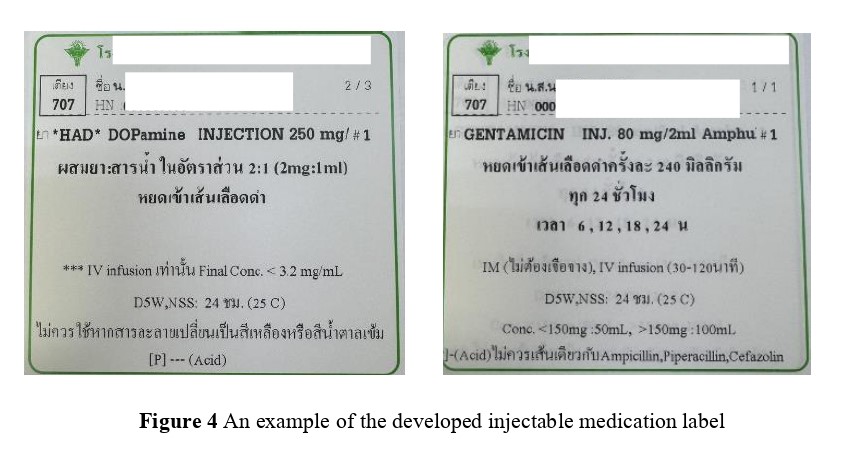
วิธีการวิจัย การศึกษานี้เป็นการวิจัยกึ่งทดลองแบบเปรียบเทียบก่อนและหลังโดยไม่มีกลุ่มควบคุม (A quasi-experimental uncontrolled before-and-after study)โดยเปรียบเทียบข้อมูลอุบัติการณ์จากระบบ HRMS ช่วงก่อนการพัฒนา (1 พฤษภาคม 2567 – 28 กุมภาพันธ์ 2568) และช่วงหลังการพัฒนา (1 มีนาคม 2568 – 31 ธันวาคม 2568) กลุ่มตัวอย่าง คือ รายงานอุบัติการณ์ที่เข้าเกณฑ์ความคลาดเคลื่อนทางยาและเหตุการณ์ไม่พึงประสงค์จากการใช้ยาฉีด โดยการพัฒนาฉลากเน้นการออกแบบให้สอดคล้องกับการใช้งานของพยาบาล เช่น การระบุวิถีการให้ยา ความคงสภาพ ความเข้ากัน ค่า pH และ osmolarity รวมถึงการใช้สัญลักษณ์เตือนความเสี่ยง
ผลการวิจัย ภายหลังการพัฒนาฉลากยาฉีด พบว่าจำนวนรายงานอุบัติการณ์ลดลงเมื่อเทียบกับช่วงก่อนการพัฒนา และการกระจายของระดับความรุนแรงแตกต่างกันอย่างมีนัยสำคัญทางสถิติ (p = 0.025) โดยไม่พบอุบัติการณ์ระดับ C หลังจากการพัฒนา และระดับ D ลดจาก 12 รายงาน เหลือ 8 รายงาน อีกทั้งความผิดพลาดด้านการผสมและเตรียมยา รวมถึงการจัดการยาแบบ multiple dose ลดลง ส่งผลให้มูลค่าการสูญเสียยาลดลงจาก 2,662.01 บาท เหลือ 806.00 บาท
สรุปและข้อเสนอแนะ ภายหลังการพัฒนาฉลากยาฉีดตามแนวคิด HFE พบว่าความคลาดเคลื่อนทางยา เหตุการณ์ไม่พึงประสงค์จากการใช้ยา และมูลค่าการสูญเสียยามีแนวโน้มลดลงเมื่อเทียบกับช่วงก่อนการพัฒนา สะท้อนว่าฉลากที่ยึดผู้ใช้เป็นศูนย์กลางอาจช่วยสนับสนุนความปลอดภัยด้านยา อย่างไรก็ตาม การศึกษานี้ไม่มีกลุ่มควบคุม จึงไม่สามารถสรุปได้ว่าการเปลี่ยนแปลงดังกล่าวเกิดจากฉลากเพียงปัจจัยเดียว
เอกสารอ้างอิง
Abbasi, S., Sharafat, M.A., & Khan, F. (2025). Medication errors and adverse drug events in peri-operative pediatric anesthetic care over twenty years: A retrospective observational study. BMC Anesthesiology, 25, 247. https://doi.org/10.1186/s12871-025-03109-8
Aceves-Gonzalez, C., Caro-Rojas, A., Rey-Galindo, J.A., Aristizabal-Ruiz, L., & Hernández-Cruz, K. (2024). Estimating the impact of label design on reducing the risk of medication errors by applying HEART in drug administration. European Journal of Clinical Pharmacology, 80, 575 – 588. https://doi.org/10.1007/s00228-024-03619-3
Bauer, D.T., & Guerlain, S. (2011). Improving the usability of intravenous medication labels to support safe medication delivery. International Journal of Industrial Ergonomics, 41(4), 394 – 399. https://doi.org/10.1016/j.ergon.2011.02.005
Dieckmann, P., Clemmensen, M. H., Sørensen, T. K., Kunstek, P., & Hellebek, A. (2016). Identifying facilitators and barriers for patient safety in a medicine label design system using patient simulation and interviews. Journal of Patient Safety, 12(4), 210 – 222. https://doi.org/10. 1097/PTS.0000000000000109
Groll, D., Davies, B., MacDonald, J., Nelson, S., & Virani, T. (2010). Evaluation of the psychometric properties of the phlebitis and infiltration scales for the assessment of complications of peripheral vascular access devices. Journal of Infusion Nursing, 33(6), 385 – 390. https://doi.org/10.1097/NAN.0b013e3181f85a73
Healthcare Accreditation Institute. (2021). Quality tips (2018–2021). Author.
Healthcare Accreditation Institute. (2022). Hospital and healthcare standards. Author.
Healthcare Accreditation Institute. (2023). Top 10 patient safety issues Thailand 2023 (Research Report). Author.
Naseralallah, L., Stewart, D., Ali, R. A., & Paudyal, V. (2022). An umbrella review of systematic reviews on contributory factors to medication errors in health-care settings. Expert Opinion on Drug Safety, 21(11), 1379 – 1399. https://doi.org/10.1080/14740338.2022.2147921
Ngamkitpramote, P., Kanjananantawong, C., Thapia, W., Piempreecha, T., & Piempreecha, S. (2020). Improvement of access to information on injectable high alert drugs among nurses with QR code. Thai Journal of Pharmacy Practice, 12(3), 633 – 641. https://he01.tci-thaijo.org/index. php/TJPP/article/view/177147
Nochod, P. (2025). Efficiency of human factor engineering to the reporting report of Lamphun Hospital laboratory. Journal of Environmental and Community Health, 10(1), 587 – 591. https://he03.tci-thaijo.org/index.php/ech/article/view/3894
Normkusol, J., Uppahat, W., & Prasertsang, P. (2023). The effect of nursing practice guideline for prevention of Amiodarone/vasopressors-induced phlebitis in coronary care unit Khon Kaen Hospital. Academic Journal of Nursing and Health Sciences, 3(2), 18 – 29. https://he04.tci-thaijo.org/index.php/AJNHS/article/view/409
Pathomjaruwat, T. (2016). Impact of a nursing care guideline on prevention and management of extravasation. Thai Journal of Nursing Council, 31(2), 81 – 95. https://he02.tci-thaijo.org/index.php/TJONC/article/view/47539
Pathomjaruwat, T. (2017). Prevention and management of extravasation in infusion therapy. Songklanagarind Journal of Nursing, 37(2), 169 – 181. https://he02.tci-thaijo.org/index.php/nur-psu/article/view/91366
Phianthum, C., Ploylearmsang, C., & Anusornsangiam, W. (2018). Outcome of medication errors reduction procedure in Phukieo Health Promoting Hospitals, Chaiyaphum Province. Isan Journal of Pharmaceutical Sciences, 14(3), 116 – 129. https://doi.org/10.14456/ijps.2018.30
Piempreecha, S. (2019). Effect of change on drug name labeling using Thai language for drugs with similar names on pre-dispensing errors. Thai Journal of Pharmacy Practice, 11(1), 119 – 127. https://he01.tci-thaijo.org/index.php/TJPP/article/view/171391
Piraly, T. (Ed.). (2019). HA update 2019. Healthcare Accreditation Institute.
R Core Team. (2024). R: A language and environment for statistical computing. R Foundation for Statistical Computing.
Reason, J. (2000). Human error: Models and management. BMJ, 320, 768. https://doi.org/10.1136/bmj.320.7237.768
Schroers, G., Ross, J. G., & Moriarty, H. (2021). Nurses’ perceived causes of medication administration errors: A qualitative systematic review. The Joint Commission Journal on Quality and Patient Safety, 47(1), 38 – 53. https://doi.org/10.1016/j.jcjq.2020.09.010
Sirilak, T. (2024, June 18–19). Human factor engineering and medication error management [Poster presentation]. HA Regional Forum Chiang Mai 2024: Growth Mindset for Better Healthcare System, Asawin Grand Convention Hotel, Bangkok, Thailand.
Tewthanom, K., & Tananonniwas, S. (2009). Medication error and prevention guide for patient’s safety. Veridian E-Journal, Silpakorn University, 2(1), 195 – 217. https://he02.tci-thaijo.org/index.php/Veridian-E-Journal/article/view/6937
The Joint Commission. (2024). National Patient Safety Goals® effective January 2025 for the ospital program. Author.
UC Davis PSNet Editorial Team. (2024). Human factors engineering. PSNet.
Wiwattanaset, P. (2018). The role of pharmaceutical packaging [Master’s thesis]. University of Phayao.
World Health Organization. (2023). Medication without harm: Policy brief. Author.
ดาวน์โหลด
เผยแพร่แล้ว
รูปแบบการอ้างอิง
ฉบับ
ประเภทบทความ
สัญญาอนุญาต
ลิขสิทธิ์ (c) 2026 วารสารมหาวิทยาลัยนราธิวาสราชนครินทร์

อนุญาตภายใต้เงื่อนไข Creative Commons Attribution-NonCommercial-NoDerivatives 4.0 International License.