
Loss Reduction in Wire Bonding Process Using Risk Management Framework
Article Sidebar
Main Article Content
Abstract
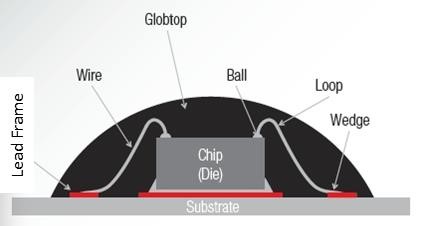
The purpose of this research was to reduce losses in wire bonding process by using risk management framework. The wire bonding process is the most important process in the integrated circuit manufacture because it is the method of making interconnections between semiconductor device and its package. The wiring process usually uses gold or copper wire which is very small size and is operated by high accuracy machines. As a result there would be more defects using this process than others.
According to Key Performance Indicator (KPI), defect rate and down time percentage are the main objective parameters. Initially, study method began with collecting the data of losses in the past then identifying the risk that impacted to the objective parameters by using fish bone diagram. The risk assessment was done by using questionnaires from the process team for ranking. Then, Fault Tree Diagram (FTA) was used as a tool for analyzing risk cause and separating all risks into similar group by using Affinity diagram technique. Afterward, the risk response was applied to all risk cause groups. Finally, the 5 risk management plans were established and implemented in the process.
After the implementation, the risks decreased from extreme and high level to medium level which is acceptable. This means the risk management plans could reduce the risks of losses in wire bonding process. Compared to the previous period, defect rate decreased from 6,381 DPM to 5,418 DPM (15.1% decreased) and down time decreased from 13.58% to 9.65% (3.93% decreased). It can be concluded that the parameter evaluation plan is the most effective plan.
Article Details
บทความที่ได้รับการตีพิมพ์เป็นลิขสิทธิ์ของ วารสารวิทยาศาสตร์และเทคโนโลยี มหาวิทยาลัยอุบลราชธานี
ข้อความที่ปรากฏในบทความแต่ละเรื่องในวารสารวิชาการเล่มนี้เป็นความคิดเห็นส่วนตัวของผู้เขียนแต่ละท่านไม่เกี่ยวข้องกับมหาวิทยาลัยอุบลราชธานี และคณาจารย์ท่านอื่นๆในมหาวิทยาลัยฯ แต่อย่างใด ความรับผิดชอบองค์ประกอบทั้งหมดของบทความแต่ละเรื่องเป็นของผู้เขียนแต่ละท่าน หากมีความผิดพลาดใดๆ ผู้เขียนแต่ละท่านจะรับผิดชอบบทความของตนเองแต่ผู้เดียว
