เกี่ยวกับวารสาร
วารสารวนศาสตร์ เริ่มก่อตั้งในปี พ.ศ. 2525 ได้เปลี่ยนชื่อเป็น วารสารวนศาสตร์ไทย ในปี พ.ศ. 2563 ISSN : 2822-115X (Online) ภายใต้การดำเนินงานของคณะวนศาสตร์ มหาวิทยาลัยเกษตรศาสตร์ ตีพิมพ์ผลงานวิชาการที่เกี่ยวข้องทางด้านวนศาสตร์ เช่น นิเวศวิทยาป่าไม้ การจัดการป่าไม้ เศรษฐศาสตร์ป่าไม้ วนวัฒนวิทยา การจัดการลุ่มน้ำ การอนุรักษ์ความหลากหลายทางชีวภาพ สัณฐานวิทยาและสรีรวิทยาของพืชพรรณและสัตว์ป่า เป็นต้น ทั้งจากนักวิจัยทั้งในไทยและนอกสถาบัน โดยมีผู้ทรงคุณวุฒิในแต่ละสาขาเป็นผู้พิจารณาผลงาน อย่างน้อย 3 ท่าน แบบผู้ทรงคุณวุฒิและผู้แต่งไม่ทราบชื่อกันและกัน และมีกำหนดพิมพ์เผยแพร่ปีละ 2 ฉบับ คือ เดือนมกราคม-มิถุนายน และเดือนกรกฎาคม-ธันวาคม
นโยบายและขอบเขตการตีพิมพ์ : ตีพิมพ์ผลงานวิชาการที่เกี่ยวข้องทางด้านวนศาสตร์ เช่น นิเวศวิทยาป่าไม้ การจัดการป่าไม้ เศรษฐศาสตร์ป่าไม้ วนวัฒนวิทยา การจัดการลุ่มน้ำ การอนุรักษ์ความหลากหลายทางชีวภาพ อุทยานและนันทนาการ สัณฐานวิทยาและสรีรวิทยาของพืชพรรณและสัตว์ป่า เป็นต้น ทั้ง จากนักวิจัยทั้งในไทยและนอกสถาบัน
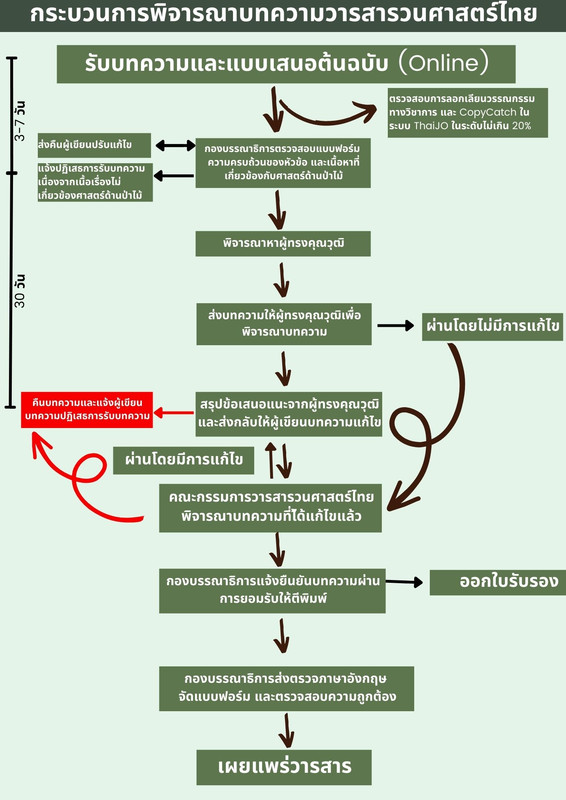
กระบวนการพิจารณาบทความ : มีผู้ทรงคุณวุฒิในแต่ละสาขาเป็นผู้พิจารณาผลงาน อย่างน้อย 3 ท่าน แบบผู้ทรงคุณวุฒิและผู้แต่งไม่ทราบชื่อกันและกัน
ประเภทของบทความ : นิพนธ์ต้นฉบับ,บทความวิจัยสั้น และ บทวิจารณ์
ภาษาที่รับตีพิมพ์ : ภาษาไทย หรือ ภาษาอังกฤษ
กำหนดออก : พิมพ์เผยแพร่ปีละ 2 ฉบับ คือ เดือนมกราคม-มิถุนายน และเดือนกรกฎาคม-ธันวาคม
เจ้าของวารสาร : คณะวนศาสตร์ มหาวิทยาลัยเกษตรศาสตร์
สรุปขั้นตอนการพิจารณาบทความวารสารวนศาสตร์ไทย
คำแนะนำในการเตรียมต้นฉบับบทความ
การเตรียมต้นฉบับ
ต้นฉบับ
ต้นฉบับเขียนเป็นภาษาไทยหรือภาษาอังกฤษ ควรมีการตรวจทานการใช้ภาษาและคำสะกดต่างๆ อย่างถี่ถ้วนก่อนนำเสนอ ความยาวไม่เกิน 20 หน้า กระดาษ A4
การพิมพ์
1. การพิมพ์ใช้ตัวอักษร TH Sarabun PSK ขนาด 14 สำหรับภาษาไทย และ ภาษาอังกฤษ
2. หัวข้อหลัก ใช้ ขนาด 18 ตัวหนาและจัดกึ่งกลางหน้า เช่น คำนำ อุปกรณ์และวิธีการ ฯลฯ ถ้าเรื่องที่เขียนเป็นภาษาอังกฤษ หัวข้อหลักใช้ตัวอักษรพิมพ์ใหญ่ เช่น ABSTRACT REFERENCES เป็นต้น
3. หัวข้อย่อยแรก ใช้อักษรตัวหนาและจัดชิดซ้าย ขนาด 16 และเริ่มใส่หมายเลขข้อ ในหัวข้อย่อยถัดไปโดยใช้อักษรตัวหนาขนาด 14
4. ใส่หมายเลขหน้า มุมขวา ด้านบน
5. ใส่หมายเลขบรรทัด
6. รายละเอียดใน Table และ Figure เป็นภาษาอังกฤษทั้งหมด ใช้ตัวอักษร TH Sarabun PSK ขนาด 14
รายละเอียดของเนื้อหา
หน้าแรก (Title page) แยกออกจากเนื้อหาอื่นๆ ประกอบด้วย
1. ชื่อเรื่อง เรื่องที่เขียนเป็นภาษาไทย ให้ระบุชื่อเรื่องทั้งภาษาไทยและภาษาอังกฤษ ควรกระชับและตรงกับเนื้อเรื่อง จัดให้อยู่กึ่งกลางหน้ากระดาษ
2. ชื่อผู้เขียน เรื่องที่เขียนเป็นภาษาไทยใช้ชื่อเต็มทั้งภาษาไทยและภาษาอังกฤษไม่ต้องระบุเพศ ยศ ตำแหน่ง
3. สถานที่ทำงานของผู้เขียน ให้ระบุสถานที่ทำงานและที่อยู่ของผู้เขียนทุกท่านทั้งภาษาไทยและภาษาอังกฤษพร้อมระบุที่อยู่ที่ติดต่อได้ของผู้เขียน โดยระบุชื่อหน่วยงาน สถานที่ทำงาน เขต/อำเภอ จังหวัด รหัสไปรษณีย์ และ Corresponding Author E-mail
เนื้อหา ประกอบด้วยหัวข้อหลัก ดังนี้
1. บทคัดย่อ สรุปสาระสำคัญของผลงานไว้โดยครบถ้วน และมีความยาวไม่เกิน 300 คำ เรื่องที่เขียนเป็นภาษาไทย ต้องมีบทคัดย่อเป็นภาษาไทย (ABSTRACT) ด้วย (ภาษาอังกฤษก่อนและตามด้วยภาษาไทย) ให้ระบุ Keywords จำนวนไม่เกิน 5 คำไว้ในตอนท้ายบทคัดย่อภาษาอังกฤษด้วย
2. คำนำ อธิบายความสำคัญของปัญหา การตรวจเอกสาร (literature review) เฉพาะส่วนที่เกี่ยวข้องกับงานวิจัยเท่านั้น และวัตถุประสงค์ของงานวิจัย ในกรณีงานวิจัยทางสังคมศาสตร์อาจเพิ่มเติมขอบเขตการวิจัย กรอบแนวคิดการวิจัย และสมมติฐานการวิจัย (ถ้ามี)
3. อุปกรณ์และวิธีการ เขียนให้รัดกุม ไม่พรรณนาวิธีการวิเคราะห์ใช้วิธีการอ้างอิงชื่อหรือองค์กร เช่น ใช้ตามวิธีของ AOAC (1990)
4. ผลและวิจารณ์ ผลการทดลองและวิจารณ์ผลเขียนรวมกัน ภาพและตาราง ต้องมีเนื้อหาและคำอธิบายเป็นภาษาอังกฤษ ให้แสดงเฉพาะข้อมูลสำคัญและจำเป็น แทรกภาพและตารางตามลำดับในเนื้อหา โดยใช้คำว่า Figure ในการอ้างอิงภาพและใช้คำว่า Table ในการอ้างอิงตาราง
5. สรุป ให้กระชับ ยกใจความสำคัญที่ได้จากการวิจัย
6. คำนิยม ไม่ควรเกิน 50 คำ
7. REFERENCCES หลักเกณฑ์และรูปแบบการเขียน REFFERENCES เรียบเรียงโดยใช้ภาษาอังกฤษทั้งหมดในกรณีเอกสารอ้างอิงเป็นภาษาไทย ให้ปรับเป็นภาษาอังกฤษและต่อท้ายเอกสารอ้างอิงนั้นด้วยคำว่า (in Thai)
คำแนะนำสำหรับผู้เขียนวารสารวนศาสตร์ไทย.pdf
แบบเสนอต้นฉบับวารสารวนศาสตร์ไทย.docx
ข้อตกลงการส่งบทความสําหรับผู้แต่ง
การส่งต้นฉบับ
ต้นฉบับต้องไม่เคยลงตีพิมพ์และไม่ได้อยู่ระหว่างกระบวนการพิจารณาลงตีพิมพ์ในวารสารหรือสิ่งตีพิมพ์อื่นใด ผลงานจัดอยู่ในงานเขียนประเภทหนึ่ง ดังต่อไปนี้
1. นิพนธ์ต้นฉบับ (original article) เป็นการเสนอผลงานวิจัยแบบสมบูรณ์ที่ผู้เขียนได้ดำเนินการวิจัยด้วยตนเอง
2. บทความวิจัยสั้น (short communications) เป็นงานวิจัยที่น่าสนใจหรือการค้นพบสิ่งใหม่แต่มีเนื้อหาสมบูรณ์น้อยกว่า
3. บทวิจารณ์ (review article) เป็นบทความทางวิชาการที่นำเสนอสาระซึ่งผ่านการวิเคราะห์หรือประมวลจากการตรวจเอกสาร ทั้งนี้เรื่องที่เป็นนิพนธ์ต้นฉบับ และ บทความวิจัยสั้น จะได้รับพิจารณาให้ลงตีพิมพ์ก่อนเรื่องที่เป็นบทวิจารณ์
คำแนะนำสำหรับผู้ประเมินบทความ
วารสารมีนโยบายในการประเมินบทความโดยขอความร่วมมือจากผู้ทรงคุณวุฒิให้พิจารณาประเด็นต่างๆ ดังนี้
1. ขอความร่วมมือประเมินบทความโดยการแสดงข้อคิดเห็น คำแนะนำ รวมทั้ง แนวทางการแก้ปัญหา
2. เพื่อให้วารสารฯ ได้รับการตีพิมพ์ภายในระยะเวลาที่กำหนด ใคร่ขอทางผู้ทรงคุณคุณวุมฒิโปรดกรุณาดำเนินการให้แล้วเสร็จ ภายในระยะเวลาที่กำหนด หากท่านขัดข้องประการใดกรุณาแจ้งเจ้าหน้าที่ประสานงานเบอร์โทรศัพท์หมายเลข 02-561-4761 หรือ 062-291-3035
ข้อความแสดงลิขสิทธิ์วารสาร
ข้าพเจ้าและผู้เขียนร่วม (ถ้ามี) ขอรับรองว่า ต้นฉบับที่เสนอมานี้ยังไม่เคยได้รับการตีพิมพ์และไม่ได้อยู่ในระหว่างกระบวนการพิจารณาตีพิมพ์ลงในวารสารหรือสิ่งตีพิมพ์อื่นใด ข้าพเจ้าและผู้เขียนร่วม (ถ้ามี) ยอมรับหลักเกณฑ์และเงื่อนไขการพิจารณาต้นฉบับ ทั้งยินยอมให้กองบรรณาธิการมีสิทธิ์พิจารณาและตรวจแก้ต้นฉบับได้ตามที่เห็นสมควร พร้อมนี้ขอมอบลิขสิทธิ์ผลงานที่ได้รับการตีพิมพ์ให้แก่วารสารวนศาสตร์ คณะวนศาสตร์ มหาวิทยาลัยเกษตรศาสตร์ กรณีมีการฟ้องร้องเรื่องการละเมิดลิขสิทธิ์เกี่ยวกับภาพ กราฟ ข้อความส่วนใดส่วนหนึ่ง หรือ ข้อคิดเห็นที่ปรากฏในผลงาน ให้เป็นความรับผิดชอบของข้าพเจ้าและผู้เขียนร่วม (ถ้ามี) แต่เพียงฝ่ายเดียว และหากข้าพเจ้าและผู้เขียนร่วม (ถ้ามี) ประสงค์ถอนบทความในระหว่างกระบวนการพิจารณาของทางวารสาร ข้าพเจ้าและผู้เขียนร่วม (ถ้ามี) ยินดีรับผิดชอบค่าใช้จ่ายทั้งหมดที่เกิดขึ้นในกระบวนการพิจารณาบทความนั้น
