
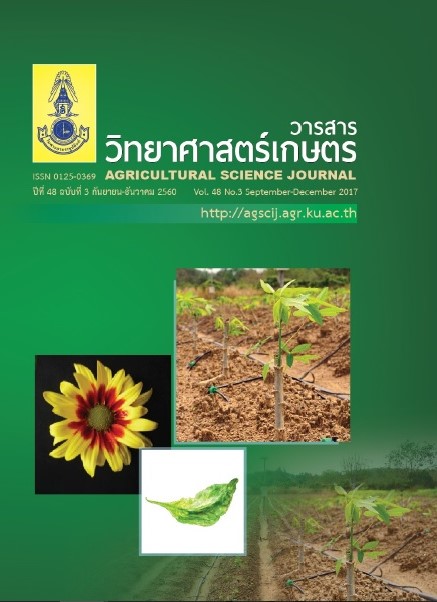
ผลผลิตมันสำปะหลังที่ปลูกในช่วงต้นของฤดูต้นฝน ภายใต้การให้น้ำหยดใต้ผิวดินและน้ำหยดบนดิน เปรียบเทียบกับน้ำฝนตามธรรมชาติ
Article Sidebar
Main Article Content
บทคัดย่อ
น้ำและปุ๋ยเป็นปัจจัยสำคัญต่อผลผลิตมันสำปะหลัง หากสามารถจัดการกับปัจจัยดังกล่าวได้อย่างละเอียดและแม่นยำ ผลผลิตของมันสำปะหลังน่าจะยกระดับขึ้นได้อีกตามศักยภาพพืช ดังนั้นการพัฒนาวิธีการผลิต ที่สามารถควบคุมปัจจัยดังกล่าวได้ จะเป็นการส่งเสริมประสิทธิภาพการผลิตมันสำปะหลังได้ดียิ่งขึ้น การทดลองนี้มีวัตถุประสงค์เพื่อเปรียบเทียบลักษณะทางการเกษตร และผลผลิตของมันสำปะหลังภายใต้วิธีการให้น้ำและปุ๋ยที่แตกต่างกัน โดยทดลองปลูกในช่วงต้นของฤดูปลูกต้นฝน (เมษายน 2557) วางแผนการทดลองแบบ Strip plot in RCBD จำนวน 4 ซ้ำ โดยกำหนด Vertical plot คือ วิธีการให้น้ำและปุ๋ย ซึ่งมี 3 วิธี ได้แก่ น้ำหยดใต้ผิวดินลึก 20 ซม. พร้อมกับการให้ปุ๋ยทางท่อน้ำ (SDI) น้ำหยดบนดินพร้อมกับการให้ปุ๋ยทางท่อน้ำ (DI) และน้ำฝนตามธรรมชาติพร้อมกับการให้ปุ๋ยแบบเม็ดทางดินแล้วฝังกลบ (RF) โดยทุกวิธีการจะให้ปุ๋ยเคมี 1 ครั้ง สูตร 13–13–21อัตรา 50 กก./ไร่ ที่อายุ 1 เดือนหลังปลูก (MAP) และHorizontal plot คือ พันธุ์มันสำปะหลัง ซึ่งมี 2 พันธุ์ ได้แก่ เกษตรศาสตร์ 50 และห้วยบง 80 เก็บข้อมูลผลผลิต น้ำหนักหัวสด เปอร์เซ็นต์แป้ง ปริมาณแป้ง และดัชนีเก็บเกี่ยว รวมถึงความสูงของต้นมันสำปะหลังที่อายุ 8, 10 และ 12 MAP ผลจากการทดลอง พบว่า พันธุ์มันสำปะหลังแต่ละพันธุ์มีการตอบสนองต่อวิธีการให้น้ำและปุ๋ย แตกต่างกันอย่างมีนัยสำคัญทางสถิติ โดยมีค่าเฉลี่ยน้ำหนักหัวสดเท่ากับ 6.3, 7.8 และ 8.2 ตัน/ไร่ ที่อายุ 8, 10 และ 12 MAP ตามลำดับ มันสำปะหลังภายใต้ SDI มีผลทำให้ผลผลิตหัวสดของมันสำปะหลังเพิ่มขึ้นร้อยละ 25, 20 และ 57 โดยมีปริมาณน้ำที่ได้รับทั้งหมดเท่ากับ 742, 890 และ 1,118 มม. และมันสำปะหลังภายใต้ DI มีผลผลิตหัวสดเพิ่มขึ้นร้อยละ 23 19 และ 29 มีปริมาณน้ำที่ได้รับทั้งหมดเท่ากับ 755 1,009 และ 1,301 มม. ที่อายุ 8, 10 และ 12 MAP ตามลำดับ เมื่อเปรียบเทียบกับมันสำปะหลังภายใต้ RF ซึ่งมีปริมาณน้ำที่ได้รับจากน้ำฝนเพียงอย่างเดียวเท่ากับ 509, 515 และ 543 มม. รวมถึงการเพิ่มการเจริญเติบโต เปอร์เซ็นต์แป้งในหัวสดและปริมาณแป้ง ดัชนีเก็บเกี่ยวของมันสำปะหลัง โดยเฉพาะช่วงที่มันสำปะหลังประสบสภาวะแล้ง การทดลองครั้งนี้ พบว่า การจัดการวิธีการให้น้ำหยดใต้ผิวดินลึก 20 ซม. พร้อมกับการให้ปุ๋ยทางท่อน้ำ เป็นวิธีการให้น้ำที่มีประสิทธิภาพสามารถรักษาระดับความชื้นของดินได้ดี ประหยัดทรัพยากรน้ำ เมื่อเปรียบเทียบกับปริมาณน้ำที่มันสำปะหลังภายใต้ DI ได้รับ ในทุกช่วงอายุการเก็บเกี่ยว และให้ผลผลิตหัวสดของมันสำปะหลังสูงที่สุดสามารถนำมาประยุกต์ใช้เพื่อพัฒนาศักยภาพการผลิตมันสำปะหลัง ในการรองรับการขยายตัวอุตสาหกรรมในปัจจุบัน
