
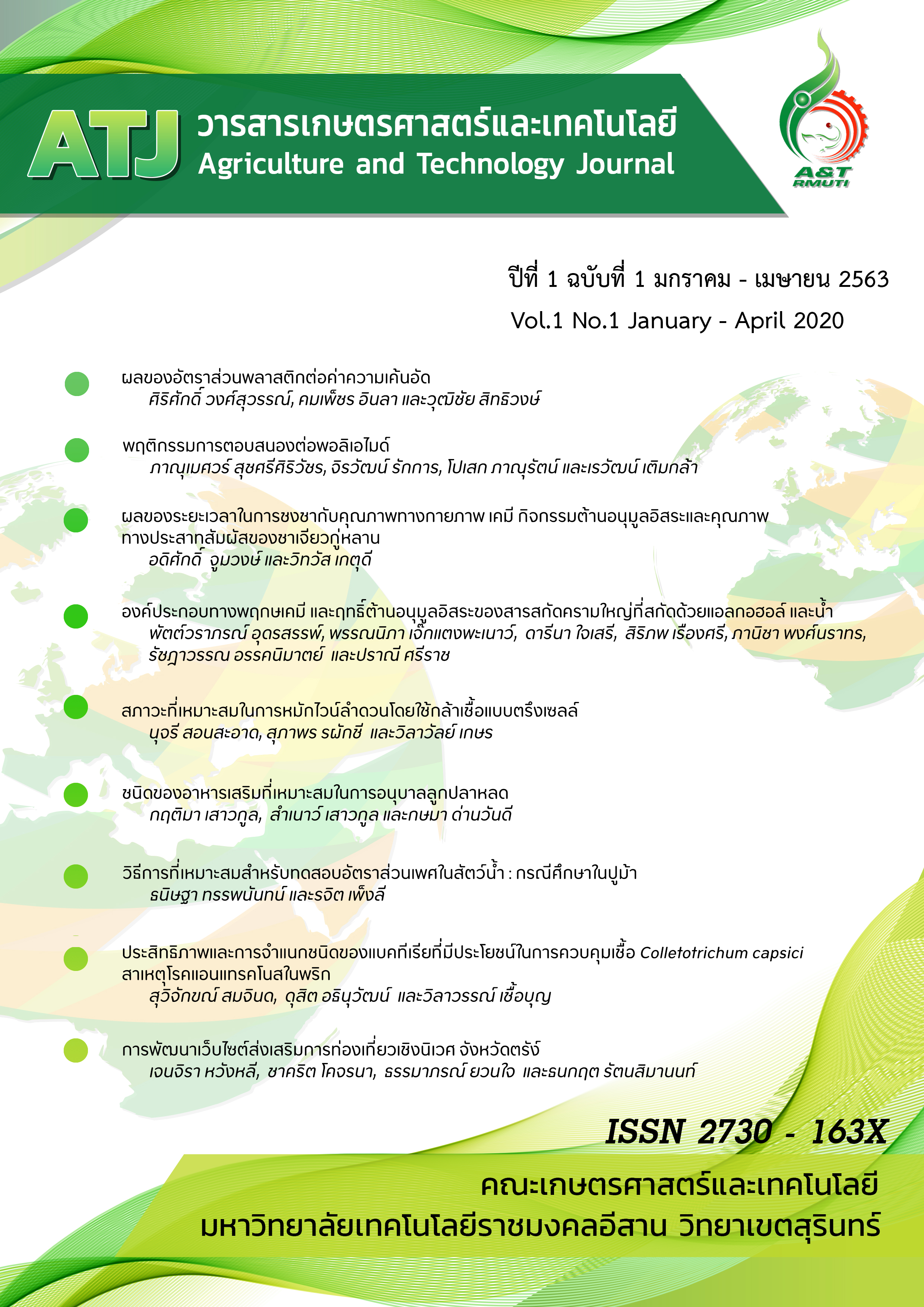
ผลของอัตราส่วนพลาสติกต่อค่าความเค้นอัด
คำสำคัญ:
บล็อกปูพื้น, ความเค้นอัด, พอลิเอทิลีน, พอลิโพรไพลีนบทคัดย่อ
งานวิจัยนี้เป็นการศึกษาความเค้นอัดของบล็อกปูพื้นจากพลาสติกล้วน และพลาสติกผสมกับวัสดุที่เตรียมไว้ต่อความเค้นอัด โดยนำพลาสติก ผสมกับวัสดุที่เตรียมไว้ (ทราย และหิน) มาอัดขึ้นรูปด้วยแม่พิมพ์รูปทรงตัวหนอนและรูปทรงแปดเหลี่ยม โดยใช้ความร้อนหลอมละลาย ทำการทดสอบหาค่าความเค้นอัดโดยใช้เครื่องทดสอบแรงอัดคอนกรีต เพื่อหาส่วนผสมที่เหมาะสมที่สุดตามเกณฑ์มาตรฐานสำหรับนำไปใช้งานจริงอย่างมีประสิทธิภาพ บล็อกปูพื้นที่เตรียมจากพลาสติกล้วน และส่วนผสมระหว่างพลาสติกล้วนกับหิน เท่ากับ 1:1 และ 1:2 โดยมวล และส่วนผสมระหว่างพลาสติกล้วนกับทราย อัตราส่วน 1:1 และ 1: 2 โดยมวล เมื่อนำมาทดสอบค่าความเค้นอัด พบว่า บล็อกปูพื้นที่เตรียมจากพลาสติกล้วนผสมวัสดุจากทรายมีค่าความเค้นอัดสูงสุดในทุกกรณี และค่าความเค้นอัดจะเพิ่มขึ้นหากเพิ่มปริมาณทราย
ดาวน์โหลด
เผยแพร่แล้ว
เวอร์ชัน
- 06-02-2022 (2)
- 23-04-2020 (1)
รูปแบบการอ้างอิง
ฉบับ
ประเภทบทความ
สัญญาอนุญาต
ลิขสิทธิ์ (c) 2020 วารสารเกษตรศาสตร์และเทคโนโลยี

อนุญาตภายใต้เงื่อนไข Creative Commons Attribution-NonCommercial-NoDerivatives 4.0 International License.
เนื้อหาและข้อมูลในบทความที่ลงตีพิมพ์ในวารสารทดสอบระบบ ThaiJo2 ถือเป็นข้อคิดเห็นและความรับผิดชอบของผู้เขียนบทความโดยตรงซึ่งกองบรรณาธิการวารสาร ไม่จำเป็นต้องเห็นด้วย หรือร่วมรับผิดชอบใดๆ
บทความ ข้อมูล เนื่อหา รูปภาพ ฯลฯ ที่ได้รับการดีพิมพ์ในวารสารทดสอบระบบ ThaiJo2 ถือเป็นลิขสิทธิ์ของวารสารทดสอบระบบ ThaiJo2 หากบุคคลหรือหน่วยงานใดต้องการนำทั้งหมดหรือส่วนหนึ่งส่วนใดไปเผยแพร่หรือเพื่อกระทำการใดๆ จะต้องได้รับอนุญาตเป็นลายลักอักษรณ์จากวารสารทดสอบระบบ ThaiJo2 ก่อนเท่านั้น