
ประสิทธิภาพและการจำแนกชนิดของแบคทีเรียที่มีประโยชน์ในการควบคุมเชื้อ Colletotrichum capsici สาเหตุโรคแอนแทรคโนสในพริก
คำสำคัญ:
แบคทีเรียที่มีประโยชน์, พริก, ควบคุมโรค, โรคแอนแทรคโนสบทคัดย่อ
คัดแยกแบคทีเรียที่มีประโยชน์จากผลพริก ได้ทั้งหมด 121 ไอโซเลทจากตัวอย่างพริก 20 ตัวอย่าง แบ่งออกเป็น 7 กลุ่มตามลักษณะโคโลนีบนอาหาร nutrient glucose agar และเมื่อนํามาทดสอบประสิทธิภาพในการยับยั้งเชื้อราสาเหตุโรคแอนแทรคโนส ด้วยวิธี Dual culture บนอาหาร potato dextrose agar (PDA) วางแผนการทดลองแบบสุ่มสมบูรณ์ พบว่า แบคทีเรียที่มีประโยชน์ไอโซเลท TU089, TU101 และ TU121 มีประสิทธิภาพสูงในการยับยั้งการเจริญของเส้นใย เท่ากับ 85.55, 78.33 และ 88.33% ตามลำดับ และให้ผลการยับยั้งดีกว่าการใช้สารเคมี เมื่อเปรียบเทียบกับสารคาร์เบนดาซิม (36.66%) โดยเมื่อจำแนกชนิดตามลักษณะทางสัณฐานวิทยา สรีรวิทยา และชีวเคมี โดยเทียบเคียงกับตำราของ Bergey's Manual of Determinative Bacteriology พบว่า TU089, TU101 และ TU121 มีความคล้ายคลึงกับ Bacillus subtilis, B. licheniformis และ B. megaterium ตามลำดับ
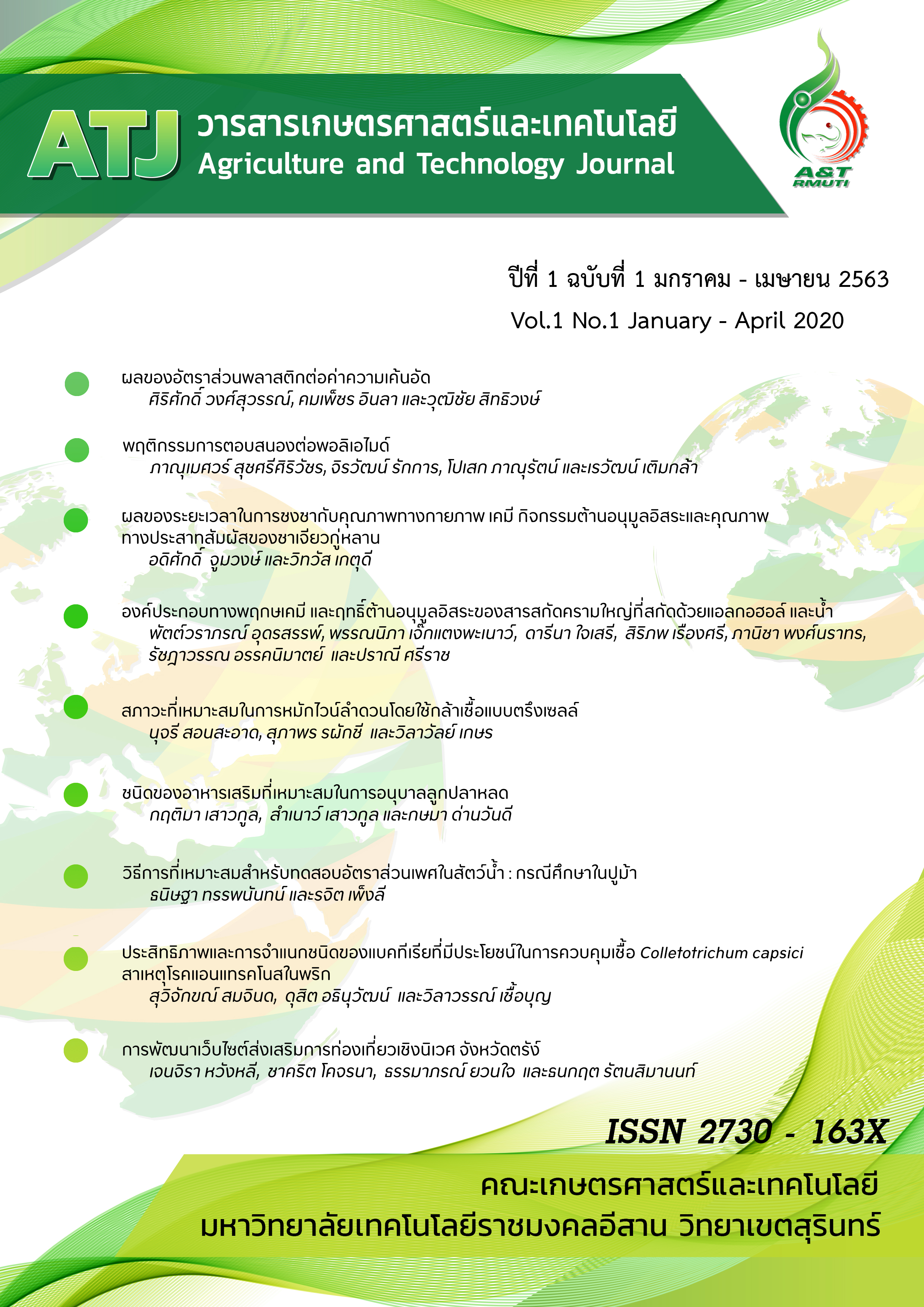
ดาวน์โหลด
เผยแพร่แล้ว
เวอร์ชัน
- 23-04-2020 (2)
- 23-04-2020 (1)
รูปแบบการอ้างอิง
ฉบับ
ประเภทบทความ
สัญญาอนุญาต
ลิขสิทธิ์ (c) 2020 วารสารเกษตรศาสตร์และเทคโนโลยี

อนุญาตภายใต้เงื่อนไข Creative Commons Attribution-NonCommercial-NoDerivatives 4.0 International License.
เนื้อหาและข้อมูลในบทความที่ลงตีพิมพ์ในวารสารทดสอบระบบ ThaiJo2 ถือเป็นข้อคิดเห็นและความรับผิดชอบของผู้เขียนบทความโดยตรงซึ่งกองบรรณาธิการวารสาร ไม่จำเป็นต้องเห็นด้วย หรือร่วมรับผิดชอบใดๆ
บทความ ข้อมูล เนื่อหา รูปภาพ ฯลฯ ที่ได้รับการดีพิมพ์ในวารสารทดสอบระบบ ThaiJo2 ถือเป็นลิขสิทธิ์ของวารสารทดสอบระบบ ThaiJo2 หากบุคคลหรือหน่วยงานใดต้องการนำทั้งหมดหรือส่วนหนึ่งส่วนใดไปเผยแพร่หรือเพื่อกระทำการใดๆ จะต้องได้รับอนุญาตเป็นลายลักอักษรณ์จากวารสารทดสอบระบบ ThaiJo2 ก่อนเท่านั้น