
Indoor Air Quality in Hotel Buildings and Sick Building Syndrome of Hotel Staffs, Surat Thani Province
Article Sidebar
Main Article Content
Abstract
Hotel buildings were mostly located in business center areas surrounded by high traffic congestion and high density of occupancies. When indoor air quality in the buildings was not good, it could lead to health problem for hotel staffs. The objectives of this research were 1) to examine indoor air quality of hotel buildings in Surat Thani, 2) to measure and compare the contamination affecting indoor air quality between hotels, 3) to evaluate the sick building syndrome (SBS) in hotel staffs. The working environment data were collected by a checklist and measurement of contamination. In addition, the evaluations related to SBS were investigated using the questionnaire and the data were analyzed by using descriptive statistics and t-test.
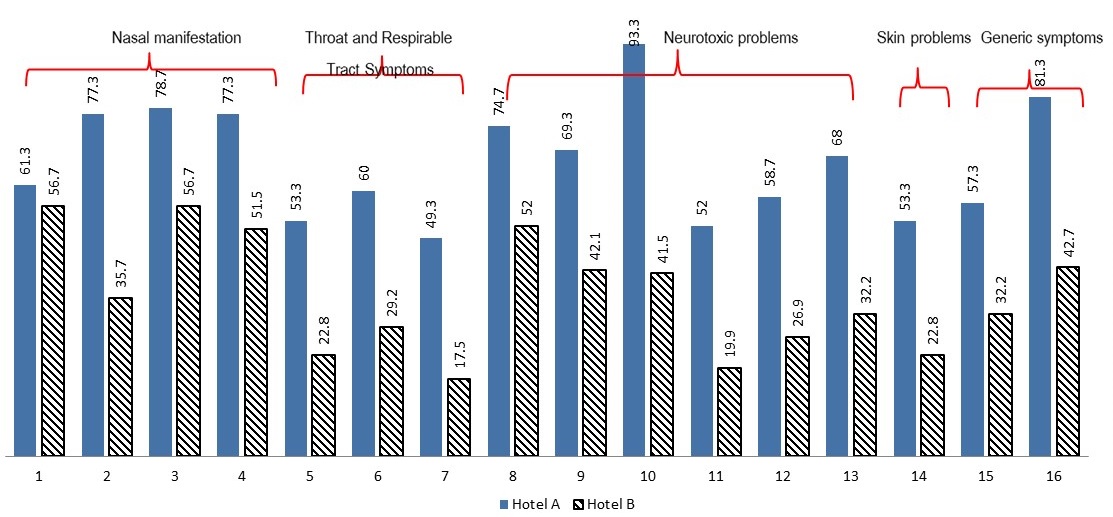
The results of the environmental study in each area of hotel buildings of both hotels demonstrated that the major source of contamination was more in the kitchen room than other areas. The measurement results of respirable dust, air velocity and carbon dioxide did not exceed the standard limit of ASHRAE but those regarding temperature and humidity were higher than the limit in both hotels. The compared differences of humidity (t-test = 5.650; p-value = 0.000), carbon dioxide (t-test = -3.475; p-value = 0.001) and total dust (t-test = -5.440; p-value = 0.000) between two hotels were statistically significant difference. They were from any activities in the building such as customer services, cooking and the use of office equipment. The outcome of the evaluation from 246 staffs in two hotels indicated that that fatigue and general malaise in hotel A and nasal manifestation and eye irritation in hotel B were found in sick building syndrome of hotel staffs. These may be caused by the humidity and total dust in buildings; in particular staffs who were sensitive to the syndrome above. Therefore, this research suggested that the ventilation system of the hotel should be improved to protect and relieve contaminants that affect the illness of staffs in the hotel buildings.
Article Details
บทความที่ได้รับการตีพิมพ์เป็นลิขสิทธิ์ของ วารสารวิทยาศาสตร์และเทคโนโลยี มหาวิทยาลัยอุบลราชธานี
ข้อความที่ปรากฏในบทความแต่ละเรื่องในวารสารวิชาการเล่มนี้เป็นความคิดเห็นส่วนตัวของผู้เขียนแต่ละท่านไม่เกี่ยวข้องกับมหาวิทยาลัยอุบลราชธานี และคณาจารย์ท่านอื่นๆในมหาวิทยาลัยฯ แต่อย่างใด ความรับผิดชอบองค์ประกอบทั้งหมดของบทความแต่ละเรื่องเป็นของผู้เขียนแต่ละท่าน หากมีความผิดพลาดใดๆ ผู้เขียนแต่ละท่านจะรับผิดชอบบทความของตนเองแต่ผู้เดียว
