
การผลิตและทดสอบทางกายภาพของถ่านชีวภาพจากวัสดุเหลือทิ้งทางการเกษตร จังหวัดสุราษฎร์ธานี
Article Sidebar
Main Article Content
บทคัดย่อ
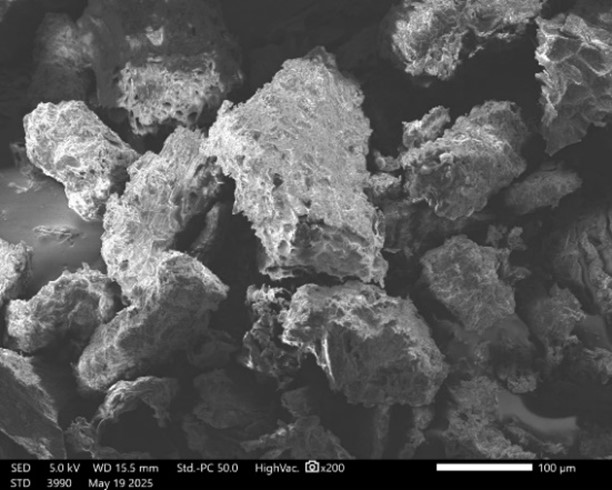
ถ่านชีวภาพ (Biochar) เป็นวัสดุคาร์บอนที่ได้จากกระบวนการไพโรไลซิส (Pyrolysis) ซึ่งเป็นการให้ความร้อนกับวัสดุเหลือทิ้งทางการเกษตรในสภาวะที่มีออกซิเจนจำกัดหรือไม่มีออกซิเจน ส่งผลให้เกิดการเปลี่ยนแปลงโครงสร้างทางกายภาพจนได้วัสดุที่มีรูพรุนและค่าคาร์บอนคงตัวสูง งานวิจัยนี้มีวัตถุประสงค์เพื่อผลิตและทดสอบคุณสมบัติทางกายภาพของถ่านชีวภาพจากวัสดุชีวมวล ได้แก่ ต้นกัญชา เปลือกโกโก้ ซังข้าวโพด เปลือกทุเรียน เปลือกมังคุดและเปลือกสับปะรด ซึ่งถึงแม้ว่าผ่านกระบวนการไพโรไลซิสภายใต้อุณหภูมิระหว่าง 215–300 องศาเซลเซียสที่ไม่มีการควบคุมอุณหภูมิยังสามารถผลิตถ่านชีวภาพมีคุณสมบัติของรูพรุนที่ดี ผลการศึกษาทางกายภาพของถ่านชีวภาพจากเปลือกทุเรียนมีค่าดีที่สุด พบค่าความร้อนสูง ค่าคาร์บอนคงตัว ความชื้น ค่าเถ้าและค่าสารระเหยเท่ากับ 7107.63 Cal/g , 73.17%, 2.84%, 23.18% และ 1.38% ตามลำดับ รองลงมาคือถ่านชีวภาพจากซังข้าวโพดมีค่าความร้อน ค่าคาร์บอนคงตัว ความชื้น ค่าเถ้าและ ค่าสารระเหย เท่ากับ 6011.18 ± 16.91 Cal/g 76.95%, 2.64%, 19.07%, และ 1.51% ตามลำดับ การวิเคราะห์โครงสร้างรูพรุนพบว่าถ่านซังข้าวโพดมีค่าปริมาตรรูพรุนและพื้นที่ผิวมากที่สุดเท่ากับ 0.1028 cm3/g และ 147.00 m2/g ตามลำดับ โครงสร้างอสัณฐานวิทยาของถ่านชีวภาพมีลักษณะเป็นท่อคล้ายคาปิลลารีจากการตรวจวัดด้วยกล้องจุลทรรศน์อิเล็คตรอนไมโครสโคบแบบส่องกราด (Scanning Electron Microscopy) กำลังขยาย 200 เท่าและ 500 เท่า แสดงให้เห็นว่า ซังข้าวโพด มีลักษณะรูพรุนชัดเจนที่สุด รองลงมาคือถ่านกัญชา ทุเรียน โกโก้ มังคุดและสับปะรด ตามลำดับ
Article Details

อนุญาตภายใต้เงื่อนไข Creative Commons Attribution-NonCommercial-NoDerivatives 4.0 International License.
Journal of TCI is licensed under a Creative Commons Attribution-NonCommercial-NoDerivatives 4.0 International (CC BY-NC-ND 4.0) licence, unless otherwise stated. Please read our Policies page for more information...
เอกสารอ้างอิง
กรมพัฒนาที่ดิน. (2567). แผนการใช้ที่ดินตำบลพิเทน อำเภอทุ่งยางแดง จังหวัดปัตตานี (รายงาน). สถานีพัฒนาที่ดินปัตตานี, สำนักงานพัฒนาที่ดินเขต 12, กรมพัฒนาที่ดิน, กระทรวงเกษตรและสหกรณ์.
กฤษฎา บุญชม, จุฑามาศ เตียวสกุล และกมลวรรณ ทิพวรรณ. (2563). สมบัติทางกายภาพและอัตราการดูดซับความชื้นของถ่านผลไม้. วารสารวิจัยและพัฒนา วไลยอลงกรณ์ ในพระบรมราชูปถัมภ์, 15(2), 77–89.
วนิดา จิตติวสุรัตน์ และสุธิรา รัตนถาวร. (2562). กระบวนการผลิตถ่านชีวมวลจากวัสดุเหลือใช้ทางการเกษตร: กรณีศึกษาชาวสวนยางพาราในจังหวัดสงขลา. วารสารวิชาการและวิจัย มหาวิทยาลัยแม่โจ้, 13(2), 71–86.
นรานันท์ ขำมณี. (2564). คู่มือการผลิตและเพิ่มมูลค่าของถ่านชีวภาพ [E-book]. FlipHTML5. https://fliphtml5.com/dzitx/phta/basic
Afrah, A., Prapaiwong, P., Mahaprom, W., Manoh, M., & Muneer, S. (2025). The preliminary study of two-stage pyrolysis durian shell to biochar. International Journal of Environmental Science, 6(8), 523–532.
Al-Widyan, M. I., Al-Jalil, H. F., Abu-Zreig, M. M., & Abu-Hamdeh, N. H. (2002). Physical properties of selected biomass solids. Canadian Biosystems Engineering, 44(3), 39–46.
Altıkat, A., Alma, M. H., Altıkat, A., Bilgili, M. E., & Altıkat, S. (2024). A comprehensive study of biochar yield and quality concerning pyrolysis conditions: A multifaceted approach. Sustainability, 16(2), 937.
Barta, Z., Sipos, L., & Takács, A. (2022). Bioenergy potential of hemp (Cannabis sativa L.): A review on biomass properties and thermochemical conversion techniques. Biomass and Bioenergy, 160, 106398.
Ceretta, M. B., Antic Gorrazzi, S., D’Ippolito, S., Mendieta, J., Nercessian, D., & Bonanni, S. (2025). Cannabis sativa biochar: Characterization and preliminary application in plant growth and adsorption, and as an electrode material. RSC Sustainability, 3, 1932–1940.
Daosukho, C., & Rodprasert, W. (2015). The development of soil quality using biochar amendment from agricultural waste. Burapha Science Journal, 20(3), 78–89.
Ghosh, P., Basak, B., & Saha, S. (2020). A comprehensive review on the valorization of Cannabis sativa L. hemp-based industrial by-products for bioenergy and biochar production. Renewable and Sustainable Energy Reviews, 130, 109944.
Guo, Y., & Rockstraw, D. A. (2009). Physical and chemical properties of carbons synthesized from xylan, cellulose, and Kraft lignin by H3PO4 activation. Bioresource Technology, 100(21), 4867–4873.
Hashim, R., Nadhari, W. N. A. W., Sulaiman, O., Kawamura, F., Hiziroglu, S., Sato, M., & Sahari, N. (2020). Characterization of raw materials and manufactured binderless particleboard from a mixture of rubberwood and mangosteen peel. Industrial Crops and Products, 150, 112394.
Kamali, M., et al. (2022). Biochar for soil applications – sustainability aspects, challenges and future prospects. Chemical Engineering Journal, 428, 131086.
Khawkomol, T., Supaphol, P., & Limtrakul, J. (2021). Potential of biochar derived from agricultural residues for sustainable management. KMUTT Research and Development Journal, 44(4), 541–550.
Lim, W. S., Lee, C. H., & Mah, S. K. (2021). Valorization of cocoa pod husk for production of biochar: Characterization and application. Biomass Conversion and Biorefinery, 11(4), 1453–1463.
Mbah, G. O., Obiechina, N. S., & Achi, C. G. (2023). Preparation and characterization of activated carbon from corn cob for wastewater treatment applications. Environmental Technology & Innovation, 30, 102986.
Mohamad, N., Ab. Rahman, N. A., Abdullah, N., & Bakar, R. A. (2019). Combustion characteristics of oil palm biomass waste and co-firing with coal: A review. Environmental Technology & Innovation, 14, 100346.
Nations University. (2002). Agricultural waste in Thailand: Potential for resource recovery [Unpublished report]. FAO. https://www.fao.org/…
Phonphuak, N., & Chindaprasirt, P. (2015). Characterization and utilization of biomass fly ash from electric power plants. Waste Management, 38, 157–162.
Qian, S., Zhou, X., Fu, Y., Song, B., Yan, H., Chen, Z., Sun, Q., Ye, H., Qin, L., & Lai, C. (2023). Biochar-compost as a new option for soil improvement: Application in various problem soils. Science of the Total Environment, 870, 162871.
Rattanasak, U., Jantarat, N., & Wongcharee, S. (2021). Utilization of mangosteen peel for biochar production and its adsorption capacity for dye removal. Journal of Cleaner Production, 279, 123456.
Sharma, S., Rana, V. S., Rana, N., Prasad, H., Sharma, U., & Patiyal, V. (2022). Biochar from fruit crops waste and its potential impact on fruit crops. Scientia Horticulturae, 299, 111058.
Takolpuckdee, P. (2014). Transformation of agricultural market waste disposal to biochar soil amendments (Research Report). Nakhon Sawan Rajabhat University.
Tarasawatpipat, T., Promraksa, A., Pimsamarn, M., & Srichandr, P. (2014). Biochar production from agricultural waste in Amphawa district, Samutsongkram province Thailand. Advanced Materials Research, 1051, 388–391.
Wang, Y., Zhang, J., & Chen, M. (2022). Biochar from hemp fibers: Characterization and adsorption capacity for heavy metals. Bioresource Technology Reports, 17, 100926.
Žiūra, K., Zvicevičius, E., Černiauskienė, Ž., Tilvikienė, V., Bakšinskaitė, A., & Pilipavičius, J. (2023). Effect of thermochemical treatment on the physicochemical properties of fiber hemp (Cannabis sativa L.) by-product. Journal of Cleaner Production, 384, 135589.
Sawangphol, N., Sirisomboonchai, S., Laowameea, J., & Suttibut, C. (2021). The availability and assessment of potential agricultural residues for the regional development of second-generation bioethanol in Thailand. Energy Reports, 7, 1414–1422.
Lim, W. S., Lee, C. H., & Mah, S. K. (2021). Valorization of cocoa pod husk for production of biochar: Characterization and application. Biomass Conversion and Biorefinery, 11(4), 1453–1463.
Altıkat, A., Bilgili, M. E., & Altıkat, S. (2024). A comprehensive study of biochar yield and quality concerning pyrolysis conditions: A multifaceted approach. Sustainability, 16(2), 937.
