
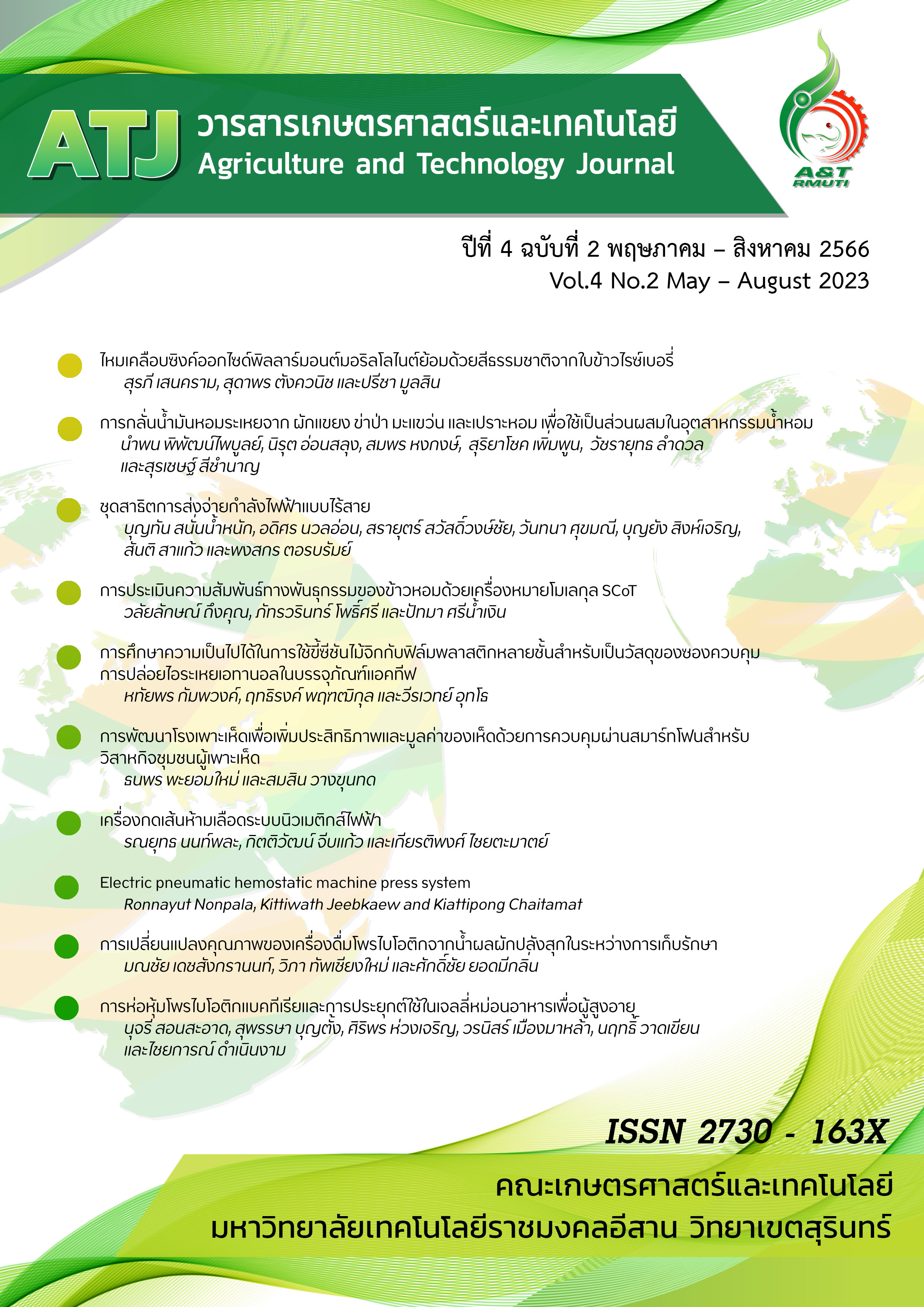
การประเมินความสัมพันธ์ทางพันธุกรรมของข้าวหอมด้วยเครื่องหมายโมเลกุล SCoT
คำสำคัญ:
ข้าวหอม, เครื่องหมายโมเลกุล SCoT, ความใกล้ชิดทางพันธุกรรมบทคัดย่อ
ประเทศไทยเป็นแหล่งที่มีความหลากหลายทางพันธุกรรมของข้าวสูง ลักษณะความหอมจัดเป็นลักษณะที่มีความสำคัญสามารถเพิ่มมูลค่าให้กับข้าวพันธุ์นั้น ๆ ได้ และอัลลีลของยีนความหอมกระจายอยู่ในพันธุ์ข้าวโดยเฉพาะพันธุ์พื้นเมืองที่ปลูกทุกภาคของประเทศ การทดลองในครั้งนี้มีวัตถุประสงค์เพื่อประเมินความสัมพันธ์ทางพันธุกรรมของข้าวหอม 26 พันธุ์/สายพันธุ์ โดยใช้เครื่องหมายโมเลกุล Start Codon Targets (SCoT) จำนวน 14 ไพรเมอร์ และสร้างแผนภูมิความสัมพันธ์ทางพันธุกรรมของพันธุ์ข้าวหอมเหล่านี้ ด้วยโปรแกรม NTSYSpc 2.2 ผลการศึกษาพบว่า ไพรเมอร์ SCoT ให้แถบลายพิมพ์
ดีเอ็นเอเฉลี่ย 12.21 แถบต่อไพรเมอร์ โดยมีแถบดีเอ็นเอที่แสดงความแตกต่างระหว่างข้าวแต่ละสายพันธุ์เฉลี่ย 11.07 แถบ คิดเป็น 90.64 เปอร์เซ็นต์ นอกจากนี้ พบความสัมพันธ์ทางพันธุกรรมของข้าวหอมมีค่าอยู่ในช่วง 0.60-0.86 และมีค่า Cophenetic correlation (r) อยู่ที่ 0.76 ถือว่าจัดกลุ่มได้ปานกลาง และสามารถจำแนกกลุ่มความสัมพันธ์ทางพันธุกรรมได้
2 กลุ่มใหญ่โดยสอดคล้องไปกับลักษณะภายนอกที่ปรากฏ จากข้อมูลที่ได้สามารถนำไปใช้ในการวางแผนเพื่ออนุรักษ์พันธุ์และการปรับปรุงพันธุ์ข้าวได้ในอนาคต
เอกสารอ้างอิง
กรมพัฒนาสังคมและสวัสดิการ. (2560). แนวทางการพัฒนาการค้าข้าวหอมมะลิไทยในตลาดโลก. ค้นเมื่อ 10 ตุลาคม 2565. shorturl.at/bcx38
ช่อทิพย์ สกูลสิงหาโรจน์, วราภรณ์ แสงทอง, แสงทอง พงษ์เจริญกิต และศรีเมฆ ชาวโพงพาง. (2558). การโคลนและศึกษาคุณสมบัติของยีนที่เกี่ยวข้องกับการสังเคราะห์โพรแอนโทไซยานิดินในเมล็ดข้าวเพื่อใช้เป็นยีนเครื่องหมายในการปรับปรุงพันธุ์ข้าว. รายงานการวิจัยฉบับสมบูรณ์ มหาวิทยาลัยแม่โจ้ เชียงใหม่.
ชุติมา เมฆวัน. (2563). แนวทางการสร้างมูลค่าแก่ผลิตภัณฑ์ข้าวพื้นบ้านที่สอดคล้องกับบริบทและวิถีบริโภคในปัจจุบัน
ในพื้นที่อำเภอราศีไศล จังหวัดศรีษะเกษ. วารสารศิลปกรรมศาสตร์ 12(1): 152-179.
นันทกา แสงจันทร์, ทิพย์วรรณ นันใจยะ และอัษฎาวุธ แสงจันทร์. (2561). ระบบฐานข้อมูลเพื่อการวางแผนพัฒนาการเกษตรและสหกรณ์รายสินค้าของจังหวัดสระบุรี “ข้าว”. กลุ่มสารสนเทศการเกษตร สำนักงานเกษตรและสหกรณ์จังหวัดสระบุรี.
สิรินทร์ กุลเสวกกุล, ศันสนีย์ จำจด และต่อนภา ผุสดี. (2562). ความหลากหลายทางพันธุกรรมของข้าวพันธุ์พื้นเมืองที่สูงจากกลุ่มชาติพันธุ์ในภาคเหนือของประเทศไทย. วารสารแก่นเกษตร. 47(5): 901-916.
สุรีพร เกตุงาม. (2557). การปรับปรุงพันธุ์พืชระดับโมเลกุล. อุบลราชธานี: มหาวิทยาลัยอุบลราชธานี.
Aesomnuk W., Ruengphayak S., Ruanjaichon V., Sreewongchai T., Malumpong C., Vanavichit A., Toojinda T., Wanchana S. and Arikit, S. (2021). Estimation of the genetic diversity and population structure of Thailand’s rice landraces using SNP markers. Agronomy. 11(5): 1-14.
Bryant R.J. and McClung A.M. (2011). Volatile profiles of aromatic and non-aromatic rice cultivars using SPME/GC–MS. Food Chemistry. 124: 501-513.
Buttery R.G., Ling L.C., Juliano B.O. and Turnbauhg J.G. (1983). Cooked rice aroma and 2-acetyl-1-pyrroline. Journal of Agricultural and Food Chemistry. 31: 823-826.
Collard B.C.Y. and Mackill D.J. (2009). Start codon targeted (SCoT) polymorphism: a simple novel DNA marker technique for generating gene-targeted markers in plants. Plant Molecular Biology Reporter. 27: 86-93.
Patidar A., Sharma R., Kotu G.K., Kumar A., Ramakrishnan R.S. and Sharma S. (2022). SCoT markers assisted evaluation of genetic diversity in new plant type (npt) lines of rice. Bangladesh Journal of Botany. 51(2): 335-341.
Ravi M., Geethanjali S., Sameeyafarheen F. and Maheswaran M. (2003). Molecular marker-based genetic diversity analysis in rice (Oryza sativa L.) using RAPD and SSR markers. Euphytica. 133: 243-252.
Sajib A.M., Hossain Md.M., Mosnaz A.T.M.J., Hossain H., Islam Md.M., Ali Md.S. and Prodhan S.H. (2012). SSR marker-based molecular characterization and genetic diversity analysis of aromatic landraces of rice (Oryza sativa L.). Journal of BioScience and Biotechnology. 1(2): 107-116.
Ting-Jang L., Hsiao-Ni C. and Huei-Ju W. (2011). Chemical constituents, dietary fiber, and γ-Oryzanol in six commercial varieties of brown rice from Taiwan. Cereal Chemistry. 88(5): 463-466.
Tsuzuki W., Komba S. and Kotake-Nara E. (2019). Diversity in γ-oryzanol profiles of Japanese black-purple rice varieties. Journal of Food Science and Technology. 56: 2778-2786.
ดาวน์โหลด
เผยแพร่แล้ว
เวอร์ชัน
- 19-02-2024 (2)
- 30-08-2023 (1)
รูปแบบการอ้างอิง
ฉบับ
ประเภทบทความ
สัญญาอนุญาต
ลิขสิทธิ์ (c) 2023 วารสารเกษตรศาสตร์และเทคโนโลยี

อนุญาตภายใต้เงื่อนไข Creative Commons Attribution-NonCommercial-NoDerivatives 4.0 International License.
เนื้อหาและข้อมูลในบทความที่ลงตีพิมพ์ในวารสารทดสอบระบบ ThaiJo2 ถือเป็นข้อคิดเห็นและความรับผิดชอบของผู้เขียนบทความโดยตรงซึ่งกองบรรณาธิการวารสาร ไม่จำเป็นต้องเห็นด้วย หรือร่วมรับผิดชอบใดๆ
บทความ ข้อมูล เนื่อหา รูปภาพ ฯลฯ ที่ได้รับการดีพิมพ์ในวารสารทดสอบระบบ ThaiJo2 ถือเป็นลิขสิทธิ์ของวารสารทดสอบระบบ ThaiJo2 หากบุคคลหรือหน่วยงานใดต้องการนำทั้งหมดหรือส่วนหนึ่งส่วนใดไปเผยแพร่หรือเพื่อกระทำการใดๆ จะต้องได้รับอนุญาตเป็นลายลักอักษรณ์จากวารสารทดสอบระบบ ThaiJo2 ก่อนเท่านั้น