
ปริมาณความเข้มข้นและสัณฐานวิทยาของฝุ่นละอองขนาดเส้นผ่าศูนย์กลางน้อยกว่า 2.5 ไมครอน (PM2.5) ในพื้นที่อุทยานแห่งชาติแควน้อยและเขตเทศบาลนครพิษณุโลก
Article Sidebar
Main Article Content
บทคัดย่อ
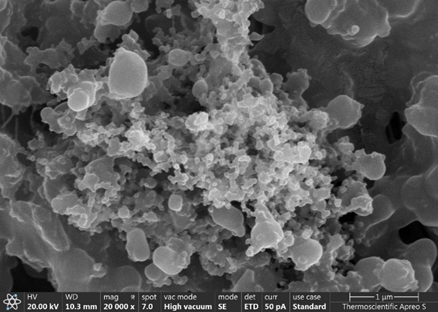
ปัญหาฝุ่นละออง PM2.5 ในจังหวัดพิษณุโลกมีแนวโน้มรุนแรงขึ้นอย่างต่อเนื่อง การวิจัยครั้งนี้จึงมุ่งศึกษาความเข้มข้น สัณฐานวิทยา และองค์ประกอบธาตุของ PM2.5 เพื่อเปรียบเทียบความแตกต่างระหว่างพื้นที่ป่า (อุทยานแห่งชาติแควน้อย) และพื้นที่เมือง (เทศบาลนครพิษณุโลก) ซึ่งจะช่วยให้เข้าใจลักษณะเฉพาะของมลพิษในแต่ละบริบทพื้นที่ได้ชัดเจนขึ้น ในการศึกษาทำการเก็บตัวอย่าง PM2.5 ดำเนินการด้วยวิธีกราวิเมตริกเป็นเวลา 24 ชั่วโมงต่อหนึ่งรอบการเก็บตัวอย่าง ในปี พ.ศ. 2568 โดยแบ่งการศึกษาออกเป็น 2 ฤดูกาลคือฤดูแล้ง (ระหว่างเดือน มีนาคม ถึง เดือนเมษายน 2567) และฤดูฝน (ระหว่างเดือนพฤษภาคม ถึง เดือนมิถุนายน 2567) ผลการศึกษาพบว่า ในฤดูแล้งระดับความเข้มข้นเฉลี่ยของ PM2.5 สูงเกินค่ามาตรฐานที่กรมควบคุมมลพิษกำหนดไว้ (ไม่เกิน 37.5 µg/m³ ในช่วง 24 ชั่วโมง) ทั้ง 2 พื้นที่ (51.23±13.41 µg/m³ และ 46.33±10.95 µg/m³ ตามลำดับ) อย่างไรก็ตามผลการศึกษาในฤดูฝนพบว่าพื้นที่อุทยานแห่งชาติแควน้อยมีระดับค่าเฉลี่ยค่อนข้างต่ำและไม่เกินระดับมาตรฐานดังกล่าว (เท่ากับ 22.23 ± 5.85 µg/m³ ) และมีความแตกต่างกันอย่างมีนัยสำคัญทางสถิติ (P<.05) เมื่อเปรียบเทียบกับฤดูแล้ง นอกจากนั้นเมื่อเปรียบเทียบระหว่างพื้นที่ในแต่ละฤดูกาลพบว่าในฤดูฝนนั้นระดับ PM2.5 ในเขตป่า มีระดับต่ำกว่าเขตเมืองอย่างมีนัยสำคัญทางสถิติ (P<.05) เมื่อได้ทำการวิเคราะห์สัณฐานวิทยาของอนุภาคภายใต้กล้องจุลทรรศน์อิเล็กตรอนแบบส่องกราด (FE-SEM) และ วิเคราะห์องค์ประกอบธาตุโดยใช้รังสีเอ็กซ์เรย์แบบกระจายพลังงาน (EDS) พบลักษณะอนุภาคเด่น 9 ประเภท ได้แก่ (1) รูปร่างแท่งยาว (2) รูปร่างเป็นก้อนปุย (3) รูปร่างผลึกผิวไม่สม่ำเสมอซ้อนกัน (4) ทรงกลมสมมาตร (5) รูปร่างทรงกลมที่ไม่สมมาตร มีขอบเรียบ (6) รูปร่างเป็นเกลียวซ้อนกัน (7) รูปร่างแท่งสี่เหลี่ยมผืนผ้ายาวซ้อนบนรูปร่างไม่แน่นอนและทรงกลม (8) รูปร่างไม่สม่ำเสมอรวมตัวเป็นก้อน และ (9) รูปร่างแท่งยาวเรียว การวิเคราะห์องค์ประกอบธาตุแสดงให้เห็นว่า ธาตุที่พบในสัดส่วนสูงสุด 2 ลำดับแรกมีลักษณะเหมือนกันทั้งสองพื้นที่และสองฤดูกาลโดยพบ คาร์บอน (C) และ ออกซิเจน (O) ลำดับถัดไปจะพบ Si N S และ ไนโตรเจน (N) เป็นส่วนใหญ่ ซึ่งบ่งชี้ถึงแหล่งกำเนิดอนุภาคที่สำคัญ ได้แก่ การเผาไหม้น้ำมันเชื้อเพลิงจากยานพาหนะ การเผาไหม้ชีวมวลที่ไม่สมบูรณ์ สารชีวภาพ เช่น การเผาไหม้น้ำมันเชื้อเพลิงฟอสซิล การเผาชีวมวลที่ไม่สมบูรณ์ การเผาไหม้ความร้อนสูง เศษซากชีวมวล ไรฝุ่น เกสรดอกไม้ รวมถึงฝุ่นดิน และการสึกกร่อนของชิ้นส่วนโลหะหรือสนิม การฟุ้งกระจายของปุ๋ยเคมีจากแหล่งเกษตรกรรม โดยสรุป เมื่อพิจารณาทั้งระดับความเข้มข้น ลักษณะสัณฐาน และชนิดของธาตุในภาพรวม พบว่าอนุภาค PM2.5 ในพื้นที่ศึกษาได้รับอิทธิพลจากแหล่งกำเนิดทั้ง 2 ฤดูกาลและทั้ง 2 พื้นที่ จึงควรดำเนินมาตรการจัดการแหล่งกำเนิดโดยเฉพาะอย่างยิ่งในฤดูแล้ง และควรพิจารณาดำเนินการในเขตเมืองเป็นพิเศษเนื่องจากเป็นพื้นที่ที่มีระดับ PM2.5 สูงเกินค่ามาตรฐานทั้ง 2 ฤดูกาล เพื่อป้องกันและลดความเสี่ยงจากการสัมผัสอนุภาคฝุ่นละอองของประชาชนในเขตจังหวัดพิษณุโลก
Article Details

อนุญาตภายใต้เงื่อนไข Creative Commons Attribution-NonCommercial-NoDerivatives 4.0 International License.
Journal of TCI is licensed under a Creative Commons Attribution-NonCommercial-NoDerivatives 4.0 International (CC BY-NC-ND 4.0) licence, unless otherwise stated. Please read our Policies page for more information...
เอกสารอ้างอิง
กรมขนส่งทางบก. (2566). รายงานสถิติการขนส่ง ปีงบประมาณ 2562 – 2566. https://shorturl.at/ejUxP
กรมควบคุมมลพิษ. (2568). แผนการปฏิบัติการขับเคลื่อนวาระแห่งชาติ “การแก้ไขปัญหามลพิษด้านฝุ่นละออง” ฉบับที่ 2 พ.ศ. 2568 – 2570 และระยะ 5 ปีต่อไป. pcdnew-2025-08-01_07-12-19_226372.pdf
กรมพัฒนาที่ดิน. (2562). พื้นที่เขตเกษตรกรรมประเทศไทย. https://webapp.ldd.go.th/lpd/node_ modules/img/Download/zonmap/zonmap2/agri_zone_th.pdf
กรมควบคุมมลพิษ. (2567). แผนปฏิบัติการขับเคลื่อนวาระแห่งชาติ “การแก้ไขปัญหามลพิษด้านฝุ่นละออง” ฉบับที่ 2 พ.ศ. 2568 – 2570 และระยะ 5 ปีต่อไป. https://www.pcd.go.th/strategy
กรมควบคุมมลพิษ. (2567). รายงานสถานการณ์มลพิษของประเทศ ปี 2567. https://www.pcd.go.th/publication/36174/
กรมควบคุมมลพิษ. (2568). ค่ามาตรฐาน PM2.5 ใหม่ บังคับใช้แล้ววันนี้ (1 มิ.ย. 66). https://www.pcd.go.th/pcd_news/29901/
กรมอุตุนิยมวิทยา. (2556). เอกสารวิชาการ อุตุนิยมวิทยาน่ารู้เพืÉอการเกษตรจังหวัดพิษณุโลก. https://shorturl.at/SCb2u
กรมอุทยานแห่งชาติ สัตว์ป่า และพันธุ์พืช. (2568). อุทยานแห่งชาติแควน้อย (เตรียมการ) (Khwae Noi). https://portal.dnp.go.th/Content/nationalpark?contentId=792
เบญจพร โกญจนาท, กฤษฎา ภาณุมนต์วาที และ กณิตา ธนเจริญชณภาส. (2567). การศึกษาความเข้มข้น ลักษณะสัณฐาน และองค์ประกอบธาตุของอนุภาคแขวนลอยขนาดเล็กกว่า 2.5 ไมครอน บริเวณพื้นที่ริมถนนในเขตเทศบาลนครพิษณุโลก. วารสารเกษตรนเรศวร, 21(2), 1-25.
วริศรา กิติภูวดล. (2563). มาตรการทางกฎหมายในการจัดการปัญหามลพิษทางอากาศ : ศึกษากรณี ปัญหาฝุ่นละอองขนาดไม่เกิน 2.5 ไมครอน (PM 2.5) [วิทยานิพนธ์ปริญญามหาบัณฑิต, มหาวิทยาลัยธรรมศาสตร์].
https://digital.library.tu.ac.th/tu_dc/frontend/Info/item/dc:191512
ศิริวรรณ แก้วงาม. (2543). สัณฐานและองค์ประกอบธาตุของฝุ่นละอองที่มีขนาดเล็กกว่า 10 ไมครอน ในกรุงเทพมหานคร[วิทยานิพนธ์ปริญญามหาบัณฑิต, จุฬาลงกรณ์มหาวิทยาลัย]. https://digital.car.chula.ac.th/chulaetd/21102/
สำนักงานเกษตรจังหวัดพิษณุโลก. (2566). ข้อมูลด้านการเกษตรจังหวัดพิษณุโลก,กรมส่งเสริมการเกษตร. https://phitsanulok.doae.go.th/province/wp-content/uploads/2024/03/ข้อมูลพื้นฐานด้านการเกษตรจังหวัดพิษณุโลก.pdf
สำนักงานพัฒนาเทคโนโลยีอวกาศและภูมิสารสนเทศ (Gistda). (2566). พื้นที่จุดความร้อนปี 2566. https://shorturl.at/BKKDq
สุพรรณิการ์ ซาเหลา, ณฐพล โพธิ์ทาทอง, ปริยาพร คำมุงคุณ และ ภาคภูมิ ชูมณี. (2564). การวิเคราะห์องค์ประกอบทางเคมีเพื่อระบุแหล่งกำเนิดของฝุ่นละออง PM2.5 ในเขตอำเภอเมือง จังหวัดอุบลราชธานี. วารสารวิทยาศาสตร์บูรพา, 26(1), 438-453.
Adachi, K. & Buseck, P. R. (2008). Internally mixed soot, sulfates, and organic matter in aerosol particles from Mexico City. Atmospheric Chemistry and Physics, 8, 6469–6481.
Ahmad, S., Zed, B., Ditta, A., Shahid, U., Shah, U. A., Ahmad, I., Alasmari, A., Sakran, M. & Alqurashi, M. (2023). Morphological, mineralogical, and biochemical characteristics of particulate matter in three size fractions (PM10, PM2.5, and PM1) in the urban environment. ACS Omega, 8, 31661−31674.
Anwar, S., Shameer, M., Alawadhi, H., Hamdan, N.M. (2024). Source apportionment of PM2.5 and PM10 pollutants near an urban roadside site using positive matrix factorization. Environmental Advances, 17, 100573. doi:10.1016/j.envadv.2024.100573.
Ju, H., Bian, F., Wei, M. & Zhang, Y. (2023). Effect of temperature on morphologies and microstructures of soot particles in the diesel exhaust pipe. Energies, 16(14), 5488. doi:10.3390/en16145488.
Kostić, A. Ž, Milinčić, D. D, Barać, M. B, Ali Shariati, M., Tešić, Ž.L., & Pešić, M. B. (2020). The application of pollen as a functional food and feed ingredient-the present and perspectives. Biomolecules, 10(1), 84. doi: 10.3390/biom10010084.
Krachler, M., & Shotyk, W. (2004). Natural and anthropogenic enrichments of molybdenum, thorium, and uranium in a complete peat bog profile, Jura Mountains, Switzerland Journal of Environmental Monitor, 6(5), 418-26. doi: 10.1039/b313300.
Li, N., Georas, S. Alexis, N., Fritz, P., Xia., T., Williams, M.A., Horner, E., & Nel, A. (2016). A work group report on ultrafine particles (American Academy of Allergy, Asthma & Immunology): Why ambient ultrafine and engineered nanoparticles should receive special attention for possible adverse health outcomes in human subjects. Journal of Allergy and Clinical Immunology, 138(2), 386–396. doi: 10.1016/j.jaci.2016.02.023.
Li, W., Shao, L., Shi, Z., Chen, J., Yang, L., & Wang, Z. (2010). Individual particle analysis of aerosols collected under haze and non-haze conditions at a high-elevation mountain site in North China. Atmospheric Chemistry and Physics, 10(13), 6407–6420. doi:10.5194/acp-11-11733-2011.
Lim, C. H., Ryu, J., Choi, Y., Jeon, S. W., & Lee, W., K. (2020). Understanding global PM2.5 concentrations and their drivers in recent decades (1998–2016). Environment International, 1-12. doi:10.1016/j.envint.2020.106011.
Maskey, S., Chae, H., Lee, K., Dan, P. N., Khoi, T. T. & Park, K. (2016). Morphological and elemental properties of urban aerosols among PM events and different traffic systems. Journal of Hazardous Materials, 317, 108–118.
Matawle L. J., Pervez, S., Dewangan, S., Shrivastava, A., Tiwari, S., Pant, P., Deb, K. M. & Pervez, Y. (2015). Characterization of PM2.5 source profiles for traffic and dust sources in Raipur, India. Aerosol and Air Quality Research, 15, 2537–2548. doi:10.4209/aaqr.2015.04.0222.
Murphy, D. M., Cziczo, D. J., Froyd, K. D., Hudson, P. K., Matthew, B. M., Middlebrook, A. M., Peltier, R. E., Sullivan, A., Thomson, D. S. & Weber, R. J. (2006). Single-particle mass spectrometry of tropospheric aerosol particles. Journal of Geophysical Research, 111, D23S32. doi:10.1029/2006JD007340.
Pipal, A., Kulshrestha, A. & Taneja, A. (2011). Characterization and morphological analysis of airborne PM2.5 and PM10 in Agra located in north central India. Atmospheric Environment, 45, 3621-3630. doi:10.1016/j.atmosenv.2011.03.062.
Pöschl, U. (2005). Atmospheric aerosols: Composition, transformation, climate and health effects. Angewandte Chemie International Edition, 44(46), 7520–7540. doi: 10.1002/anie.200501122.
Posfai, M., Simonics, R., Li, J., Hobbs, v. P. & Buseck R. P. (2003). Individual aerosol particles from biomass burning in southern Africa:1. Compositions and size distributions of carbonaceous particles. Journal of Geophysical Research, 108 (D13), 8483. doi:10.1029/2002JD002291.
Quijano, C. F. M., Mateus, L. V., Saint'Pierre, D. T., Bott, S. I. & Gioda, A. (2019). Exploratory and comparative analysis of the morphology and chemical composition of PM2.5 from regions with different socioeconomic characteristics. Microchemical Journal, 147, 507-515. doi:10.1016/j.microc.2019.03.071.
Szidat, S., Ruff, M., Perron, N., Wacker, L., Synal, H.-A., Hallquist, M., Shannigrahi, A. S., Yttri, K. E., Dye, C., & Simpson, D. (2009). Fossil and non-fossil sources of organic carbon (OC) and elemental carbon (EC) in Goteborg, Sweden. Atmospheric Chemistry and Physics, 9, 1521–1535.
Usman, F.; Zeb, B.; Alam, K.; Huang, Z.; Shah, A.; Ahmad, I.; Ullah, S. 2022. In-Depth Analysis of Physicochemical Properties of Particulate Matter (PM10, PM2.5 and PM1) and Its Characterization through FTIR, XRD and SEM–EDX Techniques in the Foothills of the Hindu Kush Region of Northern Pakistan. Atmosphere, 13, 124. doi:10.3390/atmos13010124.
Viana, M., Kuhlbusch, T. A. J., Querol, X., Alastuey, A., Harrison, R. M., Hopke, P. K., et al. (2008). Source apportionment of particulate matter in Europe: A review of methods and results. Journal of Aerosol Science, 39(10), 827–849. doi:10.1016/j.jaerosci. 2008.05.007.
Zeb, B., Alam, K., Sorooshian, A., Blaschke, T., Ahmad, I., & Shahid, I. (2018). On the morphology and composition of particulate matter in an Urban environment. Aerosol and Air Quality Research, 18, 1431–1447. doi: 10.4209/aaqr.2017.09.0340.
Zhai, M., Kuang, Y., Liu, L., He, Y., Luo., B., Xu, W., Tao, J., Zou, Y., Li, C., Xu, H., & Deng, X. (2023). Insights into characteristics and formation mechanisms of secondary organic aerosols in the Guangzhou urban area. Atmospheric Chemistry and Physics, 23, 5119–5133. Doi:10.5194/acp-23-5119-2023.
Zhang, J., Su, Y., Chen, C., Guo, W., Tan, Q., Feng, M., Song, D., Jiang, T., Chen, Q., Li, Y., Wang, Y., Huang, X., Han, L., Wu, W. & Wang, G. (2024). Chemical composition, sources and formation mechanism of urban PM25 in Southwest China: a case study at the beginning of 2023. Atmospheric Chemistry and Physics, 24, 2803–2820. doi:10.5194/acp-24-2803-2024.
Zhang, Q., Wang, Y., Xiao, Q., Geng, G., Steven, J. Q., Liu, X., Yang, J., Liu, J., Huang, W., He, C., Luo, B., Martin, R.V., Brauer, M., Randerson, J.T., & He, K.. (2023). Long-range PM2.5 pollution and health impacts from the 2023 Canadian wildfires. Nature, 645, 672–678. doi:10.1038/s41586-025-09482-1.
Zhang, R., Wang, G., Guo, S., Zamora, M. L., Ying, Q., Lin, Y., Wang, E., Hu, M., & Wang, Y., (2019). Formation of urban fine particulate matter. Chemical Reviews, 115(10), 3803–3855.
