
Concentration and morphology of particulate matter less than 2.5 microns in diameter (PM2.5) in the area of Kwai Noi National Park and Phitsanulok Municipality
Article Sidebar
Main Article Content
Abstract
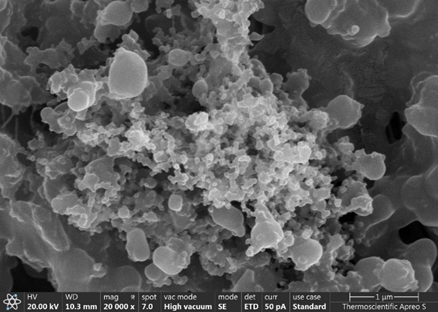
Due to the escalating severity of PM2.5 pollution in Phitsanulok Province, this study investigates the concentration, morphology, and elemental composition of fine particulates. The research compares a forest area (Kwai Noi National Park) and an urban area (Phitsanulok Municipality) to characterize the distinct pollution profiles between these two environments. In this study, PM2.5 samples were collected using the gravimetric method with a 24-hour sampling duration. The sampling campaign was conducted in 2024, spanning two distinct seasons: the dry season (March–April) and the rainy (wet) season (May–June). The results revealed that, during the dry season, the average concentrations of PM2.5 in both study areas exceeded the National Ambient Air Quality Standard set by the Pollution Control Department of Thailand (37.5 µg/m³ per 24 hours), with mean values of 51.23 ± 13.41 µg/m³ and 46.33 ± 10.95 µg/m³, respectively. In contrast, during the wet season, the concentration at Khae Noi National Park was considerably lower (22.23 ± 5.85 µg/m³) and did not exceed the standard limit. Furthermore, when comparing the two sites within each season, it was found that during the wet season, the PM2.5 concentration in the forest area was significantly lower than that in the urban area (P<.05). Morphological analysis using a Field Emission Scanning Electron Microscope (FE-SEM) and for elemental composition using Energy Dispersive X-ray Spectroscopy (EDS). The findings revealed the identified nine dominant particle types: (1) elongated cylindrical (rod-shaped) forms, (2) fluffy aggregates, (3) irregularly layered crystal structures with uneven surfaces, (4) symmetric spherical particles, (5) asymmetric spherical particles with smooth edges, (6) coiled structures, (7) elongated rectangular rods associated with irregular and spherical shapes, (8) irregular aggregated particles, and (9) elongated tapered rods. Elemental composition analysis indicated that carbon (C) and oxygen (O) were the predominant elements across both sites and seasons, followed by silicon (Si), nitrogen (N), and sulfur (S). These compositions suggest that the major sources of PM2.5 include incomplete combustion of fossil fuels and biomass, biological residues, soil dust, pollen, metal abrasion, and dispersion of chemical fertilizers from agricultural activities. Overall, the study concludes that PM2.5 in Phitsanulok is influenced by various emission sources across both seasons and locations. Effective emission control measures, particularly during the dry season and in urban areas, are essential to reduce PM2.5 levels and mitigate health risks for local residents.
Article Details

This work is licensed under a Creative Commons Attribution-NonCommercial-NoDerivatives 4.0 International License.
บทความในวารสารเกษตรนเรศวรที่ได้รับการตีพิมพ์ เป็นลิขสิทธิ์ของ คณะเกษตรศาสตร์
ข้อความที่ปรากฏในบทความแต่ละเรื่องในวารสารนี้เป็นความคิดเห็นส่วนตัวของผู้เขียนแต่ละท่านไม่เกี่ยวข้องกับคณะเกษตรศาสตต์ฯ
References
กรมขนส่งทางบก. (2566). รายงานสถิติการขนส่ง ปีงบประมาณ 2562 – 2566. https://shorturl.at/ejUxP
กรมควบคุมมลพิษ. (2568). แผนการปฏิบัติการขับเคลื่อนวาระแห่งชาติ “การแก้ไขปัญหามลพิษด้านฝุ่นละออง” ฉบับที่ 2 พ.ศ. 2568 – 2570 และระยะ 5 ปีต่อไป. pcdnew-2025-08-01_07-12-19_226372.pdf
กรมพัฒนาที่ดิน. (2562). พื้นที่เขตเกษตรกรรมประเทศไทย. https://webapp.ldd.go.th/lpd/node_ modules/img/Download/zonmap/zonmap2/agri_zone_th.pdf
กรมควบคุมมลพิษ. (2567). แผนปฏิบัติการขับเคลื่อนวาระแห่งชาติ “การแก้ไขปัญหามลพิษด้านฝุ่นละออง” ฉบับที่ 2 พ.ศ. 2568 – 2570 และระยะ 5 ปีต่อไป. https://www.pcd.go.th/strategy
กรมควบคุมมลพิษ. (2567). รายงานสถานการณ์มลพิษของประเทศ ปี 2567. https://www.pcd.go.th/publication/36174/
กรมควบคุมมลพิษ. (2568). ค่ามาตรฐาน PM2.5 ใหม่ บังคับใช้แล้ววันนี้ (1 มิ.ย. 66). https://www.pcd.go.th/pcd_news/29901/
กรมอุตุนิยมวิทยา. (2556). เอกสารวิชาการ อุตุนิยมวิทยาน่ารู้เพืÉอการเกษตรจังหวัดพิษณุโลก. https://shorturl.at/SCb2u
กรมอุทยานแห่งชาติ สัตว์ป่า และพันธุ์พืช. (2568). อุทยานแห่งชาติแควน้อย (เตรียมการ) (Khwae Noi). https://portal.dnp.go.th/Content/nationalpark?contentId=792
เบญจพร โกญจนาท, กฤษฎา ภาณุมนต์วาที และ กณิตา ธนเจริญชณภาส. (2567). การศึกษาความเข้มข้น ลักษณะสัณฐาน และองค์ประกอบธาตุของอนุภาคแขวนลอยขนาดเล็กกว่า 2.5 ไมครอน บริเวณพื้นที่ริมถนนในเขตเทศบาลนครพิษณุโลก. วารสารเกษตรนเรศวร, 21(2), 1-25.
วริศรา กิติภูวดล. (2563). มาตรการทางกฎหมายในการจัดการปัญหามลพิษทางอากาศ : ศึกษากรณี ปัญหาฝุ่นละอองขนาดไม่เกิน 2.5 ไมครอน (PM 2.5) [วิทยานิพนธ์ปริญญามหาบัณฑิต, มหาวิทยาลัยธรรมศาสตร์].
https://digital.library.tu.ac.th/tu_dc/frontend/Info/item/dc:191512
ศิริวรรณ แก้วงาม. (2543). สัณฐานและองค์ประกอบธาตุของฝุ่นละอองที่มีขนาดเล็กกว่า 10 ไมครอน ในกรุงเทพมหานคร[วิทยานิพนธ์ปริญญามหาบัณฑิต, จุฬาลงกรณ์มหาวิทยาลัย]. https://digital.car.chula.ac.th/chulaetd/21102/
สำนักงานเกษตรจังหวัดพิษณุโลก. (2566). ข้อมูลด้านการเกษตรจังหวัดพิษณุโลก,กรมส่งเสริมการเกษตร. https://phitsanulok.doae.go.th/province/wp-content/uploads/2024/03/ข้อมูลพื้นฐานด้านการเกษตรจังหวัดพิษณุโลก.pdf
สำนักงานพัฒนาเทคโนโลยีอวกาศและภูมิสารสนเทศ (Gistda). (2566). พื้นที่จุดความร้อนปี 2566. https://shorturl.at/BKKDq
สุพรรณิการ์ ซาเหลา, ณฐพล โพธิ์ทาทอง, ปริยาพร คำมุงคุณ และ ภาคภูมิ ชูมณี. (2564). การวิเคราะห์องค์ประกอบทางเคมีเพื่อระบุแหล่งกำเนิดของฝุ่นละออง PM2.5 ในเขตอำเภอเมือง จังหวัดอุบลราชธานี. วารสารวิทยาศาสตร์บูรพา, 26(1), 438-453.
Adachi, K. & Buseck, P. R. (2008). Internally mixed soot, sulfates, and organic matter in aerosol particles from Mexico City. Atmospheric Chemistry and Physics, 8, 6469–6481.
Ahmad, S., Zed, B., Ditta, A., Shahid, U., Shah, U. A., Ahmad, I., Alasmari, A., Sakran, M. & Alqurashi, M. (2023). Morphological, mineralogical, and biochemical characteristics of particulate matter in three size fractions (PM10, PM2.5, and PM1) in the urban environment. ACS Omega, 8, 31661−31674.
Anwar, S., Shameer, M., Alawadhi, H., Hamdan, N.M. (2024). Source apportionment of PM2.5 and PM10 pollutants near an urban roadside site using positive matrix factorization. Environmental Advances, 17, 100573. doi:10.1016/j.envadv.2024.100573.
Ju, H., Bian, F., Wei, M. & Zhang, Y. (2023). Effect of temperature on morphologies and microstructures of soot particles in the diesel exhaust pipe. Energies, 16(14), 5488. doi:10.3390/en16145488.
Kostić, A. Ž, Milinčić, D. D, Barać, M. B, Ali Shariati, M., Tešić, Ž.L., & Pešić, M. B. (2020). The application of pollen as a functional food and feed ingredient-the present and perspectives. Biomolecules, 10(1), 84. doi: 10.3390/biom10010084.
Krachler, M., & Shotyk, W. (2004). Natural and anthropogenic enrichments of molybdenum, thorium, and uranium in a complete peat bog profile, Jura Mountains, Switzerland Journal of Environmental Monitor, 6(5), 418-26. doi: 10.1039/b313300.
Li, N., Georas, S. Alexis, N., Fritz, P., Xia., T., Williams, M.A., Horner, E., & Nel, A. (2016). A work group report on ultrafine particles (American Academy of Allergy, Asthma & Immunology): Why ambient ultrafine and engineered nanoparticles should receive special attention for possible adverse health outcomes in human subjects. Journal of Allergy and Clinical Immunology, 138(2), 386–396. doi: 10.1016/j.jaci.2016.02.023.
Li, W., Shao, L., Shi, Z., Chen, J., Yang, L., & Wang, Z. (2010). Individual particle analysis of aerosols collected under haze and non-haze conditions at a high-elevation mountain site in North China. Atmospheric Chemistry and Physics, 10(13), 6407–6420. doi:10.5194/acp-11-11733-2011.
Lim, C. H., Ryu, J., Choi, Y., Jeon, S. W., & Lee, W., K. (2020). Understanding global PM2.5 concentrations and their drivers in recent decades (1998–2016). Environment International, 1-12. doi:10.1016/j.envint.2020.106011.
Maskey, S., Chae, H., Lee, K., Dan, P. N., Khoi, T. T. & Park, K. (2016). Morphological and elemental properties of urban aerosols among PM events and different traffic systems. Journal of Hazardous Materials, 317, 108–118.
Matawle L. J., Pervez, S., Dewangan, S., Shrivastava, A., Tiwari, S., Pant, P., Deb, K. M. & Pervez, Y. (2015). Characterization of PM2.5 source profiles for traffic and dust sources in Raipur, India. Aerosol and Air Quality Research, 15, 2537–2548. doi:10.4209/aaqr.2015.04.0222.
Murphy, D. M., Cziczo, D. J., Froyd, K. D., Hudson, P. K., Matthew, B. M., Middlebrook, A. M., Peltier, R. E., Sullivan, A., Thomson, D. S. & Weber, R. J. (2006). Single-particle mass spectrometry of tropospheric aerosol particles. Journal of Geophysical Research, 111, D23S32. doi:10.1029/2006JD007340.
Pipal, A., Kulshrestha, A. & Taneja, A. (2011). Characterization and morphological analysis of airborne PM2.5 and PM10 in Agra located in north central India. Atmospheric Environment, 45, 3621-3630. doi:10.1016/j.atmosenv.2011.03.062.
Pöschl, U. (2005). Atmospheric aerosols: Composition, transformation, climate and health effects. Angewandte Chemie International Edition, 44(46), 7520–7540. doi: 10.1002/anie.200501122.
Posfai, M., Simonics, R., Li, J., Hobbs, v. P. & Buseck R. P. (2003). Individual aerosol particles from biomass burning in southern Africa:1. Compositions and size distributions of carbonaceous particles. Journal of Geophysical Research, 108 (D13), 8483. doi:10.1029/2002JD002291.
Quijano, C. F. M., Mateus, L. V., Saint'Pierre, D. T., Bott, S. I. & Gioda, A. (2019). Exploratory and comparative analysis of the morphology and chemical composition of PM2.5 from regions with different socioeconomic characteristics. Microchemical Journal, 147, 507-515. doi:10.1016/j.microc.2019.03.071.
Szidat, S., Ruff, M., Perron, N., Wacker, L., Synal, H.-A., Hallquist, M., Shannigrahi, A. S., Yttri, K. E., Dye, C., & Simpson, D. (2009). Fossil and non-fossil sources of organic carbon (OC) and elemental carbon (EC) in Goteborg, Sweden. Atmospheric Chemistry and Physics, 9, 1521–1535.
Usman, F.; Zeb, B.; Alam, K.; Huang, Z.; Shah, A.; Ahmad, I.; Ullah, S. 2022. In-Depth Analysis of Physicochemical Properties of Particulate Matter (PM10, PM2.5 and PM1) and Its Characterization through FTIR, XRD and SEM–EDX Techniques in the Foothills of the Hindu Kush Region of Northern Pakistan. Atmosphere, 13, 124. doi:10.3390/atmos13010124.
Viana, M., Kuhlbusch, T. A. J., Querol, X., Alastuey, A., Harrison, R. M., Hopke, P. K., et al. (2008). Source apportionment of particulate matter in Europe: A review of methods and results. Journal of Aerosol Science, 39(10), 827–849. doi:10.1016/j.jaerosci. 2008.05.007.
Zeb, B., Alam, K., Sorooshian, A., Blaschke, T., Ahmad, I., & Shahid, I. (2018). On the morphology and composition of particulate matter in an Urban environment. Aerosol and Air Quality Research, 18, 1431–1447. doi: 10.4209/aaqr.2017.09.0340.
Zhai, M., Kuang, Y., Liu, L., He, Y., Luo., B., Xu, W., Tao, J., Zou, Y., Li, C., Xu, H., & Deng, X. (2023). Insights into characteristics and formation mechanisms of secondary organic aerosols in the Guangzhou urban area. Atmospheric Chemistry and Physics, 23, 5119–5133. Doi:10.5194/acp-23-5119-2023.
Zhang, J., Su, Y., Chen, C., Guo, W., Tan, Q., Feng, M., Song, D., Jiang, T., Chen, Q., Li, Y., Wang, Y., Huang, X., Han, L., Wu, W. & Wang, G. (2024). Chemical composition, sources and formation mechanism of urban PM25 in Southwest China: a case study at the beginning of 2023. Atmospheric Chemistry and Physics, 24, 2803–2820. doi:10.5194/acp-24-2803-2024.
Zhang, Q., Wang, Y., Xiao, Q., Geng, G., Steven, J. Q., Liu, X., Yang, J., Liu, J., Huang, W., He, C., Luo, B., Martin, R.V., Brauer, M., Randerson, J.T., & He, K.. (2023). Long-range PM2.5 pollution and health impacts from the 2023 Canadian wildfires. Nature, 645, 672–678. doi:10.1038/s41586-025-09482-1.
Zhang, R., Wang, G., Guo, S., Zamora, M. L., Ying, Q., Lin, Y., Wang, E., Hu, M., & Wang, Y., (2019). Formation of urban fine particulate matter. Chemical Reviews, 115(10), 3803–3855.
