
Soil Properties under Miang Tea Garden Coffee Plantation and Remnant Forest at Pa Miang Village, Chae Son Sub-District, Mueang Pan District, Lampang Province
Article Sidebar
Main Article Content
Abstract
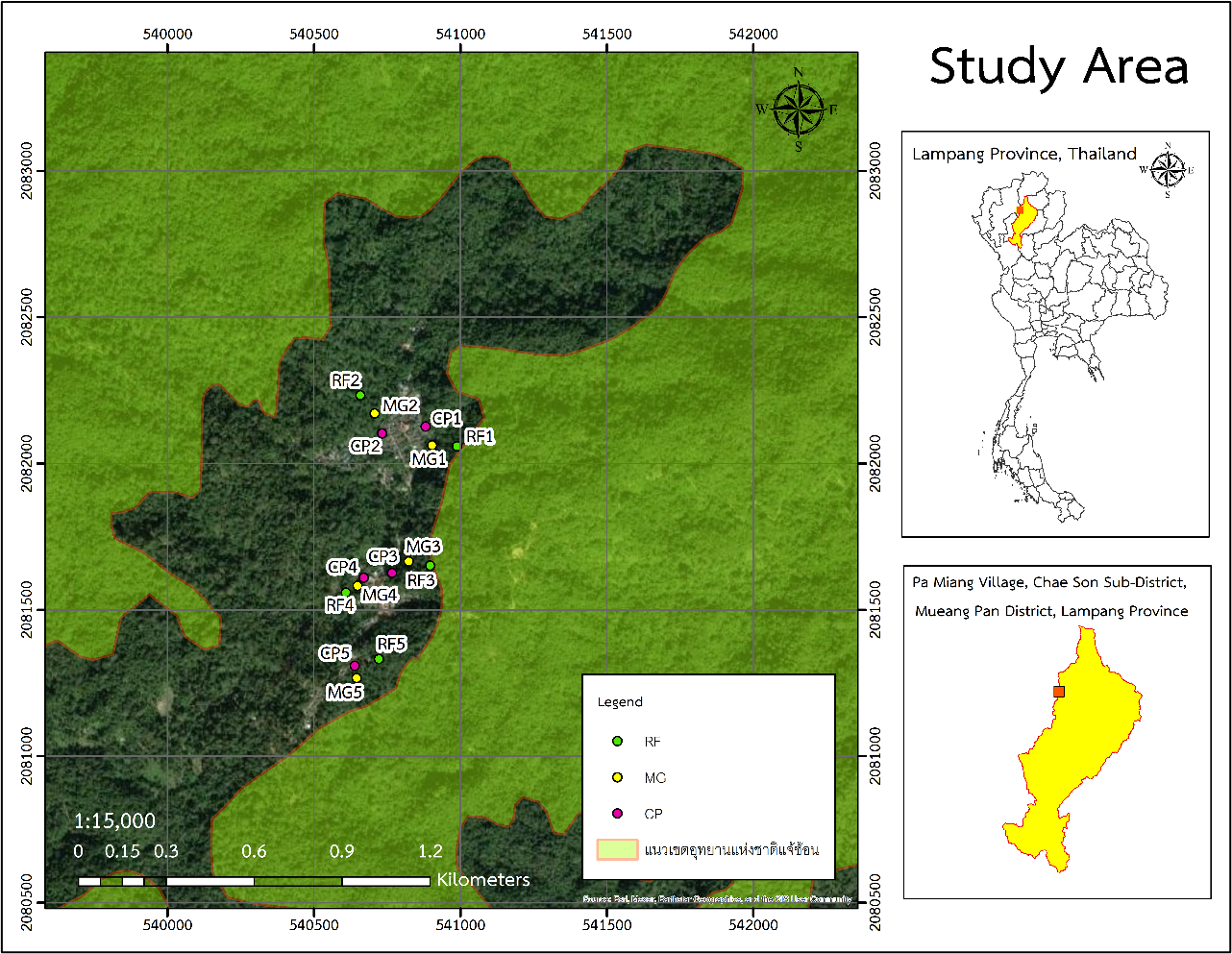
The study of soil properties in Ban Pa Miang, Chae Son Subdistrict, Mueang Pan District, Lampang Province aimed to study the physical and chemical properties of soil in the Miang tea plantation, Coffee plantation and Remnant Forest (control), and to study the relationship of soil factors affecting the growth of Miang and coffee. Data were collected from the surface soil (0-5 cm) and sub-surface soil (20-25 cm). The study plots were set up using the Stratified Random Sampling method with a size of 10 x 10 m, 5 plots per area, totaling 15 plots, and the relationship of soil factors was analyzed using the Principal Component Analysis (PCA) method. The results of the study found that the soil hardness of the Miang tea plantation in the surface soil and sub-surface soil were the hardest, resulting in less moisture and a very acidic pH. In the Coffee plantation area, the surface soil contained the highest amount of nutrients (P, Na, Ca, and Mg), and the Remnant Forest contained more organic matter than the Miang tea plantation and Coffee plantation due to the long-term decomposition of plant and animal remains. The sub-surface contained sand, silt, and clay, which were not much different from the surface soil. When analyzing the relationship between soil factors, it was found that different land uses affected the amount of nutrients and physical soil properties, including the fertility of soil in each area, depending on the parent soil. The management of the Miang tea plantation and coffee plantation areas is a way of using land that can create jobs for farmers in the area. It also has ecological components that are a form of agroforestry that is suitable for soil, water, and forest conservation, allowing people to live together with the forest sustainably.
Article Details

This work is licensed under a Creative Commons Attribution-NonCommercial-NoDerivatives 4.0 International License.
บทความในวารสารเกษตรนเรศวรที่ได้รับการตีพิมพ์ เป็นลิขสิทธิ์ของ คณะเกษตรศาสตร์
ข้อความที่ปรากฏในบทความแต่ละเรื่องในวารสารนี้เป็นความคิดเห็นส่วนตัวของผู้เขียนแต่ละท่านไม่เกี่ยวข้องกับคณะเกษตรศาสตต์ฯ
References
กนกนิภา อ่ำสวัสดิ์, เสาวนุช ถาวรพฤกษ์ และณัฐพล จิตมาตย์. (2562). สมบัติและศักยภาพทางการเกษตรของดินปนกรวด ในอำเภอเนินมะปราง จังหวัดพิษณุโลก. วารสารเกษตรพระจอมเกล้า, 37(1), 78-87.
พรชัย ปรีชาปัญญา และพงษ์ศักดิ์ สหุนาฬุ. (2542). โครงการภูมิปัญญาชาวป่าเมี่ยง (ชา) เกี่ยวกับความหลากหลายทางชีวภาพเพื่อการจัดการลุ่มน้ำที่สูงภาคเหนือ ประเทศไทย. สำนักงานกองทุนสนับสนุนการวิจัย.
พรชัย ปรีชาปัญญา. (2536). ภูมิปัญญาชาวบ้านด้านนิเวศน์เกี่ยวกับความยั่งยืนของชาวสวนชา ในป่าดิบเขาในภาคเหนือของประเทศไทย. วารสารวนศาสตร์, 12, 18-26.
พันธศักดิ์ ธาดา และศุภธิดา อ่ำทอง. (2550). อิทธิพลของการเปลี่ยนแปลงการใช้ที่ดินและรูปแบบการใช้ที่ดินต่อคุณภาพดิน หมู่บ้านละเบ้ายา ตำบลสะเนียน อำเภอเมือง จังหวัดน่าน. วารสารเกษตร, 23(2), 133-146.
ลัดดา ปินตา. (2560). การพัฒนาสมการโครงสร้างของปัจจัยที่ส่งผลกระทบต่ออาชีพทำสวนเมี่ยง กรณีศึกษา ตำบลป่าแป๋ อำเภอแม่แตง จังหวัดเชียงใหม่. วารสารธุรกิจปริทัศน์, 9(1), 69-86.
วีระชัย ฟองธิวงค์, ธนากร ลัทธิ์ถีระสุวรรณ, ฑีฆา โยธาภักดี, ธัญญรัตน์ เชื้อสะอาด และ ศิรินทิพย์ ชัยมงคล. (2564). ลักษณะนิเวศของสวนชาเมี่ยงบ้านศรีนาป่าน ตำบลเรือง อำเภอเมือง จังหวัดน่าน. วารสารแก่นเกษตร, 49(6), 1351-1363.
อาจิน หนูประสิทธิ์, บุญมา ดีแสง, พิณทิพย์ ธิติโรจนะวัฒน์ และแสงจันทร์ ศรีสายเชื้อ. (2540). สมบัติทางกายภาพและเคมีของดิน บริเวณสถานีวิจัยลุ่มน้ำปากพนัง อ.ลานสกา จ.นครศรีธรรมราช. กลุ่มลุ่มน้ำส่วนวิจัยและพัฒนาสิ่งแวดล้อมป่าไม้สำนักวิชาการป่าไม้ กรมป่าไม้.
Lattirasuvan, T., Tanaka, S., Nakamoto, K., Hattori, D., & Sakurai, K. (2010). Ecological characteristics of home gardens in Northern Thailand. Tropics, 18, 172-184.
Preechapanya. P. (1996). Indigenous Ecological Knowledge about the Sustainability of tea gardens in the hill Evergreen Forest of northern Thailand. Ph.D. Thesis, School of Agricultural and Forest Sciences, University of Wales, Bangor, UK.
Sakurai, K., Puriyakorn, B., Preechapanya, P., Tanpibal, V., Muangnil, K., & Prachaiyo, B. (1995). Improvement of Biological Productivity in Degraded Lands in Thailand III. Soil hardness measurement in the field. Tropics, 4(2/3), 151-172.
Tanaka S., Lattirasuvan, T., Nakamoto, K., Sritulanon, C., & Sakurai, K. (2010). Soil fertility status under various types of upland farming in northern Thailand, I. A case study of a village located in a transitional zone of hill evergreen and mixed deciduous forests. Tropics. 18: 185-199.
