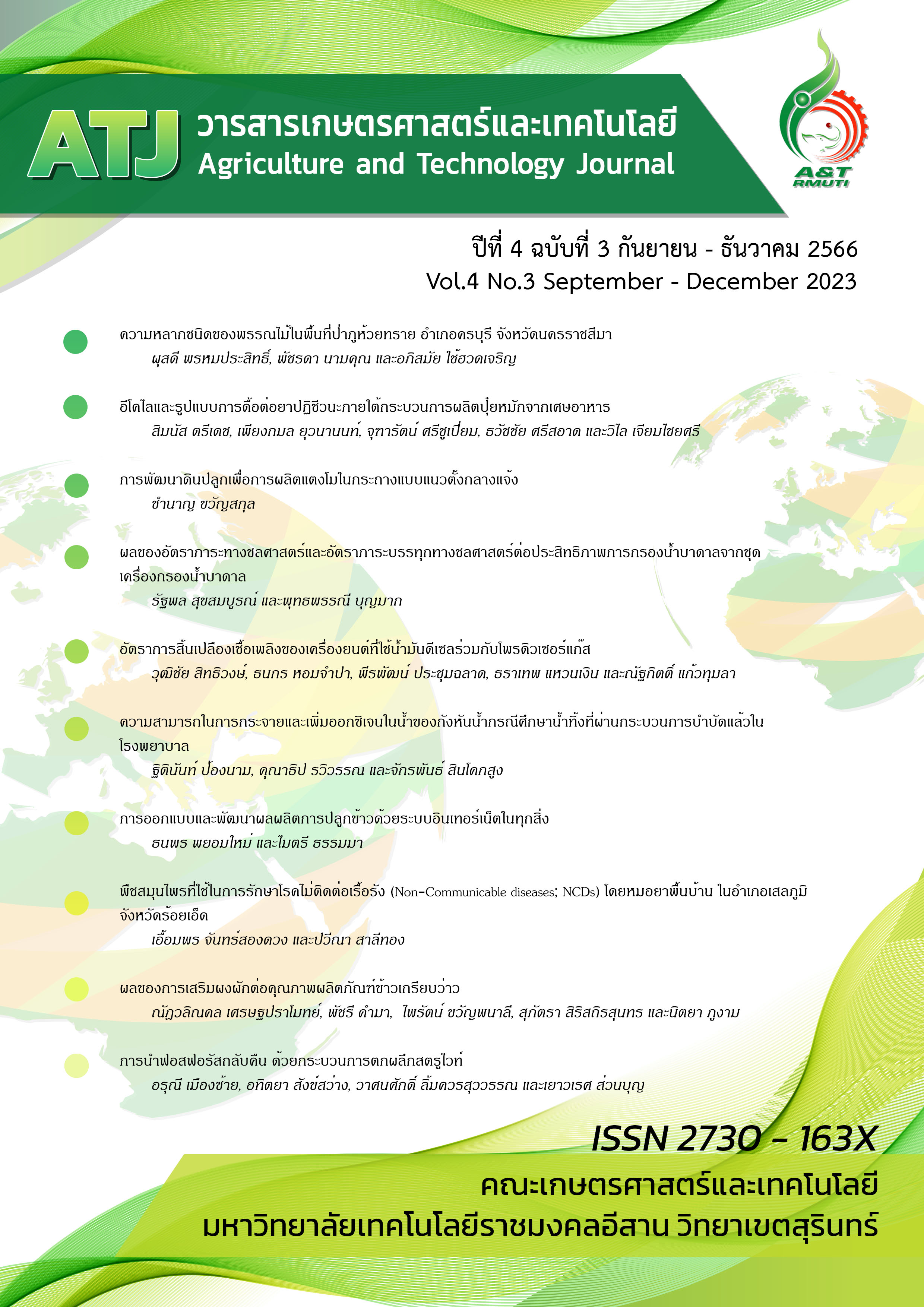
การออกแบบและพัฒนาผลผลิตการปลูกข้าวด้วยระบบอินเทอร์เน็ตในทุกสิ่ง
คำสำคัญ:
สมาร์ทฟาร์ม, อินเทอร์เน็ตในทุกสิ่ง, เซ็นเซอร์.บทคัดย่อ
การศึกษาการออกแบบระบบสมาร์ทฟาร์มโดยใช้เทคโนโลยีอินเทอร์เน็ตในทุกสิ่งสำหรับการปลูกข้าวครั้งนี้ มีวัตถุประสงค์เพื่อออกแบบนวัตกรรมการเกษตรอัจฉริยะด้วยเทคโนโลยีอินเทอร์เน็ตในทุกสิ่งเพื่อเพิ่มประสิทธิภาพการผลิตสำหรับการปลูกข้าว แปลงสาธิตที่ศูนย์วิจัยข้าว อำเภอพิมาย จังหวัดนครราชสีมา ซึ่งใช้แนวความคิดของเทคโนโลยีอินเทอร์เน็ตในทุกสิ่งโดยมีเซ็นเซอร์วัดค่าข้อมูลของการปลูกข้าว โดยกำหนดไว้ 3 ค่า ตามสภาพแวดล้อมและคุณภาพของดิน คือ 1) ความชื้น (Humidity), 2) ค่าทีดีเอส (TDS) และ 3) ค่าพีเอช (pH) ผลการศึกษาพบว่า การออกแบบแผนผังการเชื่อมต่ออุปกรณ์ IoT (Node MCU) กับ Arduino board และระบบเซ็นเซอร์พร้อมกับการพัฒนาแอปพลิเคชันสำหรับเชื่อมต่อกับอุปกรณ์ IoT สามารถใช้งานร่วมกับอุปกรณ์โมบายโฟนแอปพลิเคชันต่าง ๆ โดยสามารถรองรับการใช้งานได้ทั้งระบบปฏิบัติการ Android และสามารถแสดงข้อมูลตามค่ามาตรฐาน ดังนี้ 1) ค่า Humidity จะอยู่ในช่วง 70-100, 2) ค่า TDS น้อยกว่า 3 มิลลิซีเมนส์ต่อเซนติเมตร และ 3) ค่า pH ที่เหมาะสมอยู่ที่ 7-9 ซึ่งผลลัพธ์ที่ได้คือ สามารถมีการจัดการน้ำที่ดีและลดต้นทุนทางด้านบุคลากร ลดเวลา สามารถทำงานและพัฒนาร่วมกับแอปพลิเคชันได้เป็นอย่างดี ส่งผลให้ข้าวน้ำหนักดีและเกษตรกรมีรายได้เพิ่มมากขึ้นต่อเดือน 12.7%
เอกสารอ้างอิง
เจษฎา ขจรฤทธิ์, ปิยนุช ชัยพรแก้ว และหนึ่งฤทัย เอ้งฉ้วน. (2562). การประยุกต์ใช้เทคโนโลยี IoT ในการควบคุมระบบส่องสว่างสาหรับบ้านอัจฉริยะ. วารสารวิทยาการและเทคโนโลยีสารสนเทศ. 7(1): 1-11.
ธีรยศ เวียงทอง และประยูร จวงจันทร์. (2554). ระบบควบคุมอุณหภูมิความชื้นอัตโนมัตินโรงเรือนแบบปิด. วิทยานิพนธ์ปริญญาวิทยาศาสตรมหาบัณฑิต ภาควิชาอิเล็กทรอนิกส์ คณะวิศวกรรมศาสตร์ มหาวิทยาลัยเทคโนโลยีมหานคร.
วริศร์ รัตนนิมิตร. (2560). การติดตามและแจ้งเตือนข้อมูลทางเกษตรกรรมผ่านระบบเครือข่ายอินเทอร์เน็ตในทุกสรรพสิ่ง. วารสารสหศาสตร์ศรีปทุม ชลบุรี. 3(2): 17-21.
สมาคมผู้ส่งออกข้าวไทย. (2562). รายงานสถานการณ์ส่งออกข้าวแนวโน้มและทิศทางการส่งออกข้าวไทยปี 2562. ค้นเมื่อ 20 เมษายน 2565. http://www.thairiceexporters.or.th/Press%20release/2019/TREA%20Press%20Release
สำนักงานเศรษฐกิจการเกษตร. (2562). ข้าวนาปรังเนื้อที่เพาะปลูก เนื้อที่เก็บเกี่ยวผลผลิตและผลผลิตต่อไร ณ ความชื้น15%. ค้นเมื่อ 20 เมษายน 2565. http://www.oae.go.th/assets/portals/1/files/production/secondrice.pdf%20Thai%20Rice%20Situation%20&%20Trend%20Year%202019-30012019.pdf
อรพรรณ แซ่ตั้ง, นิสา พุทธนาวงศ์ และณัฐพล ธนเชวงสกุล. (2560). การออกแบบโรงเรือนสำหรับควบคุมอุณหภูมิและความชื้นโดยใช้เทคโนโลยีอินเทอร์เน็ตของสรรพสิ่ง. วารสารการอาชีวะและเทคนิคศึกษา. 7(13): 87-97.
Rotchanatheeratham W. and Choosumrong S. (2018). Development of real-time smart weather station and web processing service for monitoring and evaluation of field environmental data based on IoT and FOSS4G. Proceedings of International Conference on GIS-IDEAS 2018, 64-70.
Shashwathi N., Priyam B. and Suhas K. (2012). Smart farming: A step towards techno-savvy agriculture. International Journal of Computer Applications. 57(18): 45-48.
ดาวน์โหลด
เผยแพร่แล้ว
เวอร์ชัน
- 20-02-2024 (3)
- 05-02-2024 (2)
- 29-12-2023 (1)
รูปแบบการอ้างอิง
ฉบับ
ประเภทบทความ
สัญญาอนุญาต
ลิขสิทธิ์ (c) 2023 วารสารเกษตรศาสตร์และเทคโนโลยี

อนุญาตภายใต้เงื่อนไข Creative Commons Attribution-NonCommercial-NoDerivatives 4.0 International License.
เนื้อหาและข้อมูลในบทความที่ลงตีพิมพ์ในวารสารทดสอบระบบ ThaiJo2 ถือเป็นข้อคิดเห็นและความรับผิดชอบของผู้เขียนบทความโดยตรงซึ่งกองบรรณาธิการวารสาร ไม่จำเป็นต้องเห็นด้วย หรือร่วมรับผิดชอบใดๆ
บทความ ข้อมูล เนื่อหา รูปภาพ ฯลฯ ที่ได้รับการดีพิมพ์ในวารสารทดสอบระบบ ThaiJo2 ถือเป็นลิขสิทธิ์ของวารสารทดสอบระบบ ThaiJo2 หากบุคคลหรือหน่วยงานใดต้องการนำทั้งหมดหรือส่วนหนึ่งส่วนใดไปเผยแพร่หรือเพื่อกระทำการใดๆ จะต้องได้รับอนุญาตเป็นลายลักอักษรณ์จากวารสารทดสอบระบบ ThaiJo2 ก่อนเท่านั้น