
การพัฒนาระบบการพิจารณาคดีต่อเนื่องของศาลยุติธรรม
คำสำคัญ:
การพิจารณาคดีต่อเนื่อง, การบริหารจัดการคดี, เทคโนโลยีสารสนเทศบทคัดย่อ
บทความวิจัยนี้มีวัตถุประสงค์เพื่อ 1) ศึกษาเปรียบเทียบระบบการพิจารณาคดีต่อเนื่องและการบริหารจัดการคดีของศาลยุติธรรมไทยกับศาลในต่างประเทศ และ 2) เสนอแนวทางการพัฒนาระบบการพิจารณาคดีต่อเนื่องของศาลยุติธรรมไทยให้มีประสิทธิภาพมากยิ่งขึ้นโดยการศึกษาวิจัยในเชิงคุณภาพด้วยวิธีการรวบรวมข้อมูลจากเอกสาร ศึกษาค้นคว้าจากตําราหนังสือ บทความ และเอกสารอื่น ๆ ข้อมูลในเว็บไซต์ต่าง ๆ การสัมภาษณ์บุคคลผู้เกี่ยวข้อง และการทำแบบสอบถามการวิจัย แล้วนํามาวิเคราะห์เปรียบเทียบกับศาลในต่างประเทศ เพื่อเสนอแนะแนวทางในการพัฒนาการพิจารณาคดีต่อเนื่องของศาลยุติธรรมต่อไป
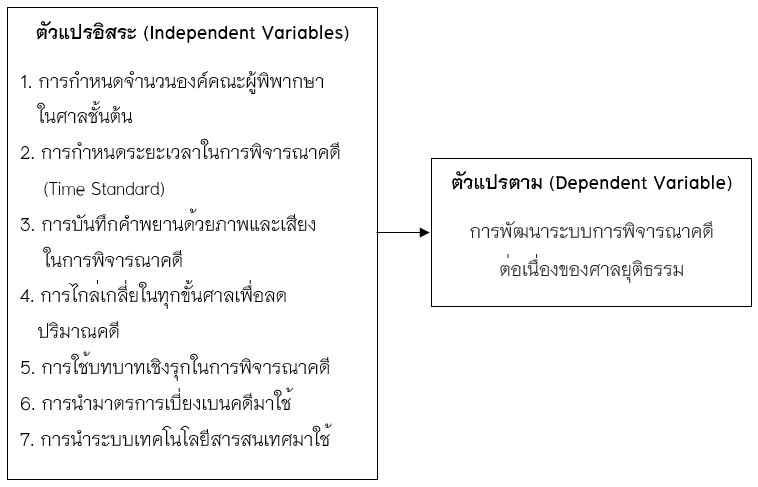
ผลการวิจัยพบว่า แนวทางการพัฒนาระบบการพิจารณาคดีต่อเนื่องของศาลยุติธรรม อันประกอบด้วย 1) การกําหนดจํานวนองค์คณะผู้พิพากษาในศาลชั้นต้น 2) การกําหนดระยะเวลาในการพิจารณาคดี (Time Standard) 3) การบันทึกคำพยานด้วยภาพและเสียง ในการพิจารณาคดี 4) การไกล่เกลี่ยในทุกขั้นศาลเพื่อลดปริมาณคดี 5) การใช้บทบาทเชิงรุก ในการพิจารณาคดี 6) การนำมาตรการเบี่ยงเบนคดีมาใช้ และ 7) การนำระบบเทคโนโลยีสารสนเทศมาใช้ ทำให้การพิจารณาคดีมีประสิทธิภาพมากยิ่งขึ้น
Downloads
เอกสารอ้างอิง
กนกศักดิ์ พ่วงลาภ, 2559. การต่อรองคำรับสารภาพไม่ใช่สิ่งแปลกปลอมของกระบวนการยุติธรรมทางอาญา. สืบค้นเมื่อ 30 กรกฎาคม 2564,
จาก https://www.matichon.co.th/columnists/news_408632
กมลชัย รัตนสกาววงค์ และคณะ. (2548). การนั่งพิจารณาคดีต่อเนื่องและครบองค์คณะ. กรุงเทพฯ: สำนักงานศาลยุติธรรม.
จุฬาลงกรณ์มหาวิทยาลัย. (2558). การพัฒนาระบบการพิจารณาคดีของศาลยุติธรรมในการค้นหาความจริงเพื่ออำนวยความยุติธรรมแก่ประชาชนตามเจตนารมณ์ของกฎหมาย. กรุงเทพฯ: สำนักงานศาลยุติธรรม.
ดวงธมล คำวิโส. (2556). การไกล่เกลี่ยคดีอาญาความผิดต่อแผ่นดินในชั้นศาล: ศึกษาเฉพาะกรณีที่มีผู้เสียหาย (วิทยานิพนธ์นิติศาสตรมหาบัณฑิต). มหาวิทยาลัยธุรกิจบัณฑิตย์, กรุงเทพฯ.
ทวีป ศรีน่วม. (2564). พระธรรมนูญศาลยุติธรรม. กรุงเทพฯ: สถาบันนิติธรรมาลัย.
ทวีป ศรีน่วม. (2564). รัฐธรรมนูญแห่งราชอาณาจักรไทย พุทธศักราช 2560. กรุงเทพฯ: สถาบันนิติธรรมาลัย.
เพลินตา ตันรังสรรค์, (2554). แนวทางการจัดแบ่งกลุ่มความผิดและโทษในประมวลกฎหมายอาญาไทย. วารสารจุลนิติ, 69-70.
ภัคพล ยุติธรรมดำรง. (2555). มาตรการทางกฎหมายเกี่ยวกับการต่อรองคำรับสารภาพในการสอบสวนคดีพิเศษ (วิทยานิพนธ์นิติศาสตรมหาบัณฑิต). มหาวิทยาลัยศรีปทุม, ชลบุรี.
มานิตย์ จุมปา. (2540). ความรู้เบื้องต้นเกี่ยวกับรัฐธรรมนูญ พ.ศ. 2540 (พิมพ์ครั้งที่ 2). กรุงเทพฯ: สำนักพิมพ์นิติธรรม.
เมทินี ชโลธร. (2559). ระบบการพิจารณาคดีต่อเนื่องเปรียบเทียบของไทยกับต่างประเทศ. กรุงเทพฯ: มหาวิทยาลัยธรรมศาสตร์.
สำนักการต่างประเทศ. (2562). รายงานการฝึกอบรมหลักสูตรการพัฒนาระบบงานศาลเน้นการนำเทคโนโลยีสารสนเทศมาใช้. กรุงเทพฯ: สำนักงานศาลยุติธรรม.
สำนักประธานศาลฎีกา. (2564). นโยบายประธานศาลฎีกา พ.ศ. 2564. สืบค้นเมื่อ 7 สิงหาคม 2564, จาก https://opsc.coj.go.th/th/content/category/detail/id/10/iid/217265
สำนักแผนงานและงบประมาณ. (2563). หนังสือรายงานสถิติคดีประจำปี พ.ศ. 2563. กรุงเทพฯ: สำนักงานศาลยุติธรรม.
สำนักพัฒนาระบบ. (2558). แนวทางการพิจารณาคดีครบองค์คณะและต่อเนื่อง. กรุงเทพฯ: สำนักงานศาลยุติธรรม.
ดาวน์โหลด
เผยแพร่แล้ว
รูปแบบการอ้างอิง
ฉบับ
ประเภทบทความ
สัญญาอนุญาต
ลิขสิทธิ์ (c) 2022 มหาวิทยาลัยราชภัฏจันทรเกษม

อนุญาตภายใต้เงื่อนไข Creative Commons Attribution-NonCommercial-NoDerivatives 4.0 International License.
บทความที่ได้รับการตีพิมพ์เป็นลิขสิทธิ์ของมหาวิทยาลัยราชภัฏจันทรเกษม
ข้อความที่ปรากฏในบทความแต่ละเรื่องในวารสารวิชาการเล่มนี้เป็นความคิดเห็นส่วนตัวของผู้เขียนแต่ละท่านไม่เกี่ยวข้องกับมหาวิทยาลัยราชภัฎจันทรเกษม และคณาจารย์ท่านอื่นๆในมหาวิทยาลัยฯ แต่อย่างใด ความรับผิดชอบองค์ประกอบทั้งหมดของบทความแต่ละเรื่องเป็นของผู้เขียนแต่ละท่าน หากมีความผิดพลาดใดๆ ผู้เขียนแต่ละท่านจะรับผิดชอบบทความของตนเองแต่ผู้เดียว