
ภาษาในป้ายห้ามของไทย: การศึกษาตามแนวภูมิทัศน์ภาษา
คำสำคัญ:
ภูมิทัศน์ภาษา, ป้ายห้าม, การเลือกภาษาบทคัดย่อ
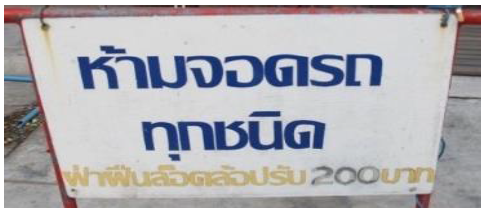
บทความวิจัยนี้มีวัตถุประสงค์เพื่อศึกษาว่า ตัวเขียน ภาษาเขียนในป้ายห้ามหรือประกาศสาธารณะที่ระบุการบังคับใช้กฎหมายประเภทต่าง ๆ ในประเทศไทยว่าใช้ภาษาใดเป็นหลัก โดยเฉพาะระหว่างภาษาไทยซึ่งเป็นภาษาประจำชาติกับภาษาอังกฤษที่กำลังมีอิทธิพลอยู่ในภูมิภาคอาเซียน
ผลการวิจัย พบว่า มีการเลือกใช้ภาษาไทยในป้ายหรือประกาศสาธารณะที่ระบุการบังคับใช้กฎหมายประเภทต่าง ๆ มากที่สุด อย่างไรก็ตาม ยังมีการใช้ภาษาอังกฤษและภาษาอื่นรวมอยู่ด้วย และบางป้ายปรากฏถ้อยคำภาษาอังกฤษโดดเด่นกว่าภาษาไทย หรือปรากฏภาษาอังกฤษในป้ายเพียงหนึ่งภาษาเท่านั้น ปรากฏการณ์เช่นนี้แสดงให้เห็นว่าภาษาอังกฤษมีบทบาทในการแสดงอำนาจ ควบคุม และบังคับคนในสังคมไทย ทั้งที่ในความเป็นจริงป้ายที่เป็นข้อห้ามในภูมิทัศน์ภาษาของไทยควรเลือกใช้เฉพาะภาษาไทย กล่าวได้ว่าการใช้ภาษาอังกฤษในป้ายห้ามของไทยมีอิทธิพลต่อภาษาประจำชาติ
Downloads
เอกสารอ้างอิง
นัทธ์ชนัน นาถประทาน. (2557). อำนาจในภาษากฎหมายไทยที่แสดงโดยคำกริยาบังคับ. ภาษากับอำนาจ: บทความจากการสัมมนาวิชาการ. โรงพิมพ์แห่งจุฬาลงกรณ์มหาวิทยาลัย.
สรบุศย์ รุ่งโรจน์สุวรรณ. (2557). การแสดงอำนาจในภาษากฎหมายไทยผ่านการใช้รูปแบบภาษาที่ซับซ้อน. ภาษากับอำนาจ: บทความจากการสัมมนาวิชาการ. โรงพิมพ์แห่งจุฬาลงกรณ์มหาวิทยาลัย.
Ben-Rafael, E., Shohamy, E., Amara, M. H., & Trumper-Hecht, N. (2006). Linguistic Landscape as Symbolic Construction of the Public Space: The Case of Israel. International Journal of Multilingualism, 3(1), 7-30.
Giles, H. & Coupland, N. (1991). Language: Contexts and consequences. Thomson Brooks/Cole Publishing Co.
Huebner, T. (2006). Bangkok’s linguistic landscape: Environmental print, codemixing and language change. in Gorter, D. (ed.) Linguistic landscape: A new Approach to Multilingualism, pp.31-51. Multilingual Matters Ltd.
Spolsky, B. (2009). Language Management. Cambridge University Press.
Smalley, W. A. (1994). Linguistic diversity and national unity: Language ecology in Thailand. University of Chicago Press.
ดาวน์โหลด
เผยแพร่แล้ว
รูปแบบการอ้างอิง
ฉบับ
ประเภทบทความ
สัญญาอนุญาต
ลิขสิทธิ์ (c) 2023 มหาวิทยาลัยราชภัฏจันทรเกษม

อนุญาตภายใต้เงื่อนไข Creative Commons Attribution-NonCommercial-NoDerivatives 4.0 International License.
บทความที่ได้รับการตีพิมพ์เป็นลิขสิทธิ์ของมหาวิทยาลัยราชภัฏจันทรเกษม
ข้อความที่ปรากฏในบทความแต่ละเรื่องในวารสารวิชาการเล่มนี้เป็นความคิดเห็นส่วนตัวของผู้เขียนแต่ละท่านไม่เกี่ยวข้องกับมหาวิทยาลัยราชภัฎจันทรเกษม และคณาจารย์ท่านอื่นๆในมหาวิทยาลัยฯ แต่อย่างใด ความรับผิดชอบองค์ประกอบทั้งหมดของบทความแต่ละเรื่องเป็นของผู้เขียนแต่ละท่าน หากมีความผิดพลาดใดๆ ผู้เขียนแต่ละท่านจะรับผิดชอบบทความของตนเองแต่ผู้เดียว