
Enhancing Inquiry Based Learning Ability with Visualization Integrated Technology in Multicultural and Religion Setting Lampang Province
Keywords:
Inquiry Learning, Visualization Integrated Technology, Multicultural and Religion SettingAbstract
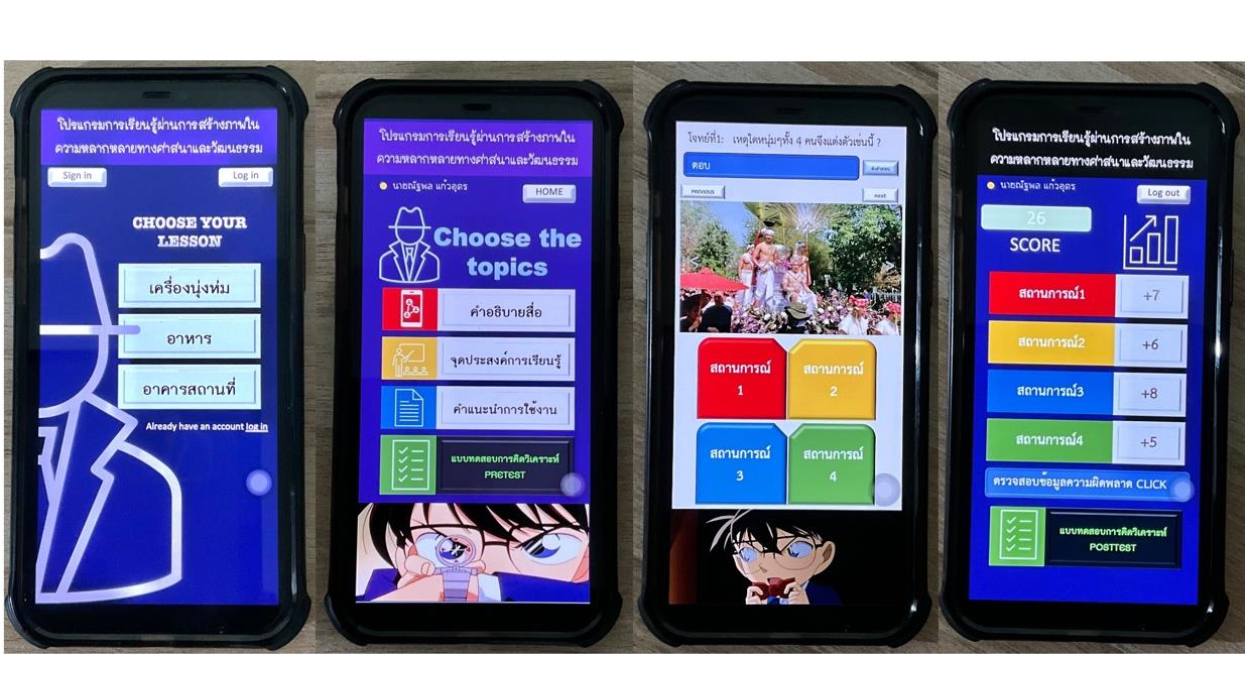
This research article presents a technology that could enhance the ability of inquiry-based learning. The present study was conducted to achieve the following aims: 1) to develop a technology for integrating visualization in multicultural settings according to the 80.00/80.00 criterion; 2) to compare analytical thinking abilities before and after using a technology for integrating visualization in multicultural settings; and, 3) to study the ability in inquiry-based learning after using a technology for integrating visualization in multicultural settings. The sample group consisted of 30 Lampang Rajabhat University students derived via simple random sampling by lottery method to select participants from the whole class. The experimental design employed was One Group Pretest – Posttest Design. The tools used were learning applications and tests. The statistics used were percentage, mean (M), Standard Deviation (SD), and t-test.
The results of the study were as follows: 1) The results of technology for integrating visualization in multicultural settings were found to yield efficiency value of 80.00/82.00 according to the 80.00/80.00 criterion. 2) The participants in sample group trained with the technology for integrating visualization in multicultural settings were found to have higher analytical thinking skills after studying than before with significant coefficient of .05. and 3) The participants who used the technology for integrating visualization in multicultural settings demonstrated a strong aptitude for inquiry-based learning, with an average score of 4.20 (M = 4.20), with the aspect of engagement garnered the highest mean score of 4.25 (M = 4.25).
Downloads
References
กรัณฑรักข์ วิทยอภิบาลกุล. (2563). ทักษะการคิดวิเคราะห์และแก้ปัญหา : องค์ประกอบสำคัญของทักษะในศตวรรษที่ 21. วารสารมหาวิทยาลัยราชภัฏวไลยอลงกรณ์ ในพระบรมราชูปถัมภ์. 14(2), 167-182.
ชูศรี วงศ์รัตนะ. (2564). เทคนิคการใช้สถิติเพื่อการวิจัย (ฉบับปรับปรุงเพิ่มเติม). สำนักพิมพ์จุฬาลงกรณ์มหาวิทยาลัย.
ชัยวัฒน์ สุทธิรัตน์. (2561). 80 นวัตกรรม การจัดการเรียนรู้ที่เน้นผู้เรียนเป็นสำคัญ (พิมพ์ครั้งที่ 8). พี บาลานซ์ดีไซน์ แอนปริ้นติ้ง.
ธีระยุทธ์ หมันหลี. (2564). การพัฒนาบทเรียนออนไลน์ เรื่อง การประเมินพัฒนาการเด็กตามคู่มือเฝ้าระวัง และส่งเสริมพัฒนาการเด็กปฐมวัย สำหรับนิสิตแพทย์. บัณฑิตวิทยาลัย มหาวิทยาลัยเกษตรศาสตร์.
ฟิสิกส์ ฌอณ บัวกนก. (2563). การจัดการเรียนรู้เชิงรุกในวิชาการออกแบบและพัฒนามัลติมีเดีย เพื่อพัฒนาความคิด สร้างสรรค์ในการผลิตสื่อของผู้เรียนระดับอุดมศึกษา มหาวิทยาลัยราชภัฏลำปาง จ.ลำปาง. วารสารการพัฒนาชุมชนและคุณภาพชีวิต. 8(3), 553–565.
ฟิสิกส์ ฌอณ บัวกนก. (2564). นวัตกรรมและเทคโนโลยีสารสนเทศเพื่อการสื่อสารการศึกษาและการเรียนรู้. ดีเซมเบอรี่ จำกัด.
วัชรา เล่าเรียนดี ปรณัฐ กิจรุ่งเรือง และอรพิณ ศิริสัมพันธ์. (2560). กลยุทธ์การจัดการเรียนรู้เชิงรุกเพื่อพัฒนาการคิดและยกระดับคุณภาพ การศึกษาสำหรับศตวรรษที่ 21. เพชรเกษมพริ้นติ้ง กรุ๊ป.
วลัยลักษณ์ คงพระจันทร์. (2562). “ทักษะแห่งศตวรรษที่ 21”: อยู่รอดแม้จุดยืนมนุษย์สั่นคลอน ในโลกดิจิทัลที่ไม่ย้อนกลับหลัง. เน็คเทค.
Banks, A. J. (1995). Multicultural Education and Curriculum Transformation. The Journal of Negro Education. 64(4), 390-400.
Colette, B. (2019). The BSCS 5 E Instructional Model: Origins and Effectiveness. A report prepared for the Office of Science Education, National Institutes of Health, 1(2), 78-90.
Gholam, A. (2019). Inquiry-Based Learning: Student Teachers’ Challenges and Perceptions. Journal of Inquiry & Action in Education. 10(2), 112-133.
Goldston, M., & Dantzler, J. (2021). Psychometric analysis of a 5E learning cycle lesson plan assessment instrument. International Journal of Science and Mathematics Education. 8, 633–648.
Likert, R. (1967). The Method of Constructing and Attitude Scale. Wiley & Son.
Gerges, E. (2022). How to Use the 5E Model in Your Science Classroom. EdTech Team Press.
Needham, J. (2015). The Teacher of Nations. Cambridge University Press.
Rahmi, Y. L., & Alberida, H. (2019). Enhancing students’ critical thinking skills through inquiry-based learning model. Journal of Physics: Conference Series. 1(2), 1-6.
Trilling, B., & Fadel, C. (2021). 21st Century Skills: Learning for Life in Our Times. John Wiley & Sons Inc.
Yamthap, S., & Siriphon, A. (2022). Digital Journalism and News and Feature Video Writing in the 21st Century. Journal of Business, Economics and Communications. 17(3), 19-31.
Zepeda, S. J., & Mayers, R. S. (2020). Supervision Across the Content Areas. Routledge Publishing.
Downloads
Published
How to Cite
Issue
Section
License
Copyright (c) 2024 Chandrakasem Rajabhat University

This work is licensed under a Creative Commons Attribution-NonCommercial-NoDerivatives 4.0 International License.
บทความที่ได้รับการตีพิมพ์เป็นลิขสิทธิ์ของมหาวิทยาลัยราชภัฏจันทรเกษม
ข้อความที่ปรากฏในบทความแต่ละเรื่องในวารสารวิชาการเล่มนี้เป็นความคิดเห็นส่วนตัวของผู้เขียนแต่ละท่านไม่เกี่ยวข้องกับมหาวิทยาลัยราชภัฎจันทรเกษม และคณาจารย์ท่านอื่นๆในมหาวิทยาลัยฯ แต่อย่างใด ความรับผิดชอบองค์ประกอบทั้งหมดของบทความแต่ละเรื่องเป็นของผู้เขียนแต่ละท่าน หากมีความผิดพลาดใดๆ ผู้เขียนแต่ละท่านจะรับผิดชอบบทความของตนเองแต่ผู้เดียว