
อิทธิพลของความผูกพันต่อองค์การในฐานะตัวแปรคั่นกลางระหว่างปัจจัยคุณลักษณะงานกับประสิทธิภาพในการปฏิบัติงานของพนักงานเจเนอเรชัน Z กลุ่มธุรกิจพาณิชย์อิเล็กทรอนิกส์ ในกรุงเทพมหานคร
คำสำคัญ:
ประสิทธิภาพในการปฏิบัติงาน, ปัจจัยคุณลักษณะงาน, ความผูกพันต่อองค์การ, เจเนอเรชั่น Zบทคัดย่อ
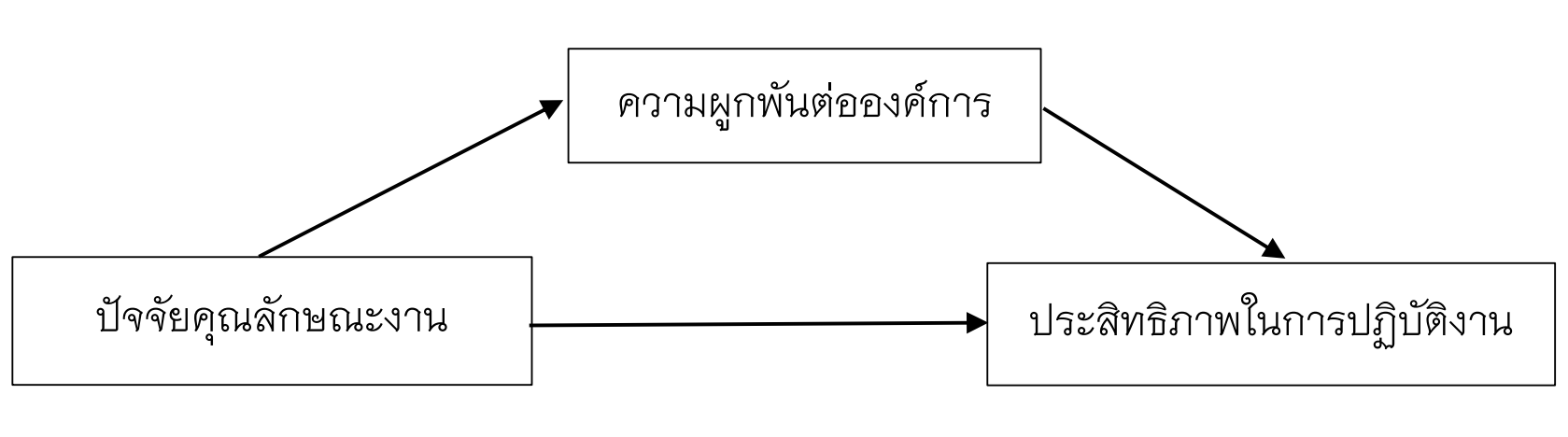
บทความวิจัยนี้มีวัตถุประสงค์เพื่อ 1) ศึกษาระดับของปัจจัยคุณลักษณะงาน ความผูกพันต่อองค์การ และประสิทธิภาพในการปฏิบัติงานของพนักงานเจเนอเรชัน Z 2) ศึกษาอิทธิพลของปัจจัยลักษณะงานที่มีต่อประสิทธิภาพในการปฏิบัติงานของพนักงานเจเนอเรชัน Z และ 3) ศึกษาบทบาทของความผูกพันต่อองค์การในฐานะตัวแปรคั่นกลางที่มีต่อความสัมพันธ์ระหว่างปัจจัยคุณลักษณะงานและประสิทธิภาพในการปฏิบัติงานของพนักงานเจเนอเรชัน Z การศึกษานี้ เป็นการวิจัยเชิงปริมาณ ศึกษากลุ่มพนักงานธุรกิจพาณิชย์อิเล็กทรอนิกส์ พื้นที่กรุงเทพมหานคร และเก็บข้อมูลจากกลุ่มตัวอย่าง จำนวน 400 คน สถิติที่ใช้ ได้แก่ ค่าร้อยละ ค่าเฉลี่ย ส่วนเบี่ยงเบนมาตรฐาน สัมประสิทธิ์สหสัมพันธ์ และการวิเคราะห์ถดถอยพหุคูณ
ผลการวิจัยพบว่า 1) ปัจจัยคุณลักษณะงานอยู่ในระดับสูง (M = 4.13, SD = 0.53) ความผูกพันต่อองค์การอยู่ในระดับสูง (M = 4.00, SD = 0.44) และประสิทธิภาพในการปฏิบัติงานอยู่ในระดับสูง (M = 3.79, SD = 0.53) 2) ปัจจัยคุณลักษณะงานมีอิทธิพลเชิงบวกต่อประสิทธิภาพในการปฏิบัติงานอย่างมีนัยสำคัญทางสถิติที่ระดับ .01 และ 3) ความผูกพันต่อองค์การมีบทบาทเป็นตัวแปรคั่นกลางแบบบางส่วนในความสัมพันธ์ระหว่างปัจจัยคุณลักษณะงานและประสิทธิภาพในการปฏิบัติงานของพนักงาน ผลการศึกษานี้สะท้อนให้เห็นว่าปัจจัยคุณลักษณะงานส่งผลเชิงบวกทั้งทางตรงและทางอ้อมต่อพนักงานเจเนอเรชัน Z ในกลุ่มธุรกิจพาณิชย์อิเล็กทรอนิกส์ ทำให้ประสิทธิภาพในการปฏิบัติงานของพนักงานสูงขึ้น ทั้งนี้กลุ่มธุรกิจพาณิชย์อิเล็กทรอนิกส์ สามารถนำผลการวิจัยไปปรับใช้ในการบริหารงานด้านทรัพยากรมนุษย์และการวางแผนเชิงนโยบายที่ส่งเสริมการออกแบบงานตามปัจจัยคุณลักษณะงานเพื่อส่งเสริมความผูกพันต่อองค์การที่จะส่งผลให้พนักงานปฏิบัติงานได้อย่างมีประสิทธิภาพ
Downloads
เอกสารอ้างอิง
กิติศักดิ์ สิรหทัยวรกิจ และสุมาลี รามนัฏ. (2564). แรงจูงใจภายใน ความคิดสร้างสรรค์ ความยึดมั่นผูกพันในงานเป็นปัจจัยคั่นกลางที่เชื่อมโยงระหว่างผู้นําการเปลี่ยนแปลงสู่ประสิทธิภาพในการทํางานของพนักงานบริษัทผู้ผลิตชิ้นส่วนรถยนต์ในนิคมอุตสาหกรรมอีสเทิร์น ซีบอร์ด (ระยอง). วารสารวิจัยมหาวิทยาลัยเวสเทิร์น มนุษยศาสตร์และสังคมศาสตร์, 8(3), 29-43.
ฐิตาฉัตร แป้นดวงเนตร. (2559). ปัจจัยที่ส่งผลต่อประสิทธิภาพการปฏิบัติงานของพนักงานบริษัท ซีพีเมจิ จำกัด [การค้นคว้าอิสระปริญญามหาบัณฑิต]. มหาวิทยาลัยรามคำแหง.
ธิติมา ไชยมงคล. (2562, 1 มิถุนายน). รู้ทันปัญหา Gen Z เป็นเรื่องง่าย ๆ แค่เข้าใจ. https://www.prachachat.net/csr-hr/news-382415
ธนพร สุขเจริญ. (2560). ปัจจัยในการพัฒนาองค์การกับศักยภาพของกิจการ e-commerce. วารสารโครงการทวิปริญญาทางรัฐประศาสนศาสตร์และบริหารธุรกิจ, 1, 1-10.
ประภัทสรณ์ ชำนาญเวช, ฐิติยา นามทอง, ปรีดา สุระเสียง, พัสกร อาวรณ์ และสงกรานต์ ท่าทราย. (2564). ปัจจัยลักษณะงานและปัจจัยประสบการณ์ทำงานที่ส่งผลต่อความผูกพันของพนักงานบริษัท เอฟ-เทค เอ็มเอฟจี.(ไทยแลนด์) จำกัด (สำนักงานใหญ่). วิทยาการจัดการวไลยอลงกรณ์ปริทัศน์, 2(1), 18-34.
ปีราติ พันธ์จบสิงห์ และธีระชินภัทร รามเดชะ. (2564). ปัจจัยที่มีผลต่อความผูกพันของพนักงานเทศบาลในอำเภอเมืองจังหวัดชลบุรี. วารสารด้านการบริหารรัฐกิจและการเมือง, 100(2), 22-49.
ปาณิศา เชาวน์วิจิตร และนิตยา สินเธาว์. (2564). ความผูกพันต่อองค์การของข้าราชการสํานักงานเทศบาลนครนครปฐม. วารสารวิจัยมหาวิทยาลัยเวสเทิร์น มนุษยศาสตร์และสังคมศาสตร์,7(1), 131-142.
ยงยุทธ รักษาพล, สุมาลี รามนัฏ และธัญนันท์ บุญอยู่. (2565). ความผูกพันในองค์กรในฐานะตัวแปรคั่นกลางที่เชื่อมโยงวัฒนธรรมองค์กรและการบริการทรัพยากรมนุษย์สู่ประสิทธิภาพในการปฏิบัติงานของพนักงานในบริษัทอุตสาหกรรมการผลิตเหล็กแห่งหนึ่ง ในจังหวัด ระยอง. วารสารวิจัยมหาวิทยาลัยเวสเทิร์น มนุษยศาสตร์และสังคมศาสตร์, 8(1), 31-46.
วิทัศนีย์ ใจฉวะ, สุมาลี รามนัฏ และธัญนันท์ บุญอยู่. (2565). อิทธิพลของความผูกพันของพนักงานใน ฐานะตัวแปรคั่นกลางที่เชื่อมโยงระหว่างการบริหารทรัพยากรมนุษย์และความพึงพอใจของพนักงาน ส่งผลต่อการธำรงรักษาพนักงานของบริษัทแห่งหนึ่งในอุตสาหกรรมผู้ผลิตบรรจุภัณฑ์ พลาสติก จังหวัดระยอง. วารสารวิทยาการจัดการ มหาวิทยาลัยราชภัฎนครปฐม, 9(1), 253-264.
วรนาท สามารถ (2557). บุพปัจจัยและความแตกต่างของความเชื่อถือไว้วางใจในทีมและความผูกพันต่อองค์การระหว่าง พนักงานในทีมดั้งเดิมและทีมเสมือนจริง: กรณีศึกษา อุตสาหกรรมสายการบิน. วารสารวิชาการ อุตสาหกรรมศึกษา, 8(2), 46-56.
ศุภพิชญ์ ศุขโกเมศ. (2560). ปัจจัยที่ส่งผลให้เกิดความผูกพันธ์ต่องานและความผูกพันต่อองค์การของบุคลากรที่ดูแลคนพิการ [วิทยานิพนธ์ปริญญามหาบัณฑิต]. สถาบันบัณฑิตพัฒนบริหารศาสตร์. https://doi.org/10.14457/NIDA.the.2017.168
ศิรประภา ภาคีอรรถ. (2562). ความพึงพอใจในงานที่ส่งผลต่อประสิทธิภาพในการปฏิบัติงานของบุคลากรในองค์กร [การค้นคว้าอิสระปริญญามหาบัณฑิต]. มหาวิทยาลัยเทคโนโลยีราชมงคลธัญบุรี.
สมบูรณ์ สาระพัด, ณิชา เกตุงาม, ทิพย์โกศล หริ่งกระโทก, สกุลทิพย์ อินทร์พิทักษ์ และนภาพร หงษ์ภักดี (2564). ปัจจัยที่มีผลต่อความผูกพันองค์กรของพนักงานระดับปฏิบัติการในนิคมอุตสาหกรรม เครือสหพัฒน์ของประเทศไทย. วารสารบริหารศาสตร์ มหาวิทยาลัยอุบลราชธานี, 11(1), 106-126.
Ahmad, L., & Gao, Y. (2023). Ethical leadership and work engagement: The roles of psychological empowerment and power distance orientation. Management Decision, 56, 1991-2005. https://doi.org/10.1108/MD-02-2017-0107
Hewitt, A. (2017). Trends in global employee engagement. https://www.aonhewitt.com.au/Reports-and-research/2017-Trends-inGlobal-Employee-Engagement-report
Carmeli, A., & Gefen, D. (2005). The relationship between work commitment models and employee withdrawal intentions. Journal of Managerial Psychology, 20(2), 63–86.
Cochran, W. G. (1997). Sampling techniques. Hoboken, John Wiley & Sons, Inc.
Dwivedula, R., Bredillet, C., & Müller, R. (2013). Work motivation as a determinant of organisational and professional commitment in temporary organisations: theoretical lenses and propositions. Journal of Project, Program & Portfolio Management, 1(4), 11-29.
Fidyah, D. N., & Setiawati, T. (2020). Influence of organizational culture and employee engagement on employee performance: job satisfaction as intervening variable. Review of Integrative. Business and Economics Research, 9(4), 64-81.
Garson, G. D. (2012). Testing statistical assumptions. Statistical Associates Publishing.
Greenberg, J., & Baron, R. A. (1986). Behavior in organizations. Prentice Hall.
Hackman, J. R., & Oldham, G. R. (1980). Work redesign and motivation. Professional Psychology, 11(3), 445–455.
Hayes, A. F. (2017). Introduction to mediation, moderation, and conditional process analysis: A regression-based approach: Guilford publications.
Homans, G. C. (1958). Social behavior as exchange. American Journal of Sociology, 63, 597–606.
Kahn, W. A. (1990). Psychological conditions of personal engagement and disengagement at work. Academy of Management Journal, 33(4), 692–724.
Katz, S. (2017). Enhancing self-efficacy of elementary school students to learn mathematics. Journal of Curriculum and Teaching, 4(1), 42-55.
Mowday, R., Porter, L., & Steers, R. (1982). Employee Organization Linkages: The Psychology of Commitment, Absenteeism, and Turnover. Academic Press.
Peterson, E., & Plowman, E.G. (1989). Business Organization and Management. Richard D. Irwin.
Preacher, K. J., Rucker, D. D., & Hayes, A. F. (2007). Addressing moderated mediation hypotheses: Theory, methods, and prescriptions. Multivariate behavioral research, 42(1), 185-227. https://doi.org/10.1080/00273170701341316
Rangsungnoen, G. (2011). Factor Analysis with SPSS and AMOS for Research. SE-Education Public Company Limited.
Saks, A. M. (2006). Antecedents and consequences of employee engagement. Journal of Managerial Psychology, 21, 600-619. https://doi.org/10.1108/02683940610690169
Schroer, W. J. (2008). Generations X, Y, Z and the others. https://s3.amazonaws.com/rdcms-iam/files/production/public/newimages/portalpdfs/2008_03_04.pdf
Senen, S., Masharyono, M., & Edisa, N. (2020). The Effect of Job Characteristics to Employee’s Performance: A Case Study on Employees at Interior Industry. In R. Hurriyati (Eds.), Advances in Economics, Business and Management Research: vol. 117. The 3rd Global Conference on Business, Management, and Entrepreneurship. (pp. 227-232). Springer nature.
Work Venture. (2565, 17 มกราคม). สุดยอด TOP 50 บริษัท ที่คนรุ่นใหม่อยากร่วมงานด้วยมากที่สุดในปี 2022. https://www.workventure.com/top50-companies-2022
ดาวน์โหลด
เผยแพร่แล้ว
รูปแบบการอ้างอิง
ฉบับ
ประเภทบทความ
สัญญาอนุญาต
ลิขสิทธิ์ (c) 2024 มหาวิทยาลัยราชภัฏจันทรเกษม

อนุญาตภายใต้เงื่อนไข Creative Commons Attribution-NonCommercial-NoDerivatives 4.0 International License.
บทความที่ได้รับการตีพิมพ์เป็นลิขสิทธิ์ของมหาวิทยาลัยราชภัฏจันทรเกษม
ข้อความที่ปรากฏในบทความแต่ละเรื่องในวารสารวิชาการเล่มนี้เป็นความคิดเห็นส่วนตัวของผู้เขียนแต่ละท่านไม่เกี่ยวข้องกับมหาวิทยาลัยราชภัฎจันทรเกษม และคณาจารย์ท่านอื่นๆในมหาวิทยาลัยฯ แต่อย่างใด ความรับผิดชอบองค์ประกอบทั้งหมดของบทความแต่ละเรื่องเป็นของผู้เขียนแต่ละท่าน หากมีความผิดพลาดใดๆ ผู้เขียนแต่ละท่านจะรับผิดชอบบทความของตนเองแต่ผู้เดียว