
พลังแห่งเกม: การค้นพบทักษะพิเศษ “BEN-FIELD” ที่ส่งเสริมพัฒนาการเรียนรู้ของนักเรียนในโลกความจริง
คำสำคัญ:
เกมเพื่อการเรียนรู้, ทักษะพิเศษ, การพัฒนาศักยภาพ, เกมมิฟิเคชันบทคัดย่อ
บทความนี้ไม่ได้สนับสนุนให้นักเรียนเล่นเกมโดยปราศจากการควบคุมหรือดูแลจากผู้ปกครอง แต่เป็นการมองในมิติที่สะท้อนถึงผลกระทบเชิงบวกที่ต่างออกไป โดยมุ่งเน้นการวิเคราะห์ศักยภาพของเกมในฐานะเครื่องมือที่ส่งเสริมการเรียนรู้และพัฒนาทักษะชีวิตของนักเรียนผ่านกรอบแนวความคิด “BEN-FIELD” ซึ่งประกอบด้วยการก้าวข้ามขีดจำกัด ความยืดหยุ่นทางอารมณ์ การวางกลยุทธ์นำทาง การดำเนินการอย่างมีเป้าหมาย พลวัตการสื่อสารระหว่างบุคคล การตัดสินใจเชิงจริยธรรม การปรับตัวเพื่อการเรียนรู้ และความมุ่งมั่นในบริบทของสังคมดิจิทัลที่เปลี่ยนแปลงอย่างรวดเร็ว บทความนี้นำเสนอแนวทางการใช้เกมเพื่อการเรียนรู้ การเลือกแนวเกมให้เหมาะสมกับเป้าหมายทางการศึกษา การบริหารเวลาอย่างสมดุล การบูรณาการเกมในหลักสูตรการเรียนการสอน การส่งเสริมทักษะสังคม และอารมณ์ผ่านเกม และการใช้แนวคิดเกมมิฟิเคชัน ผลการวิเคราะห์สะท้อนให้เห็นว่าเกมสามารถเป็นเครื่องมือฝึกฝนทักษะชีวิตที่สำคัญ เช่น การคิดวิเคราะห์ การแก้ปัญหา การบริหารเวลา และการทำงานเป็นทีม อย่างไรก็ตาม การใช้เกมให้เกิดประโยชน์สูงสุดจำเป็นต้องมีแนวทางการบริหารจัดการที่เหมาะสมเพื่อป้องกันผลกระทบด้านลบและเสริมสร้างศักยภาพของนักเรียนให้พร้อมรับมือกับความท้าทายของโลกอนาคต
Downloads
เอกสารอ้างอิง
Abdellatif, M., & Abdul-Gawad, M. A. (2021). The Contribution of Psychological Barriers in Predicting the Cognitive Load among the University Students’ users of Blackboard System. Cypriot Journal of Educational Science, 16(6), 3058-3072.
Adipat, S., Laksana, K., Busayanon, K., Asawasowan, A., & Adipat, B. (2021). Engaging Students in the Learning Process with Game-Based Learning: The Fundamental Concepts. International Journal of Technology in Education, 4(3), 542-552.
Alwhaibi, R. M., Alotaibi, M. S., Almutairi, S. F., Alkhudhayr, J. E., Alanazi, R. F., Jamil, H. F. A., & Aygun, Y. (2024). Exploring the Relationship Between Video Game Engagement and Creative Thinking in Academic Environments: Cross-Sectional Study. Sustainability, 16, 9104.
Alzahrani, A. K. D., & Griffiths, M. D. (2024). Problematic Gaming and Students’ Academic Performance: A Systematic Review. International Journal of Mental Health and Addiction. https://doi.org/10.1007/s11469-024-01338-5
Anane, C. (2024). Impact of a Game-based Tool on Student Engagement in a Foreign Language Course: A Three-term Analysis. Frontiers in Psychology, 9, Article 1430729. https://doi.org/10.3389/feduc.2024.1430729
Atanasova, A. (2024). The Role of Games in Contemporary Education: Challenges for the Teachers and Students in the Era of Blended Learning – Correlation between Grades and Games Performance. SCIENCE International journal, 3(1), 127-132.
Avdiu, E., Bekteshi, E., & Gollopeni, B. (2024). Learning Skills for the Future-Implementation the 21st-century Learning. Multidisciplinary Science Journal, 7(1), Article 2025011. https://doi.org/10.31893/multiscience.2025011
Barnabe, F., Armenia, S., Nazir, S., & Pompei, A. (2023). Critical Thinking Skills Enhancement through System Dynamics-Based Games: Insights from the Project Management Board Game Project. Systems, 11(11), 1-29.
Bhati, L., & Sharma, H. (2024). Self-Regulation as a Predictor of Personal Growth among Youth. Journal of the Indian Academy of Applied Psychology, 50(2), 161-167.
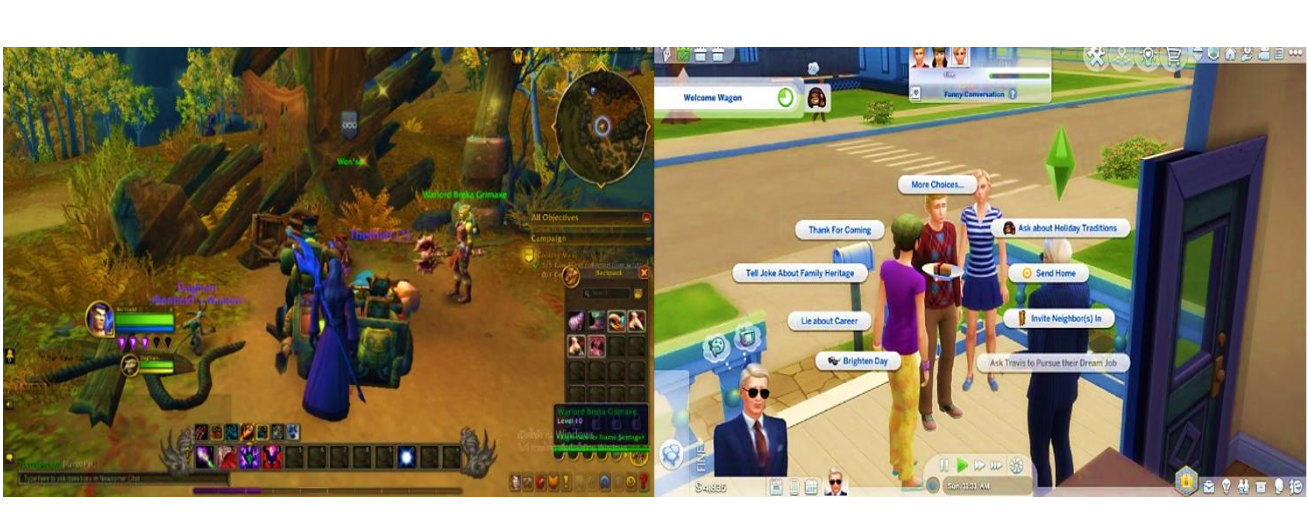
Blizzard Entertainment. (2011). World of Warcraft [Screenshot from video game]. Blizzard Entertainment.
Electronic Arts. (2022). The Sims [Screenshot from video game]. Electronic Arts.
Faiqotuzzulfa, F., & Putra, S. A. (2023). Virtual Reality's Impacts on Learning Results in 5.0 Education: A Meta-Analysis. International Transactions on Education Technology (ITEE), 1(1), 10-18.
Hefkaluk, N., Linehan, C., & Trace, A. (2024). Fail, Fail Again, Fail Better: How Players who Enjoy Challenging Games Persist after Failure in “Celeste”. International Journal of Human – Computer Studies, 183, Article 103199. https://doi.org/10.1016/j.ijhcs.2023.103199
Hemenover, S., & Bowman, N. (2018). Video Games, Emotion, and Emotion Regulation: Expanding the Scope. Annals of the International Communication Association, 42(2), 1-19.
Koivisto, J., & Hamari, J. (2019). The Rise of Motivational Information Systems: A Review of Gamification Research. International Journal of Information Management, 45, 191-210.
Lavoie, R., Main, K., & Stuart-Edwards, A. (2022). Flow Theory: Advancing the Two-dimensional Conceptualization. Motivation and Emotion, 46(1), 38-58.
Li, Y., Xu, Z., Hao, Y., Xiao, P., & Liu, J. (2022). Psychosocial Impacts of Mobile Game on K12 Students and Tend Exploration for Future Educational Mobile Games. Frontiers in Education, 7, Article 843090. https://doi.org/10.3389/feduc.2022.843090
Lin, W., Wang, J., & Yueh, H. (2022). Learning Information Ethical Decision Making with a Simulation Game. Frontiers in Psychology, 13, Article 933298. https://doi.org/10.3389/fpsyg.2022.933298
Lodge, J. M., Kennedy, G., Lockyer, L., Arguel, A., & Pachman, M. (2018). Understanding Difficulties and Resulting Confusion in Learning: An Integrative Review. Frontiers in Education, Article 49. https://doi.org/10.3389/feduc.2018.00049
Majkowski, J. (2021). Communication in Online Game on the Example of Own Research. E-Methodology, 8(8), 56-64.
Miller, M., & Hegelheimer, V. (2006). The SIMs Meet ESL Incorporating Authentic Computer Simulation Games into the Language Classroom. Interactive Technology and Smart Education, 3(4), 311-328.
Munawarah, S., Hayati, S., Fitriyani, W., Rahman, E., Mieyrandha, Maharani, L. M., Tegar, J., & Fauzi, I. (2024). Games in Enhancing Productive Skills for EFL Students. Journal of English Language Teaching, Linguistics, and Literature, 4(2), 138-147.
Nazmi, R., Ardiyanto, J., Anshori, M. I., & Siswanto, D. E. (2023). Adaptive Learning in the Future of Educational Management Adapts to Student Needs. Al-Fikrah: Jurnal Manajemen Pendidikan, 11(2), 272-283.
Nutt, D., & Railton, D. (2003). The Sims: Real Life as Genre. Information Communication and Society, 6(4), 577-592.
Pitic, A. E., & Pitic, A. A. E. (2022). The Positive Effects of Video Games on the Human Mind. International Journal of Advanced Statistics and IT&C for Economics and Life Sciences, 12(2), 24-31.
Setyoadi, E. T., & Patmanthara, S. (2024). Students’ Goal Orientation and Gamification in Learning for Academic Performance: A Systematic Literature Review. Research and Development in Education (RaDEn), 4(1), 390-403.
Smiderle, R., Rigo, S. J., Marques, L. B., Coeiho, J. A. P. M., & Jaques, P. A. (2020). The Impact of Gamification on Students’ Learning, Engagement and Behavior based on their Personality Traits. Smart Learning Environments, 7(3), 1-11.
Sun, R., Sun, G., & Ye, J. (2023). The Effects of Online Game Addiction on Reduced Academic Achievement Motivation among Chinese College Students: The Mediating Role of Learning Engagement. Frontiers in Psychology, 14, Article 1185353. https://doi.org/10.3389/fpsyg.2023.1185353
Teng, C.-I., Huang, T.-L., Huang, G.-L., Wu, C.-N., Cheng, T. C. E., & Liao, G.-Y. (2024). Creatability, Achievability, and Immersibility: New Game Design Elements that Increase Online Game Usage. International Journal of Information Management, 75. Article 102732. https://doi.org/10.1016/j.ijinfomgt.2023.102732.
Wiklund, M. A., & Ekenberg, L. (2009). Going to School in World of Warcraft: Observations from a Trial Programme using Off-the-shelf Computer Games as Learning Tools in Secondary Education. Designs for Learning, 2(1), 36-55.
Xavier, P. B., Raj, A. R. V., & Nazini, N. (2023). Impact of Online Gaming Addiction on Social Isolation Among First-Year Sathyabama Undergraduate Students: A Study. ShodhKosh: Journal of Visual and Performing Arts, 4(1), 331-339.
Zhao, D., Muntean, C.H., Chis, A. E., Rozinaj, G., & Muntean, G. (2022). Game-Based Learning: Enhancing Student Experience, Knowledge Gain, and Usability in Higher Education Programming Courses. IEEE Transactions on Education, 99, 1-12.
ดาวน์โหลด
เผยแพร่แล้ว
รูปแบบการอ้างอิง
ฉบับ
ประเภทบทความ
สัญญาอนุญาต
ลิขสิทธิ์ (c) 2025 มหาวิทยาลัยราชภัฏจันทรเกษม

อนุญาตภายใต้เงื่อนไข Creative Commons Attribution-NonCommercial-NoDerivatives 4.0 International License.
บทความที่ได้รับการตีพิมพ์เป็นลิขสิทธิ์ของมหาวิทยาลัยราชภัฏจันทรเกษม
ข้อความที่ปรากฏในบทความแต่ละเรื่องในวารสารวิชาการเล่มนี้เป็นความคิดเห็นส่วนตัวของผู้เขียนแต่ละท่านไม่เกี่ยวข้องกับมหาวิทยาลัยราชภัฎจันทรเกษม และคณาจารย์ท่านอื่นๆในมหาวิทยาลัยฯ แต่อย่างใด ความรับผิดชอบองค์ประกอบทั้งหมดของบทความแต่ละเรื่องเป็นของผู้เขียนแต่ละท่าน หากมีความผิดพลาดใดๆ ผู้เขียนแต่ละท่านจะรับผิดชอบบทความของตนเองแต่ผู้เดียว