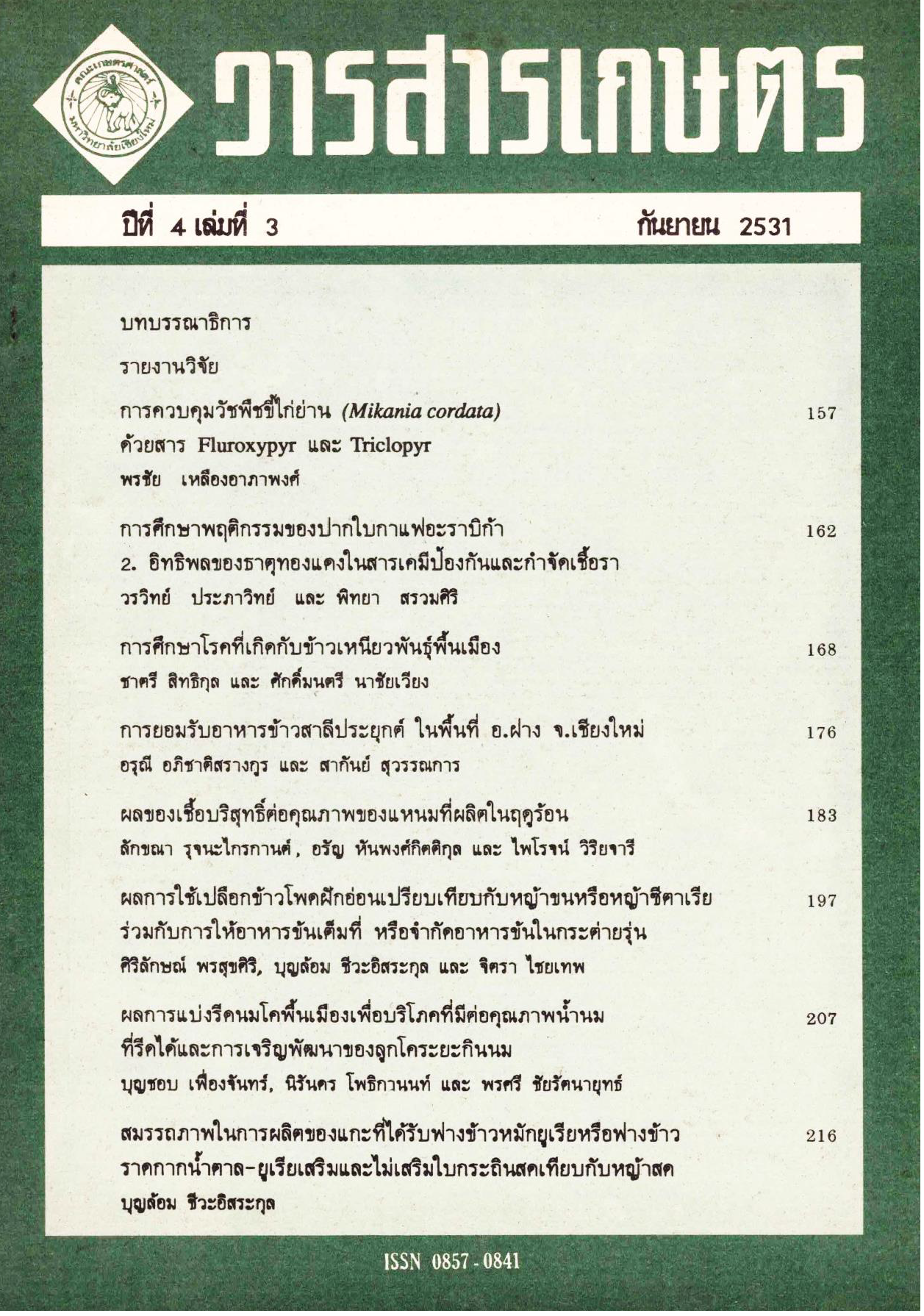
THE ACCEPTANCE OF MODIFIED WHEAT MEALS AT FANG DISTRCT, CHIANGMAI
Article Sidebar
Main Article Content
Abstract
Wheat Technology Transfer for Local Utilization’s Project had trained wheat growers and non wheat growers to be familiar with 30 blanded local-wheat meals which were classed into three categories i.e. whole-meal flour, cooked grain and cracked wheat.
Fourty random samples were used to evaluate the acceptance of these products. About 35 % of the whole population were wheat growers who wish to expand their cultivable fields for strengthening the incomes by 50%. The rest 65% were non wheat grower who were interested in planting wheat for self comsumption by 26.92% and for strengthening their incomes by 15.38%. 79.5% of the trainees have gained knowledge from these trainings above moderate level. The wheat meals that received highest score were modified egg noodle and modified chilli paste.
The future schemes to be undertaken are as follows: encouragement to the expansion of cultivable fields, developing of different vendible wheat meals and supporting of the increase of market demand.
Article Details
References
Cummings, J.H. (1979). Some Aspects of Dietary Fibre Metabolism in the Human Gut. Food And Health Birch, G.G. Applied Science Publishers pages 441-451.
Hoseney, R.C. (1986). Principles of Cereal Science and Technology. The American Association of Cereal Chemists Inc. pages 1-19 ,89-92.
San Buenaventura, M.L., Dong, F.M. and Rasco, B.A. (1987). The total Dietary Fiber Content of Wheat, Corn, Barley, Sorghum, and Distillers' Dried Grains with Solubles American Association of Cereal Chemists Inc. vol 64 No. 2 page 135.
